

The Circus - Bath, Bath Travel Guide
Free Guide: An 18th-century Georgian masterpiece in Bath, blending classical architecture with rich Masonic and Druidic symbolism in a perfect circular design.


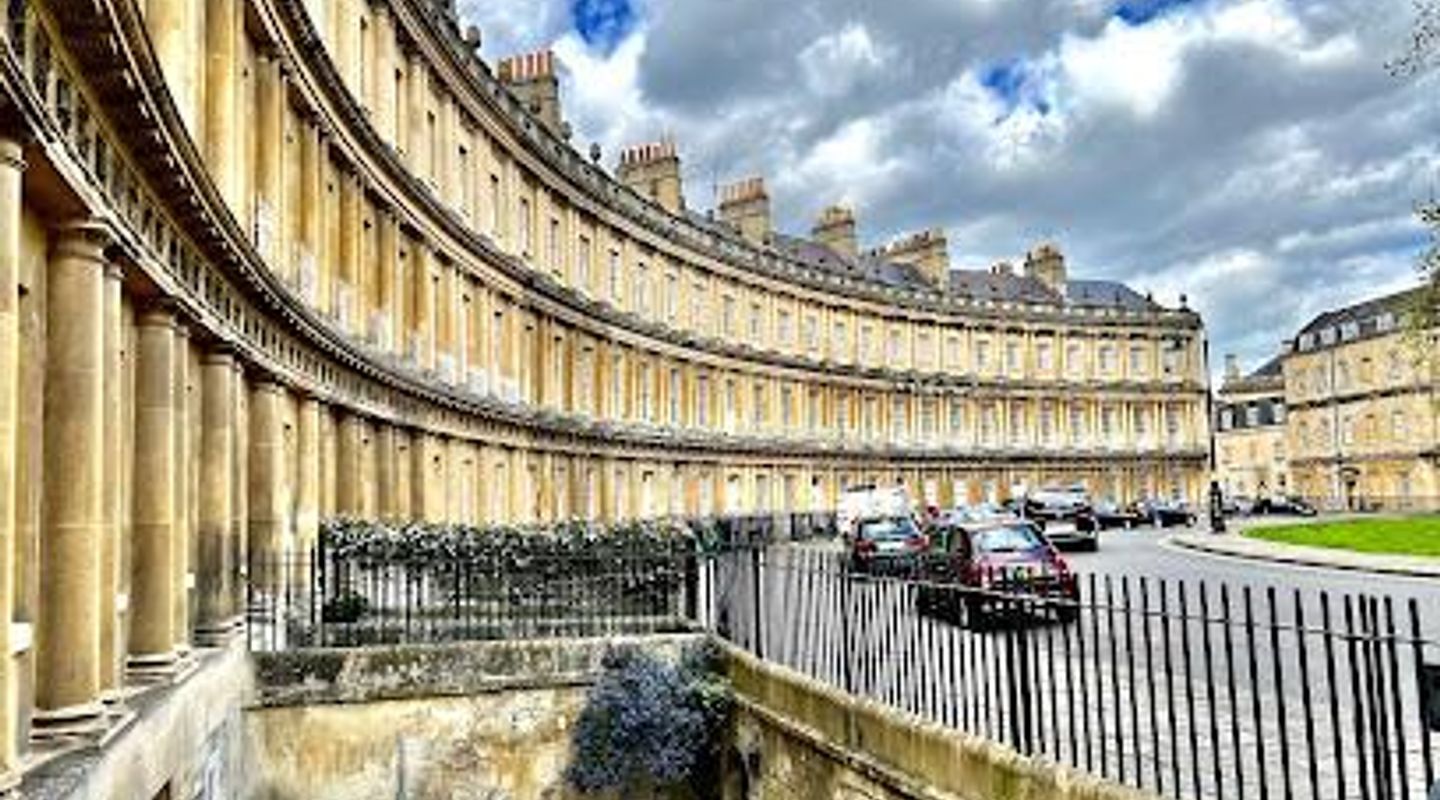
A brief summary of The Circus - Bath
An 18th-century Georgian masterpiece in Bath, blending classical architecture with rich Masonic and Druidic symbolism in a perfect circular design.
The Circus in Bath is a remarkable 18th-century architectural landmark designed by John Wood the Elder and completed by his son. This Grade I listed circular ensemble of townhouses features intricate Palladian design inspired by the Roman Colosseum and prehistoric stone circles. Its central garden, surrounded by three curved terraces, is steeped in symbolism including Masonic and Druidic motifs, making it a unique cultural and historic highlight in Bath.
On-site amenities
 Seating areas
 Information boards
 Restrooms
 Drink options
 Food options
Opening hours
- Every dayOpen 24 hours
Opening hours as listed on the venue’s Google Business Profile. Hours can change for services and special events, so check with the venue before you go.
- Address
- Bath BA1 2ET
- Phone
- Website
Getting there
Bus
Train and Walk
Taxi
Discover more about The Circus - Bath
Architectural Vision Rooted in Antiquity
The Circus was conceived by John Wood the Elder, a visionary architect who sought to transform Bath into a neoclassical cityscape inspired by Imperial Rome and ancient British heritage. Construction began in 1754 but Wood died shortly after, leaving his son John Wood the Younger to complete the project in 1768. The design draws heavily on the Roman Colosseum’s tiered classical orders, arranged inwardly in a perfect circle rather than an amphitheatre’s outward-facing form. The diameter of the Circus was deliberately matched to that of Stonehenge’s inner circle, reflecting Wood’s fascination with Druidic culture and prehistoric stone circles.
Symbolism and Masonic Influence
The Circus is richly adorned with symbolic stonework, including acorns, serpents, and nautical motifs, many of which are linked to Freemasonry and Druidic lore. The acorns crowning the parapets are believed to honor the Druids, whom Wood regarded as ancient architects of sacred British sites. The Circus, Queen Square, and Gay Street together form a key shape when viewed from above, a potent Masonic symbol. This layering of meanings imbues the site with a spiritual and cultural depth beyond its architectural grandeur.
Design and Layout of the Circular Ensemble
The Circus consists of three equal curved terraces of Grade I listed townhouses arranged around a central circular garden, which was originally a reservoir for the houses. Over time, this reservoir was replaced with a grassy area planted with mature plane trees. Each of the three entrances to the Circus faces a curved segment, ensuring that visitors are greeted by an elegant façade whichever way they enter. The central green space offers a tranquil oasis amid the urban setting, enhancing the site's charm and livability.
Historical Residents and Cultural Legacy
Over the centuries, The Circus has been home to many notable figures. The celebrated 18th-century portrait artist Thomas Gainsborough lived and worked at number 17, using it as his studio. Politician William Pitt the Elder also resided here, as did more recent celebrities such as actor Nicholas Cage. The Circus has witnessed Bath’s evolution from a Georgian spa town to a modern cultural hub, maintaining its status as a prestigious address and architectural treasure.
Restoration and Preservation
During World War II, The Circus suffered damage in the 1942 Bath Blitz but was carefully restored to its original style. Today, it stands as a protected heritage site, exemplifying Georgian urban planning and architectural artistry. Its preservation ensures that visitors can continue to experience the grandeur and symbolism envisioned by the Woods.
Experiencing The Circus Today
Visitors to The Circus can stand in the center to appreciate the harmonious proportions and intricate stone details up close. The circular layout creates an unusual acoustic effect where sounds echo dramatically. This, combined with the elegant façades and leafy central garden, makes The Circus a captivating destination for architecture enthusiasts and cultural explorers alike.
Evendo Review Centre
 Google
Guest reviews
Best time to go
Quietest: Jan, Feb & Dec · before 6am or from 11pm
Busy times are Evendo estimates for a typical year, to help you plan. Actual crowds vary with events, school holidays and the weather.
Explore The Circus - Bath on the map
A handpicked selection of must-see spots near The Circus - Bath, mapped for you.
Get your free copy of our complete guide to The Circus - Bath, delivered straight to you.
Everything on this page, from opening hours and how to get there to Eve’s tips and the best time to go, in one PDF you can read offline, print or share.
Already have an account? Sign in
Your The Circus - Bath guide is ready.
We'll send it to · Not you? Sign out

Getting your guide ready…
We are putting together a fresh copy of the The Circus - Bath guide. This can take up to a minute.
This can take a few moments. If your browser asks, choose Allow so the download can start. You'll find the guide in your Downloads folder.
Nothing happened? Download it again
Sorry, the guide is taking longer than usual. Please try again in a minute, or get it by email instead.
Unlock the best of The Circus - Bath
Skip-the-line tickets, guided tours with entry, and walking tours of the area, booked in a few clicks.



Other nearby places you may find interesting
The closest places of the same kind, if this one is not quite what you had in mind.
-
-
-
-
-


Swipe for more places
More to explore near The Circus - Bath

 Best experiences near The Circus - Bath
 Best hotels near The Circus - Bath
 Best landmarks near The Circus - Bath
 Best attractions near The Circus - Bath
 Best shops near The Circus - Bath
 Best restaurants near The Circus - Bath
 Best bars near The Circus - Bath
Do you manage this location?
Take control to get all the benefits, like improved information, better appearance, and stronger visibility across AI-powered discovery.
Explore more

Explore more of Bath
Discover Bath: A harmonious blend of Roman history, Georgian elegance, and natural beauty in the heart of England's countryside.
Explore Bath
Explore more of United Kingdom
Discover the United Kingdom: A blend of rich history, stunning landscapes, and vibrant cities, offering a unique travel experience for every visitor.
Explore United Kingdom
