

Royal Cres, Bath Travel Guide
Free Guide: A sweeping crescent of 30 Georgian terraced houses, the Royal Crescent is Bath’s iconic symbol of 18th-century architectural elegance and social heritage.


A brief summary of Royal Cres
A sweeping crescent of 30 Georgian terraced houses, the Royal Crescent is Bath’s iconic symbol of 18th-century architectural elegance and social heritage.
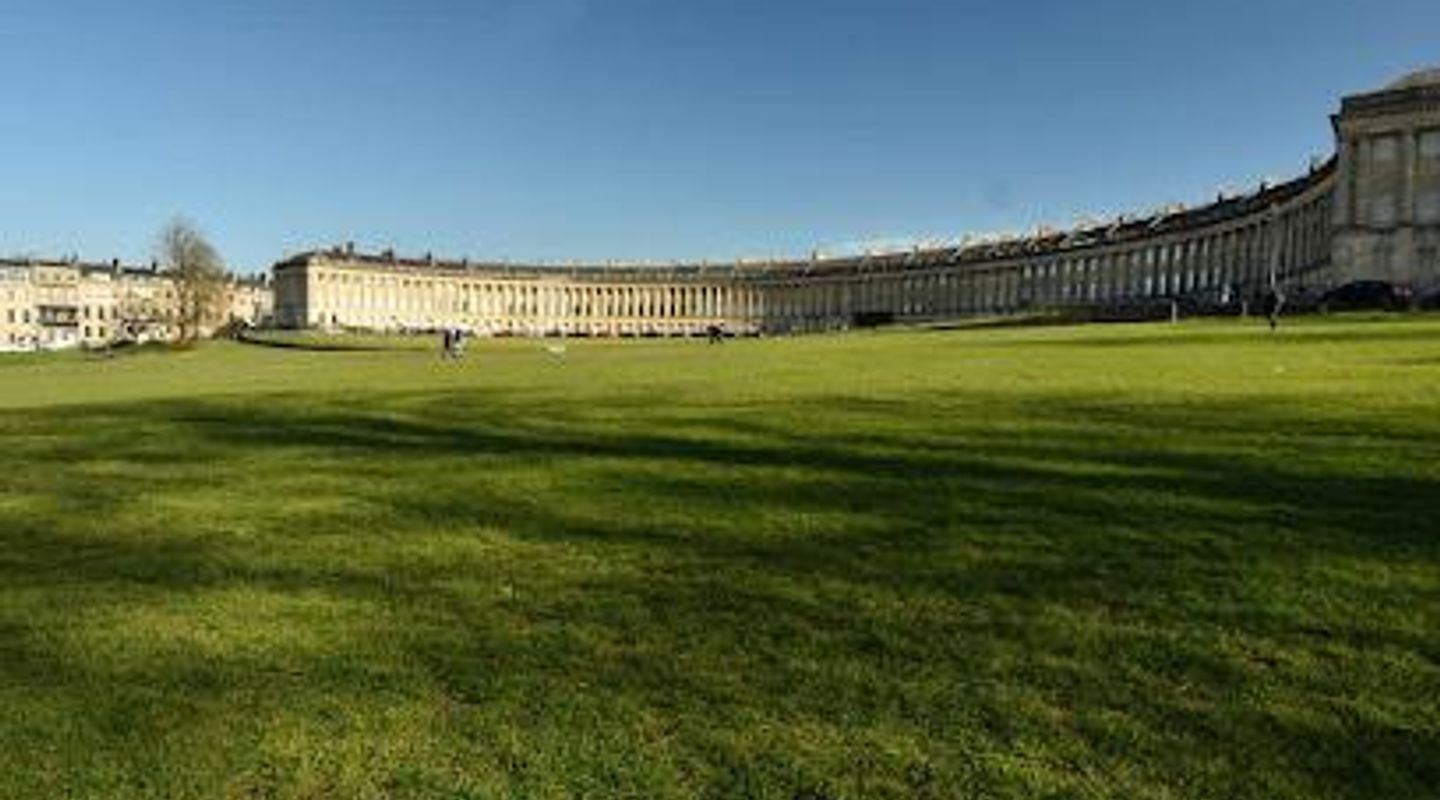
The Royal Crescent in Bath is a sweeping crescent of 30 terraced Georgian houses designed by John Wood the Younger between 1767 and 1774. This Grade I listed architectural masterpiece features a uniform façade with 114 Ionic columns and Palladian embellishments, exemplifying 18th-century urban design. Beyond its classical frontage, the crescent’s rear reveals diverse layouts, reflecting individual owners’ tastes. Today, it remains a symbol of Bath’s heritage, featuring a museum, luxury hotel, and expansive lawns overlooking the city.
On-site amenities
 Restrooms
 Drink options
 Food options
 Seating areas
 Information boards
- Address
- Bath
Getting there
Bus
Walking
Taxi
Discover more about Royal Cres
Architectural Grandeur and Design Innovation
The Royal Crescent, designed by John Wood the Younger and completed in 1774, stands as one of the finest examples of Georgian architecture in the United Kingdom. Stretching 150 metres in a sweeping crescent shape, it comprises 30 terraced houses unified by a monumental façade of 114 Ionic columns rising 14.3 metres, crowned with Palladian-style entablature. The ground floor is rusticated, emphasizing the elegant stonework made from Bath’s characteristic warm honey-coloured stone. While the façade presents a harmonious and symmetrical classical appearance, the rear of the houses reveals a striking contrast with varied roof heights and layouts, as each owner was free to design their interiors independently. This juxtaposition is famously described as 'Queen Anne fronts and Mary-Anne backs.' The crescent was the first of its kind and introduced the concept of 'rus in urbe'—bringing the countryside feel into the city—with views over the adjacent parkland enhancing its charm.
Historical Significance and Social Legacy
Since its foundation stone was laid in 1767, the Royal Crescent quickly became Bath’s most desirable address, attracting the emerging middle classes and notable figures of the 18th century. Its grandeur and elegance were a testament to Bath’s social shift towards refined living and leisure. The crescent gained its 'Royal' title after a visit by Prince Frederick, Duke of York and Albany, who acquired No. 16, now the site of the Royal Crescent Hotel & Spa. Over centuries, the crescent has witnessed significant historical events, including severe damage during the Second World War’s Baedeker Raids when incendiary bombs gutted Nos. 2 and 17. These were later restored, preserving the crescent’s architectural integrity. The lawns in front have served various purposes, from grazing livestock to allotments during wartime food shortages.
Current Use and Cultural Importance
Today, fewer than ten of the original 30 houses remain single-family residences; most have been subdivided into apartments of varying sizes. No. 1 Royal Crescent operates as a museum managed by the Bath Preservation Trust, showcasing Georgian life with period furnishings and educational exhibits. The central No. 16 houses the luxurious Royal Crescent Hotel & Spa, offering a blend of historic elegance and modern comfort. The crescent’s iconic façade and setting have made it a favored backdrop for films and television, including adaptations of Jane Austen’s works and the popular series Bridgerton. Its architectural and cultural significance contributed to Bath’s designation as a UNESCO World Heritage Site in 1987.
Architectural Details and Surroundings
The crescent’s façade is marked by its 114 Ionic columns, each 30 inches in diameter, supporting a grand entablature. The stonework is complemented by slate roofs, originally stone-tiled, and subtle variations such as small balconettes on some houses add character. A distinctive feature is the ha-ha—a sunken ditch with a vertical stone face and sloped turf side—forming an invisible boundary between the crescent’s raised lawns and the parkland beyond, preserving uninterrupted views. The rear elevations display a patchwork of differing heights and styles, reflecting the individual architects’ freedom behind the uniform frontage.
Living Heritage and Visitor Experience
The Royal Crescent remains a vibrant part of Bath’s community, blending residential life with tourism and heritage conservation. Visitors can admire the crescent’s majestic curve and expansive lawns, experience Georgian history at the museum, or indulge in luxury at the hotel. The crescent’s enduring appeal lies in its architectural brilliance, historical depth, and the seamless integration of urban design with natural surroundings. Its preservation and continued use exemplify Bath’s commitment to celebrating its rich past while accommodating modern life.
Legacy of John Wood the Younger and Bath’s Urban Landscape
John Wood the Younger’s vision extended his father’s legacy, complementing the nearby Circus with the Royal Crescent’s grand curve and classical uniformity. His design philosophy balanced monumental architecture with the natural environment, creating a landmark where nature and structure are equals. The crescent’s influence reached beyond Bath, inspiring urban designs such as Connaught Place in New Delhi. As one of Britain’s most treasured architectural landmarks, the Royal Crescent encapsulates the elegance, innovation, and social aspirations of Georgian England, continuing to enchant visitors and residents alike.
Evendo Review Centre
 Google
Guest reviews
Best time to go
Quietest: Jan, Feb & Dec · before 6am or from 11pm
Busy times are Evendo estimates for a typical year, to help you plan. Actual crowds vary with events, school holidays and the weather.
Explore Royal Cres on the map
A handpicked selection of must-see spots near Royal Cres, mapped for you.
Get your free copy of our complete guide to Royal Cres, delivered straight to you.
Everything on this page, from opening hours and how to get there to Eve’s tips and the best time to go, in one PDF you can read offline, print or share.
Already have an account? Sign in
Your Royal Cres guide is ready.
We'll send it to · Not you? Sign out

Getting your guide ready…
We are putting together a fresh copy of the Royal Cres guide. This can take up to a minute.
This can take a few moments. If your browser asks, choose Allow so the download can start. You'll find the guide in your Downloads folder.
Nothing happened? Download it again
Sorry, the guide is taking longer than usual. Please try again in a minute, or get it by email instead.
Unlock the best of Royal Cres
Skip-the-line tickets, guided tours with entry, and walking tours of the area, booked in a few clicks.

Other nearby places you may find interesting
The closest places of the same kind, if this one is not quite what you had in mind.
-
-
-
-
-


Swipe for more places
More to explore near Royal Cres

 Best experiences near Royal Cres
 Best hotels near Royal Cres
 Best landmarks near Royal Cres
 Best attractions near Royal Cres
 Best shops near Royal Cres
 Best restaurants near Royal Cres
 Best bars near Royal Cres
Do you manage this location?
Take control to get all the benefits, like improved information, better appearance, and stronger visibility across AI-powered discovery.
Explore more

Explore more of Bath
Discover Bath: A harmonious blend of Roman history, Georgian elegance, and natural beauty in the heart of England's countryside.
Explore Bath
Explore more of United Kingdom
Discover the United Kingdom: A blend of rich history, stunning landscapes, and vibrant cities, offering a unique travel experience for every visitor.
Explore United Kingdom
