

Lord's Mount Travel Guide
Free Guide: Explore Lord’s Mount, a towering Tudor artillery fortification guarding Berwick-upon-Tweed with panoramic views and rich border history.


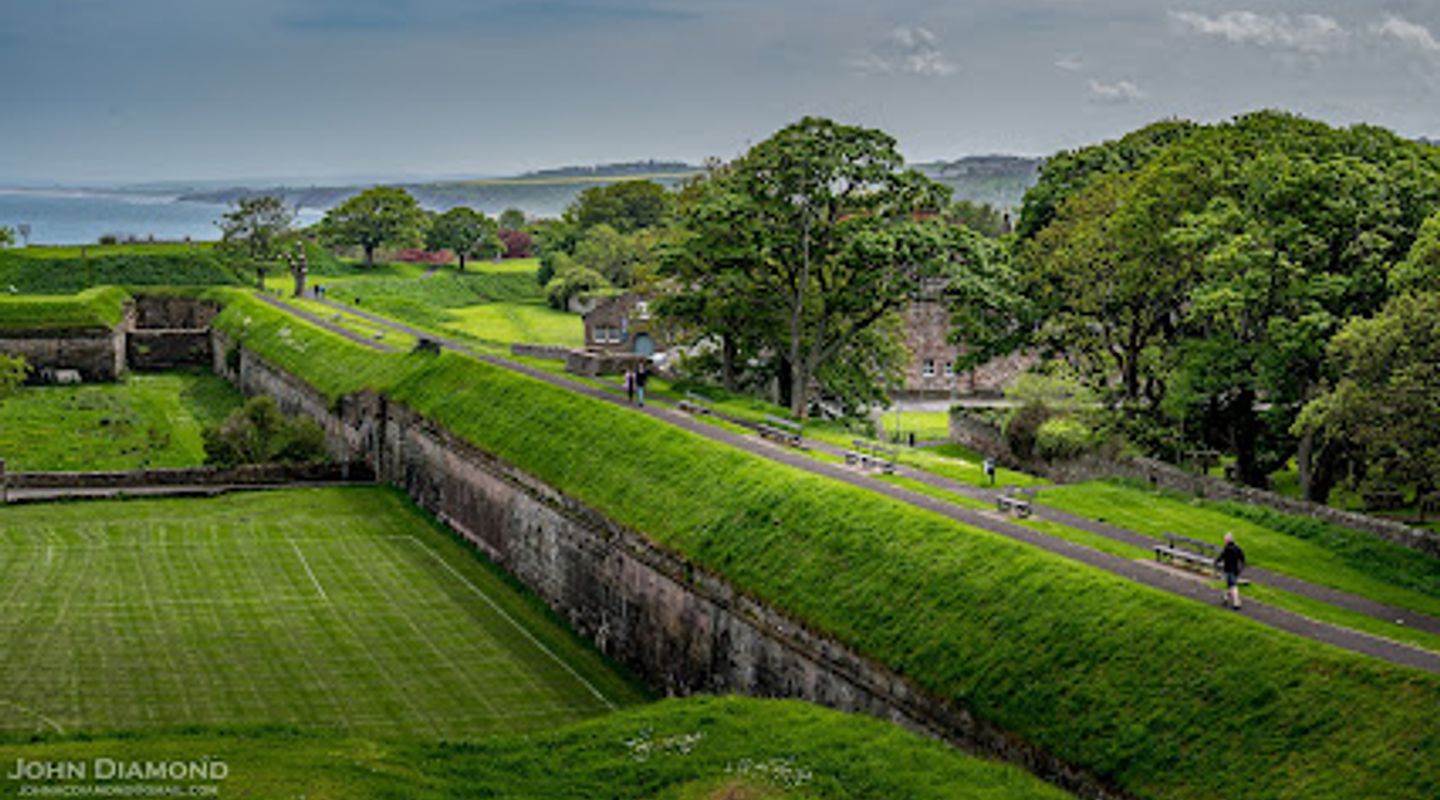
A brief summary of Lord's Mount
Explore Lord’s Mount, a towering Tudor artillery fortification guarding Berwick-upon-Tweed with panoramic views and rich border history.
Lord's Mount is a remarkable 16th-century artillery fortification located at the north-east angle of Berwick-upon-Tweed's medieval defences. Built under King Henry VIII’s reign, it features massive walls nearly 6 meters thick and was designed to withstand artillery attacks. Today, visitors can explore its surviving lower floor with casemates for swivel guns, living quarters, and a kitchen, while enjoying panoramic views of the historic town and River Tweed.
On-site amenities
 Restrooms
 Drink options
 Food options
 Seating areas
 Information boards
 Visitor centre
Opening hours
- Every dayOpen 24 hours
Opening hours as listed on the venue’s Google Business Profile. Hours can change for services and special events, so check with the venue before you go.
- Address
- Berwick-upon-Tweed TD15 1NE
- Website
Getting there
Train
Bus
Car
Discover more about Lord's Mount
A Strategic Stronghold of Tudor Military Engineering
Lord's Mount stands as a testament to Tudor military innovation, constructed between 1539 and 1542 during the reign of King Henry VIII. This massive circular artillery fortification was erected to protect the vulnerable north-east corner of Berwick-upon-Tweed’s medieval town defences. Its walls, nearly 6 meters (20 feet) thick, were designed to withstand the era’s evolving artillery threats, reflecting the shift from traditional medieval fortifications to Renaissance-style bastioned defences. King Henry VIII himself took a personal interest in the design plans, underscoring the strategic importance of Berwick as a border fortress.
Architectural Features and Surviving Elements
Though the upper floor containing the captain’s apartments and the parapet was demolished during later Elizabethan modifications, the lower floor of Lord’s Mount survives remarkably well. Visitors can explore six casemates originally used for long swivel guns, alongside living quarters that included a kitchen with a well and oven, as well as a latrine. This design allowed defenders to operate artillery effectively while maintaining essential living functions within the fortification. The robust construction and layout highlight the advanced military architecture of the period.
Berwick’s Turbulent History and Defensive Evolution
Berwick-upon-Tweed’s history is marked by its shifting control between Scotland and England, making it one of the most contested towns in the British Isles. The town’s medieval castle, first recorded in 1160 and rebuilt by Edward I in the late 13th century, was eventually superseded by the Elizabethan ramparts and artillery fortifications like Lord’s Mount. These Renaissance defences were part of a broader modernization to counter new military technologies and political threats, including the possibility of French invasion during the mid-16th century.
Modern-Day Experience and Historical Context
Today, Lord’s Mount is part of the larger Berwick-upon-Tweed Castle and Ramparts site managed by English Heritage. Visitors can walk the extensive Elizabethan ramparts encircling the town, gaining panoramic views of the River Tweed, the town’s Georgian architecture, and the North Sea coast. Informative boards along the ramparts provide rich historical context, linking Lord’s Mount to the broader story of Berwick’s martial past, including its role during the English Civil War and Jacobite risings.
Preservation and Cultural Significance
Lord’s Mount is a Grade I listed building and scheduled monument, recognized for its outstanding historical and architectural value. Its preservation allows insight into Tudor military strategy and the evolution of fortifications in response to artillery advancements. The site also reflects the complex Anglo-Scottish border history, serving as a physical reminder of Berwick’s strategic and symbolic importance over centuries.
Visitor Considerations and Surrounding Attractions
The site is accessible to the public year-round with no entrance fee, though visitors should be cautious of uneven terrain and steep unguarded drops along the ramparts. Nearby, the Berwick Barracks and the remains of Berwick Castle offer additional historical exploration. The town itself provides amenities such as restrooms, refreshments, and visitor information, enhancing the overall experience of this unique heritage destination.
Evendo Review Centre
 Google
Guest reviews
Best time to go
Quietest: Jan, Feb & Dec · before 6am or at 9pm
Busy times are Evendo estimates for a typical year, to help you plan. Actual crowds vary with events, school holidays and the weather.
Explore Lord's Mount on the map
A handpicked selection of must-see spots near Lord's Mount, mapped for you.
Get your free copy of our complete guide to Lord's Mount, delivered straight to you.
Everything on this page, from opening hours and how to get there to Eve’s tips and the best time to go, in one PDF you can read offline, print or share.
Already have an account? Sign in
Your Lord's Mount guide is ready.
We'll send it to · Not you? Sign out

Getting your guide ready…
We are putting together a fresh copy of the Lord's Mount guide. This can take up to a minute.
This can take a few moments. If your browser asks, choose Allow so the download can start. You'll find the guide in your Downloads folder.
Nothing happened? Download it again
Sorry, the guide is taking longer than usual. Please try again in a minute, or get it by email instead.
Other nearby places you may find interesting
The closest places of the same kind, if this one is not quite what you had in mind.
-
-
-
-
-


Swipe for more places
More to explore near Lord's Mount

 Best experiences near Lord's Mount
 Best hotels near Lord's Mount
 Best landmarks near Lord's Mount
 Best attractions near Lord's Mount
 Best shops near Lord's Mount
 Best restaurants near Lord's Mount
 Best bars near Lord's Mount
Do you manage this location?
Take control to get all the benefits, like improved information, better appearance, and stronger visibility across AI-powered discovery.
Explore more
Explore more of Berwickshire
Discover Berwickshire: A blend of coastal beauty, historic landmarks, and charming villages in Scotland's serene southeastern corner.
Explore Berwickshire
Explore more of United Kingdom
Discover the United Kingdom: A blend of rich history, stunning landscapes, and vibrant cities, offering a unique travel experience for every visitor.
Explore United Kingdom
