Union Bridge Travel Guide
Free Guide: Walk or cycle across the world’s oldest vehicular suspension bridge, a stunning 1820 engineering landmark linking England and Scotland over the River Tweed.


A brief summary of Union Bridge
Walk or cycle across the world’s oldest vehicular suspension bridge, a stunning 1820 engineering landmark linking England and Scotland over the River Tweed.
The Union Chain Bridge, opened in 1820, is the world's oldest vehicular suspension bridge still in use. Spanning the River Tweed between Horncliffe, England, and Fishwick, Scotland, it was once the longest wrought iron suspension bridge globally. This Grade I listed structure is a symbol of engineering innovation and cross-border unity, offering scenic views and a peaceful atmosphere for pedestrians, cyclists, and light vehicles.
On-site amenities
 Parking
 Information boards
 Seating areas
Opening hours
- Every dayOpen 24 hours
Opening hours as listed on the venue’s Google Business Profile. Hours can change for services and special events, so check with the venue before you go.
- Address
- Berwick-upon-Tweed TD15 1XQ
Getting there
Car
Public Transport and Taxi
Cycling
Discover more about Union Bridge
Engineering Innovation of the Early 19th Century
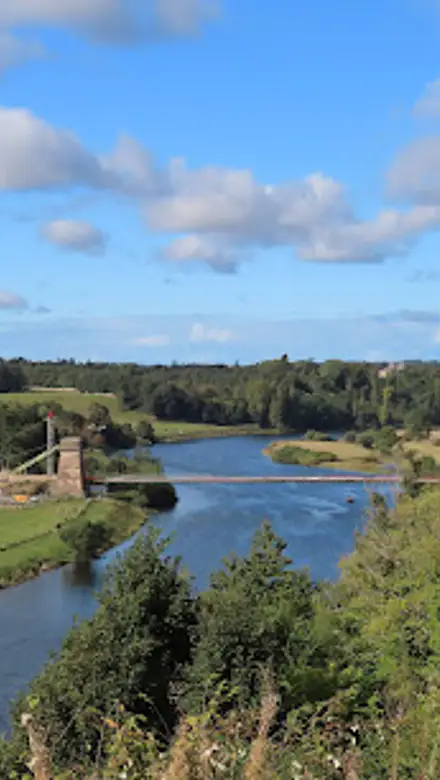
The Union Chain Bridge was completed in 1820, designed by Captain Samuel Brown, a former Royal Navy officer and engineer. It was the longest wrought iron suspension bridge in the world at the time, boasting a single span of 137 meters (449 feet) across the River Tweed. Brown’s patented eye-bar chain design provided a stronger and lighter alternative to previous suspension bridge chains, marking a significant advancement in civil engineering. The bridge’s construction involved massive stone towers—one freestanding on the Scottish side and one built into the rock face on the English side—anchoring the suspension chains that support the wooden deck.
A Vital Cross-Border Link
Situated approximately four miles upstream from Berwick-upon-Tweed, the bridge connects Horncliffe in Northumberland, England, with Fishwick in Berwickshire, Scotland. Before its construction, crossing the river at this point required long detours or risky fording during floods. The Union Chain Bridge provided a reliable and direct route for transporting agricultural products and lime, facilitating trade and communication between the two nations. Its name reflects its role as a symbol of peace and unity between England and Scotland. Today, it continues to serve pedestrians, cyclists, and light vehicles, maintaining its importance as a local crossing.
Historical Context and Cultural Significance
The bridge’s opening ceremony on 26 July 1820 was a celebrated event, attended by notable figures including the Duke of Northumberland. It cost approximately £7,700 to build, a considerable investment at the time. The structure is a Grade I listed building in England and recognized as an International Historic Civil Engineering Landmark, highlighting its global significance. Its chains are even represented on the Flag of Berwickshire, underscoring its cultural importance. The bridge also stands near historic sites such as Paxton House and the Elizabethan town walls of Berwick-upon-Tweed, enriching the region’s heritage landscape.
Restoration and Preservation Efforts
Over two centuries after its construction, the Union Chain Bridge underwent a major restoration completed in 2023, costing £10.5 million. This extensive project replaced the original chains, repaired the stone towers and abutments, and repainted the bridge to preserve its structural integrity and historical character. The restoration ensures that the bridge remains safe and functional for modern use while retaining its original early 19th-century charm. The bridge’s resilience against floods and weather over the years is a testament to the foresight of its designers, including the decision to site it higher than initially planned.
Visitor Experience and Surrounding Environment
Visitors to the Union Chain Bridge can enjoy tranquil pastoral views of the River Tweed and the surrounding countryside. The bridge offers a unique experience of walking or cycling across a historic engineering landmark that also serves as a border crossing between England and Scotland. Nearby parking is available on both sides, and the area is accessible for light traffic. The bridge’s setting near Paxton House and scenic river paths invites leisurely exploration. Informative boards provide historical context, enhancing the visitor experience. The peaceful atmosphere and scenic vistas make it a favored spot for photographers and history enthusiasts alike.
Legacy and Continuing Importance
The Union Chain Bridge remains a vital piece of infrastructure and a cherished symbol of innovation and unity. It stands as the oldest known suspension bridge still carrying vehicular traffic and continues to inspire admiration for early industrial engineering. Its preservation reflects a commitment to maintaining heritage while serving contemporary needs. The bridge’s story intertwines with the cultural and historical fabric of the Anglo-Scottish border region, making it a must-see landmark for travelers exploring Berwick-upon-Tweed and the surrounding areas.
Evendo Review Centre
 Google
Guest reviews
Best time to go
Quietest: Jan, Feb & Dec · before 6am or at 9pm
Busy times are Evendo estimates for a typical year, to help you plan. Actual crowds vary with events, school holidays and the weather.
Explore Union Bridge on the map
A handpicked selection of must-see spots near Union Bridge, mapped for you.
Get your free copy of our complete guide to Union Bridge, delivered straight to you.
Everything on this page, from opening hours and how to get there to Eve’s tips and the best time to go, in one PDF you can read offline, print or share.
Already have an account? Sign in
Your Union Bridge guide is ready.
We'll send it to · Not you? Sign out

Getting your guide ready…
We are putting together a fresh copy of the Union Bridge guide. This can take up to a minute.
This can take a few moments. If your browser asks, choose Allow so the download can start. You'll find the guide in your Downloads folder.
Nothing happened? Download it again
Sorry, the guide is taking longer than usual. Please try again in a minute, or get it by email instead.
Other nearby places you may find interesting
The closest places of the same kind, if this one is not quite what you had in mind.
-
-
-
-
-


Swipe for more places
More to explore near Union Bridge

 Best experiences near Union Bridge
 Best hotels near Union Bridge
 Best landmarks near Union Bridge
 Best attractions near Union Bridge
 Best shops near Union Bridge
 Best restaurants near Union Bridge
 Best bars near Union Bridge
Do you manage this location?
Take control to get all the benefits, like improved information, better appearance, and stronger visibility across AI-powered discovery.
Explore more
Explore more of Berwickshire
Discover Berwickshire: A blend of coastal beauty, historic landmarks, and charming villages in Scotland's serene southeastern corner.
Explore Berwickshire
Explore more of United Kingdom
Discover the United Kingdom: A blend of rich history, stunning landscapes, and vibrant cities, offering a unique travel experience for every visitor.
Explore United Kingdom