

Cardiff Bay (Cardiff) Travel Guide - Free
Explore Cardiff Bay in Cardiff with Evendo's free guide. Find the best shops, historic streets, restaurants, and gems on web or mobile.


Cardiff Bay combines historic docks, Tiger Bay heritage, Welsh cultural landmarks, waterfront dining and scenic walks beside the Cardiff Barrage.
A Waterfront Recast
Cardiff Bay spreads around the tidal waters once known as the Bute East and West Docks, south of the city centre. Its present-day character is the result of a remarkable late twentieth-century transformation: a working port shaped by coal exports has become a setting for national cultural institutions, modern apartments, restaurants and broad waterside promenades. The area is not a single historic quarter but a collection of waterfront spaces, dockside streets and former industrial sites connected by the bay and its public realm.Read more about Cardiff Bay
Culture Beside the Water
Tiger Bay and Everyday Bay Life
Best attractions in Cardiff Bay
Cardiff Bay’s attractions cluster around the water and range from major cultural buildings to open-air promenades. Roald Dahl Plass forms the principal public space, with its oval amphitheatre facing the Wales Millennium Centre, where theatre, opera, dance and musical performances take place. The Senedd offers an opportunity to explore the work of the Welsh Parliament, subject to visitor arrangements, while the neighbouring Pierhead presents the visual language of Cardiff’s dock era. Families often make for Techniquest, an interactive science discovery centre, and the Norwegian Church Arts Centre adds a quieter historical and cultural stop. Mermaid Quay supplies restaurants, shops and views across the inner bay, while the Cardiff Bay Barrage provides a longer walk beside the water and towards the Bristol Channel. Cardiff Bay Wetlands Reserve, on the western side of the bay, offers a more natural setting for observing wetland habitats.
-
Tourist attraction
Wales Millennium Centre
Wales Millennium Centre: Cardiff’s iconic national arts hub for opera, dance, music, and immersive cultural experiences.
6 min walk · 0.5 km from neighbourhood centre
-
Shopping Centre
Mermaid Quay
Vibrant Cardiff Bay waterfront alive with dining, shopping, comedy, and bay views—maritime heritage meets modern leisure in this regenerated gem.
4 min walk · 0.3 km from neighbourhood centre
-
Tourist attraction
Roald Dahl Plass
A dynamic waterfront plaza in Cardiff Bay celebrating Roald Dahl’s legacy with iconic architecture, cultural events, and TV fame.
5 min walk · 0.4 km from neighbourhood centre
-
City park
Hamadryad Park
A serene 20-acre urban nature reserve in Cardiff Bay, blending wetlands, wildlife, and peaceful pathways for city escapes.
6 min walk · 0.4 km from neighbourhood centre


Best landmarks in Cardiff Bay
The Pierhead is Cardiff Bay’s most recognisable historic dock building, a red-brick late nineteenth-century structure associated with the Bute Docks and the political and commercial power behind Cardiff’s port. Nearby, the Senedd presents a deliberately open contemporary civic building for the Welsh Parliament, with timber, glass and sustainable design elements that contrast with the older waterfront architecture. The Wales Millennium Centre is another defining structure, marked by its large inscription and copper-coloured exterior, while Roald Dahl Plass provides the civic space linking these institutions. The Norwegian Church is significant both as a surviving dockside place of worship and as a reminder of Cardiff’s international maritime connections; Roald Dahl was christened there. Together, these buildings express the bay’s layered identity, from coal-exporting port and migrant community to national cultural and political centre.
-
Historical landmark
The Scott Antarctic Memorial Cardiff Bay
A poignant tribute in Cardiff Bay honoring Captain Scott’s heroic Antarctic expedition and the city’s maritime heritage.
8 min walk · 0.6 km from neighbourhood centre
-
Historical landmark
Ship Weather Vane - Cardiff Bay Art Trail
A dynamic copper and steel ship weather vane celebrating Cardiff Bay’s maritime heritage atop the historic Pilotage Office.
3 min walk · 0.3 km from neighbourhood centre


Explore Cardiff Bay on the map
A handpicked selection of must-see spots in Cardiff Bay, mapped for you.
Best hotels in Cardiff Bay
Best restaurants in Cardiff Bay
Dining in Cardiff Bay is concentrated around Mermaid Quay and the waterfront streets leading towards Roald Dahl Plass, where restaurants and cafés take advantage of views across the inner bay. The choice is broad rather than tied to one single local cuisine, ranging from casual meals and family-friendly venues to contemporary restaurants, bars and coffee stops. The setting makes the area particularly convenient before or after a performance at the Wales Millennium Centre, although the busiest periods often coincide with theatre schedules and pleasant weather. Visitors seeking a stronger connection with Cardiff’s older dock culture can look beyond the polished waterfront development towards the surviving streets and institutions around the former docks, while Cardiff city centre offers a wider independent dining scene a short distance away. Food markets and temporary events may add variety, but their arrangements change, so they are best treated as occasional rather than permanent fixtures.
-
British
Bill's Cardiff Bay Restaurant
Historic waterfront dining with colorful charm, seasonal British classics, and a lively atmosphere in the heart of Cardiff Bay.
3 min walk · 0.3 km from neighbourhood centre
-
Bar
Las Iguanas - Cardiff - Mermaid Quay
Sizzling Latin American tapas, stacked fajitas, and two-for-one cocktails ignite fiesta vibes on Cardiff Bay's vibrant waterfront at Mermaid Quay.
5 min walk · 0.4 km from neighbourhood centre
-
Restaurant
Côte Cardiff Bay
Experience the elegance of modern French dining with classic flavors and waterfront views at Côte Cardiff Bay in Mermaid Quay.
5 min walk · 0.4 km from neighbourhood centre
-
Italian
Demiro's
A lively Italian restaurant blending flavors and waterfront views in the heart of Cardiff Bay’s Mermaid Quay.
5 min walk · 0.4 km from neighbourhood centre


Best bars in Cardiff Bay
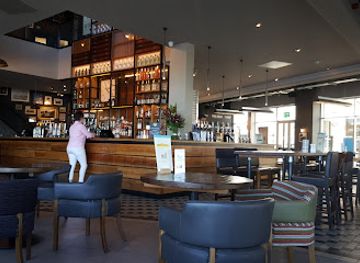
Cardiff Bay’s evening scene is led by theatre, waterfront dining and drinks rather than by a dense concentration of nightclubs. Mermaid Quay has bars and restaurants with views across the water, while the Wales Millennium Centre brings a steady programme of performances that gives Roald Dahl Plass a theatrical atmosphere after dark. Pubs and casual bars around the bay serve as meeting places before and after shows, and the illuminated architecture of the Senedd, Pierhead and surrounding waterfront makes the central promenade appealing for an evening walk. Entertainment is generally more organised and venue-based than in Cardiff’s city-centre nightlife districts, with quieter stretches towards the barrage and residential edges. Event schedules, access arrangements and late opening vary, so visitors should check directly with venues rather than assume that every part of the waterfront remains busy late into the night.
-
Live music bar
The Dock
A waterside bar and kitchen in Mermaid Quay — bright windows, bay views, live music and big‑screen sport for daytime dining through late-night sessions.
4 min walk · 0.3 km from neighbourhood centre
-
Cocktail bar
The Alchemist Cardiff
Theatrical cocktails, molecular mixology, and global dining on Cardiff's buzzing St Mary Street—where every drink and dish performs like magic. (142 characters)
6 min drive · 1.9 km from neighbourhood centre
-
Pub
The Eli Jenkins
Lively Cardiff Bay pub in a historic building, with beer garden views, live sports, cask ales, craft beers, and hearty grub—perfect for sports fans and casual nights out.
4 min walk · 0.4 km from neighbourhood centre
-
Bar
Cosy Club
Retro-chic haven at Cardiff Bay's Mermaid Quay, serving brunch to cocktails with harbor views and eclectic vibes.
4 min walk · 0.4 km from neighbourhood centre


Best nightclubs in Cardiff Bay
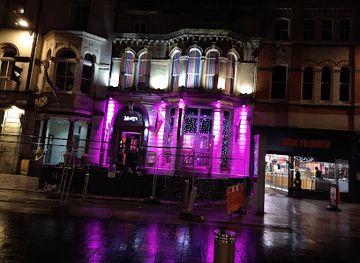
Cardiff Bay’s evening scene is led by theatre, waterfront dining and drinks rather than by a dense concentration of nightclubs. Mermaid Quay has bars and restaurants with views across the water, while the Wales Millennium Centre brings a steady programme of performances that gives Roald Dahl Plass a theatrical atmosphere after dark. Pubs and casual bars around the bay serve as meeting places before and after shows, and the illuminated architecture of the Senedd, Pierhead and surrounding waterfront makes the central promenade appealing for an evening walk. Entertainment is generally more organised and venue-based than in Cardiff’s city-centre nightlife districts, with quieter stretches towards the barrage and residential edges. Event schedules, access arrangements and late opening vary, so visitors should check directly with venues rather than assume that every part of the waterfront remains busy late into the night.
-
Nightclub
Clwb Ifor Bach
Cardiff's gritty Welsh club heart: live music legends, late-night dances, and cultural rebellion on historic Womanby Street since 1983.
6 min drive · 2.0 km from neighbourhood centre
-
Nightclub
Popworld - Cardiff
Dive into cheesy pop heaven at Popworld Cardiff—karaoke, half-price drinks, and dance floor anthems until 3am on vibrant St Mary Street.
5 min drive · 1.8 km from neighbourhood centre
-
Nightclub
Mary's Cardiff
Dive into Cardiff's nightlife gem: outrageous cabaret, premium gins, cocktails, and DJ vibes at Mary's on St Mary Street—where every night sparkles with energy and entertainment.
5 min drive · 1.7 km from neighbourhood centre
-
Nightclub
Kapu
Escape to a tiki oasis on Cardiff's St Mary Street, where masterful cocktails and rhythmic nights blend tropical vibes with city pulse.
5 min drive · 1.6 km from neighbourhood centre



Best shops in Cardiff Bay
Shopping in Cardiff Bay is centred on Mermaid Quay, a purpose-built waterfront complex with food, lifestyle and visitor-oriented retail alongside its restaurants and public spaces. It is suited to browsing between attractions, buying gifts or finding practical items, but it does not replicate the scale or independent character of Cardiff’s main city-centre shopping streets. The bay’s most distinctive purchases are more likely to come from cultural venues, exhibitions and Welsh-themed retail than from a specialist dockside craft tradition. Around Roald Dahl Plass and the Wales Millennium Centre, theatre-related and cultural shopping may complement a visit, while temporary markets and event stalls can appear as part of the wider programme. Visitors interested in independent bookshops, records, vintage goods or a larger range of Welsh products will find a broader choice elsewhere in central Cardiff, which is conveniently connected to the waterfront.
-
Shopping Centre
Cardiff Bay Retail Park
Value-packed shopping hub amid Cardiff Bay's waterfront allure—superstores, groceries, and easy parking for practical pit stops.
16 min walk · 1.3 km from neighbourhood centre
-
Gift shop
Cardiff Creative Shop
Handcrafted Welsh wonders from 45+ local artisans await in Queen's Arcade—a creative haven for unique gifts and souvenirs in Cardiff's vibrant core.
6 min drive · 2.1 km from neighbourhood centre
-
Gift shop
Zia Boutique
Discover handpicked jewellery, homeware, and gifts at this independent gem in Cardiff Bay's Mermaid Quay—a stylish haven since 2011.
4 min walk · 0.3 km from neighbourhood centre
-
Gift shop
Gallery Gift Shop at the Norwegian Church
Discover Nordic treasures and Welsh crafts in the historic Norwegian Church, where Roald Dahl's legacy meets Cardiff Bay's maritime charm—a perfect spot for unique souvenirs.
8 min walk · 0.6 km from neighbourhood centre


Cardiff Bay essentials
Getting There
Getting Around
Safety
Emergency Situations
Do's and Don'ts
Local Tips

From Eve
Local phrases worth knowing
You don't need to get them perfect. A few words go a long way, and locals appreciate the effort.
Basics
| English | Local | Say it |
|---|---|---|
| Hello | Alright | [al-rite] |
| Goodbye | Cheerio | [cheer-ee-oh] |
| Yes | Yeah | [yeh] |
| No | Nah | [nah] |
| Please/You're welcome | Please/Ta | [pleez/ta] |
| Thank you | Cheers | [cheers] |
| Excuse me/Sorry | Sorry | [sor-ee] |
| How are you? | How are you doing? | [how ar yu doo-in] |
| Fine. And you? | I'm sound. You? | [aim sound. yu?] |
| Do you speak English? | Do you speak English like? | [doo yu speak ing-lish like?] |
| I don't understand | I haven't got a scooby | [I hav-ent got a scoo-bee] |
Eating & Drinking
| English | Local | Say it |
|---|---|---|
| I'd like to see the menu, please | I'll have a butcher's at the menu, please | [I'll hav a butcher's at the menu, pleez] |
| I don't eat meat | I don't touch the flesh | [I don't tuch the flesh] |
| Cheers! | Cheers! | [cheers] |
| I would like to pay, please | I'll settle up, please | [I'll set-l up, pleez] |
Emergencies
| English | Local | Say it |
|---|---|---|
| Help! | Help! | [help] |
| Go away! | Clear off! | [clear off] |
| Call the Police! | Ring the bizzies! | [ring the biz-ees] |
| Call a doctor! | Ring for a quack! | [ring for a kwak] |
| I'm lost | I'm all over the shop | [I'm all over the shop] |
| I'm ill | I'm feeling rough | [I'm feel-ing ruff] |
Shopping
| English | Local | Say it |
|---|---|---|
| I'd like to buy... | I fancy a bit of... | [I fan-see a bit of] |
| I'm just looking | I'm just having a gander | [I'm just hav-in a gan-der] |
| How much is it? | How much is that? | [how much is that] |
| That's too expensive | That's a bit steep, that | [That's a bit steep, that] |
| Can you lower the price? | Can you knock a few quid off? | [Can yu nok a few kwid off] |
Time & Numbers
| English | Local | Say it |
|---|---|---|
| What time is it? | What's the time? | [whats the time] |
| It's one o'clock | It's one on the button | [It's one on the button] |
| Half past (10) | Half ten | [Half ten] |
| Morning | Mornin' | [mornin] |
| Afternoon | Arvo | [ar-vo] |
| Evening | Evenin' | [evenin] |
| Yesterday | Yest'day | [yest'day] |
| Today | Today | [Today] |
| Tomorrow | Morrer | [mor-er] |
| 1 | One | [wun] |
| 2 | Two | [too] |
| 3 | Three | [three] |
| 4 | Four | [for] |
| 5 | Five | [five] |
| 6 | Six | [six] |
| 7 | Seven | [sev-en] |
| 8 | Eight | [ate] |
| 9 | Nine | [n-ine] |
| 10 | Ten | [ten] |
Transport & Directions
| English | Local | Say it |
|---|---|---|
| Where's a/the...? | Where's the...? | [wheres the] |
| What's the address? | What's the addy? | [whats the addy] |
| Can you show me (on the map)? | Can you point me in the right direction? | [Can yu point me in the rite di-rek-shun] |
| When's the next (bus)? | When's the next bus due? | [whens the next bus doo] |
| A ticket (to ....) | A ticket to ... | [A ticket to] |
History of Cardiff Bay
From Tidal Inlet to Export Port
Before the docks were built, the area around Cardiff Bay consisted of tidal water, marshland and settlements associated with the lower reaches of the River Taff and Ely. Cardiff’s development as a coal-exporting port accelerated in the nineteenth century, when the Bute family invested in dock infrastructure to serve the South Wales coalfield. The Bute West Dock opened in 1839 and the Bute East Dock followed in 1855, creating an extensive port south of the town. Warehouses, railways, foundries and workers’ housing spread around the docks, tying the waterfront closely to industrial production in the valleys.
Tiger Bay’s International Community
The dock economy drew seafarers, merchants and labourers from Europe, Africa, the Middle East and Asia, helping create the multicultural community widely known as Tiger Bay. The name was associated with the dockside district rather than a precisely defined administrative neighbourhood, and its social life extended through streets, cafés, places of worship and businesses around the port. The Norwegian Church, established for Scandinavian sailors and residents, is one surviving reminder of those international connections. Cardiff Bay’s history therefore encompasses migration and settlement as well as coal, shipping and engineering.
Decline of the Working Docks
The importance of the docks diminished during the twentieth century as coal exports declined, shipping patterns changed and industrial activity contracted. Parts of the waterfront became underused, while the once-busy dock community experienced major disruption and clearance. The closure of the East Moors steelworks in the 1970s further weakened employment in the wider southern Cardiff industrial landscape. Although the port did not disappear, the old docklands no longer functioned as the economic engine that had shaped them. The resulting physical and social decline prompted ambitious plans to regenerate the bay.
The Barrage and a New Waterfront
The Cardiff Bay Development Corporation was established in 1983 to coordinate regeneration, and the Cardiff Bay Barrage was completed in 1999 across the mouth of the bay. It created a freshwater lake and helped establish continuous public promenades, although the project was debated because of its environmental and social consequences. New civic and cultural buildings followed, including the Wales Millennium Centre, opened in 2004, and the Senedd, completed in 2006. Regeneration brought investment, housing and visitor facilities, while debates about the loss of older communities and the presentation of Tiger Bay remain part of the bay’s contemporary history.
Cardiff Bay in Photos
Browse through our photo collection highlighting the charm and character of the destination.
Neighbourhoods near Cardiff Bay
The closest neighbourhoods to Cardiff Bay, if you have time for more than one stop.
-

-

-


Swipe for more neighbourhoods
Explore more

Explore more of Cardiff
Cardiff combines a medieval castle, waterfront culture, grand civic architecture and Welsh traditions with lively museums, markets and green spaces to explore.
Explore Cardiff