

Free Cardiganshire Travel Guide & Mobile App
Explore Cardiganshire with free travel guides. Discover regional history, expert tips, proposed trips, and audio guides on web or mobile app.


Explore Cardiganshire’s Ceredigion coast, Welsh-speaking towns, river valleys, castles, beaches and upland landscapes across west Wales.
Read more about Cardiganshire
When is the best time to visit Cardiganshire?
Best: June–August · 19–21°C| Month | High (°C) | Rainfall (mm) |
|---|---|---|
| January | 7 | 100 |
| February | 7 | 80 |
| March | 10 | 90 |
| April | 13 | 70 |
| May | 16 | 70 |
| June (best) | 19 | 70 |
| July (best) | 21 | 80 |
| August (best) | 21 | 80 |
| September | 18 | 90 |
| October | 14 | 100 |
| November | 10 | 110 |
| December | 7 | 110 |
Getting to and around Cardiganshire
How to get there
Transportation
Best attractions in Cardiganshire
Cardiganshire’s attractions range from coastal landscapes to carefully preserved historic estates and religious ruins. Aberystwyth combines the remains of its medieval castle with the National Library of Wales, university collections, a long promenade and the Camera Obscura above Constitution Hill. Cardigan Castle introduces the history of the Teifi valley, while the harbour towns of Aberaeron and New Quay provide maritime scenery and access to the coast. Beaches at Mwnt, Llangrannog, Aberporth and Borth suit different combinations of swimming, walking and wildlife watching. Inland, Llanerchaeron reveals the workings of an eighteenth-century estate, Strata Florida Abbey stands beside the upper Teifi, and Cors Caron offers boardwalk walks across a rare raised bog. The Elan Valley lies outside Cardiganshire, but the Cambrian Mountain landscapes bordering the region provide comparable opportunities for walking, birdwatching and quiet scenic drives. The Wales Coast Path, local museums, galleries, gardens and farm-based experiences complete an attraction landscape that rewards slower exploration rather than a rapid checklist of sights.
-
Tourist attraction
Devil's Bridge Waterfalls
Experience the awe-inspiring triple bridges and cascading 300-foot waterfalls deep in Wales’ enchanting Cambrian Mountains.
-
Tourist attraction
Bwlch Nant yr Arian Forest Visitor Centre
A hilltop forest retreat near Aberystwyth with stunning views, waymarked trails, and daily red kite feeding.
-
 Tourist attraction
Talyllyn Railway - Tywyn Wharf Railway Station
Historic gateway to Wales’ oldest preserved narrow-gauge railway, blending heritage, scenic journeys, and a charming museum experience.
-
Tourist attraction
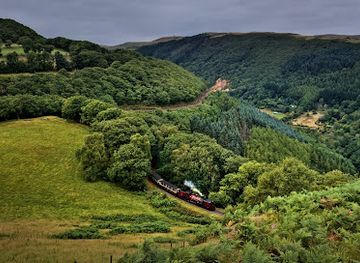
Vale of Rheidol Railway
Experience a century-old steam railway journey through the breathtaking Rheidol Valley from Aberystwyth to Devil’s Bridge.
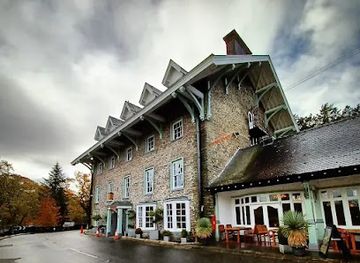
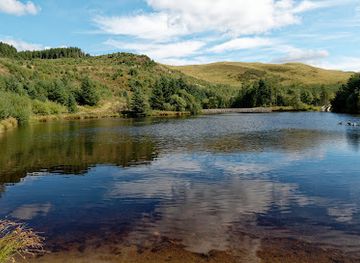
Best landmarks in Cardiganshire
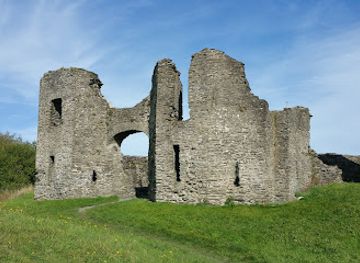
Cardigan Castle is one of the region’s most important historic landmarks, occupying a strategic position above the River Teifi and marking the development of the medieval town. Aberystwyth Castle, built on a headland beside the sea, gives the university town a powerful coastal silhouette and illustrates Edwardian military architecture in Wales. The coloured Georgian terraces and harbour of Aberaeron form one of Cardiganshire’s most recognisable townscapes, while the harbour and sea-facing streets of New Quay retain a different maritime character. Strata Florida Abbey is significant not only for its surviving medieval stonework but also for its connection with the Cistercian order and Welsh princely history. Inland, Cors Caron is a natural landmark of national ecological importance, its open bog and surrounding hills contrasting with the wooded Teifi valley. Constitution Hill above Aberystwyth provides a prominent coastal viewpoint, while the cliffs, coves and headlands around Mwnt and Llangrannog define the region visually as much as its built heritage.
-
Castle
Newcastle Emlyn Castle
Medieval Welsh stronghold steeped in dragon legend, overlooking the scenic River Teifi.
-
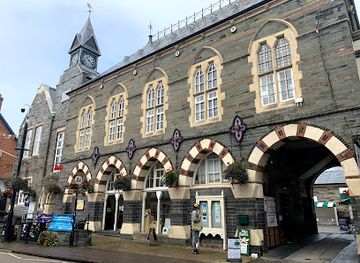
Market
Cardigan Guildhall Market
Discover Cardigan Guildhall Market, a historic indoor market blending heritage charm with vibrant local trade in the heart of Cardigan.
-
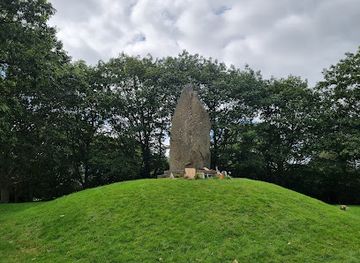
Historical landmark
Llywelyn Monument
A solemn granite monument at Cilmeri honors Llywelyn the Last, marking the site where Wales’ final native prince fell in battle, symbolizing a pivotal moment in Welsh history.
-
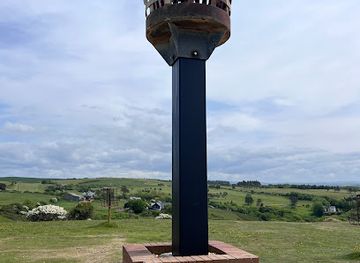
Historical landmark
Nwy Prydain Beacon
A historic beacon crowning Constitution Hill with panoramic coastal views and timeless maritime heritage.
Explore Cardiganshire on the map
Plan your trip on one map. See where the top cities, national parks and sights are, and book hotels and experiences in a few clicks.
Best hotels in Cardiganshire
Best restaurants in Cardiganshire
Dining in Cardiganshire reflects its position between pasture, river valley and Cardigan Bay. Menus commonly draw on Welsh lamb and beef, farmhouse cheeses, seasonal vegetables, breads, cakes and locally caught fish, while coastal towns add shellfish and other seafood when available. Aberystwyth, Cardigan, Aberaeron and New Quay have the broadest choice of cafés, pubs, bakeries and contemporary restaurants; inland towns and villages are more likely to centre on traditional inns, tearooms and small independent establishments. Farmers’ markets and farm shops are useful for finding chutneys, preserves, cider, cheeses and other regional produce, although individual market days vary. Welsh recipes such as cawl may appear alongside modern British cooking, but the region’s food identity is better understood through its producers and changing seasonal menus than through one exclusive local dish. Reservations are sensible for popular coastal restaurants in summer.
-
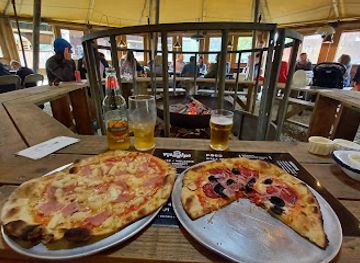
Pizza
Pizzatipi
Enjoy wood-fired stonebaked pizzas riverside under a giant tipi in Cardigan’s vibrant, rustic courtyard setting.
-
Gastropub
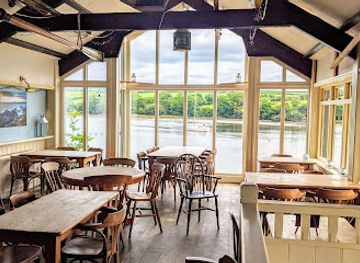
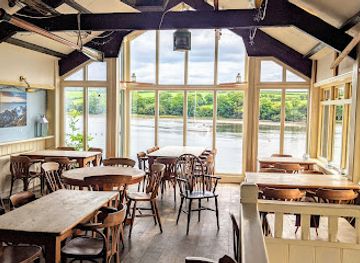
The Ferry Inn
Scenic riverside gastropub in St Dogmaels offering fresh Welsh cuisine, warm service, and stunning Teifi estuary views.
-
Restaurant
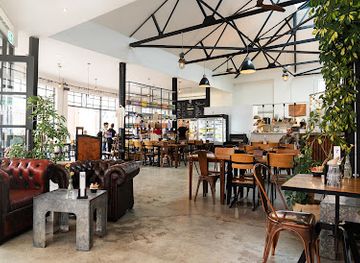
Crwst
Crwst offers fresh, locally inspired dishes in a lively, dog-friendly setting in the heart of Cardigan.
-
Hotel
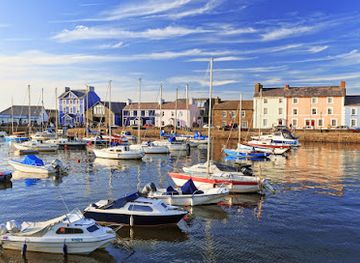
Y Seler
Boutique harbour-side hotel with vibrant rooms, fresh seafood dining, and stunning views in the heart of Aberaeron.
Best bars in Cardiganshire
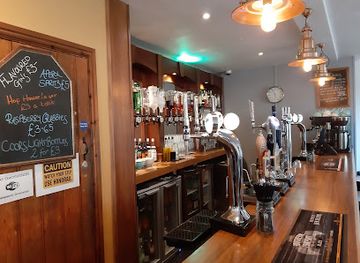
Evenings in Cardiganshire are generally centred on pubs, cafés, restaurants, live music and community events rather than a large nightclub economy. Aberystwyth has the widest choice, shaped by its university population, with traditional pubs, bars, venues for live performance and later-opening establishments in the town centre. Cardigan, Aberaeron, New Quay and Lampeter offer a smaller selection of pubs, wine bars and restaurants, with activity varying by season and day of the week. Historic inns and village pubs remain important social venues in rural districts, while breweries and cider producers may provide daytime tastings or occasional events rather than permanent nightlife. In coastal communities, summer evenings can be busier than winter ones, but visitors should check current arrangements locally rather than expect fixed opening patterns.
-
Bar
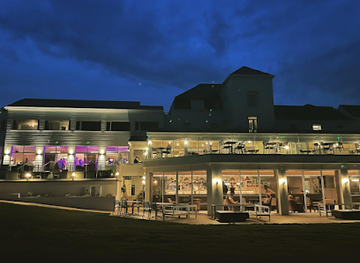
The Cliff Hotel & Spa
Cliffside luxury and serene spa indulgence with panoramic views over Cardigan Bay’s stunning coastline.
-
Gastropub
The Ferry Inn
Charming riverside gastropub in St Dogmaels with stunning Teifi estuary views, fresh seafood, and a welcoming atmosphere.
-
Pub
Ship Inn, Tresaith
Seaside pub with stunning Cardigan Bay views, cozy rooms, and classic Welsh fare just steps from Tresaith’s golden beach and waterfall.
-
Pub
The Grosvenor
Traditional riverside pub in Cardigan offering hearty food, scenic views of Cardigan Castle, and a warm, dog-friendly atmosphere.
Best nightclubs in Cardiganshire
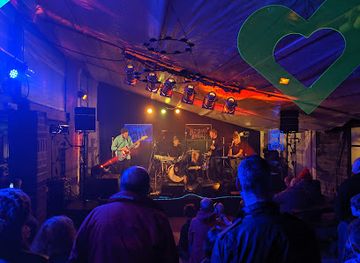
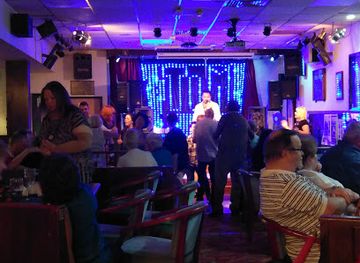
Evenings in Cardiganshire are generally centred on pubs, cafés, restaurants, live music and community events rather than a large nightclub economy. Aberystwyth has the widest choice, shaped by its university population, with traditional pubs, bars, venues for live performance and later-opening establishments in the town centre. Cardigan, Aberaeron, New Quay and Lampeter offer a smaller selection of pubs, wine bars and restaurants, with activity varying by season and day of the week. Historic inns and village pubs remain important social venues in rural districts, while breweries and cider producers may provide daytime tastings or occasional events rather than permanent nightlife. In coastal communities, summer evenings can be busier than winter ones, but visitors should check current arrangements locally rather than expect fixed opening patterns.
-
Pub
The Grosvenor
Traditional Welsh pub with riverside views, hearty food, and a welcoming atmosphere in the heart of Cardigan town centre.
-
Nightclub
The Gremlin Club
Experience Carmarthen’s vibrant nightlife at The Gremlin Club, a lively venue known for music, open mic nights, and welcoming vibes.
-
Nightclub
Eddie Rocks
A vibrant multi-floor nightclub in Haverfordwest offering diverse music, lively atmosphere, and late-night entertainment for 18+ crowds.
-
Nightclub
Yokoswnb
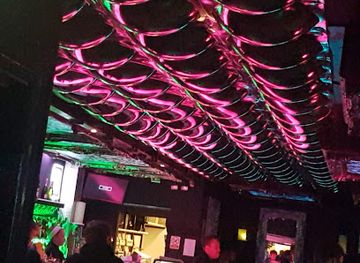
A vibrant, youthful nightclub in Aberystwyth offering affordable drinks and lively nights in a compact, central venue.

Best shops in Cardiganshire
Shopping in Cardiganshire is concentrated in the high streets and markets of Aberystwyth, Cardigan, Aberaeron and Lampeter rather than in large retail complexes. Aberystwyth offers the broadest urban choice, including books, clothing, galleries, cafés and everyday shopping, while Cardigan combines independent retailers with arts, crafts and food businesses around the historic town centre. Aberaeron and New Quay are suited to browsing smaller galleries, gift shops and coastal-oriented independents. Farmers’ markets, farm shops and delicatessens provide Welsh cheeses, preserves, baked goods, cider, honey and other produce, with locations and schedules varying through the year. Useful locally themed purchases include woollen goods, ceramics, prints, jewellery, books by Welsh writers and food from Ceredigion producers. Rural shops may keep shorter hours and card payments are not universal at small stalls, so a little cash remains useful.
-
Homewares Shop
Charlies Stores Ltd Aberystwyth (Parc-y-Llyn)
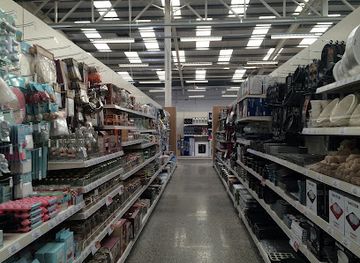
Spacious and friendly, Charlies Stores Ltd at Parc-y-Llyn is Aberystwyth’s premier destination for home, garden, clothing, and seasonal shopping under one roof.
-
Discount shop
B&M Store with Garden Centre
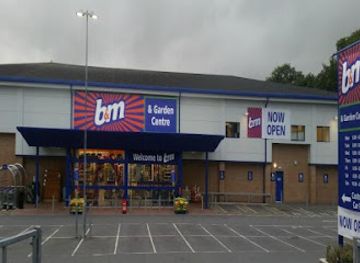
Budget-friendly shopping meets garden centre expertise in Cardigan's largest discount store.
-
Market
Cardigan Guildhall Market
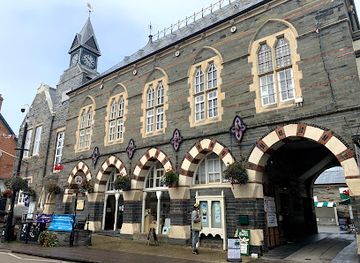
Historic Gothic market in Cardigan offering local crafts, vintage finds, fresh foods, and a welcoming community vibe.
-
Gift shop
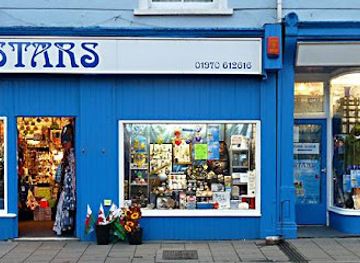
Stars
Discover unique gifts, handcrafted jewelry, and local charm at Stars, Aberystwyth’s beloved gift shop on Terrace Road.
Get your free copy of our complete guide to Cardiganshire, delivered straight to you.
Everything on this page, from attractions and restaurants to essentials and local phrases, in one PDF you can read offline, print or share.
Already have an account? Sign in
Your Cardiganshire guide is ready.
We'll send it to · Not you? Sign out

Getting your guide ready…
We are putting together a fresh copy of the Cardiganshire guide. This can take up to a minute.
This can take a few moments. If your browser asks, choose Allow so the download can start. You'll find the guide in your Downloads folder.
Nothing happened? Download it again
Sorry, the guide is taking longer than usual. Please try again in a minute, or get it by email instead.
Cardiganshire essentials
Currency and Payment
Safety
Emergency Situations
Do's and Don'ts
Local Tips
From Eve
Local phrases worth knowing
You don't need to get them perfect. A few words go a long way, and locals appreciate the effort.
Basics
| English | Local | Say it |
|---|---|---|
| Hello | Shwmae | [shoo-my] |
| Goodbye | Hwyl fawr | [hoyl vowr] |
| Yes | Ie | [yay] |
| No | Na | [nah] |
| Please/You're welcome | Os gwelwch yn dda | [oss gwell-ookh un tha] |
| Thank you | Diolch | [dee-olkh] |
| Excuse me/Sorry | Mae'n ddrwg gennyf | [mine droog gen-iv] |
| How are you? | Sut wyt ti? | [sit weet tee] |
| Fine. And you? | Da. A ti? | [dah. ah tee] |
| Do you speak English? | Ydych chi'n siarad Saesneg? | [uh-dich chee-n sha-rad sighs-neg] |
| I don't understand | Dydw i ddim yn deall | [dih-doo ee dheem un deh-al] |
Eating & Drinking
| English | Local | Say it |
|---|---|---|
| I'd like to see the menu, please | Baswn i'n hoffi gweld y fwydlen, os gwelwch yn dda | [bah-soon een hoff-ee gweld uh voo-id-len, oss gwell-ookh un tha] |
| I don't eat meat | Dydw i ddim yn bwyta cig | [dih-doo ee dheem un boo-ee-ta keeg] |
| Cheers! | Iechyd da! | [yeh-khid dah] |
| I would like to pay, please | Baswn i'n hoffi talu, os gwelwch yn dda | [bah-soon een hoff-ee tah-lee, oss gwell-ookh un tha] |
Emergencies
| English | Local | Say it |
|---|---|---|
| Help! | Help! | [help] |
| Go away! | Dewch yma! | [dewch um-ah] |
| Call the Police! | Galwch y Heddlu! | [gal-ookh uh hed-lu] |
| Call a doctor! | Galwch ddoctor! | [gal-ookh doct-or] |
| I'm lost | Dw i'n colli | [doo een kho-lee] |
| I'm ill | Dw i'n sal | [doo een sal] |
Shopping
| English | Local | Say it |
|---|---|---|
| I'd like to buy... | Baswn i'n hoffi prynu... | [bah-soon een hoff-ee pruh-nee] |
| I'm just looking | Dw i'n edrych yn unig | [doo een ed-rikh un een-ig] |
| How much is it? | Faint mae'n costio? | [fine mine cost-yo] |
| That's too expensive | Mae hynny'n rhy ddrud | [my hun-nee un ree threed] |
| Can you lower the price? | Allwch chi leihau'r pris? | [ahl-kh oo chee lay-hai'r prees] |
Time & Numbers
| English | Local | Say it |
|---|---|---|
| What time is it? | Faint yw hi? | [fine ee hoo] |
| It's one o'clock | Mae'n un o'r gloch | [mine un or gloch] |
| Half past (10) | Hanner wedi (10) | [hanner wed-ee] |
| Morning | Bore | [bore] |
| Afternoon | Prynhawn | [prin-hown] |
| Evening | Noswaith | [nos-wyth] |
| Yesterday | Ddoe | [thoy] |
| Today | Heddiw | [hed-ee] |
| Tomorrow | Fory | [vor-ee] |
| 1 | Un | [een] |
| 2 | Dau | [dye] |
| 3 | Tri | [tree] |
| 4 | Pedwar | [ped-wahr] |
| 5 | Pum | [peem] |
| 6 | Chwech | [khwech] |
| 7 | Saith | [site] |
| 8 | Wyth | [weeth] |
| 9 | Naw | [now] |
| 10 | Deg | [deg] |
Transport & Directions
| English | Local | Say it |
|---|---|---|
| Where's a/the...? | Ble mae'r...? | [bleh my-are] |
| What's the address? | Beth yw'r cyfeiriad? | [beth ee-oo'r kuh-ver-yad] |
| Can you show me (on the map)? | Allwch chi ddangos i mi (ar y map)? | [ahl-kh chee thang-os ee mee (ar uh map)] |
| When's the next (bus)? | Pryd mae'r (bws) nesaf? | [prid my-are (boos) ness-af] |
| A ticket (to ....) | Tocyn (i ....) | [tok-in (ee ....)] |
History of Cardiganshire
Prehistoric and Celtic Foundations
Cardiganshire contains evidence of settlement and agriculture extending back to prehistory, although much of the archaeological record is formed by scattered monuments, enclosures and later reused sites rather than a single defining complex. Iron Age communities occupied defended hillforts and maintained connections along the west Wales coast and river valleys. The area later became associated with the Celtic kingdom of Ceredigion, traditionally linked to Ceredig, a sixth-century ruler whose name survives in the modern Welsh county name. This early landscape established patterns of dispersed settlement and local identity that remained important through later political changes.
Roman Roads and the Post-Roman Kingdom
Roman power reached west Wales, though Cardiganshire was less heavily urbanised than parts of southern Britain. Roads, forts and administrative links connected the region with the wider Roman province, while the uplands and western coastline retained a more rural character. After Roman rule ended, Ceredigion emerged as a distinct post-Roman kingdom and later formed part of the political world of medieval Welsh princes. Place names, church foundations and the survival of Welsh as the principal historic language reflect the persistence of local cultural traditions beyond the period of imperial administration.
Norman Expansion and Medieval Welsh Rule
From the eleventh century, Norman and Marcher forces attempted to extend control into west Wales, establishing castles and boroughs while facing resistance from Welsh rulers. Cardigan Castle, overlooking the River Teifi, became a major strategic stronghold and was rebuilt in stone during the medieval period. The town developed around the castle and river crossing, helping connect the coast with inland trade routes. Political control shifted repeatedly between English and Welsh powers before the Edwardian conquest brought Cardiganshire more firmly into the English crown’s administrative system in the late thirteenth century.
Cistercian Monasteries and Medieval Christianity
Religious houses played a major role in the medieval landscape. Strata Florida Abbey, founded in the twelfth century near the upper Teifi valley, became an important Cistercian centre and a place of burial for members of the Welsh princely house of Deheubarth. Its monks managed land, livestock and literary activity across the surrounding countryside. The surviving ruins convey both the scale of the foundation and the disruption caused by the dissolution of the monasteries in the sixteenth century. Parish churches, chapels and place names preserve further evidence of the region’s long Christian history.
Agriculture, Estates and the Rural Economy
For centuries, Cardiganshire’s economy rested largely on mixed farming, livestock, wool and local trade. Large estates shaped parts of the countryside, while tenant farms and smallholdings produced food for nearby market towns and coastal communities. Houses such as Llanerchaeron illustrate the organisation of an eighteenth-century estate, including the main residence, workshops, gardens and agricultural buildings. The region’s dispersed settlement pattern and enclosed fields developed gradually through changing landownership, improvement schemes and agricultural markets, leaving a landscape in which farms, lanes, stone walls and hedges remain central to its identity.
Maritime Trade and the Eighteenth-Century Ports
Cardigan and the smaller ports along Cardigan Bay supported coastal trade, fishing and shipbuilding, although their fortunes fluctuated with silting, changing markets and improvements elsewhere. Aberaeron was planned in the eighteenth century as a harbour town, with its distinctive coloured Georgian terraces arranged around the waterfront. New Quay also developed through maritime activity and remains closely associated with the sea. Vessels from the region carried agricultural produce and other goods around the Irish Sea, linking rural hinterlands with wider commercial networks before railways and modern roads altered the balance.
Railways, Education and Modern Ceredigion
Railway development in the nineteenth century connected parts of Cardiganshire more effectively with Carmarthen, the coast and the national network, encouraging tourism, trade and the expansion of towns. Aberystwyth became a leading educational and cultural centre after the establishment of the University College of Wales in the nineteenth century, while Lampeter developed an earlier academic and theological tradition. The decline of some rural industries and branch railway services in the twentieth century was offset by the growth of education, public administration, tourism and conservation. Contemporary Ceredigion retains a strong Welsh-language and rural identity alongside these modern institutions.
Cardiganshire in Photos
Browse through our photo collection highlighting the charm and character of the destination.
Neighbouring regions of Cardiganshire
The closest regions to Cardiganshire, if you have time for more than one.
-

-

-

-

-


Swipe for more regions
Explore more

Explore more of United Kingdom
Discover the United Kingdom: A blend of rich history, stunning landscapes, and vibrant cities, offering a unique travel experience for every visitor.
Explore United Kingdom