

Free Powys Travel Guide & Mobile App
Explore Powys with free travel guides. Discover regional history, expert tips, proposed trips, and audio guides on web or mobile app.


Explore Powys for Welsh mountains, market towns, historic castles, reservoirs, walking routes and quiet rural landscapes across central Wales.
Read more about Powys
When is the best time to visit Powys?
Best: June–August · 20–22°C| Month | High (°C) | Rainfall (mm) |
|---|---|---|
| January | 7 | 100 |
| February | 7 | 80 |
| March | 10 | 80 |
| April | 13 | 70 |
| May | 16 | 60 |
| June (best) | 20 | 60 |
| July (best) | 22 | 70 |
| August (best) | 22 | 80 |
| September | 19 | 80 |
| October | 15 | 90 |
| November | 10 | 90 |
| December | 7 | 100 |
Getting to and around Powys
How to get there
Transportation
Destinations in Powys
Resorts, valleys and scenic spots worth a trip of their own.

Swipe for more destinations
Best attractions in Powys
Powys offers an unusually varied rural attraction landscape, with the Bannau Brycheiniog National Park providing mountain walks, waterfalls, caves, cycling routes and dark-sky opportunities in the south. Brecon is a useful base for exploring the park, while the central region leads towards the Elan Valley, where reservoirs, dams, woodland and open moorland create a distinctive setting for walking and scenic drives. Lake Vyrnwy in the north combines upland scenery, birdlife and Victorian waterworks. Heritage attractions include Powis Castle and its gardens near Welshpool, Montgomery Castle, the National Cycle Collection at Llandrindod Wells and the textile and industrial history of the Severn Valley. Hay-on-Wye adds bookshops and literary culture, while canals, long-distance paths and rivers provide slower ways to experience the countryside. Because many sites are separated by winding roads and sparse public transport, the best itineraries combine a market town with one landscape or heritage area rather than attempting too many distant excursions in a single day.
-
Castle
National Trust - Powis Castle and Garden
Explore Powis Castle’s medieval grandeur and stunning terraced gardens, a Welsh heritage jewel blending history, art, and nature.
-
Tourist attraction
Welshpool & Llanfair Light Railway
Step back in time on a scenic steam railway journey through the rolling countryside of Mid Wales, blending heritage, nature, and charm.
-
Gastropub
The Nags Head Inn
Historic five-star coaching inn and gastropub in Garthmyl blending classic charm with modern comfort and award-winning local cuisine.
-
Castle
Hay Castle
Discover Hay Castle’s restored medieval charm, art galleries, and stunning views at the heart of Hay-on-Wye’s vibrant cultural scene.


Best landmarks in Powys
-
Hotel
The Brecon Castle Hotel
Historic Wales’ oldest hotel blending timeless charm with modern comforts near Brecon Beacons National Park.
-
Historical landmark
Llys a Chastell Tre-tŵr / Tretower Court and Castle
Medieval fortress and magnificent manor house where 900 years of Welsh power and prestige converge in one extraordinary site.
-
Tourist attraction
Brecon Cathedral
Nine centuries of faith and heritage in Wales's most unique cathedral close
-
Hostel
YHA Brecon Beacons
Rustic farmhouse hostel offering clean, cozy accommodation and a warm communal atmosphere in the heart of Brecon Beacons National Park.


Explore Powys on the map
Plan your trip on one map. See where the top cities, national parks and sights are, and book hotels and experiences in a few clicks.
Best hotels in Powys
Best restaurants in Powys
Dining in Powys reflects its farming landscape and small market towns rather than a single regional culinary style. Menus commonly draw on Welsh lamb, beef, locally reared pork, seasonal vegetables, game and cheeses, while trout and other locally sourced produce appear in some restaurants and rural inns. Brecon, Hay-on-Wye, Machynlleth, Newtown and Welshpool have the broadest choice of cafés, pubs, bakeries and contemporary restaurants, although quality and opening patterns vary by season. Country pubs and village inns remain important for informal meals, particularly outside the larger towns. Farm shops and producers' markets are useful for Welsh cheeses, preserves, cakes, breads, cider and other provisions for walking trips. In the west and north, bilingual cultural influences are evident in local food businesses, while border towns also reflect culinary links with neighbouring England. Booking ahead is sensible for well-regarded rural dining, especially on summer weekends.
-
Gastropub
The Nags Head Inn
Historic charm meets five-star luxury and award-winning British cuisine in the heart of Mid Wales at The Nags Head Inn.
-
Restaurant
Hills
Savor delicious burgers with stunning Brecon Beacons views at Hills, a welcoming spot blending quality food and scenic charm.
-
British
Lakeside Cafe and Catering
Charming lakeside cafe in Llandrindod Wells offering hearty British breakfasts, homemade cakes, and scenic views by the tranquil lake.
-
Restaurant
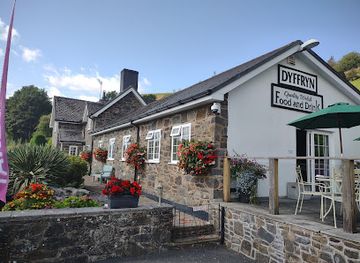
Dyffryn Cafe & Restaurant
A charming Welsh countryside café offering homemade dishes, warm hospitality, and scenic views just outside Welshpool.


Best bars in Powys
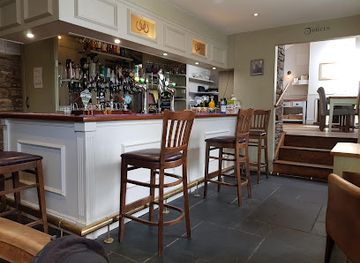
Powys has a modest, town-centred evening scene rather than a large nightclub culture. Traditional pubs and modern bars in Brecon, Hay-on-Wye, Newtown, Welshpool, Machynlleth and Llandrindod Wells provide the main opportunities for local ales, Welsh drinks, conversation and occasional live music. Literary events and arts programming give Hay-on-Wye a busier evening atmosphere at certain times of year, while Brecon's cultural venues can add concerts and theatre to a night out. In smaller villages, evening life generally centres on a pub, restaurant or community event, and many places close earlier than venues in major Welsh cities. Visitors should check current arrangements before travelling, as opening patterns and entertainment change seasonally. Drink-driving is a particular concern on rural roads, where public transport and taxis may be limited.
-
Pub
Three Horseshoes Inn
Cozy gastro-pub in Groesffordd with award-winning seasonal British cuisine, inviting beer garden, and warm Brecon Beacons charm.
-
Pub
The Horseshoes Inn
A charming 17th-century Welsh country inn offering cozy pub dining, local flavors, and comfortable holiday apartments in scenic Berriew.
-
Pub
Royal Oak
Cozy Welsh pub in Pencelli offering traditional hospitality and local ales amidst the scenic Brecon Beacons.
-
Pub
Coach & Horses
Historic canal-side pub and inn in Llangynidr offering hearty Welsh fare, cozy rooms, and a warm, welcoming atmosphere.


Best nightclubs in Powys
-
Night Club
The Kirkhouse Nightclub (Koolers)
Experience the vibrant and friendly nightlife of Merthyr Tydfil at The Kirkhouse Nightclub, known locally as Koolers.
-
Nightclub
Pure Bar & Nightclub Ltd
A lively nightclub and cocktail bar in Merthyr Tydfil offering vibrant music, crafted drinks, and late-night entertainment in South Wales.


Best shops in Powys
Shopping in Powys is concentrated in independent market towns rather than large retail centres. Hay-on-Wye is the region's best-known shopping destination, with numerous bookshops and literary businesses alongside galleries, cafés and antiques, although its commercial character extends beyond books. Brecon, Machynlleth, Newtown, Welshpool, Llanidloes and Llandrindod Wells offer a mixture of independent shops, practical high-street services, galleries, antiques and cafés. Farmers' markets, farm shops and local food stores are good places to look for Welsh cheeses, chutneys, preserves, baked goods, cider and other regional produce. Craft shopping may include woollens, ceramics, woodwork, artwork and outdoor goods, with the selection varying between towns and seasons. Visitors travelling through rural districts should not expect extensive late-opening retail, so buy provisions before heading to remote valleys or reservoirs. The most distinctive purchases are generally books, food and locally made crafts rather than mass-produced souvenirs.
-
Discount shop
Bargain Buys
Affordable homewares and pet care essentials meet unbeatable prices in the heart of Llandrindod Wells.
-
Shop
Ian Snow
Discover ethically sourced vintage Indian furniture and bohemian homewares in a charming family-run shop in the heart of Machynlleth.
-
Shopping Centre
Bear Lanes
A vibrant, historic shopping centre in Newtown offering diverse stores and a welcoming community atmosphere.
-
Gift shop
Fine Things
Discover unique local crafts and artisan treasures in the heart of Chirk at Fine Things gift shop.


Get your free copy of our complete guide to Powys, delivered straight to you.
Everything on this page, from attractions and restaurants to essentials and local phrases, in one PDF you can read offline, print or share.
Already have an account? Sign in
Your Powys guide is ready.
We'll send it to · Not you? Sign out

Getting your guide ready…
We are putting together a fresh copy of the Powys guide. This can take up to a minute.
This can take a few moments. If your browser asks, choose Allow so the download can start. You'll find the guide in your Downloads folder.
Nothing happened? Download it again
Sorry, the guide is taking longer than usual. Please try again in a minute, or get it by email instead.
Powys essentials
Currency and Payment
Safety
Emergency Situations
Do's and Don'ts
Local Tips
From Eve
Local phrases worth knowing
You don't need to get them perfect. A few words go a long way, and locals appreciate the effort.
Basics
| English | Local | Say it |
|---|---|---|
| Hello | Shwmae | [shoo-my] |
| Goodbye | Hwyl fawr | [hoyl vowr] |
| Yes | Ydw | [oodoo] |
| No | Nac ydw | [nack oodoo] |
| Please/You're welcome | Os gwelwch yn dda | [oss gwellookh un tha] |
| Thank you | Diolch | [dee-olkh] |
| Excuse me/Sorry | Mae 'na drwg gennyf | [my eh na droog gen-iv] |
| How are you? | Sut wyt ti? | [sit weet tee] |
| Fine. And you? | Da. A ti? | [da. Ah tee] |
| Do you speak English? | Wyt ti'n siarad Saesneg? | [weet teen sha-rad sighs-neg] |
| I don't understand | Dydw i ddim yn deall | [doodoo ee dim un deh-ahl] |
Eating & Drinking
| English | Local | Say it |
|---|---|---|
| I'd like to see the menu, please | Hoffwn i weld y fwydlen, os gwelwch yn dda | [hoff-oon ee weld uh voo-id-len, oss gwellookh un tha] |
| I don't eat meat | Dydw i ddim yn bwyta cig | [doodoo ee dim un boo-ee-ta keeg] |
| Cheers! | Iechyd da! | [yeh-khid dah] |
| I would like to pay, please | Hoffwn i dalu, os gwelwch yn dda | [hoff-oon ee tah-lee, oss gwellookh un tha] |
Emergencies
| English | Local | Say it |
|---|---|---|
| Help! | Help! | [help] |
| Go away! | Dewch yma! | [dewch uh-mah] |
| Call the Police! | Galwch am y heddlu! | [gal-ookh am uh head-lee] |
| Call a doctor! | Galwch am ddoctor! | [gal-ookh am doctor] |
| I'm lost | Dw i wedi colli | [doo ee wed-ee coal-ee] |
| I'm ill | Dw i'n sâl | [doo een saal] |
Shopping
| English | Local | Say it |
|---|---|---|
| I'd like to buy... | Hoffwn i brynu... | [hoff-oon ee brin-ee] |
| I'm just looking | Dwi'n edrych yn unig | [dween ed-rikh un eenig] |
| How much is it? | Faint yw e? | [fine too eh] |
| That's too expensive | Mae 'na'n rhy drud | [my nahn ree dreed] |
| Can you lower the price? | Allwch chi iselhau'r pris? | [al-lukh kee ees-el-highr prees] |
Time & Numbers
| English | Local | Say it |
|---|---|---|
| What time is it? | Faint yw e? | [fine too eh] |
| It's one o'clock | Mae hi'n un o'r gloch | [my heen een or gloch] |
| Half past (10) | Hanner awr (10) | [han-er owrr (10)] |
| Morning | Bore | [bor-eh] |
| Afternoon | Pryd hwn | [prid hwin] |
| Evening | Prynhawn | [prin-hawn] |
| Yesterday | Ddoe | [thoy] |
| Today | Heddiw | [hed-ee] |
| Tomorrow | Dyddiad yfory | [thee-dyad uh-vor-ee] |
| 1 | Un | [een] |
| 2 | Dau | [die] |
| 3 | Tri | [tree] |
| 4 | Pedwar | [ped-war] |
| 5 | Pum | [peem] |
| 6 | Chwech | [khwech] |
| 7 | Saith | [sighth] |
| 8 | Wyth | [weeth] |
| 9 | Naw | [now] |
| 10 | Deg | [dayg] |
Transport & Directions
| English | Local | Say it |
|---|---|---|
| Where's a/the...? | Ble mae...? | [bleh my...] |
| What's the address? | Beth yw'r cyfeiriad? | [beth yoor kuh-veh-ree-ad] |
| Can you show me (on the map)? | Allwch chi ddangos i mi (ar y map)? | [al-lukh kee than-gos ee mee (ar uh map)] |
| When's the next (bus)? | Pryd mae'r bws nesaf? | [prid myr boos ness-av] |
| A ticket (to ....) | Tocyn (i....) | [toh-kin (ee....)] |
History of Powys
Early Powys and the Roman Frontier
The kingdom of Powys emerged in the early medieval period in central and north-eastern Wales, although its boundaries changed over time. Earlier communities left hillforts and other archaeological remains across the uplands, while Roman occupation introduced roads, forts and new administrative links. Caersws, in the Severn Valley, is associated with the Roman settlement of Mediolanum, and Roman military influence reached several strategic routes through the region. Powys's position between western Wales and the English Midlands made its valleys and borderlands important long before the modern county existed.
Medieval Kingdoms and Border Castles
Medieval Powys was divided into northern and southern branches, with local rulers competing for influence with Gwynedd, Deheubarth and the expanding Anglo-Norman lordships. Castles and fortified settlements became prominent along the eastern frontier, where the Marcher Lords exercised considerable autonomy. Montgomery Castle, built by the English crown in the late twelfth century, illustrates the strategic importance of the region's border. Welsh rulers also shaped the landscape, and the remains of castles at places such as Dolforwyn and Builth Wells reflect the contested politics of medieval central Wales.
The Transformation of the Marches
The Laws in Wales Acts of the sixteenth century incorporated Wales more fully into the English legal and administrative system. Powys was not a single modern county at this point; its lands were distributed among historic counties and the complex border counties of the Marches. Boroughs such as Brecon, Montgomery and Welshpool developed as administrative and market centres, while country estates and parish churches left enduring marks on the landscape. The period also strengthened the commercial and political importance of roads linking Wales with markets in England.
Wool, Farming and Market Towns
For centuries, the economy of central Wales depended heavily on livestock, wool and small-scale agriculture. The woollen industry became especially important in the Severn Valley, where water-powered mills and domestic weaving supported towns including Newtown. Market centres such as Brecon, Llanidloes, Welshpool and Knighton connected scattered farms with regional trade networks. Droving routes carried cattle and sheep across the uplands towards English markets. Although mechanisation and changing trade patterns later reduced the importance of local textiles, the region's market-town layout and farm landscapes still reflect this agricultural economy.
Canals, Railways and Victorian Development
The nineteenth century brought major changes in transport and tourism. The Montgomery Canal and Brecon and Monmouthshire Canal formed part of wider waterways that moved coal, limestone, timber and agricultural goods, although some sections later fell into disuse. Railways reached the market towns and valleys, linking Powys with industrial centres in Wales and England. Llandrindod Wells expanded as a Victorian spa, attracting visitors to its waters and hotels, while the railway made rural resorts and farming communities more accessible. Many stations, viaducts and town buildings preserve this era's influence.
Reservoirs and the Shaping of the Uplands
The construction of reservoirs transformed several Powys valleys as growing cities outside the region sought dependable water supplies. The Elan Valley reservoirs were built for Birmingham from the late nineteenth century onwards, leading to the relocation of settlements and the creation of the monumental dam structures visible today. Lake Vyrnwy, developed to supply Liverpool, similarly altered a remote upland valley. These schemes brought roads, forestry and distinctive engineering architecture, but also caused the loss of communities and farmland, a history that remains part of the landscape's meaning.
Modern Powys and Rural Cultural Life
The modern administrative county of Powys was created in 1974 and reorganised in 1996, bringing together much of Brecknockshire, Radnorshire and Montgomeryshire. Its contemporary identity combines bilingual Welsh culture, borderland connections, agriculture, tourism and environmental stewardship. Hay-on-Wye's growth as a book town and the establishment of the Hay Festival gave the region an international literary profile, while the Bannau Brycheiniog and other upland areas support conservation, outdoor recreation and dark-sky tourism. Powys remains predominantly rural, with small towns acting as local service and cultural centres.
Powys in Photos
Browse through our photo collection highlighting the charm and character of the destination.
Neighbouring regions of Powys
The closest regions to Powys, if you have time for more than one.
-

-

-

-
-


Swipe for more regions
Explore more

Explore more of United Kingdom
Discover the United Kingdom: A blend of rich history, stunning landscapes, and vibrant cities, offering a unique travel experience for every visitor.
Explore United Kingdom