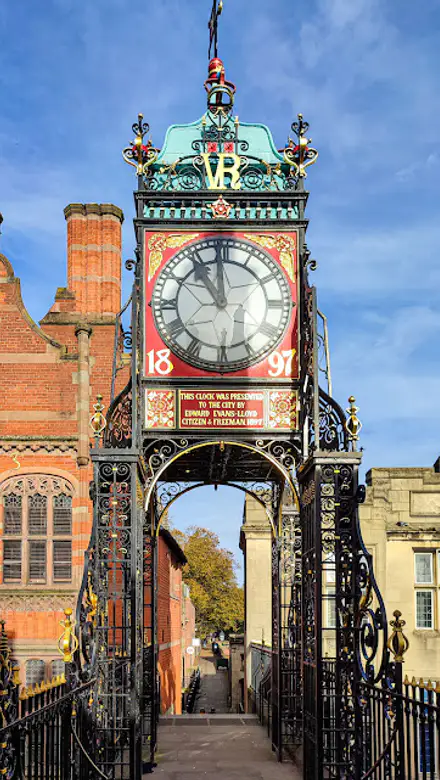
Eastgate Clock, Chester Travel Guide
Free Guide: England's second most photographed clock, crowning two millennia of history atop Chester's ancient Roman gateway.


A brief summary of Eastgate Clock
England's second most photographed clock, crowning two millennia of history atop Chester's ancient Roman gateway.
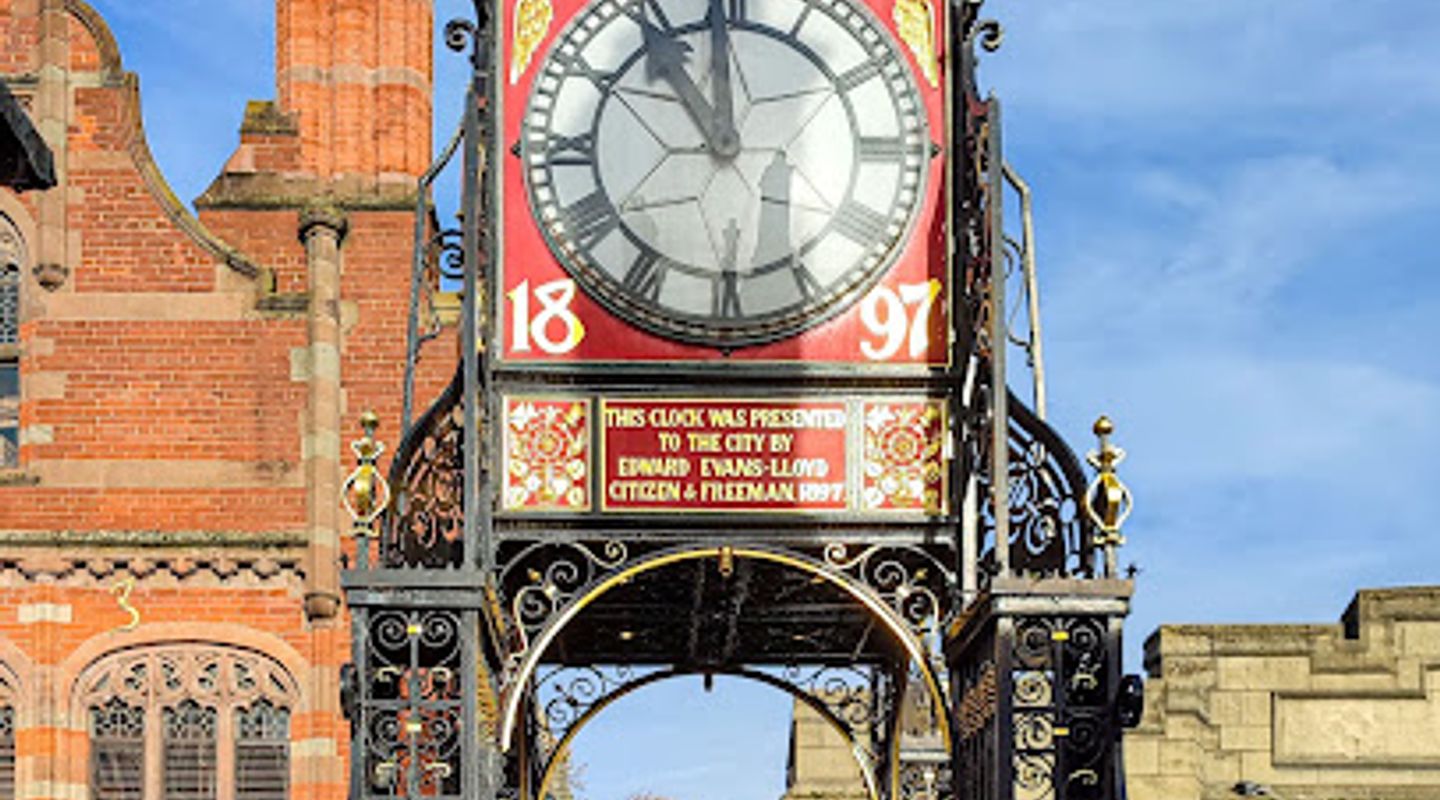
Perched atop Chester's ancient Eastgate arch, this ornate Victorian clock stands as one of England's most iconic timepieces. Built in 1899 to commemorate Queen Victoria's Diamond Jubilee, the clock features intricate wrought ironwork, gilded details, and four distinctive clock faces set within an open iron pavilion. Positioned on the city's historic Roman walls, it has become the second most photographed clock in England after Big Ben, serving as both a beloved meeting point and a tangible link to two millennia of Chester's layered history.
On-site amenities
 Seating areas
 Food options
 Drink options
 Information boards
 Restrooms
Opening hours
- Every dayOpen 24 hours
Opening hours as listed on the venue’s Google Business Profile. Hours can change for services and special events, so check with the venue before you go.
- Address
- 41-45 Eastgate St, Chester CH1 1LE
- Website
Getting there
Walking from Chester City Centre
Public Transport via Bus
Train to Chester Station
Parking in Chester City Centre
Discover more about Eastgate Clock
Two Millennia of Gateway Heritage
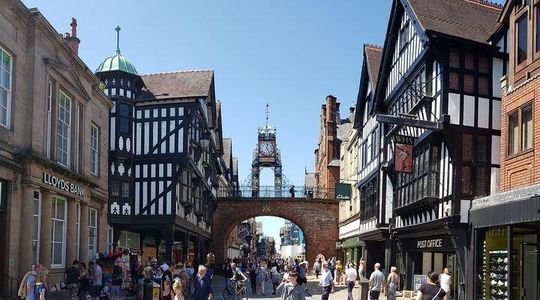
The Eastgate Clock occupies one of Chester's most historically significant locations, standing directly above the original entrance to the Roman fortress of Deva Victrix, established in the 1st century AD. For nearly 2,000 years, this gateway has served as a principal entry point into the city, witnessing the march of Roman legions, the passage of medieval merchants, and the daily life of countless generations. The current sandstone archway, a three-arched Georgian structure, dates from 1768 and forms part of Chester's remarkable circuit of city walls—the longest and most complete in Britain, stretching approximately two miles around the medieval centre.
A Victorian Celebration in Iron and Gilt
The iconic clock was added in 1899, designed by renowned local architect John Douglas, to commemorate Queen Victoria's Diamond Jubilee celebrating her 60 years on the throne. This elegant timepiece represents a period of civic pride and architectural ambition in Chester at the turn of the 20th century. The structure consists of four clock faces set within an open iron pavilion supported by decorated pylons, crowned with a copper ogee dome and a gilded weather vane featuring a lion motif. Each face carries specific inscriptions: the eastern side commemorates Victoria's 60th regnal year, the western acknowledges the civic officials of 1897–1898, the southern pays tribute to Edward Evans-Lloyd who championed the project, and the northern notes that the clock was funded by public subscription, reflecting genuine community involvement in its creation.
Architectural Distinction and Craftsmanship
The clock's design seamlessly blends Victorian engineering with artistic refinement, its intricate wrought ironwork and gilded details creating a structure of considerable visual distinction. The open pavilion design allows the mechanism to be viewed from multiple angles, while the elevated position on the ancient city walls makes it a commanding focal point visible from considerable distances. The craftsmanship evident in every detail—from the decorated pylons to the ornamental weather vane—reflects the prosperity and architectural confidence of late 19th-century Chester. The entire structure, gateway and clock combined, was designated as a Grade I listed building in 1955, recognising its outstanding historical and architectural importance.
Cultural Icon and Meeting Place
Today, the Eastgate Clock ranks as the second most photographed clock in England, a distinction that speaks to its enduring appeal and iconic status. It has become woven into Chester's cultural fabric, serving as a familiar meeting point for locals and a constant source of wonder for visitors. The clock's elevated position on the city walls provides a natural gathering spot where residents and tourists pause to admire its intricate detailing or capture panoramic views of the surrounding medieval streetscape. Its continuous presence above Eastgate Street acts as a living museum, connecting passersby to the rich layers of history beneath their feet and serving as a tangible symbol of Chester's architectural heritage and civic pride.
Stories and Legends
With such prominence, the Eastgate Clock has naturally attracted its share of local stories and myths. Local lore claims that the clock deliberately has only three functioning dials, with the west face left blank, so the clock "turns its back" on Wales—a playful reference to historic Anglo-Welsh rivalries, though historians regard this tale as likely apocryphal. Among Chester's ghostly legends, the story of Sarah, a young chambermaid, lingers beneath the clock. According to local tradition, she was in love with a soldier stationed at the gate, and their secret meetings ended tragically when Sarah, hurrying to meet him, was struck by a speeding carriage near Eastgate and killed instantly. Such stories add layers of human narrative to the clock's physical presence, enriching its significance beyond mere timekeeping.
Evendo Review Centre
 Google
Guest reviews
Best time to go
Quietest: Jan, Feb & Mar · at 1am or at 2am or at 3am
Busy times are Evendo estimates for a typical year, to help you plan. Actual crowds vary with events, school holidays and the weather.
Explore Eastgate Clock on the map
A handpicked selection of must-see spots near Eastgate Clock, mapped for you.
Get your free copy of our complete guide to Eastgate Clock, delivered straight to you.
Everything on this page, from opening hours and how to get there to Eve’s tips and the best time to go, in one PDF you can read offline, print or share.
Already have an account? Sign in
Your Eastgate Clock guide is ready.
We'll send it to · Not you? Sign out

Getting your guide ready…
We are putting together a fresh copy of the Eastgate Clock guide. This can take up to a minute.
This can take a few moments. If your browser asks, choose Allow so the download can start. You'll find the guide in your Downloads folder.
Nothing happened? Download it again
Sorry, the guide is taking longer than usual. Please try again in a minute, or get it by email instead.
Unlock the best of Eastgate Clock
Skip-the-line tickets, guided tours with entry, and walking tours of the area, booked in a few clicks.



Other nearby places you may find interesting
The closest places of the same kind, if this one is not quite what you had in mind.
-
-
-
-
-


Swipe for more places
More to explore near Eastgate Clock

 Best experiences near Eastgate Clock
 Best hotels near Eastgate Clock
 Best landmarks near Eastgate Clock
 Best attractions near Eastgate Clock
 Best shops near Eastgate Clock
 Best restaurants near Eastgate Clock
 Best bars near Eastgate Clock
Do you manage this location?
Take control to get all the benefits, like improved information, better appearance, and stronger visibility across AI-powered discovery.
Explore more
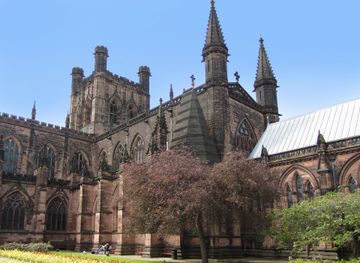
Explore more of Chester
Discover Chester: where ancient Roman walls embrace a lively city of culture, history, and stunning architecture in the heart of England.
Explore Chester
Explore more of United Kingdom
Discover the United Kingdom: A blend of rich history, stunning landscapes, and vibrant cities, offering a unique travel experience for every visitor.
Explore United Kingdom