

Wishing Steps, Chester Travel Guide
Free Guide: Run the legendary steps and make a wish in Chester's most enchanting corner.


A brief summary of Wishing Steps
Run the legendary steps and make a wish in Chester's most enchanting corner.
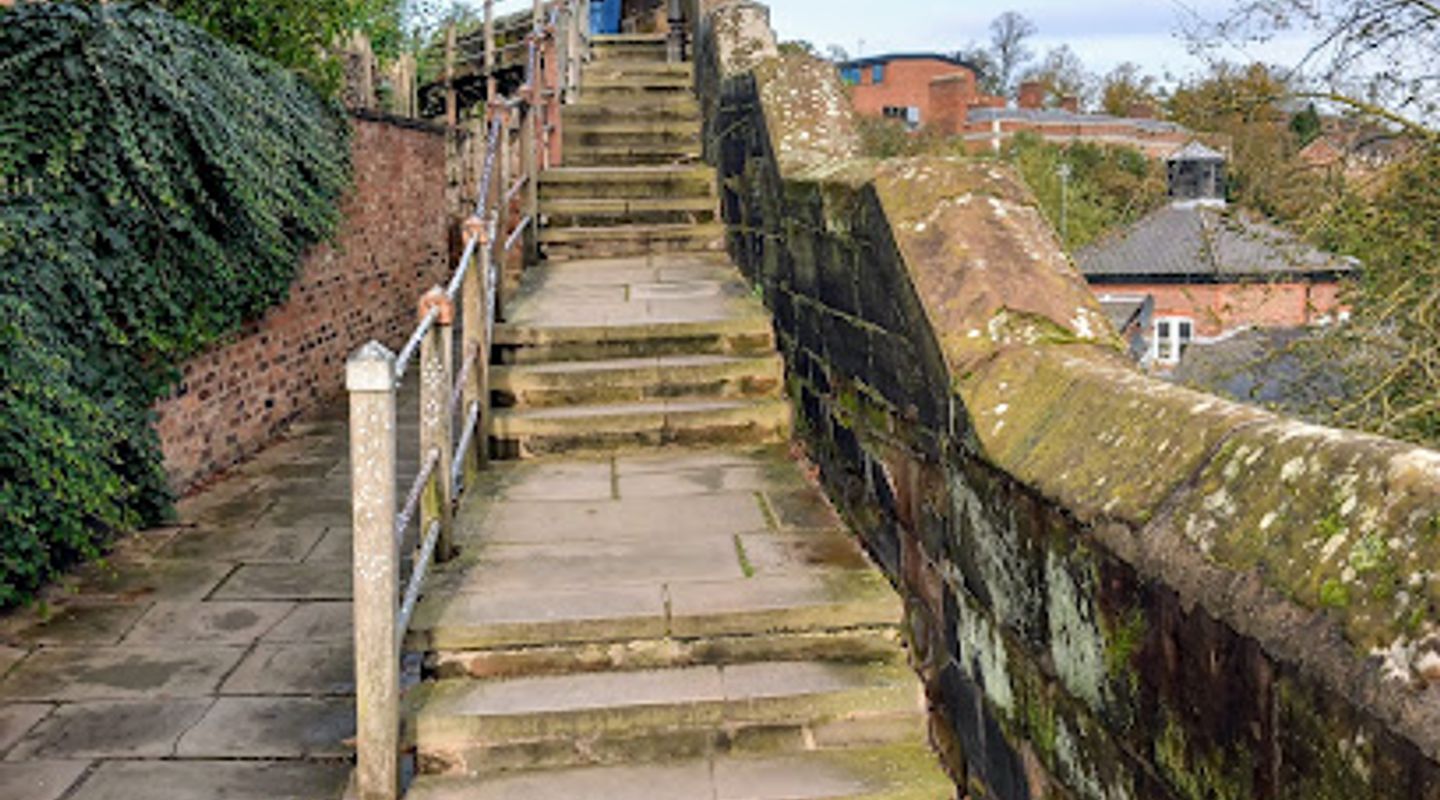
Built in 1785 on Chester's southeastern city walls, the Wishing Steps are a beloved historical landmark steeped in local folklore. These uneven stone steps offer visitors a chance to participate in a centuries-old tradition: running up and down without pausing to make a wish. Nestled within one of England's most complete medieval defensive circuits, they provide both a whimsical experience and a tangible connection to Chester's rich Roman and medieval heritage.
On-site amenities
 Information boards
 Seating areas
- Address
- 14 City Walls, Chester CH1 1SB
Getting there
Walking from Chester City Centre
Public Bus
Taxi or Ride-Share
Cycling
Discover more about Wishing Steps
A Stairway Steeped in Legend
The Wishing Steps have captivated visitors for nearly two and a half centuries with their promise of wish-granting magic. According to local folklore, unmarried girls who could take a deep breath, run to the top of the steps, back down again, and up once more without pausing would have their wishes granted. This enchanting tradition has made the steps a destination for hopeful visitors seeking a moment of possibility. The steps themselves are notably uneven, adding to both the challenge and the charm of the ritual—their irregular surfaces create an undeniable physical test that lends authenticity to the legend.
Medieval Engineering and Roman Foundations
The Wishing Steps were constructed in 1785 as part of broader improvements to Chester's city walls, which stretch back to the Roman era. The walls themselves were originally built by the Romans when they established the fortress of Deva Victrix between 70 and 80 CE. Over nearly two millennia, these defensive structures evolved from military ramparts to beloved recreational pathways. The medieval circuit of walls was largely complete by 1162, creating an almost unbroken defensive ring around the city. The Wishing Steps represent a practical solution to the challenge of traversing the steeply inclined southeastern section of the walls, making them both functional and legendary.
From Fortress to Leisure Destination
Following the English Civil War, Chester's walls lost their military significance and were gradually transformed into spaces for public enjoyment and recreation. The addition of the Wishing Steps in 1785 coincided with other accessibility improvements, including the Recorder's Steps built in 1720 on the southern section. These enhancements reflected a shift in how the city valued its walls—no longer as defensive barriers but as heritage assets to be preserved and enjoyed. The total walkway length of the walls now extends 2.95 kilometres, forming one of the most complete medieval city wall circuits in England and a major tourist attraction.
A Moment of Connection
Visiting the Wishing Steps offers more than a physical challenge; it provides a tangible link to centuries of human hope and tradition. The steps occupy a specific place in Chester's southeastern corner, positioned on a notably steep incline that makes the ritual genuinely demanding. Whether visitors believe in the folklore or simply appreciate the historical significance, the steps embody the layered history of Chester itself—Roman foundations, medieval construction, Georgian improvements, and modern heritage appreciation all converge in this small but memorable corner of the city walls.
Evendo Review Centre
 Google
Guest reviews
Best time to go
Quietest: Jan, Feb & Dec · before 6am or at 10pm
Busy times are Evendo estimates for a typical year, to help you plan. Actual crowds vary with events, school holidays and the weather.
Explore Wishing Steps on the map
A handpicked selection of must-see spots near Wishing Steps, mapped for you.
Get your free copy of our complete guide to Wishing Steps, delivered straight to you.
Everything on this page, from opening hours and how to get there to Eve’s tips and the best time to go, in one PDF you can read offline, print or share.
Already have an account? Sign in
Your Wishing Steps guide is ready.
We'll send it to · Not you? Sign out

Getting your guide ready…
We are putting together a fresh copy of the Wishing Steps guide. This can take up to a minute.
This can take a few moments. If your browser asks, choose Allow so the download can start. You'll find the guide in your Downloads folder.
Nothing happened? Download it again
Sorry, the guide is taking longer than usual. Please try again in a minute, or get it by email instead.
Other nearby places you may find interesting
The closest places of the same kind, if this one is not quite what you had in mind.
-
-
-
-
-


Swipe for more places
More to explore near Wishing Steps

 Best experiences near Wishing Steps
 Best hotels near Wishing Steps
 Best landmarks near Wishing Steps
 Best attractions near Wishing Steps
 Best shops near Wishing Steps
 Best restaurants near Wishing Steps
 Best bars near Wishing Steps
Do you manage this location?
Take control to get all the benefits, like improved information, better appearance, and stronger visibility across AI-powered discovery.
Explore more

Explore more of Chester
Discover Chester: where ancient Roman walls embrace a lively city of culture, history, and stunning architecture in the heart of England.
Explore Chester
Explore more of United Kingdom
Discover the United Kingdom: A blend of rich history, stunning landscapes, and vibrant cities, offering a unique travel experience for every visitor.
Explore United Kingdom
