

Highgate Cemetery Travel Guide
Free Guide: Explore Victorian grandeur and famous graves in London’s atmospheric Highgate Cemetery, where nature and history intertwine among ivy-clad tombs and catacombs.


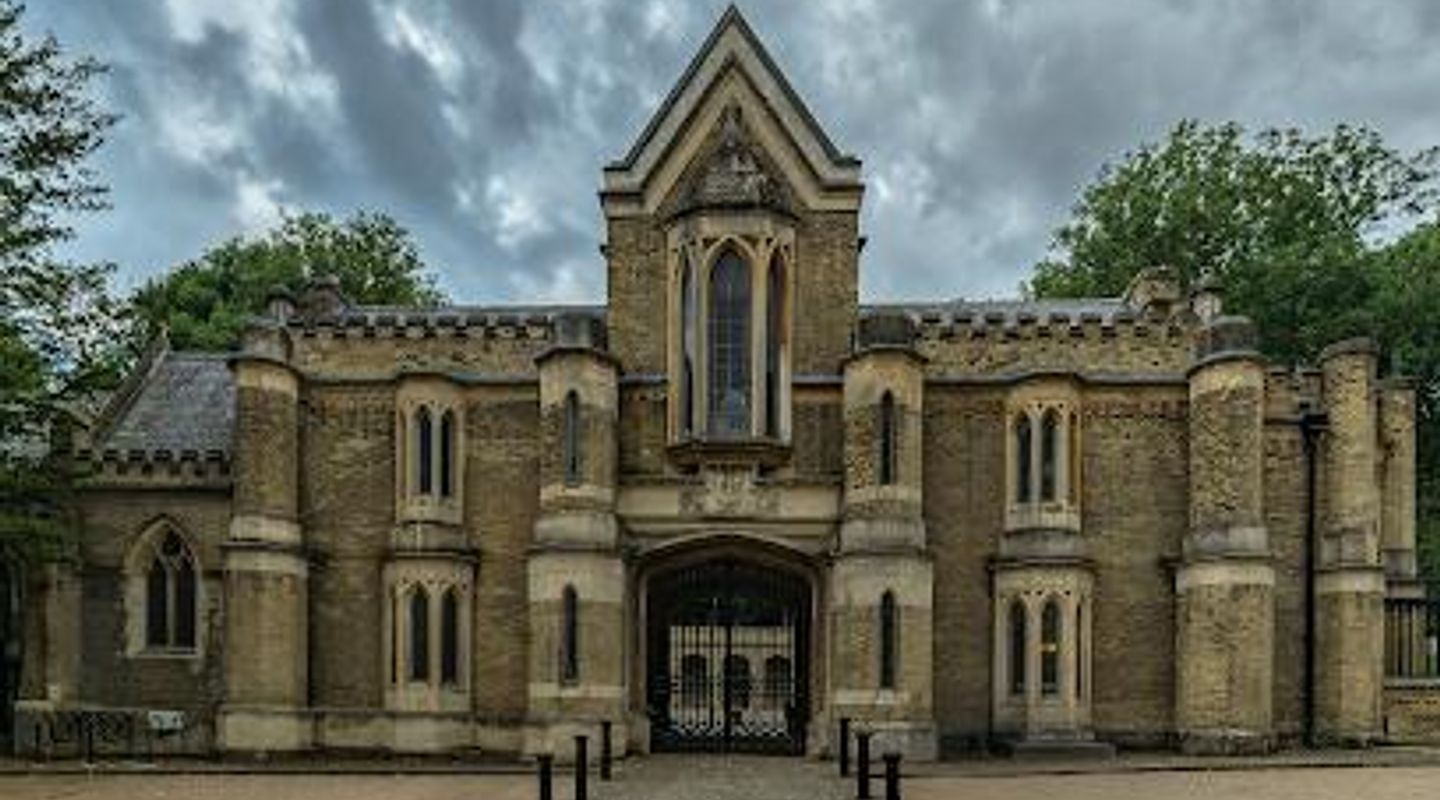
A brief summary of Highgate Cemetery
Explore Victorian grandeur and famous graves in London’s atmospheric Highgate Cemetery, where nature and history intertwine among ivy-clad tombs and catacombs.
Highgate Cemetery in North London is one of the city’s most atmospheric Victorian burial grounds, split into the overgrown, gothic West Cemetery and the more orderly East Cemetery. Famous for its Egyptian Avenue, Circle of Lebanon, and the graves of Karl Marx, Douglas Adams, and George Michael, it’s a place where history, nature, and art intertwine. Guided tours reveal hidden stories and access to the eerie catacombs, while self-guided visitors can explore the East Cemetery’s notable memorials.
On-site amenities
 Restrooms
 Drink options
 Drinking water
 Food options
 Seating areas
 Sheltered areas
 Trash bins
 Information boards
 Visitor centre
Opening hours
- Every day10 am–4 pm
Opening hours as listed on the venue’s Google Business Profile. Hours can change for services and special events, so check with the venue before you go.
- Address
- Swain's Ln, London N6 6PJ
- Phone
- Website
Getting there
Underground
Bus
Walking
Taxi / Ride‑hailing
Discover more about Highgate Cemetery
Victorian Grandeur and Garden Cemetery Origins
Highgate Cemetery opened in 1839 as one of London’s “Magnificent Seven” garden cemeteries, created to relieve overcrowded inner-city churchyards. Designed as a landscaped park for mourning and contemplation, it reflects the Victorian fascination with death, nature, and romantic melancholy. The West Cemetery, the older and more dramatic section, climbs a steep hillside with winding gravel paths, ivy-clad tombs, and elaborate funerary architecture. Egyptian Avenue, with its imposing gateway and rows of family vaults inspired by ancient Egypt, leads up to the Circle of Lebanon, a ring of grand tombs encircling an ancient cedar tree. These spaces feel like scenes from a gothic novel, where nature slowly reclaims stone and iron.
Two Worlds: West and East Cemeteries
The cemetery is divided into two distinct halves. The West Cemetery is accessible only by guided tour, preserving its fragile structures and overgrown atmosphere. Here, Victorian showmen, industrialists, and eccentrics rest beneath ornate mausoleums, obelisks, and sculpted angels. The East Cemetery, still an active burial ground, is more open and orderly, with tarmac paths and modern headstones. It’s here that visitors most often come to pay respects at the large, red-marble memorial to Karl Marx, or to find the graves of figures like Douglas Adams, George Michael, and Michael Faraday. While the West feels mysterious and theatrical, the East offers a quieter, more reflective experience among later generations of Londoners.
Stories in Stone and the Catacombs
Highgate is a place of stories as much as of graves. Guided tours bring to life the lives and quirks of those buried here, from pioneering scientists to flamboyant performers and political thinkers. The cemetery’s symbolism—weeping willows, broken columns, clasped hands—speaks a language of loss, faith, and hope. A highlight for many is the Terrace Catacombs, a series of vaulted burial chambers built into the hillside. These atmospheric chambers, with their rows of loculi for coffins, are only accessible on guided tours and offer a rare glimpse into Victorian burial practices. The contrast between the dim, cool catacombs and the sun-dappled paths above adds to the site’s layered, almost cinematic quality.
Atmosphere, Nature, and Reflection
Beyond its famous residents, Highgate is a haven of tranquility and biodiversity. Ancient trees, dense ivy, and wildflowers soften the stone, while foxes, birds, and even rare cave-dwelling spiders make their home among the graves. The air is often still, broken only by the rustle of leaves, distant traffic, or the murmur of a tour group. For many, the cemetery is less about morbid fascination and more about quiet reflection, a place to ponder time, memory, and the lives that shaped London. It’s easy to lose an hour simply reading inscriptions, admiring the craftsmanship of a sleeping angel or a lion guardian, or sitting on a bench to absorb the quiet grandeur of the place.
Planning Your Visit
Entry to both sections requires a ticket, with the West Cemetery only accessible via timed guided tours. The East Cemetery can be explored independently, though there is still an entrance fee. Comfortable walking shoes are essential, especially in the West, where paths are steep, uneven, and can become muddy. The cemetery is open daily except Christmas Day and Boxing Day, with seasonal hours that end earlier in winter. Nearby, Archway and Highgate Village offer cafés and pubs, and Waterlow Park provides a fine city view, making it easy to turn a visit into a full day in North London.
Evendo Review Centre
 Google
Guest reviews
Best time to go
Quietest: Jan, Feb & Dec · before 10am or from 6pm
Busy times are Evendo estimates for a typical year, to help you plan. Actual crowds vary with events, school holidays and the weather.
Explore Highgate Cemetery on the map
A handpicked selection of must-see spots near Highgate Cemetery, mapped for you.
Get your free copy of our complete guide to Highgate Cemetery, delivered straight to you.
Everything on this page, from opening hours and how to get there to Eve’s tips and the best time to go, in one PDF you can read offline, print or share.
Already have an account? Sign in
Your Highgate Cemetery guide is ready.
We'll send it to · Not you? Sign out

Getting your guide ready…
We are putting together a fresh copy of the Highgate Cemetery guide. This can take up to a minute.
This can take a few moments. If your browser asks, choose Allow so the download can start. You'll find the guide in your Downloads folder.
Nothing happened? Download it again
Sorry, the guide is taking longer than usual. Please try again in a minute, or get it by email instead.
Unlock the best of Highgate Cemetery
Skip-the-line tickets, guided tours with entry, and walking tours of the area, booked in a few clicks.

Other nearby places you may find interesting
The closest places of the same kind, if this one is not quite what you had in mind.
-
-
-
-
-


Swipe for more places
More to explore near Highgate Cemetery

 Best experiences near Highgate Cemetery
 Best hotels near Highgate Cemetery
 Best landmarks near Highgate Cemetery
 Best attractions near Highgate Cemetery
 Best shops near Highgate Cemetery
 Best restaurants near Highgate Cemetery
 Best bars near Highgate Cemetery
Do you manage this location?
Take control to get all the benefits, like improved information, better appearance, and stronger visibility across AI-powered discovery.
Explore more

Explore more of Devon
Discover Devon: A blend of stunning coastlines, historic cities, and charming villages perfect for outdoor adventures and culinary delights in the heart of England's West Country.
Explore Devon
Explore more of United Kingdom
Discover the United Kingdom: A blend of rich history, stunning landscapes, and vibrant cities, offering a unique travel experience for every visitor.
Explore United Kingdom
