

Hailes Castle Travel Guide
Free Guide: Explore the evocative ruins of Hailes Castle, a medieval fortress with deep royal ties and a serene riverside setting in East Lothian.


A brief summary of Hailes Castle
Explore the evocative ruins of Hailes Castle, a medieval fortress with deep royal ties and a serene riverside setting in East Lothian.
Hailes Castle is one of Scotland’s oldest stone castles, dating back to the early 1200s. Situated on the south bank of the River Tyne near Haddington, it was originally built by the de Gourlay family and later expanded by the Hepburns, who made it a formidable tower house. The castle witnessed many historic events, including sieges during the Wars of Independence and ties to Mary Queen of Scots. Though now a ruin with restricted access due to safety concerns, its riverside setting and medieval remains offer a captivating glimpse into Scotland’s turbulent past.
On-site amenities
 Information boards
 Seating areas
 Trash bins
- Address
- Haddington EH41 4PY
Getting there
Car
Bus and Walk
Cycling
Discover more about Hailes Castle
Foundations of a Medieval Fortress
Hailes Castle was established in the early 13th century by the de Gourlay family, originally Northumbrian settlers who constructed a fortified manor house featuring a central hall, chamber tower, and kitchen tower with a rock-cut well. Built of red sandstone, the castle’s original design was unusual because it occupied lower ground overlooked by higher terrain, though a surrounding wall and ditch likely offered some protection. This early structure is a rare surviving example of 13th-century castellated architecture in Scotland, marking the beginnings of what would become a significant noble residence.
Expansion and Fortification by the Hepburns
In the 14th century, ownership passed to the Hepburn family, tenants of the Earls of Dunbar. They extensively rebuilt and extended the castle, adding a four-storey West Tower with a pit prison, a North Range connected to an East Tower, and a stone curtain wall on the south side. The Hepburns also enhanced the hall and added a chapel, transforming Hailes into a formidable tower house. These expansions reflected the castle’s growing strategic importance during the Anglo-Scottish conflicts of the 15th and 16th centuries.
Historic Turmoil and Royal Connections
Hailes Castle played a role in Scotland’s turbulent history, enduring multiple sieges and changes of control. It withstood attacks such as the 1400 assault by Harry Hotspur Percy and was seized by English forces during the War of the Rough Wooing in 1547, only to be retaken by the Scots in 1548. The castle is also linked to Mary Queen of Scots through her third husband, James Hepburn, 4th Earl of Bothwell, who resided here briefly in 1567. The castle’s decline began after the mid-17th century when Oliver Cromwell’s forces attacked and dismantled it to prevent further military use.
Architectural Highlights and Ruins Today
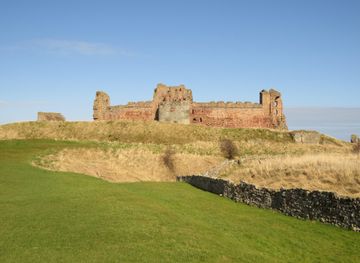
Today, Hailes Castle remains a striking ruin set on a promontory overlooking the River Tyne, with its most prominent surviving feature being the West Tower, a square donjon that dominates the site. Visitors can observe remnants of the curtain walls, vaulted kitchens, and foundations of internal buildings. The castle’s riverside location offers scenic views and a peaceful atmosphere, though access to the interior is currently restricted due to structural safety concerns and ongoing conservation efforts.
Visitor Experience and Surroundings
While the castle itself is fenced off, the surrounding grounds and riverside paths provide a tranquil setting for exploration and photography. The site is ideal for history enthusiasts and nature lovers alike, with opportunities for picnicking and enjoying the scenic landscape along the River Tyne. Nearby attractions such as Dirleton and Tantallon Castles complement a visit to Hailes, enriching the understanding of East Lothian’s medieval heritage.
Preservation and Legacy
Hailes Castle is cared for by Historic Environment Scotland and recognized for its architectural and historical significance. Despite its ruinous state, it offers valuable insights into medieval Scottish nobility, military architecture, and the complex history of border conflicts. The castle’s story is intertwined with notable figures and events that shaped Scotland’s past, making it a compelling destination for those interested in heritage and storytelling.
Evendo Review Centre
 Google
Guest reviews
Best time to go
Quietest: Jan, Feb & Dec · before 6am or at 10pm
Busy times are Evendo estimates for a typical year, to help you plan. Actual crowds vary with events, school holidays and the weather.
Explore Hailes Castle on the map
A handpicked selection of must-see spots near Hailes Castle, mapped for you.
Get your free copy of our complete guide to Hailes Castle, delivered straight to you.
Everything on this page, from opening hours and how to get there to Eve’s tips and the best time to go, in one PDF you can read offline, print or share.
Already have an account? Sign in
Your Hailes Castle guide is ready.
We'll send it to · Not you? Sign out

Getting your guide ready…
We are putting together a fresh copy of the Hailes Castle guide. This can take up to a minute.
This can take a few moments. If your browser asks, choose Allow so the download can start. You'll find the guide in your Downloads folder.
Nothing happened? Download it again
Sorry, the guide is taking longer than usual. Please try again in a minute, or get it by email instead.
Other nearby places you may find interesting
The closest places of the same kind, if this one is not quite what you had in mind.
-
-
-
-
-


Swipe for more places
More to explore near Hailes Castle

 Best experiences near Hailes Castle
 Best hotels near Hailes Castle
 Best landmarks near Hailes Castle
 Best attractions near Hailes Castle
 Best shops near Hailes Castle
 Best restaurants near Hailes Castle
 Best bars near Hailes Castle
Do you manage this location?
Take control to get all the benefits, like improved information, better appearance, and stronger visibility across AI-powered discovery.
Explore more
Explore more of East Lothian
Discover East Lothian: A stunning coastal escape filled with historical castles, scenic trails, and delicious local cuisine, just minutes from Edinburgh.
Explore East Lothian
Explore more of United Kingdom
Discover the United Kingdom: A blend of rich history, stunning landscapes, and vibrant cities, offering a unique travel experience for every visitor.
Explore United Kingdom
