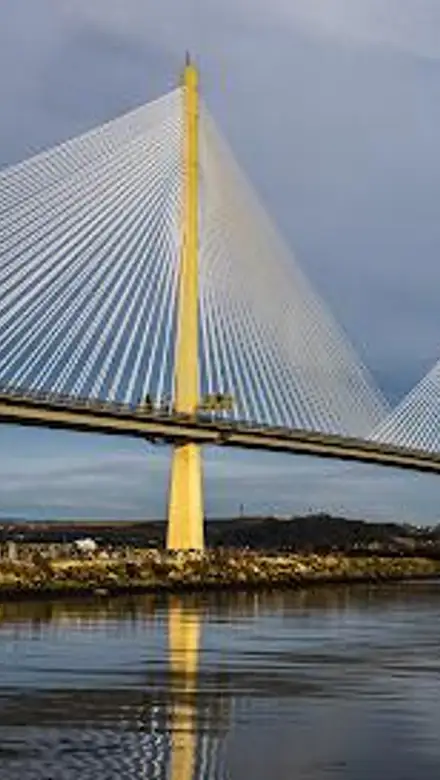
The Queensferry Crossing, Edinburgh Travel Guide
Free Guide: Experience the world’s longest three-tower cable-stayed bridge, a modern Scottish icon spanning the Firth of Forth with grace and engineering brilliance.


A brief summary of The Queensferry Crossing
Experience the world’s longest three-tower cable-stayed bridge, a modern Scottish icon spanning the Firth of Forth with grace and engineering brilliance.
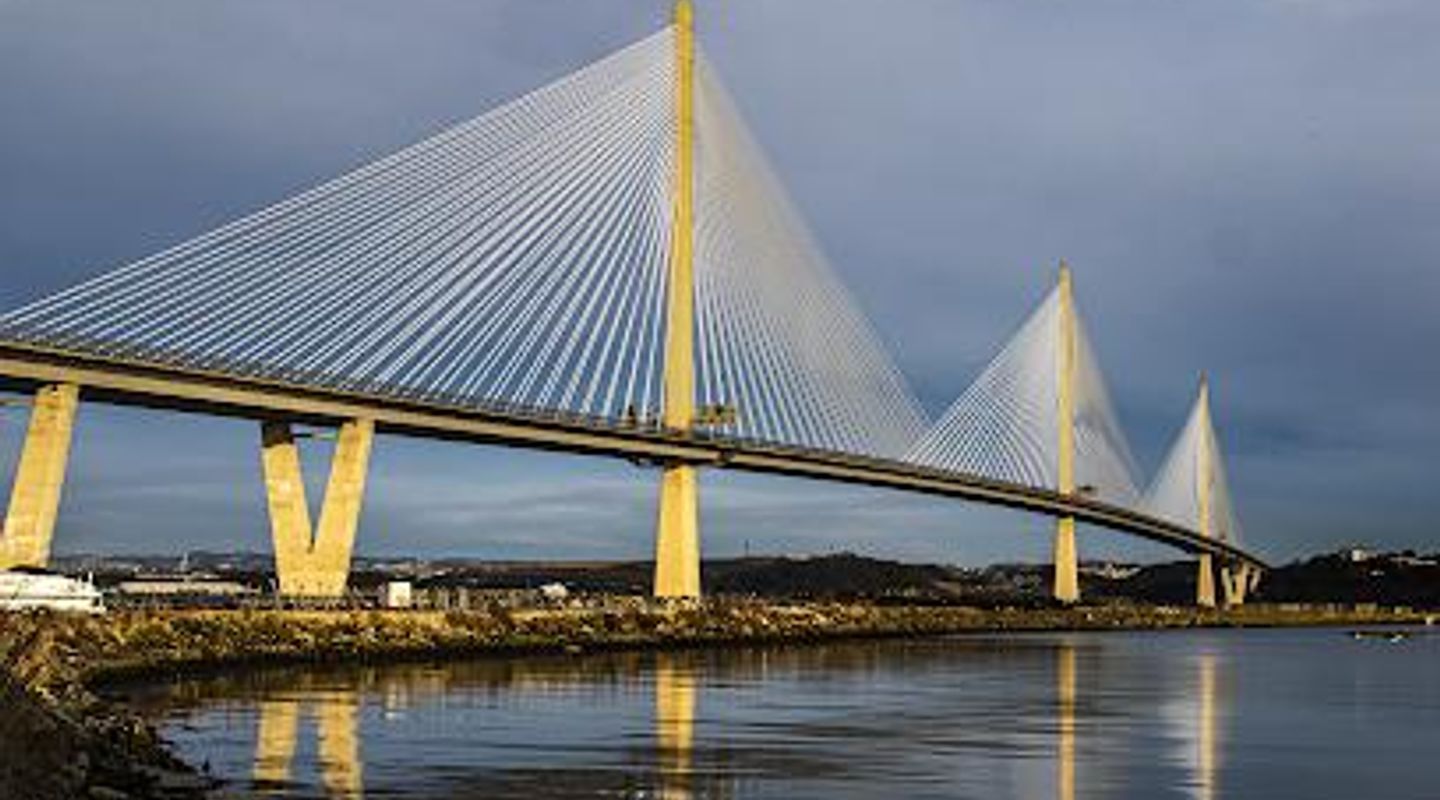
The Queensferry Crossing is the world’s longest three-tower, cable-stayed bridge, spanning 1.7 miles across the Firth of Forth near Edinburgh. Opened in 2017, it carries motorway traffic on the M90 and is renowned for its elegant design, innovative engineering, and weatherproof features that minimize closures. It stands alongside the historic Forth Road Bridge and the iconic Forth Rail Bridge, offering spectacular views and a vital transport link connecting Edinburgh with Fife.
On-site amenities
 Restrooms
 Drink options
 Food options
 Seating areas
 Information boards
Opening hours
- Every dayOpen 24 hours
Opening hours as listed on the venue’s Google Business Profile. Hours can change for services and special events, so check with the venue before you go.
- Address
- Queensferry Crossing Bridge, Queensferry EH30 9ST
- Website
Getting there
Train
Bus
Car
Boat
Discover more about The Queensferry Crossing
A Landmark of Contemporary Engineering Excellence
The Queensferry Crossing, inaugurated in August 2017, represents a pinnacle of modern bridge engineering. Stretching 2.7 kilometers (1.7 miles), it holds the record as the world’s longest three-tower, cable-stayed bridge. Its design incorporates cables that cross mid-span, a unique feature that enhances stability and aesthetics. Built to carry motorway traffic on the M90, it replaced much of the road traffic previously handled by the Forth Road Bridge, offering a safer, more weather-resilient crossing over the Firth of Forth.
Architectural Elegance Meets Practical Innovation
The bridge’s sleek towers rise impressively above the water, designed not only for strength but also to withstand Scotland’s often challenging weather. Unlike its predecessors, the Queensferry Crossing was engineered with advanced weatherproofing to reduce closures caused by high winds, a frequent issue on the Forth Road Bridge. Its smooth, level deck and wide lanes—including emergency lanes—provide a comfortable driving experience. The bridge’s concrete and steel structure combines durability with graceful proportions, making it a striking addition to the iconic trio of Forth crossings.
Context Within the Forth Bridges Trio
The Queensferry Crossing stands alongside two other famous bridges: the Forth Rail Bridge, a UNESCO World Heritage Site completed in 1890, and the Forth Road Bridge, opened in 1964. Together, these three bridges symbolize over a century of Scottish engineering achievement. Visitors to the area can appreciate the contrast between the Victorian-era cantilever railway bridge, the mid-20th-century suspension road bridge, and this 21st-century cable-stayed marvel, all spanning the same estuary.
Visitor Experience and Surroundings
While the Queensferry Crossing itself is not open to pedestrians, the adjacent Forth Road Bridge offers footpaths and cycleways providing spectacular views of all three bridges and the Firth of Forth. The nearby towns of South and North Queensferry offer charming historic streets, cafes, and museums that celebrate the bridges’ heritage. Boat tours from South Queensferry allow visitors to see the bridges from the water, including trips to nearby islands with rich history and wildlife.
Events and Access Opportunities
Occasionally, special guided tours inside the Queensferry Crossing are offered during events such as Doors Open Days, providing rare access to parts of the bridge normally closed to the public. These tours reveal the inner workings of the bridge’s structure and cable stays, narrated by engineers who maintain this vital transport artery.
Significance and Legacy
The Queensferry Crossing is more than a transport link; it is a symbol of Scotland’s commitment to innovation and infrastructure resilience. Its construction during the 2010s brought together cutting-edge engineering, environmental considerations, and aesthetic design, ensuring it will serve as a landmark for generations. The bridge enhances connectivity between Edinburgh and Fife, supporting economic growth while complementing the historic legacy of the Forth bridges.
Evendo Review Centre
 Google
Guest reviews
Best time to go
Quietest: Jan, Feb & Dec · before 6am or from 11pm
Busy times are Evendo estimates for a typical year, to help you plan. Actual crowds vary with events, school holidays and the weather.
Explore The Queensferry Crossing on the map
A handpicked selection of must-see spots near The Queensferry Crossing, mapped for you.
Get your free copy of our complete guide to The Queensferry Crossing, delivered straight to you.
Everything on this page, from opening hours and how to get there to Eve’s tips and the best time to go, in one PDF you can read offline, print or share.
Already have an account? Sign in
Your The Queensferry Crossing guide is ready.
We'll send it to · Not you? Sign out

Getting your guide ready…
We are putting together a fresh copy of the The Queensferry Crossing guide. This can take up to a minute.
This can take a few moments. If your browser asks, choose Allow so the download can start. You'll find the guide in your Downloads folder.
Nothing happened? Download it again
Sorry, the guide is taking longer than usual. Please try again in a minute, or get it by email instead.
Unlock the best of The Queensferry Crossing
Skip-the-line tickets, guided tours with entry, and walking tours of the area, booked in a few clicks.
 Tour with entry
St Andrews and the Kingdom of Fife from Glasgow
from $84.21 Tour with entry
St Andrews, Fife Coast Walk & Historic Abbey Tour from Edinburgh
from $112.22 Tour with entry
Private Highland Whisky, Chocolate & Scenic Tour from Edinburgh
from $943.18 Tour with entry
1 Day Complete Scottish Highlands Express
from $1,571.97


Other nearby places you may find interesting
The closest places of the same kind, if this one is not quite what you had in mind.
-
-
-
-
-


Swipe for more places
More to explore near The Queensferry Crossing
-
 Best experiences near The Queensferry Crossing
-
 Best hotels near The Queensferry Crossing
-
 Best landmarks near The Queensferry Crossing
-
 Best attractions near The Queensferry Crossing
-
 Best shops near The Queensferry Crossing
-
 Best restaurants near The Queensferry Crossing
-
 Best bars near The Queensferry Crossing


Do you manage this location?
Take control to get all the benefits, like improved information, better appearance, and stronger visibility across AI-powered discovery.
Explore more

Explore more of Edinburgh
Discover the enchanting blend of history, culture, and natural beauty in Edinburgh, Scotland's captivating capital city.
Explore Edinburgh
Explore more of United Kingdom
Discover the United Kingdom: A blend of rich history, stunning landscapes, and vibrant cities, offering a unique travel experience for every visitor.
Explore United Kingdom