

Free Gwynedd Travel Guide & Mobile App
Explore Gwynedd with free travel guides. Discover regional history, expert tips, proposed trips, and audio guides on web or mobile app.


Explore Gwynedd for Eryri's mountain paths, Welsh castles, slate heritage, coastal villages, beaches and a living Welsh-language culture.
Read more about Gwynedd
When is the best time to visit Gwynedd?
Best: June–August · 19–21°C| Month | High (°C) | Rainfall (mm) |
|---|---|---|
| January | 7 | 95 |
| February | 7 | 75 |
| March | 10 | 85 |
| April | 13 | 65 |
| May | 16 | 55 |
| June (best) | 19 | 60 |
| July (best) | 21 | 65 |
| August (best) | 21 | 70 |
| September | 18 | 75 |
| October | 14 | 85 |
| November | 10 | 90 |
| December | 7 | 95 |
Getting to and around Gwynedd
How to get there
Transportation
Destinations in Gwynedd
Resorts, valleys and scenic spots worth a trip of their own.
-

-


Swipe for more destinations
Best attractions in Gwynedd
Gwynedd's attractions are inseparable from its terrain and working history. Eryri National Park provides the main outdoor focus, with routes around Yr Wyddfa, the Llanberis Pass, Beddgelert, the Ogwen Valley and Cadair Idris ranging from accessible lakeside walks to demanding mountain days. The county's coast adds a different experience: the Llŷn Peninsula has sandy beaches, rocky headlands and the coastal path, while the Mawddach estuary and the Cambrian Coast combine birdlife, walking and broad water views. Medieval Caernarfon and Harlech castles offer major historical visits, complemented by Cricieth Castle, Dolwyddelan Castle and Castell y Bere. Museums and heritage sites explain Roman Segontium, quarrying, local life and the development of slate communities. The National Slate Museum at Llanberis, the Llechwedd slate attractions near Blaenau Ffestiniog and the Ffestiniog Railway interpret an industry that shaped the county's language and settlements. Gardens, galleries, craft workshops and family-oriented outdoor attractions provide gentler options, while the region's villages and market towns are attractions in their own right, revealing contrasts between mountain, coast and agricultural landscapes.
-
National park
Eryri National Park (Snowdonia)
Explore Wales’ largest national park, home to majestic peaks, rich heritage, and serene landscapes in Eryri (Snowdonia).
-
Tourist attraction
Llandudno Pier
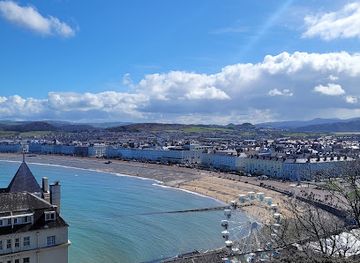
Wales’s longest Victorian pier offering stunning sea views, family fun, arcades, and classic seaside charm year-round.
-
Castle
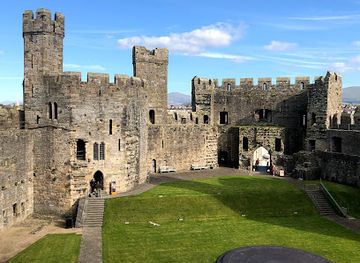
Caernarfon Castle
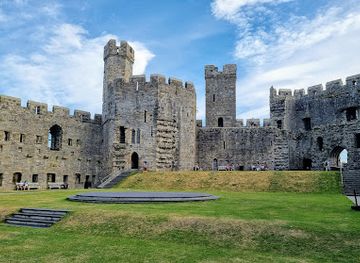
Explore Caernarfon Castle, a majestic medieval fortress with towering walls, royal history, and stunning views over the Welsh coast.
-
Tourist attraction
Portmeirion
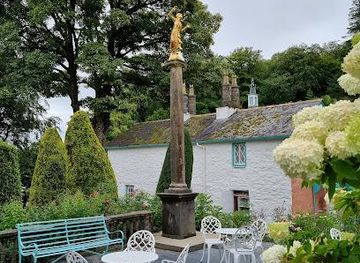
A whimsical Italianate village on the Welsh coast blending eclectic architecture, lush gardens, and rich history in a Mediterranean-inspired setting.
Best landmarks in Gwynedd
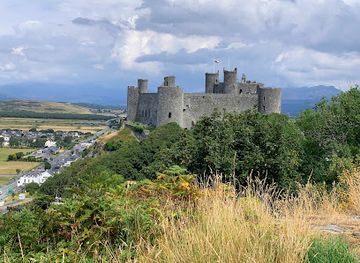
Caernarfon Castle is Gwynedd's most recognisable medieval landmark, its polygonal towers and massive walls expressing Edward I's authority while standing beside the old town and Menai Strait. Harlech Castle occupies a dramatic rocky site above the coastal plain and is notable for its carefully engineered defences and long views towards the sea and mountains. In the mountains, the slate inclines, quarry galleries and industrial terraces around Dinorwig, Bethesda, Nantlle and Blaenau Ffestiniog form a distinctive human-made landscape rather than a collection of isolated ruins. The National Slate Museum at Llanberis helps interpret that industrial setting. Roman Segontium, near Caernarfon, marks an earlier strategic centre, while Castell y Bere near Abergynolwyn preserves the remains of a native Welsh stronghold in a remote valley. Natural landmarks are equally important: Yr Wyddfa, the Glyderau, the Ogwen Valley, the Mawddach estuary and the long outline of Cadair Idris define how the county is seen and travelled. Together, these places show Gwynedd as a landscape shaped by both geology and political power.
-
Historical landmark
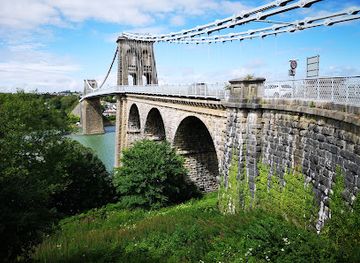
Menai Suspension Bridge.
Walk across the world’s first major iron suspension bridge and soak in breathtaking views of the Menai Strait and its historic surroundings.
-
Historical landmark
Bedd Gelert
Discover the enchanting Welsh village of Beddgelert, where legend, stunning mountain scenery, and tranquil charm await in Snowdonia National Park.
-
Historical landmark
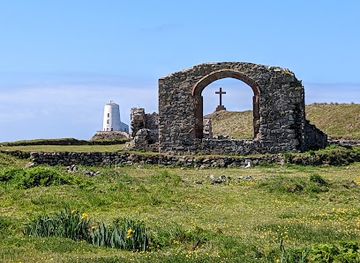
Goleudy Tŵr Mawr
A whitewashed beacon guiding ships through history on a magical tidal island.
-
Historical landmark
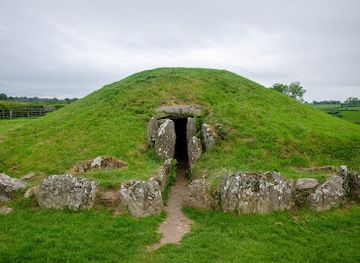
Bryn Celli Ddu Burial Chamber
A 5,000-year-old tomb aligned with the summer solstice, where Neolithic light and stone meet cosmic precision.
Explore Gwynedd on the map
Plan your trip on one map. See where the top cities, national parks and sights are, and book hotels and experiences in a few clicks.
Best hotels in Gwynedd
Best restaurants in Gwynedd
Gwynedd's food scene reflects both its coastal position and its upland farming traditions. Menus commonly draw on Welsh lamb and beef, local vegetables, seafood from north Wales waters, Welsh cheeses and bakery produce, while cafés and tearooms often serve bara brith, Welsh cakes and other familiar treats. In coastal communities such as those around the Llŷn Peninsula, shellfish and fish may feature alongside contemporary cooking, although availability varies with season and supply. Market towns including Caernarfon, Dolgellau and Porthmadog provide independent cafés, bakeries, pubs and everyday food shops, while rural inns and restaurants offer more substantial meals between outdoor excursions. Farmers' markets and farm shops can be good places to find preserves, bread, cheese, meat and locally made drinks. Dining ranges from informal cafés near walking centres to modern restaurants in larger towns; booking is sensible for popular rural and coastal establishments during summer, when small kitchens can fill quickly.
-
Seafood
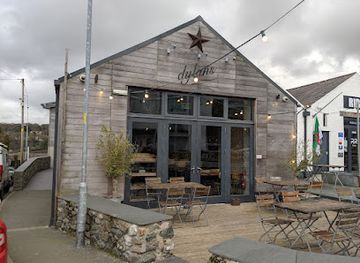
Dylan's Menai Bridge
Seaside dining with stunning Menai Strait views, fresh local seafood, and a welcoming family-friendly atmosphere in the heart of Menai Bridge.
-
Seafood
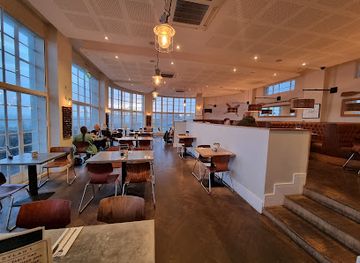
Dylan's Criccieth
Experience fresh Welsh seafood and stunning sea views in a charming Art Deco setting at Dylan's Criccieth on the North Wales coast.
-
Family friendly
Harbour Table Table
Family-friendly British pub and restaurant overlooking Caernarfon’s Victoria Dock, offering hearty meals and scenic views of the Menai Strait.
-
Pub
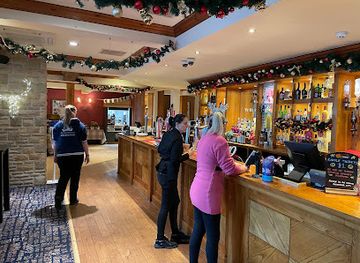
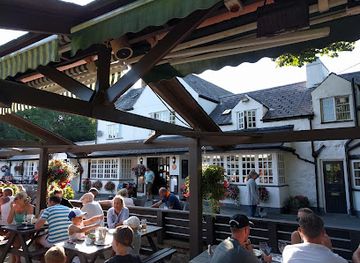
Glyn Y Weddw Arms
A charming coastal pub in Llanbedrog offering fresh food, family-friendly fun, and traditional Welsh hospitality in a relaxed seaside setting.
Best bars in Gwynedd
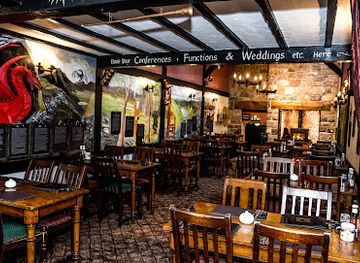
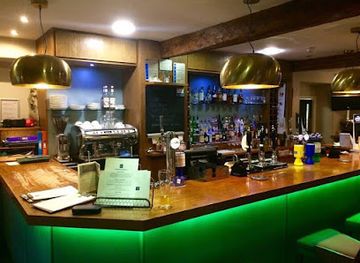
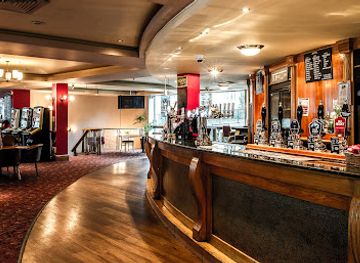
Evening life in Gwynedd is centred more on pubs, cafés, restaurants, live music and community venues than on a large nightclub circuit. Caernarfon has one of the county's most active evening scenes, with pubs and cultural venues serving a Welsh-speaking local community as well as visitors. Bangor's student population supports a broader choice of bars, live music and late-night venues, while Porthmadog and coastal towns offer pubs and restaurants rather than an extensive club culture. In smaller villages, traditional inns remain important social spaces, and some venues host Welsh-language music, folk sessions or occasional performances. The atmosphere changes with term time and the tourist season, and rural venues may close earlier than city visitors expect. Drink-driving is a serious risk on winding roads, so plan a taxi, designated driver or accommodation within walking distance instead of relying on late rural transport.
-
Bar
Black Boy Inn Four & Six Restaurant & Bar
Historic Welsh inn in Caernarfon offering cozy rooms, authentic local cuisine, and warm hospitality within ancient town walls.
-
Grill
Cross Foxes - Bar Grill Rooms
A welcoming bar and grill in Snowdonia offering creative local dishes, cozy rooms, and a vibrant atmosphere in Dolgellau’s scenic Brithdir.
-
Pub
Tafarn Y Porth - JD Wetherspoon
A vibrant Wetherspoon pub in Caernarfon blending historic charm with hearty Welsh cuisine and a lively local atmosphere.
-
Pub
The Heights
A vibrant pub and budget bunkhouse offering hearty fare and a lively atmosphere in the heart of Llanberis, Snowdonia.

Best nightclubs in Gwynedd
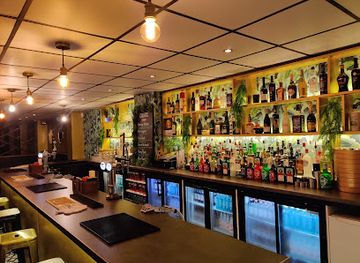
Evening life in Gwynedd is centred more on pubs, cafés, restaurants, live music and community venues than on a large nightclub circuit. Caernarfon has one of the county's most active evening scenes, with pubs and cultural venues serving a Welsh-speaking local community as well as visitors. Bangor's student population supports a broader choice of bars, live music and late-night venues, while Porthmadog and coastal towns offer pubs and restaurants rather than an extensive club culture. In smaller villages, traditional inns remain important social spaces, and some venues host Welsh-language music, folk sessions or occasional performances. The atmosphere changes with term time and the tourist season, and rural venues may close earlier than city visitors expect. Drink-driving is a serious risk on winding roads, so plan a taxi, designated driver or accommodation within walking distance instead of relying on late rural transport.
-
Nightclub
Trilogy Nightclub
Experience Bangor’s vibrant nightlife at Trilogy Nightclub, where diverse music, themed rooms, and lively crowds create unforgettable weekend parties.
-
Nightclub
Academi
A vibrant student nightclub in Bangor offering diverse music, themed parties, and a welcoming atmosphere for unforgettable university nights.
-
Nightclub
Club 147
Energetic nightclub and sports bar in Llandudno’s town centre, known for electronic music and vibrant late-night entertainment.
-
Nightclub
The Club Barmouth
Experience Barmouth’s vibrant nightlife at The Club Barmouth, where music, dancing, and special events light up the coastal evenings.


Best shops in Gwynedd
Shopping in Gwynedd is concentrated in market towns and independent high streets rather than large regional retail centres. Caernarfon offers everyday shops, cafés, books, crafts and galleries around its historic centre, while Bangor has the broadest conventional retail choice and serves as a practical shopping base for northern Gwynedd. Porthmadog combines local services with outdoor, craft and visitor-oriented shops, and Dolgellau is known for its compact streets, galleries, antiques and independent businesses. In rural and coastal areas, farm shops, bakeries, pottery studios, textile makers and small galleries provide more distinctive purchases than chain stores. Look for Welsh-language books, locally produced food, woollen goods, slate objects, ceramics, prints and handmade jewellery, checking that products are genuinely made in Wales rather than simply themed for visitors. Seasonal markets and farmers' markets vary by town and date, so confirm arrangements locally. Food gifts such as preserves, cheese, chocolate and spirits travel well, but mountain equipment and waterproof clothing are often more useful purchases than decorative souvenirs.
-
Department store
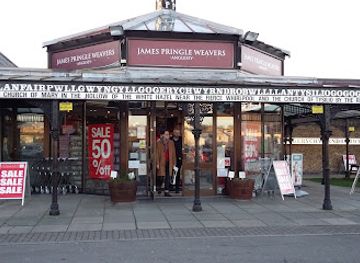
James Pringle Weavers
Discover authentic Welsh craftsmanship and cozy café charm at James Pringle Weavers, Anglesey's iconic shopping destination.
-
Shopping Centre
Deiniol Shopping Centre
A bright, accessible shopping centre in Bangor offering boutique charm and everyday essentials with free Sunday parking.
-
Shopping Centre
Menai Retail Park
A calm and comprehensive 24-hour shopping destination offering diverse stores and easy access in Bangor.
-
Gift shop
The Knight Shop
Step into history at The Knight Shop, Conwy’s premier destination for medieval and Viking treasures and expert craftsmanship.

Get your free copy of our complete guide to Gwynedd, delivered straight to you.
Everything on this page, from attractions and restaurants to essentials and local phrases, in one PDF you can read offline, print or share.
Already have an account? Sign in
Your Gwynedd guide is ready.
We'll send it to · Not you? Sign out

Getting your guide ready…
We are putting together a fresh copy of the Gwynedd guide. This can take up to a minute.
This can take a few moments. If your browser asks, choose Allow so the download can start. You'll find the guide in your Downloads folder.
Nothing happened? Download it again
Sorry, the guide is taking longer than usual. Please try again in a minute, or get it by email instead.
Gwynedd essentials
Currency and Payment
Safety
Emergency Situations
Do's and Don'ts
Local Tips
From Eve
Local phrases worth knowing
You don't need to get them perfect. A few words go a long way, and locals appreciate the effort.
Basics
| English | Local | Say it |
|---|---|---|
| Hello | Helo | [heh-lo] |
| Goodbye | Hwyl fawr | [hoyl vour] |
| Yes | Iawn | [yown] |
| No | Na | [nah] |
| Please/You're welcome | Os gwelwch yn dda | [os gweh-lukh un thah] |
| Thank you | Diolch | [dee-olk] |
| Excuse me/Sorry | Mae'n ddrwg gennyf | [myne droog gen-iv] |
| How are you? | Sut wyt ti? | [sit weet tee] |
| Fine. And you? | Iawn. A ti? | [yown. Ah tee] |
| Do you speak English? | Wyt ti'n siarad Saesneg? | [weet teen shahrad sighs-neg] |
| I don't understand | Dydw i ddim yn deall | [duh-wee eeth-im un deh-ahl] |
Eating & Drinking
| English | Local | Say it |
|---|---|---|
| I'd like to see the menu, please | Hoffwn i weld y fwydlen, os gwelwch yn dda | [hoh-foon ee weld uh voo-id-len, os gweh-lukh un thah] |
| I don't eat meat | Dydw i ddim yn bwyta cig | [duh-wee eeth-im un boo-ee-ta keeg] |
| Cheers! | Iechyd da! | [yeh-khid dah] |
| I would like to pay, please | Hoffwn i dalu, os gwelwch yn dda | [hoh-foon ee tah-lee, os gweh-lukh un thah] |
Emergencies
| English | Local | Say it |
|---|---|---|
| Help! | Help! | [help] |
| Go away! | Dychwelyd! | [duh-kweh-lid] |
| Call the Police! | Galwch am y heddlu! | [gal-ook am uh heth-lee] |
| Call a doctor! | Galwch am ddoctor! | [gal-ook am thok-tor] |
| I'm lost | Dwi wedi colli | [dwee weh-dee koh-lee] |
| I'm ill | Dwi'n sâl | [dwee-n sahl] |
Shopping
| English | Local | Say it |
|---|---|---|
| I'd like to buy... | Hoffwn i brynu... | [hoh-foon ee bruh-nee] |
| I'm just looking | Dwi'n edrych dim ond | [dwee-n ed-rukh dim ond] |
| How much is it? | Faint mae'n costio? | [vaynt mine cost-ee-oh] |
| That's too expensive | Mae hynny'n rhy drud | [my hay-nee-n rhee drid] |
| Can you lower the price? | Cenwch chi leihau'r pris? | [ken-ook hee lay-highr prees] |
Time & Numbers
| English | Local | Say it |
|---|---|---|
| What time is it? | Faint yw'r awr? | [vaynt ee-oor] |
| It's one o'clock | Mae hi'n un o'r gloch | [my hee-n een or gloch] |
| Half past (10) | Hanner wedi (10) | [han-er weh-dee (10)] |
| Morning | Bore | [bore] |
| Afternoon | Prynhawn | [prin-hown] |
| Evening | Noswaith | [nos-wyth] |
| Yesterday | Ddoe | [doy] |
| Today | Heddiw | [heh-dee] |
| Tomorrow | Fory | [vor-ee] |
| 1 | Un | [een] |
| 2 | Dau | [dye] |
| 3 | Tri | [tree] |
| 4 | Pedair | [ped-eye-r] |
| 5 | Pum | [pim] |
| 6 | Chwech | [khwech] |
| 7 | Saith | [sighth] |
| 8 | Wyth | [weeth] |
| 9 | Naw | [now] |
| 10 | Deg | [deg] |
Transport & Directions
| English | Local | Say it |
|---|---|---|
| Where's a/the...? | Ble mae'r...? | [bleh my-r...?] |
| What's the address? | Beth yw'r cyfeiriad? | [beth ee-oor kuh-veh-ree-ad?] |
| Can you show me (on the map)? | Allwch chi ddangos i mi (ar y map)? | [ahl-ook hee thang-oss ee mee (ar uh map)?] |
| When's the next (bus)? | Pryd mae'r (bws) nesaf? | [preed my-r (boos) nes-af?] |
| A ticket (to ....) | Tocyn (i ....) | [toh-kin (ee ....)] |
History of Gwynedd
Prehistoric Gwynedd and the Celtic landscape
Gwynedd contains extensive evidence of prehistoric settlement, burial and ritual activity, including the Neolithic monument of Bryn Celli Ddu on Anglesey across the Menai Strait, which is outside the county, and Bronze Age remains in the mainland's uplands and valleys. Within Gwynedd, ancient landscapes are particularly visible around the Llŷn Peninsula, the mountains and the Meirionnydd uplands, where standing stones, hillforts and burial monuments reflect long-established connections between communities and their surroundings. These remains are not isolated curiosities: they show that the region's valleys, coasts and upland routes have been used and managed for thousands of years.
Roman occupation and Segontium
Roman forces established Segontium near modern Caernarfon in the late first century AD, creating a strategically placed fort overlooking the Menai Strait and the routes into north-west Wales. It became a major military and administrative centre, supporting the Roman presence in a region that remained difficult to control. The surviving archaeological remains at Segontium include parts of the fort and associated structures, while finds displayed in the area help explain daily life on the Roman frontier. Roman roads and military activity altered patterns of movement, although the region retained strong local communities and traditions.
The medieval kingdoms of Gwynedd
Gwynedd was the heartland of a powerful medieval Welsh kingdom whose rulers, including Llywelyn the Great and Llywelyn ap Gruffudd, sought to maintain Welsh political independence. Castles, courts and religious foundations developed within a landscape of mountain strongholds and strategic valleys. Dolwyddelan Castle, Castell y Bere and the remains at Criccieth reflect different phases of Welsh and Anglo-Norman control, while sites such as Aberconwy and the royal centre at Deganwy belong to the wider history of the kingdom. Medieval Gwynedd helped shape the political and cultural idea of Wales long after its rulers were defeated.
Edwardian conquest and the castles of Gwynedd
Following the conquest of Gwynedd by Edward I in the late thirteenth century, the English Crown built a chain of formidable castles and planned settlements. Caernarfon Castle was intended as both a military stronghold and a symbol of royal authority; Harlech Castle controlled routes across Meirionnydd and the coast; and nearby regional fortresses formed part of a wider defensive system. Caernarfon and Harlech remain among the clearest architectural records of this period. Their scale, design and town planning explain why the Castles and Town Walls of King Edward in Gwynedd received UNESCO World Heritage status.
Early modern estates, religion and rural society
After the medieval conflicts, Gwynedd's economy was largely rural, based on farming, pastoralism, fishing and local trade. Great estates influenced landholding and architecture, while parish churches, chapels and nonconformist meeting houses became important centres of community life. The Reformation and later religious movements brought lasting changes to worship and education, particularly in Welsh-speaking communities. Market towns such as Dolgellau and Caernarfon connected isolated valleys with wider commercial networks. The survival of vernacular buildings, farmsteads, chapel culture and Welsh place-names preserves much of this long rural and religious history.
The slate industry and industrial transformation
From the eighteenth century and especially during the nineteenth, Gwynedd's slate industry transformed mountain communities around Bethesda, Llanberis, Dinorwig, the Nantlle Valley and Blaenau Ffestiniog. Quarries employed thousands, while inclines, railways, ports and planned settlements were created to move slate to markets in Britain and overseas. Work was arduous and industrial disputes formed part of local history, but quarrying also supported schools, chapels, societies and distinctive communities. The remains of this industry now form the Slate Landscape of Northwest Wales, recognised by UNESCO, and remain central to the county's modern identity.
Railways, tourism and modern conservation
Railways built for slate later helped open Gwynedd's mountains and coast to visitors. The Ffestiniog Railway, originally associated with the movement of slate from the mountains to Porthmadog, became a pioneering heritage railway, while other lines supported access to Llanberis and the wider Eryri landscape. Victorian tourism brought climbing, hotels and guidebooks, gradually changing the local economy. In the twentieth century, national park protection, conservation and outdoor recreation grew in importance. Today Gwynedd balances tourism with farming, quarry heritage, housing pressures, language policy and the needs of communities living in a heavily visited landscape.
Gwynedd in Photos
Browse through our photo collection highlighting the charm and character of the destination.
Neighbouring regions of Gwynedd
The closest regions to Gwynedd, if you have time for more than one.
-

-

-

-

-


Swipe for more regions
Explore more

Explore more of United Kingdom
Discover the United Kingdom: A blend of rich history, stunning landscapes, and vibrant cities, offering a unique travel experience for every visitor.
Explore United Kingdom