

Merionethshire, United Kingdom Travel Guide
Explore Merionethshire: A land of enchanting landscapes, historic castles, and rich Welsh heritage awaiting discovery in the heart of Wales.
Nestled in the heart of Wales, Merionethshire is a region steeped in history and natural beauty. This picturesque area is known for its rolling hills, lush forests, and pristine lakes. Visitors can explore charming villages that seem untouched by time, each offering a glimpse into the rich culture and heritage of the Welsh countryside. Merionethshire boasts a variety of outdoor activities for nature lovers. Hikers will delight in the numerous trails that wind through the stunning landscapes, including paths that lead to breathtaking viewpoints overlooking the Snowdonia National Park. For those interested in water activities, the region's lakes and rivers provide perfect spots for kayaking, fishing, and even swimming during the warmer months. History enthusiasts will find plenty to admire in Merionethshire. The region is home to several historic castles and ancient ruins, each with its own story to tell. Harlech Castle, a UNESCO World Heritage Site, stands as a testament to medieval architecture and offers panoramic views of the surrounding area. Additionally, visitors can explore the remnants of old slate quarries, which played a significant role in the local economy during the 19th century. Merionethshire also offers a warm and welcoming atmosphere, with friendly locals who are proud of their heritage. Traditional Welsh cuisine can be savored in local pubs and restaurants, where dishes like cawl (a hearty stew) and Welsh cakes are sure to delight. The region's markets and festivals provide opportunities to experience local crafts, music, and folklore, making any visit to Merionethshire a truly immersive experience.

Know before you go
Hi, I'm Eve. Here are a few practical things to know before exploring Merionethshire.
- Visit Harlech Castle early in the morning to avoid crowds and capture the best photos.
- Wear comfortable hiking boots; many trails can be rugged and uneven.
- Try to learn a few basic Welsh phrases. Locals appreciate the effort, and it can enhance your experience.
- Check the weather forecast before planning outdoor activities, as conditions can change quickly.
- Visit local markets for unique souvenirs and to experience authentic Welsh culture.
Destinations in Merionethshire
Resorts, valleys and scenic spots worth a trip of their own.

Explore Merionethshire: Things to Do, Places to Eat, Hotels & More
Handpicked recommendations for top attractions, local dining, accommodations, and more

Top Attractions & Sightseeing in Merionethshire
Top-rated picks
Best Attractions

Eryri National Park (Snowdonia)
Explore Wales’ largest national park, where rugged mountains, rich heritage, and thrilling adventures await in breathtaking Eryri (Snowdonia).

Llandudno Pier
Explore Wales’s longest Victorian pier with stunning sea views, lively arcades, charming shops, and family-friendly fun on Llandudno’s iconic waterfront.
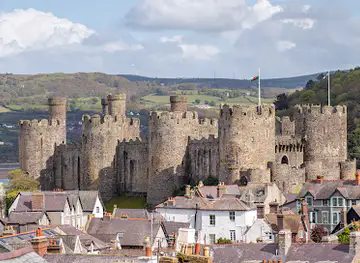
Conwy Castle
Explore Conwy Castle’s majestic medieval walls and towers with stunning views over North Wales’ historic town and Snowdonia mountains.
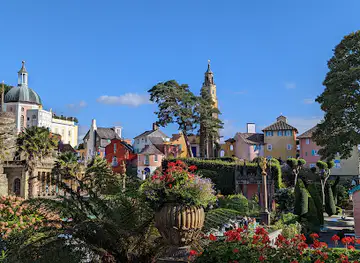
Portmeirion
Discover the enchanting Italianate village of Portmeirion, where whimsical architecture meets stunning coastal gardens in a unique North Wales setting.

Best landmarks in Merionethshire
Top-rated picks
Best Landmarks

Conwy Castle
Explore Conwy Castle, a majestic 13th-century fortress with towering walls and breathtaking views of Snowdonia and the Conwy estuary.

Caernarfon Castle
Medieval fortress where conquest meets ceremony—a UNESCO World Heritage masterpiece commanding the Welsh coast.

Barmouth Bridge
Wales’ longest timber railway bridge, a historic marvel spanning the Mawddach Estuary with stunning views and rich heritage.
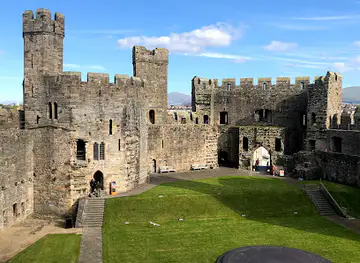
Bedd Gelert
Discover Beddgelert, a legendary village in Snowdonia where Welsh folklore, stunning landscapes, and tranquil riverside charm await your exploration.

Best restaurants in Merionethshire
Top-rated picks
Best Restaurants

Black Boy Inn Four & Six Restaurant & Bar
Historic Welsh inn and lively pub-restaurant in Caernarfon, serving traditional local dishes in a cozy, authentic setting near the castle.

Rhydycar Harvester
Casual family dining with classic British flavors and welcoming amenities in Merthyr Tydfil’s Rhydycar Leisure Park.

Pentrebach House Table Table
Classic British pub dining with family-friendly charm and hearty meals in the heart of Merthyr Tydfil.

Torna a Surriento
Authentic Italian flavors meet warm Welsh hospitality at Torna a Surriento, Bangor’s charming pier-side restaurant.

Best bars in Merionethshire
Top-rated picks
Best Bars

Black Boy Inn Four & Six Restaurant & Bar
Historic Welsh inn with cozy pub vibes, award-winning local cuisine, and comfortable rooms in the heart of Caernarfon’s medieval town walls.

Tŷ Coch Inn
Historic beachside pub with stunning sea views, simple tasty food, and a dog-friendly atmosphere on the scenic Llŷn Peninsula coast.

The Last Inn
A cosy, rustic pub in Barmouth serving excellent real ales, hearty local dishes, and warm Welsh hospitality daily from noon to late evening.
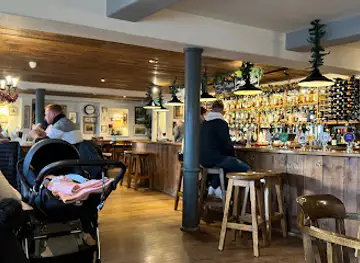
The Dinorben Arms
A charming Welsh pub in Bodfari offering hearty British fare, scenic hill views, and a warm, family-friendly atmosphere.

Best nightclubs in Merionethshire
Top-rated picks
Best Nightclubs

Trilogy Nightclub
Experience Bangor’s vibrant nightlife at Trilogy Nightclub, where music, themed rooms, and lively crowds create unforgettable weekend nights.

Academi
Bangor’s beloved student nightclub, Academi, pulses with energy, affordable fun, and a welcoming community spirit at the heart of university life.

Eddie Rocks
Experience Haverfordwest’s vibrant nightlife at Eddie Rocks, a multi-floor nightclub blending energetic music, local DJs, and a lively atmosphere for all 18+ guests.

Victory Club
Historic members’ club in Rhyl offering a welcoming atmosphere, quality real ales, and a relaxed spot to enjoy sports and socializing.

Best shops in Merionethshire
Top-rated picks
Best Shops

Tweedmill Shopping Outlet
Discover over 300 brands, local Welsh produce, and welcoming cafés at Tweedmill Shopping Outlet, your premier shopping destination in North Wales.

The Knight Shop
Discover authentic medieval and ancient replicas and collectibles in the heart of historic Conwy, steps from Conwy Castle.

The Original Factory Shop (Porthmadog)
Discover unbeatable bargains on big brands at The Original Factory Shop in Porthmadog’s vibrant High Street.

Wizarding Boutique
Step into Llandudno’s Wizarding Boutique for an immersive Harry Potter shopping experience filled with magical treasures and enchanting events.

Explore Merionethshire on the Map
A handpicked selection of must-see spots in Merionethshire, mapped for you.
Merionethshire Essentials
-
Merionethshire, located in North Wales, is accessible by various means of transport. The nearest international airport is Manchester Airport, approximately 2 hours away by car. From the airport, you can take a train to Blaenau Ffestiniog, one of the main towns in Merionethshire, with a transfer at Llandudno Junction. Additionally, driving is a popular option, especially if you want to explore the rural landscapes at your own pace.
-
Public transportation in Merionethshire is limited but reliable. The Ffestiniog Railway and the Welsh Highland Railway offer scenic train journeys. Local buses connect main towns and villages, but schedules can be infrequent. Renting a car is highly recommended for convenience. Taxis are available but may need to be booked in advance, especially in rural areas.
-
The official currency is the British Pound Sterling (£). Credit and debit cards are widely accepted in most hotels, restaurants, and shops. However, it is advisable to carry some cash for smaller establishments and rural areas. ATMs are available in larger towns like Blaenau Ffestiniog and Dolgellau.
-
Merionethshire is generally a safe destination for tourists. However, like any travel destination, it is important to take standard precautions. Avoid isolated areas at night and keep an eye on your belongings in crowded places. While there are no specific high-crime areas targeting tourists, always remain vigilant and aware of your surroundings.
-
In case of emergency, dial 999 for immediate assistance. The local police and medical facilities are available in Blaenau Ffestiniog and Dolgellau. It is recommended to have travel insurance that covers medical emergencies. For minor health issues, pharmacies are available in major towns where you can purchase over-the-counter medications.
-
Fashion: Do dress comfortably and in layers, as weather can be unpredictable. Avoid overly casual clothing in more formal settings. Religion: Do respect local customs and traditions. While there are no strict dress codes, modest clothing is appreciated. Public Transport: Do be punctual, as buses and trains run on a tight schedule. Don’t eat or drink on public transport. Greetings: Do greet people with a friendly ‘hello’ or ‘hi’. A handshake is common in more formal situations. Eating & Drinking: Do try local delicacies such as Welsh cakes and lamb. Don’t refuse hospitality, as it is considered impolite.
-
To experience Merionethshire like a local, visit the weekly farmers' markets in towns like Dolgellau, where you can buy fresh produce and traditional Welsh goods. Engage with locals, as they are often friendly and willing to share stories about the area's history and culture. Don’t miss visiting the historical castles and the stunning Snowdonia National Park. For a unique experience, take a ride on the historic narrow-gauge railways.
When is the best time to visit Merionethshire?
Useful Local Phrases for Merionethshire
You don't need to speak the language perfectly. Even learning a few simple words can make conversations warmer—and locals usually appreciate the effort.
— Eve

Here are the phrases I use most often in Merionethshire. Try a few—you'll be surprised how far they go! 😊
❤️
-
- HelloShwmae
[shoo-my] - GoodbyeHwyl fawr
[hoyl vower] - YesIe
[yay] - NoNac
[nak] - Please/You're welcomeOs gwelwch yn dda/Dim problem
[oss gwell-ookh un thah/dim prob-lem] - Thank youDiolch
[dee-olch] - Excuse me/SorryMae'n ddrwg gennyf
[my-ayn droog gen-iv] - How are you?Sut wyt ti?
[sit weet tee] - Fine. And you?Iawn. A ti?
[yown. ah tee] - Do you speak English?Wyt ti'n siarad Saesneg?
[weet teen sha-rad sighs-neg] - I don't understandDydw i ddim yn deall
[dih-woo ee thee-m un deh-al]
- HelloShwmae
-
- I'd like to see the menu, pleaseHoffwn i weld y fwydlen, os gwelwch yn dda
[hoh-foon ee weld uh voo-id-len, oss gwell-ookh un thah] - I don't eat meatDydw i ddim yn bwyta cig
[dih-woo ee thee-m un boo-ee-ta keeg] - Cheers!Iechyd da!
[yeh-kid dah] - I would like to pay, pleaseHoffwn i dalu, os gwelwch yn dda
[hoh-foon ee tal-ee, oss gwell-ookh un thah]
- I'd like to see the menu, pleaseHoffwn i weld y fwydlen, os gwelwch yn dda
-
- Help!Cymorth!
[kum-orth] - Go away!Dewch yma!
[day-ukh uh-ma] - Call the Police!Galwch am y heddlu!
[gal-ookh am uh hed-lee] - Call a doctor!Galwch am ddoctor!
[gal-ookh am doct-or] - I'm lostDw i wedi colli
[doo ee weh-dee kol-ee] - I'm illDw i'n sal
[doo een sahl]
- Help!Cymorth!
-
- I'd like to buy...Hoffwn i brynu...
[hoh-foon ee brin-ee] - I'm just lookingDw i jyst yn edrych
[doo ee yist un ed-rikh] - How much is it?Faint ydy o?
[vaynt uh-dee oh] - That's too expensiveMae hynny'n rhy ddrud
[my han-neen ree threed] - Can you lower the price?Allwch chi leihau'r pris?
[ahl-kh wee lay-hai'r prees]
- I'd like to buy...Hoffwn i brynu...
-
- What time is it?Faint o'r gloch ydy hi?
[vaynt or gloch uh-dee hee] - It's one o'clockMae un o'r gloch
[my een or gloch] - Half past (10)Hanner awr (10)
[han-er ow-r (ten)] - MorningBore
[bor-eh] - AfternoonPryd nos
[preed nos] - EveningNoswaith
[nos-wythe] - YesterdayDdoe
[dhoy] - TodayHeddiw
[heh-dee] - TomorrowFory
[vor-ee] - 1Un
[een] - 2Dau
[die] - 3Tri
[tree] - 4Pedair
[ped-eye] - 5Pump
[pimp] - 6Chwech
[khwehkh] - 7Saith
[sighth] - 8Wyth
[weeth] - 9Naw
[now] - 10Deg
[deg]
- What time is it?Faint o'r gloch ydy hi?
-
- Where's a/the...?Ble mae'r...?
[ble my-r...?] - What's the address?Beth yw'r cyfeiriad?
[beth yoo-r kuh-vey-re-yad?] - Can you show me (on the map)?Allwch chi ddangos i mi (ar y map)?
[ahl-kh wee thang-os ee mee (ar uh map)?] - When's the next (bus)?Pryd mae'r (bws) nesaf?
[preed my-r (boos) ness-af?] - A ticket (to ....)Tocyn (i....)
[toh-kin (ee....)]
- Where's a/the...?Ble mae'r...?
History of Merionethshire
-
Merionethshire, nestled in the heart of Wales, boasts a history that stretches back to prehistoric times. The region is dotted with Neolithic burial chambers and Bronze Age stone circles, indicating that human settlement in the area dates back thousands of years. These early communities were primarily agrarian, and the remnants of their settlements can still be seen in the landscape today.
-
The Roman Empire's reach extended into Merionethshire during the 1st century AD. The Romans built roads, forts, and settlements to consolidate their grip on the region. One notable site is the Roman fort of Tomen y Mur, which served as a key military outpost. The fort's ruins, including its impressive earthworks, offer a glimpse into the Roman military strategy and their interactions with the native Welsh tribes.
-
The medieval period saw Merionethshire become a focal point of conflict between the Welsh princes and the English crown. Castles such as Harlech and Dolwyddelan were constructed to defend against invasions and assert control over the region. Harlech Castle, in particular, is renowned for its role during the Wars of the Roses and the Welsh Wars of Independence. Its strategic location and formidable architecture make it a symbol of medieval military ingenuity.
-
The 18th and 19th centuries brought significant changes to Merionethshire with the advent of the Industrial Revolution. The region's rich slate deposits led to a booming quarrying industry. Towns like Blaenau Ffestiniog became centers of slate production, exporting their prized material worldwide. The Ffestiniog Railway, originally built to transport slate, is now a popular heritage railway, offering scenic journeys through the rugged Welsh landscape.
-
The late 19th and early 20th centuries saw a cultural renaissance in Merionethshire. The rise of the Eisteddfod movement celebrated Welsh literature, music, and arts, fostering a renewed sense of national identity. The National Eisteddfod, held annually in different locations across Wales, often features Merionethshire as a host, highlighting the region's rich cultural heritage and its contributions to Welsh culture.
-
Today, Merionethshire is part of the county of Gwynedd and continues to attract visitors with its stunning landscapes and historical landmarks. The Snowdonia National Park, encompassing much of the region, offers outdoor enthusiasts a wealth of activities, from hiking to rock climbing. The region's small towns and villages, such as Barmouth and Bala, provide a charming glimpse into traditional Welsh life while offering modern amenities for tourists.
Neighbouring Regions of Merionethshire
The closest regions to Merionethshire, if you have time for more than one.




Your all‑in‑one travel companion app
Explore expert travel guides, compare and book tours, experiences, hotels, and more—all from the palm of your hand. Download now for seamless trip planning wherever your wanderlust takes you.


Explore More of United Kingdom

Looking beyond Merionethshire? Discover United Kingdom for broader travel guides, local hot-spots, and regional highlights.
Explore United KingdomMerionethshire in Photos
Browse through our photo collection highlighting the charm and character of the destination.


Discover the Timeless Charm of Merionethshire
Nestled in the heart of Wales, Merionethshire is a region steeped in history and natural beauty. This picturesque area is known for its rolling hills, lush forests, and pristine lakes. Visitors can explore charming villages that seem untouched by time, each offering a glimpse into the rich culture and heritage of the Welsh countryside. Merionethshire boasts a variety of outdoor activities for nature lovers. Hikers will delight in the numerous trails that wind through the stunning landscapes, including paths that lead to breathtaking viewpoints overlooking the Snowdonia National Park. For those interested in water activities, the region's lakes and rivers provide perfect spots for kayaking, fishing, and even swimming during the warmer months. History enthusiasts will find plenty to admire in Merionethshire. The region is home to several historic castles and ancient ruins, each with its own story to tell. Harlech Castle, a UNESCO World Heritage Site, stands as a testament to medieval architecture and offers panoramic views of the surrounding area. Additionally, visitors can explore the remnants of old slate quarries, which played a significant role in the local economy during the 19th century. Merionethshire also offers a warm and welcoming atmosphere, with friendly locals who are proud of their heritage. Traditional Welsh cuisine can be savored in local pubs and restaurants, where dishes like cawl (a hearty stew) and Welsh cakes are sure to delight. The region's markets and festivals provide opportunities to experience local crafts, music, and folklore, making any visit to Merionethshire a truly immersive experience.