Fishergate Postern Tower, Leeds Travel Guide
Free Guide: A quiet sentinel at the end of York’s medieval walls, where stone meets water and history echoes from the 16th century.


A brief summary of Fishergate Postern Tower
A quiet sentinel at the end of York’s medieval walls, where stone meets water and history echoes from the 16th century.
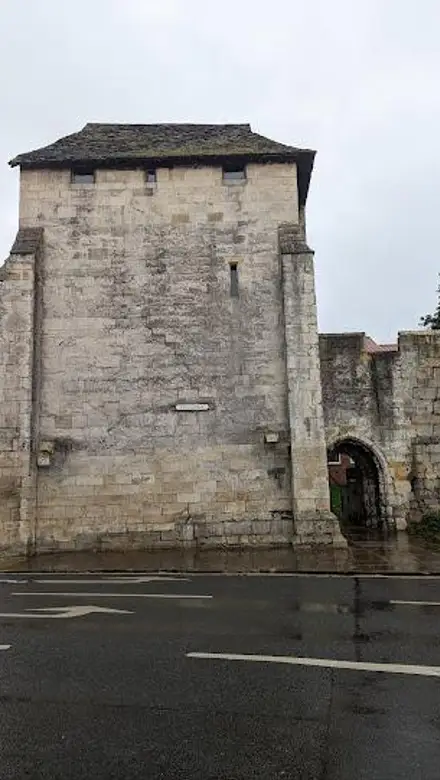
Standing at the eastern end of York’s medieval walls, Fishergate Postern Tower is a well-preserved 16th-century defensive tower with a rich history. Originally built around 1505 as a substantial postern gate, it once overlooked water separating the city from York Castle. Today, it offers a quiet glimpse into York’s fortified past, with four floors, a spiral staircase, and displays on the city walls. Managed by the Friends of York Walls, it’s a peaceful stop on a walk along the ancient ramparts.
On-site amenities
 Seating areas
 Information boards
 Trash bins
- Address
- Piccadilly, York YO1 9AF
- Website
Getting there
On foot from York city centre
From York Castle Museum
By public transport
Discover more about Fishergate Postern Tower
A Tower at the Edge of the Walls
Fishergate Postern Tower marks the eastern terminus of York’s medieval city walls, where the stone ramparts once met the flooded River Foss. Built around 1504–1507, it replaced an earlier 14th-century tower known as Talkan Tower, itself named after Robert Talkan, a prominent citizen and mayor in 1399. The new postern was part of a deliberate effort to strengthen the city’s defences, described at the time as creating ‘a substanciall posterne at Fyschergate’. Unlike the main gatehouses or bars, this was a smaller, secondary entrance – a postern – designed for controlled access rather than grand ceremonial use.
From Defence to Dovecote
The tower was originally built as a watchtower with a flat roof and battlements, similar in style to Monk Bar. Over the centuries, its military role faded, and by 1636 it had been converted into a dovecote, a use that required the upper floors and confirms the presence of its distinctive pitched roof by that date. The current roof, with queen posts, clasped purlins and high collars, is a 17th-century addition, later restored in the 19th and 20th centuries. Despite these changes, the core structure remains largely as it was completed in the early 1500s: a four-storey tower with a pointed arch postern gate, portcullis slot, and garderobe projecting from one corner.
Water, Walls and York Castle
One of the most striking aspects of Fishergate Postern’s location is its relationship with water. The walls end here because they were deliberately terminated at the flooded River Foss, which formed a natural moat around York Castle. This stretch of water, known historically as the King’s Fishpond, created a formidable barrier, making a continuous land wall unnecessary. The gap between the postern and the castle was once spanned only by water, turning the tower into a sentinel at the city’s edge. This strategic siting highlights how York’s defences were shaped not just by stone and mortar, but by the landscape and hydrology of the Foss and Ouse.
A Living Piece of York’s Heritage
Today, Fishergate Postern Tower is maintained by the Friends of York Walls, who use it as a base for displays and information about the city’s ancient defences. The interior is accessible during open days and events, revealing the tower’s spiral staircase and the layers of its history. Archaeological work around the site has uncovered finds ranging from Roman pottery to post-medieval personal items, underscoring the long human presence in this corner of York. The tower is no longer a military structure, but it remains a powerful symbol of the city’s medieval past, standing quietly at the point where the walls meet the river.
Evendo Review Centre
 Google
Guest reviews
Best time to go
Quietest: Jan, Feb & Nov · before 3am
Busy times are Evendo estimates for a typical year, to help you plan. Actual crowds vary with events, school holidays and the weather.
Explore Fishergate Postern Tower on the map
A handpicked selection of must-see spots near Fishergate Postern Tower, mapped for you.
Get your free copy of our complete guide to Fishergate Postern Tower, delivered straight to you.
Everything on this page, from opening hours and how to get there to Eve’s tips and the best time to go, in one PDF you can read offline, print or share.
Already have an account? Sign in
Your Fishergate Postern Tower guide is ready.
We'll send it to · Not you? Sign out

Getting your guide ready…
We are putting together a fresh copy of the Fishergate Postern Tower guide. This can take up to a minute.
This can take a few moments. If your browser asks, choose Allow so the download can start. You'll find the guide in your Downloads folder.
Nothing happened? Download it again
Sorry, the guide is taking longer than usual. Please try again in a minute, or get it by email instead.
Unlock the best of Fishergate Postern Tower
Skip-the-line tickets, guided tours with entry, and walking tours of the area, booked in a few clicks.


Other nearby places you may find interesting
The closest places of the same kind, if this one is not quite what you had in mind.
-
-
-
-
-


Swipe for more places
More to explore near Fishergate Postern Tower
-
 Best experiences near Fishergate Postern Tower
-
 Best hotels near Fishergate Postern Tower
-
 Best landmarks near Fishergate Postern Tower
-
 Best attractions near Fishergate Postern Tower
-
 Best shops near Fishergate Postern Tower
-
 Best restaurants near Fishergate Postern Tower
-
 Best bars near Fishergate Postern Tower


Do you manage this location?
Take control to get all the benefits, like improved information, better appearance, and stronger visibility across AI-powered discovery.
Explore more

Explore more of Leeds
Discover Leeds: A dynamic city where history meets innovation, offering cultural treasures, stunning architecture, and a gateway to the scenic Yorkshire Dales.
Explore Leeds
Explore more of United Kingdom
Discover the United Kingdom: A blend of rich history, stunning landscapes, and vibrant cities, offering a unique travel experience for every visitor.
Explore United Kingdom