Ouse Bridge, Leeds Travel Guide
York's ancient river crossing where a thousand years of history flows beneath your feet.
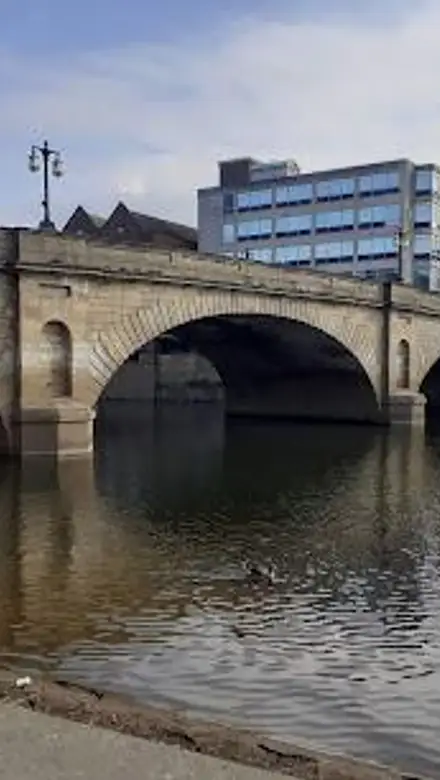
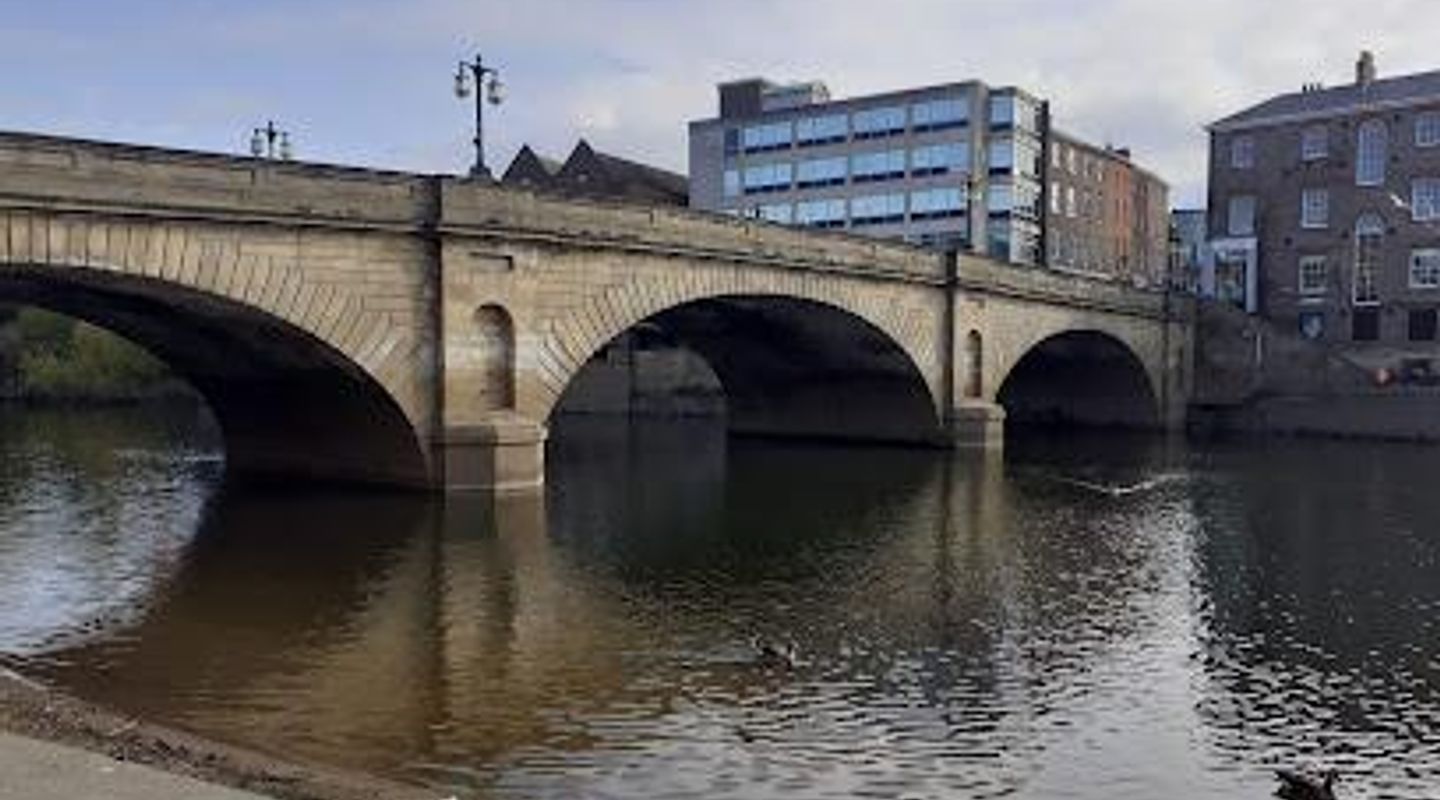
Ouse Bridge is York's most historic river crossing, spanning the River Ouse in the heart of the medieval city. With origins tracing back to the 9th century, this Grade II listed structure has witnessed nearly 1,200 years of York's evolution—from Viking wooden construction through magnificent medieval stone architecture adorned with shops and chapels, to its current reinforced concrete form completed in 1821. Today it remains a vital transport link and a tangible connection to the city's layered past.
A brief summary to Ouse Bridge
- Bridge St, York, YO1 9QU, GB
- Click to display
- Duration: 0.25 to 1.5 hours
- Free
-
 Outdoor
- Mobile reception: 5 out of 5

Know before you go
Hi, I'm Eve. Here are a few practical things to know before exploring Ouse Bridge.
- Visit during quieter morning hours to appreciate the bridge's architecture and river views without heavy traffic congestion.
- Stand at the bridge's centre to observe the River Ouse and imagine the medieval buildings, shops, and chapels that once crowded this space.
- Combine your visit with exploration of the nearby Medieval Bar Walls and York Minster to understand the bridge's place in the city's historic core.
- Look for plaques and information boards along the bridge that detail its remarkable history, including the 1154 collapse and medieval features.
- Visit the History of York website or local heritage centres for deeper context about the bridge's role in the city's development and the legend of Saint William.
Do you manage this location?
Take control to get all the benefits, like improved information, better appearance, and stronger visibility across AI-powered discovery. Learn more about listing your business on Evendo
Activate your presenceOther nearby places you may find interesting
The closest places of the same kind, if this one is not quite what you had in mind.

Explore Ouse Bridge on the Map
A handpicked selection of must-see spots near Ouse Bridge, mapped for you.
Getting There
-
On Foot from York City Centre
Ouse Bridge is located on Bridge Street in York's medieval core, within the Bar Walls. From York Railway Station, walk north through the city centre for approximately 10–15 minutes (around 800 metres). The bridge is accessible via pedestrian routes and is clearly signposted. No parking is required for foot access. The route is flat and suitable for most mobility levels.
-
By Car with Parking
The bridge itself carries vehicle traffic but is not a destination for parking. Nearby car parks include Monk Bar car park (approximately 150 metres north) and Parliament Street car park (approximately 200 metres south), both offering standard hourly rates (typically £1.50–£2.50 per hour in December 2025). From these facilities, walk to the bridge via pedestrian routes through the city centre.
-
By Public Bus
York's city centre bus network serves routes near Ouse Bridge. Services operate from the central bus station (approximately 300 metres south) with frequent departures throughout the day. Journey times from outlying areas typically range from 15–30 minutes depending on origin. Standard single fares cost £1.50–£2.50; day tickets offer better value for multiple journeys.
-
By Taxi or Ride-Share
Taxis and ride-share services can drop passengers at Bridge Street or nearby streets. Journey times from York Railway Station are typically 5–10 minutes. Estimated fares range from £6–£12 depending on traffic and exact pickup location. The bridge area has limited roadside stopping, so drivers may direct passengers to nearby car parks or pedestrian zones.
For the on-the-go comforts that matter to you
-
 Information Boards
-
 Seating Areas
Discover more about Ouse Bridge
A Crossing Through the Centuries
Ouse Bridge stands as York's oldest and most significant river crossing, with documented history stretching back to the 9th century. The bridge's story begins with a Roman structure, succeeded by a Viking-built wooden bridge that served the city for centuries. This early crossing became the foundation upon which York's medieval prosperity was built, facilitating trade and connecting the city's expanding quarters across the River Ouse.The Miraculous Collapse of 1154
In 1154, the Viking wooden bridge met a dramatic fate when it collapsed beneath a crowd gathered to welcome Saint William of York back from exile. Remarkably, despite the catastrophic failure, no lives were lost—an event that contemporaries attributed to miraculous intervention by the Archbishop himself. This incident became deeply embedded in York's religious and civic identity, with Saint William later canonised, and the bridge forever linked to his veneration throughout the city.The Medieval Bridge: A Marvel of Its Age
Following the collapse, a magnificent stone bridge emerged, becoming one of England's greatest engineering achievements. By the medieval period, the bridge featured six graceful arches and hosted an extraordinary array of buildings—by 1435, approximately 55 structures lined its length, including shops, houses, and St William's Chapel. The bridge was adorned with the King's Bow and Queen's Bow, architectural features that earned it comparisons to Venice's Ponte Rialto and Ponte Vecchio. In 1367, it pioneered the installation of the first public toilets in Yorkshire, and possibly in all of England. This bustling, built-up bridge became one of York's defining landmarks and a vital commercial hub.Tragedy and Reconstruction
The weight of its many buildings, combined with severe winter weather, proved catastrophic in 1564. A combination of snow, frost, sudden thaw, and flooding caused the central span to collapse, taking with it 12 buildings and 12 lives. A new stone bridge with five arches rose in 1566, featuring a central arch 81 feet wide and more than 17 feet high. This replacement bridge housed St William's Chapel on its south side, the Council chamber, and the city gaol below—making it simultaneously a place of governance, worship, and punishment. By the 18th century, author Daniel Defoe described it as vastly strong and without exception the greatest bridge in England.The Modern Bridge and Urban Evolution
As York transformed in the early 19th century, the medieval bridge gave way to progress. In 1810, the ancient structure was demolished, and the current Ouse Bridge was unveiled in 1821, designed by Peter Atkinson following a competitive commission. Initially, tolls were charged to recover construction costs, though in 1829 traffic carrying materials for the minster's post-fire repairs crossed free of charge. The bridge was later reinforced as a concrete plate girder structure, reflecting changing engineering standards and transport demands. In 1910, a significant fire engulfed the adjacent Boyes department store, a dramatic reminder of the bridge's continued role in the city's life. Today's bridge remains Grade II listed, a testament to its architectural and historical significance.A Living Monument to York's Past
Ouse Bridge today serves as both a functional transport link and a physical embodiment of York's layered history. Standing within the Medieval Bar Walls, it connects the city's ancient quarters and carries modern traffic across the same river that has defined York's geography for over a thousand years. The bridge's evolution—from Roman foundations through Viking construction, medieval magnificence, and Victorian engineering—mirrors York's own transformation from Roman settlement to Viking stronghold to medieval powerhouse to Georgian city. Walking across Ouse Bridge is to traverse not merely a river, but centuries of human endeavour, tragedy, innovation, and civic pride.












Your all‑in‑one travel companion app
Explore expert travel guides, compare and book tours, experiences, hotels, and more—all from the palm of your hand. Download now for seamless trip planning wherever your wanderlust takes you.


Explore More of Leeds
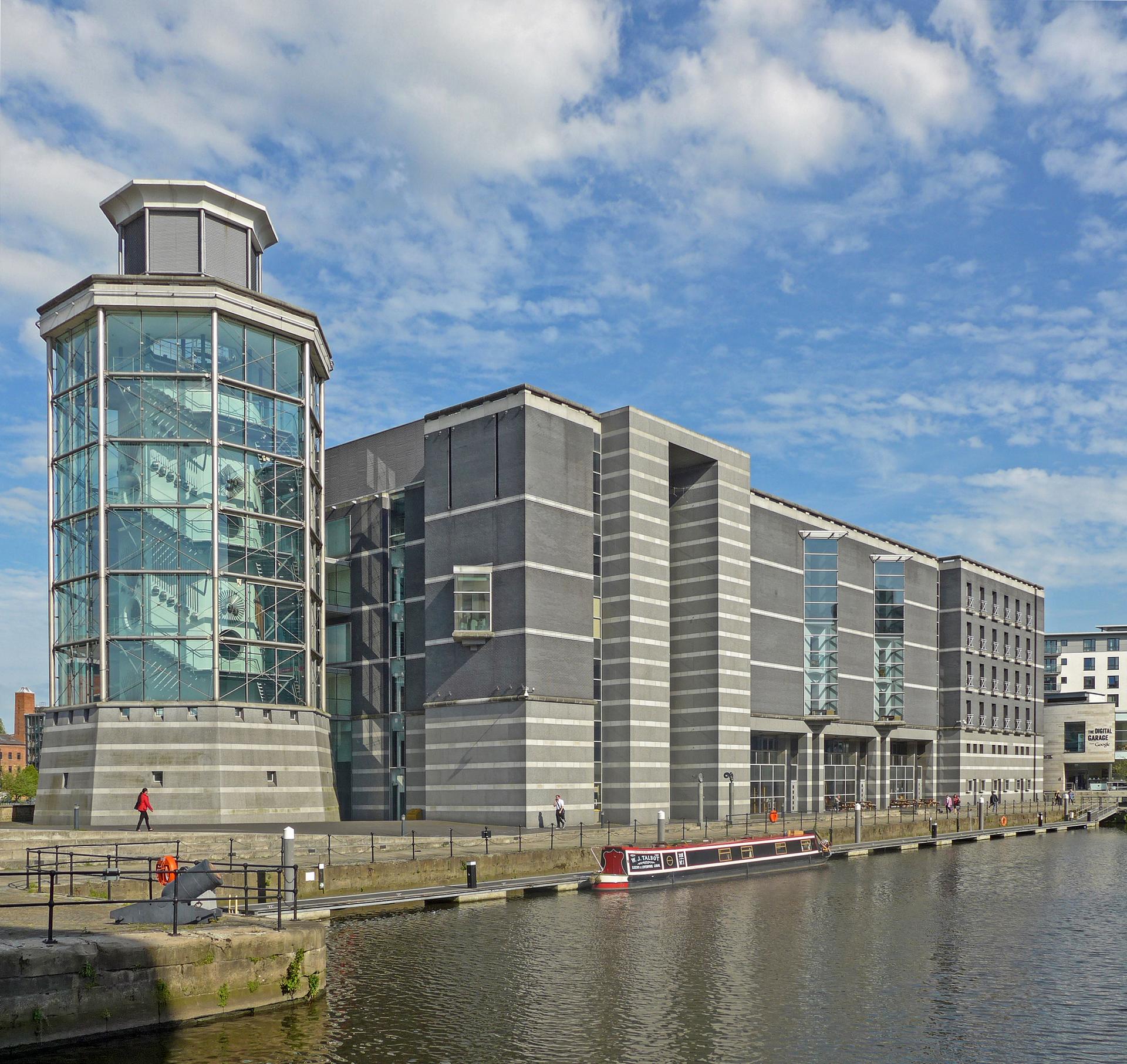
Looking beyond Ouse Bridge? Discover Leeds for broader travel guides, local hot-spots, and regional highlights.
Explore Leeds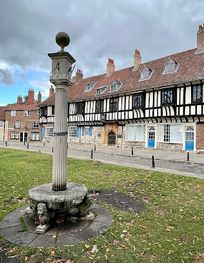
An elegant 18th-century sundial column on stone lions, quietly marking time just east of York Minster in a peaceful corner of the cathedral precincts.
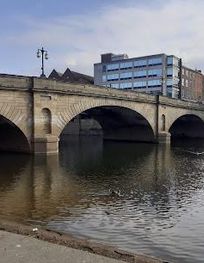
Historic Ouse Bridge in York spans the River Ouse, blending medieval heritage with 19th-century architecture and city life.