

Free Liverpool Travel Guide & Mobile App
Plan your Liverpool trip with Evendo. Get free guides to top attractions, restaurants, hotels, and bars. Web access or download the mobile app.


Liverpool blends maritime history, Beatles heritage, world-class museums, football passion and waterfront architecture with lively neighbourhoods and culture.
A City Shaped by the Mersey
Liverpool stretches along the eastern bank of the River Mersey, where a historic port helped connect Britain with Ireland, North America and the wider world. Its waterfront combines the brick warehouses of the Royal Albert Dock, the copper-green dome of the Royal Liver Building and broad views across the estuary. These scenes offer an immediate sense of the city's maritime importance, while nearby streets reveal a more layered urban character shaped by trade, migration, industry and cultural exchange.Read more about Liverpool
Music, Museums and Sporting Identity
Neighbourhoods with Distinctive Character
When is the best time to visit Liverpool?
Best: June–August · 19–22°C| Month | High (°C) | Rainfall (mm) |
|---|---|---|
| January | 8 | 54 |
| February | 8 | 44 |
| March | 9 | 42 |
| April | 12 | 33 |
| May | 15 | 36 |
| June (best) | 19 | 31 |
| July (best) | 22 | 34 |
| August (best) | 22 | 37 |
| September | 19 | 44 |
| October | 15 | 49 |
| November | 12 | 52 |
| December | 10 | 54 |
Getting to and around Liverpool
How to get there
Transportation
Best attractions in Liverpool
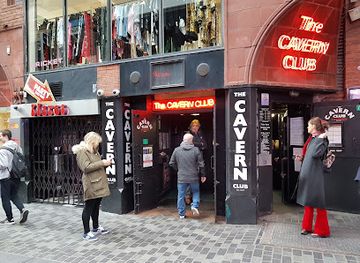
Liverpool's principal attractions cluster around the river and the cultural centre. At the Royal Albert Dock, The Beatles Story presents the band's rise through archival displays and recreated settings, while the International Slavery Museum examines the port's involvement in transatlantic enslavement and its legacies. The Museum of Liverpool, beside the waterfront, explores the city's social history through objects, photographs and personal stories. Inland, World Museum ranges across archaeology, natural history and global cultures, and the Walker Art Gallery is known for its paintings and sculpture. Music pilgrims can explore the Cavern Quarter, associated with the city's 1960s scene, while football supporters may visit Anfield or Goodison Park when tours and fixtures permit. The Mersey Ferry offers changing views of the docks and skyline, and the Baltic Triangle provides a more contemporary setting of studios, independent venues and converted industrial spaces.
-
Historical landmark
Royal Albert Dock Liverpool
A beautifully restored 19th-century dock turned vibrant waterfront hub of culture, dining, and history on the River Mersey.
12 min walk · 1.0 km from city centre
-
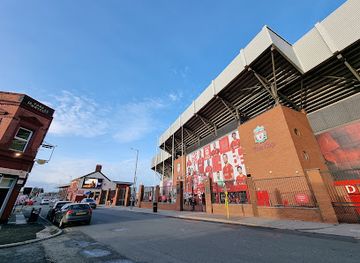
Stadium
Anfield
Step inside Anfield, the legendary home of Liverpool FC, where football history, passion, and unforgettable experiences await every visitor.
10 min drive · 3.2 km from city centre
-
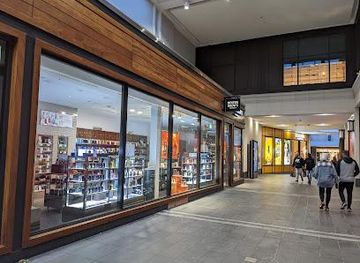
Shopping Centre
Liverpool ONE
Liverpool ONE – Liverpool’s vibrant open-air shopping and entertainment heart, blending retail, dining, and leisure on a grand scale.
8 min walk · 0.6 km from city centre
-
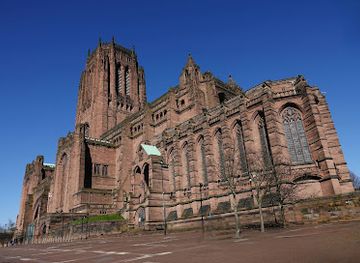
Cathedral
Liverpool Cathedral
Britain’s largest cathedral, a red sandstone giant with soaring vaults, stained glass and panoramic city views from its tower.
5 min drive · 1.7 km from city centre

Best landmarks in Liverpool
The Three Graces at the Pier Head—the Royal Liver Building, Cunard Building and Port of Liverpool Building—express Liverpool's former commercial and maritime power through monumental waterfront architecture. Nearby, the Royal Albert Dock preserves a major nineteenth-century warehouse complex, now adapted for museums, galleries and public use. St George's Hall is a grand neoclassical civic building facing Lime Street, while Liverpool Central Library and World Museum help form one of Britain's most significant cultural groupings. Liverpool Metropolitan Cathedral, with its circular modern design, and Liverpool Cathedral, whose vast Gothic revival interior dominates the skyline from St James's Mount, reflect the city's Catholic and Anglican traditions. The Chinatown Arch, built with materials from China, marks the presence of a long-established Chinese community, adding a cultural landmark to the city's architectural record.
-
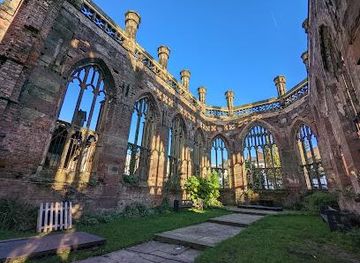
Historical landmark
St Luke’s Bombed Out Church
A roofless Gothic memorial where wartime tragedy transformed into cultural renaissance and timeless celebration.
16 min walk · 1.3 km from city centre
-
Museum
Liverpool Beatles Museum
Explore the largest authentic Beatles collection in Liverpool’s historic Mathew Street, celebrating the band’s legendary journey and legacy.
5 min walk · 0.4 km from city centre
-
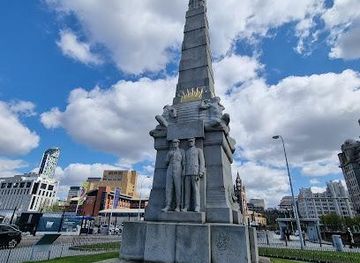
Memorial
Memorial to the Marine Engine Room Heroes
Honoring the bravery of marine engineers, this 1916 memorial stands as a solemn tribute within Liverpool’s historic maritime heart.
6 min walk · 0.5 km from city centre
-
Church
Liverpool Parish Church (Our Lady and Saint Nicholas)
Historic Anglican parish church in Liverpool, symbolizing centuries of maritime heritage and resilience through tragedy and renewal.
3 min walk · 0.3 km from city centre


Explore Liverpool on the map
Plan your Liverpool trip on one map. See where the top attractions, landmarks, restaurants, bars and hotels are, find what's near where you're staying, and book hotels and experiences in a few clicks.
Neighbourhoods in Liverpool
-

-

-

-


Swipe for more neighbourhoods
Best hotels in Liverpool
Best restaurants in Liverpool
Liverpool's food scene reflects its port history and long-established communities. Scouse, a hearty stew traditionally made with meat or vegetables and served with bread, remains the city's best-known local dish, while Liverpool's Irish influence can be felt in bakeries, cafés and familiar comfort food. Chinatown, one of the oldest Chinese communities in Europe, provides a concentration of restaurants and the ceremonial Chinese Arch is a landmark nearby. The city centre, Ropewalks and the Baltic Triangle offer restaurants, casual kitchens, cafés and bars in former commercial and industrial spaces, with menus ranging from British cooking to Middle Eastern, South Asian, East Asian and Mediterranean food. St John's Market provides an informal setting for food traders, while independent cafés around Bold Street and Hope Street contribute to the city's varied everyday dining culture.
-
Caribbean
Turtle Bay Liverpool Victoria St
Lively Caribbean dining and cocktails in Liverpool’s historic Produce Exchange, blending authentic flavors with vibrant island vibes.
4 min walk · 0.3 km from city centre
-
Caribbean
Turtle Bay Liverpool Hanover St
Vibrant Caribbean jerk and cocktails in central Liverpool's most colourful, energetic dining destination.
9 min walk · 0.7 km from city centre
-
Indian
Mowgli Street Food Water Street
Contemporary Indian street food in a vibrant, casual setting with bold flavors and communal sharing plates.
2 min walk · 0.2 km from city centre
-
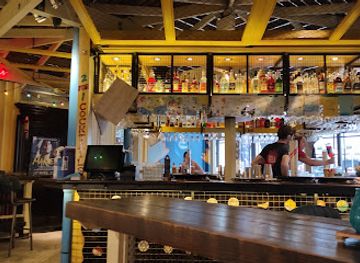
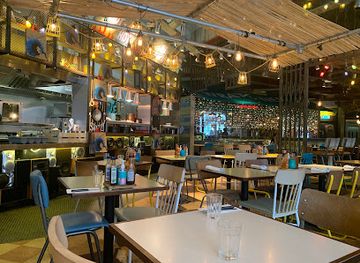
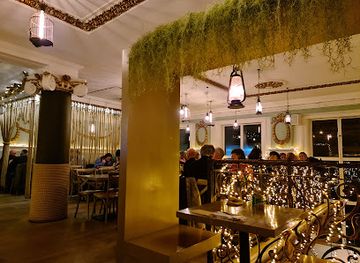
Restaurant
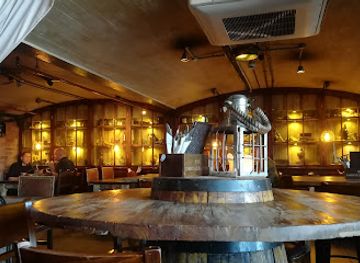
The Botanist Albert Dock
A lush botanical bar and restaurant at Liverpool’s Albert Dock, famed for inventive cocktails, seasonal menus, and live music in a garden-inspired setting.
12 min walk · 1.0 km from city centre
Best bars in Liverpool
Liverpool has a substantial evening scene concentrated around several contrasting areas. The Cavern Quarter is associated with live music and Beatles heritage, with venues ranging from small performance rooms to late-night bars. Concert Square and nearby Seel Street are busier and more club-oriented, while Ropewalks offers cocktail bars, pubs and music venues in a dense central setting. The Baltic Triangle has a more industrial backdrop, with event spaces, live performances and late venues occupying converted warehouses. Traditional pubs remain part of the city's social life, and the Georgian Quarter adds theatres and concert venues around Hope Street, including Liverpool Philharmonic Hall. Nightlife is particularly busy on Fridays, Saturdays and football or concert evenings, so crowds, noise and transport demand vary sharply between neighbourhoods and event dates.
-
Cocktail bar
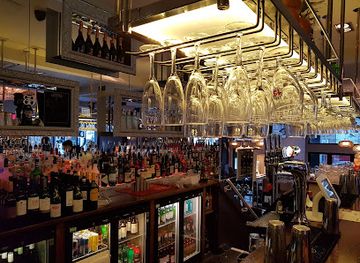
Slug & Lettuce - Liverpool
Lively multi-floor cocktail bar in Liverpool city centre, famous for 2-for-1 cocktails, bottomless brunches, and vibrant social vibes.
3 min walk · 0.3 km from city centre
-
Pub
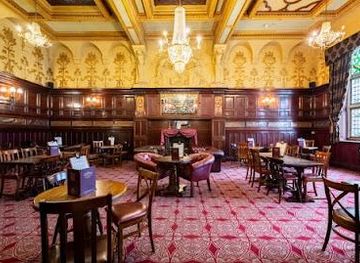
The Philharmonic Dining Rooms
A Grade I-listed Victorian gem serving exceptional ales and classic British fare in ornate, intimate rooms.
5 min drive · 1.6 km from city centre
-
Bar
The Botanist Albert Dock
A botanical-inspired bar and restaurant at Liverpool’s Albert Dock, blending lush greenery, creative cocktails, and seasonal menus in a vibrant setting.
12 min walk · 1.0 km from city centre
-
Cocktail bar
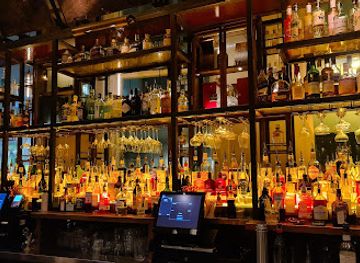
The Alchemist Liverpool
Experience Liverpool’s vibrant cocktail theatre and innovative dining at The Alchemist on Brunswick Street.
4 min walk · 0.3 km from city centre

Best nightclubs in Liverpool
Liverpool has a substantial evening scene concentrated around several contrasting areas. The Cavern Quarter is associated with live music and Beatles heritage, with venues ranging from small performance rooms to late-night bars. Concert Square and nearby Seel Street are busier and more club-oriented, while Ropewalks offers cocktail bars, pubs and music venues in a dense central setting. The Baltic Triangle has a more industrial backdrop, with event spaces, live performances and late venues occupying converted warehouses. Traditional pubs remain part of the city's social life, and the Georgian Quarter adds theatres and concert venues around Hope Street, including Liverpool Philharmonic Hall. Nightlife is particularly busy on Fridays, Saturdays and football or concert evenings, so crowds, noise and transport demand vary sharply between neighbourhoods and event dates.
-
Nightclub
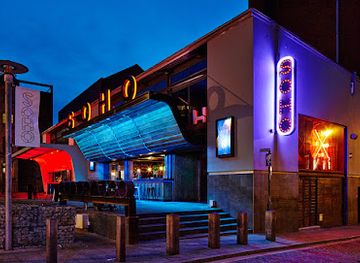
Soho Bar Liverpool
Liverpool's electrifying Concert Square gem: sports bar by day, pulsating nightclub by night with cocktails, shisha, and nonstop vibes until 4am.
12 min walk · 0.9 km from city centre
-
Nightclub
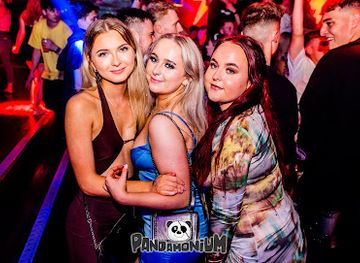
ELECTRIK WAREHOUSE
Liverpool’s electrifying nightclub with three dance floors, diverse music, and late-night energy from Thursday to Saturday.
11 min walk · 0.8 km from city centre
-
Night Club
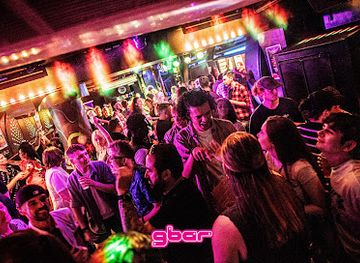
GBar Liverpool
Liverpool's legendary late-night gay club: pop upstairs, bass downstairs, dancing till dawn on Eberle Street's vibrant strip.
2 min walk · 0.1 km from city centre
-
Nightclub
Heebie Jeebies
A dynamic multi-floor nightclub and bar in Liverpool’s Seel Street, blending eclectic music, vibrant crowds, and a quirky courtyard for unforgettable nights.
14 min walk · 1.2 km from city centre

Best shops in Liverpool
Liverpool's main retail spine runs through Church Street, Paradise Street and Liverpool ONE, where high-street shops, department-store-style retailers and restaurants occupy a large central complex. Bold Street has a more independent character, with cafés, specialist food shops, vintage retailers and small businesses, while nearby Renshaw Street and the Ropewalks extend the varied urban shopping experience. St John's Market provides food, household goods and other everyday stalls rather than a purely souvenir-focused market. Visitors interested in Beatles-related merchandise will find specialist shops around Mathew Street and the Cavern Quarter, and the city's museums offer culturally informed books, prints and design objects. Local food products, football memorabilia, records, contemporary crafts and second-hand clothing often make more distinctive purchases than generic waterfront souvenirs.
-
Shopping Centre
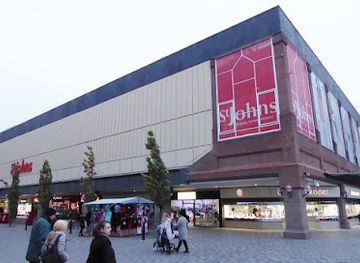
St Johns Shopping Centre
Liverpool's beating retail heart: 100+ stores, food court feasts, and easy parking since 1969 in the city centre.
9 min walk · 0.7 km from city centre
-
Shopping Centre
Cavern Walks - Shopping Centre
A charming boutique shopping centre near Liverpool’s legendary Cavern Club, blending unique retail with rich musical heritage.
5 min walk · 0.4 km from city centre
-
Gift shop
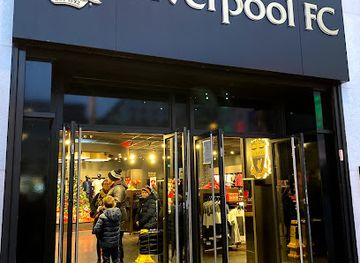
LFC Official Club Store
Discover authentic Liverpool FC merchandise and immerse yourself in the club’s vibrant spirit at the heart of Liverpool city centre.
7 min walk · 0.6 km from city centre
-
Shopping Centre
Great Homer Street District Centre UK
A vibrant Liverpool shopping hub blending historic market charm with diverse retail and community spirit.
6 min drive · 2.0 km from city centre
Get your free copy of our complete guide to Liverpool, delivered straight to you.
Everything on this page, from attractions and restaurants to essentials and local phrases, in one PDF you can read offline, print or share.
Already have an account? Sign in
Your Liverpool guide is ready.
We'll send it to · Not you? Sign out

Getting your guide ready…
We are putting together a fresh copy of the Liverpool guide. This can take up to a minute.
This can take a few moments. If your browser asks, choose Allow so the download can start. You'll find the guide in your Downloads folder.
Nothing happened? Download it again
Sorry, the guide is taking longer than usual. Please try again in a minute, or get it by email instead.
Liverpool essentials
Currency and Payment
Safety
Emergency Situations
Do's and Don'ts
Local Tips
From Eve
Local phrases worth knowing
You don't need to get them perfect. A few words go a long way, and locals appreciate the effort.
Basics
| English | Local | Say it |
|---|---|---|
| Hello | Alright | [Al-rite] |
| Goodbye | Ta-ra | [Ta-ra] |
| Yes | Aye | [Eye] |
| No | Nah | [Nah] |
| Please/You're welcome | Ta | [Ta] |
| Thank you | Cheers | [Cheers] |
| Excuse me/Sorry | Sorry, mate | [Sor-ry, mate] |
| How are you? | Alright, la? | [Al-rite, la?] |
| Fine. And you? | Sound. Yerself? | [Sound. Yer-self?] |
| Do you speak English? | Do you speak Scouse? | [Do you speak Scouse?] |
| I don't understand | I'm baffled | [I'm baff-led] |
Eating & Drinking
| English | Local | Say it |
|---|---|---|
| I'd like to see the menu, please | I'll have a gander at the menu, mate | [I'll have a gan-der at the menu, mate] |
| I don't eat meat | I don't do meat | [I don't do meat] |
| Cheers! | Chin chin! | [Chin chin!] |
| I would like to pay, please | I'll chuck you some wonga, mate | [I'll chuck you some wong-a, mate] |
Emergencies
| English | Local | Say it |
|---|---|---|
| Help! | Alarum! | [Ala-rum!] |
| Go away! | Clear off! | [Clear off!] |
| Call the Police! | Ring the bizzies! | [Ring the biz-zies!] |
| Call a doctor! | Ring the quack! | [Ring the quack!] |
| I'm lost | I'm lost, mate | [I'm lost, mate] |
| I'm ill | I'm poorly | [I'm poorly] |
Shopping
| English | Local | Say it |
|---|---|---|
| I'd like to buy... | I wanna get... | [I wanna get...] |
| I'm just looking | I'm just having a deeks | [I'm just hav-ing a deeks] |
| How much is it? | How much's that, mate? | [How much's that, mate?] |
| That's too expensive | That's a bit pricey, that | [That's a bit pricey, that] |
| Can you lower the price? | Can you do us a deal on that? | [Can you do us a deal on that?] |
Time & Numbers
| English | Local | Say it |
|---|---|---|
| What time is it? | What's the time, mate? | [What's the time, mate?] |
| It's one o'clock | It's one on the dot | [It's one on the dot] |
| Half past (10) | Half ten | [Half ten] |
| Morning | Mornin' | [Mornin'] |
| Afternoon | Afternoon | [Afternoon] |
| Evening | Evenin' | [Evenin'] |
| Yesterday | Yest'day | [Yest-day] |
| Today | Today | [Today] |
| Tomorrow | T'morrow | [T-morrow] |
| 1 | One | [One] |
| 2 | Two | [Two] |
| 3 | Three | [Three] |
| 4 | Four | [Four] |
| 5 | Five | [Five] |
| 6 | Six | [Six] |
| 7 | Seven | [Seven] |
| 8 | Eight | [Eight] |
| 9 | Nine | [Nine] |
| 10 | Ten | [Ten] |
Transport & Directions
| English | Local | Say it |
|---|---|---|
| Where's a/the...? | Where's the...? | [Where's the...?] |
| What's the address? | What's the addy? | [What's the add-y?] |
| Can you show me (on the map)? | Can you give us a butchers (on the map)? | [Can you give us a butchers (on the map)?] |
| When's the next (bus)? | When's the next bus due? | [When's the next bus due?] |
| A ticket (to ....) | A ticket to... | [A ticket to...] |
History of Liverpool
Medieval Borough and River Port
Liverpool's recorded urban history begins with a small settlement and castle associated with the tidal inlet known as the Pool. King John's borough charter of 1207 established Liverpool as a planned market town, although it remained modest for centuries compared with Chester and other regional centres. Its position on the Mersey gradually gained importance as river commerce expanded, and the town developed links with Ireland and the Irish Sea. Medieval Liverpool occupied a strategically useful but physically constrained site between the river and rising ground, with trade, fishing and local administration shaping its early growth. The surviving street pattern around the old town is difficult to read amid later redevelopment, but the city's relationship with the river remains the central geographical fact of its history.
Eighteenth-Century Maritime Expansion
Liverpool grew rapidly during the eighteenth century as merchants developed increasingly sophisticated docks, warehouses and shipping networks. Trade with Ireland, the Caribbean, North America and West Africa brought wealth to the port, while also tying the city to the transatlantic slave trade. Liverpool became one of Britain's principal slave-trading ports before Parliament abolished British participation in the trade in 1807; slavery itself was abolished across most of the British Empire in 1833. The prosperity generated through these systems left an architectural and institutional legacy, but the human cost and the city's role in enslavement are essential to understanding its past. The International Slavery Museum at the Royal Albert Dock addresses this history and its continuing significance.
Docks, Industry and Immigration
During the nineteenth century Liverpool became a major gateway for goods, people and ideas. Its dock system expanded along the Mersey, and engineering works, warehouses, shipbuilding and associated industries transformed the urban landscape. The population increased through migration from Ireland, Wales, Europe and elsewhere, creating communities whose religious buildings, associations and traditions became part of the city's identity. The Great Famine in Ireland intensified Irish migration to Liverpool in the 1840s, and the city developed one of Britain's largest Irish communities. Merchants and civic leaders also financed monumental buildings, including St George's Hall and the commercial structures that later defined the Pier Head. Industrial growth brought employment and civic ambition, but also overcrowding, inequality and harsh working conditions.
A Global Port and Cultural Crossroads
By the early twentieth century Liverpool was an internationally connected port city, carrying passengers, cotton, grain and manufactured goods. The city's shipping industry supported a dense network of hotels, theatres, music halls, markets and commercial offices, while migration continued to broaden its social landscape. Liverpool's position on Atlantic routes also made it an important departure point for emigrants travelling to North America and elsewhere. The First World War, economic depression and changes in global trade exposed the vulnerability of a city heavily dependent on maritime commerce. Nevertheless, its cosmopolitan outlook endured in food, music, religious life and neighbourhood culture, laying foundations for the later emergence of Liverpool as a major centre of popular music.
War, Decline and Urban Change
Liverpool suffered substantial damage during the May Blitz of 1941, when German bombing targeted the port and surrounding industrial areas. Post-war rebuilding, changing shipping technology and the movement of dock activity downstream contributed to economic decline in the second half of the twentieth century. Employment fell in the docks and manufacturing, and several central areas experienced long periods of dereliction and population loss. The city nevertheless retained powerful civic and cultural institutions, as well as internationally influential music and football traditions. From the late twentieth century, investment in the waterfront, conservation of historic buildings and the reuse of former industrial spaces began to reshape the centre, although regeneration remained uneven across the wider city.
The Beatles and Cultural Renaissance
Liverpool's cultural profile changed permanently during the 1960s, when The Beatles emerged from local clubs and became one of the world's most influential popular music groups. Their success drew international attention to the city and strengthened a musical tradition that also included Merseybeat performers such as Gerry and the Pacemakers. In the following decades, museums, galleries, theatres and restored waterfront buildings reinforced Liverpool's wider cultural identity. The Royal Albert Dock's redevelopment created a new visitor quarter, while the city became European Capital of Culture in 2008. Liverpool's former Mercantile Maritime City was inscribed on the UNESCO World Heritage List in 2004, but the designation was removed in 2021 after concerns about redevelopment and the changing historic waterfront.
Liverpool in Photos
Browse through our photo collection highlighting the charm and character of the destination.
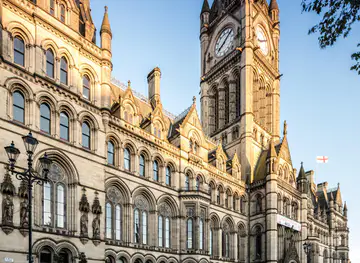
Cities near Liverpool
The closest cities to Liverpool, if you have time for more than one stop.
-

-
-

-

-


Swipe for more cities
Explore more

Explore more of United Kingdom
Discover the United Kingdom: A blend of rich history, stunning landscapes, and vibrant cities, offering a unique travel experience for every visitor.
Explore United Kingdom