

City Centre (Liverpool) Travel Guide - Free
Explore City Centre in Liverpool with Evendo's free guide. Find the best shops, historic streets, restaurants, and gems on web or mobile.


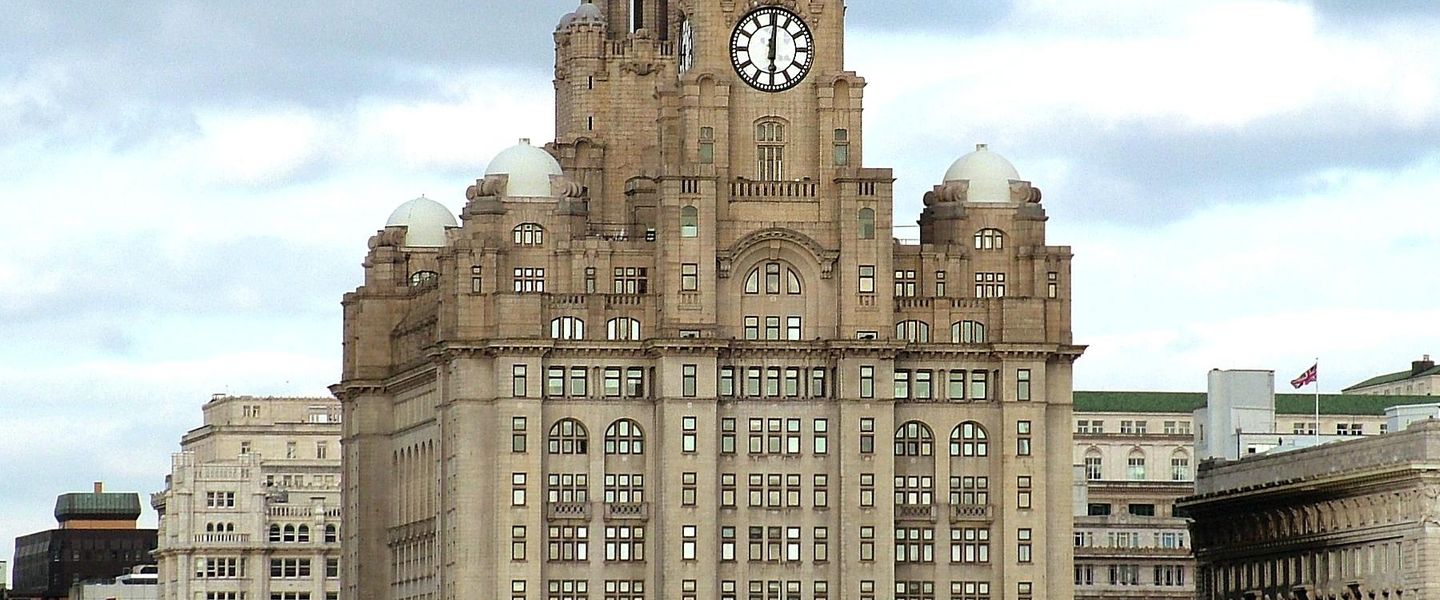


Liverpool City Centre combines the Royal Albert Dock, historic streets, Beatles heritage, galleries, theatres, shopping and independent dining in a walkable core.
Historic Core and Waterfront
Liverpool City Centre is the compact urban heart between Lime Street, the River Mersey and the commercial streets around Church Street. Its identity is shaped by the city's maritime past, grand civic architecture and enduring musical culture. At the waterfront, the red-brick warehouses of the Royal Albert Dock frame museums, galleries, restaurants and broad views across the river, while the Three Graces at Pier Head express Liverpool's former importance as a global port.Read more about City Centre
Civic Grandeur and Cultural Life
Everyday City Life
Explore City Centre on the map
A handpicked selection of must-see spots in City Centre, mapped for you.
Best hotels in City Centre
City Centre essentials
Getting There
Getting Around
Safety
Emergency Situations
Do's and Don'ts
Local Tips

From Eve
Local phrases worth knowing
You don't need to get them perfect. A few words go a long way, and locals appreciate the effort.
Basics
| English | Local | Say it |
|---|---|---|
| Hello | Alright mate | [al-right mate] |
| Goodbye | Ta-ra | [ta-ra] |
| Yes | Aye | [aye] |
| No | Nah | [nah] |
| Please/You're welcome | Please/No worries | [please/no worries] |
| Thank you | Cheers | [cheers] |
| Excuse me/Sorry | Sorry | [sorry] |
| How are you? | Alright? | [al-right?] |
| Fine. And you? | Not bad. You? | [not bad. you?] |
| Do you speak English? | Y'know English? | [y-know English?] |
| I don't understand | I ain't got a scooby | [I ain't got a scooby] |
Eating & Drinking
| English | Local | Say it |
|---|---|---|
| I'd like to see the menu, please | Can I have a butchers at the menu, please | [can I have a butchers at the menu, please] |
| I don't eat meat | I don't do meat | [I don't do meat] |
| Cheers! | Cheers! | [cheers!] |
| I would like to pay, please | I'll settle up, mate | [I'll settle up, mate] |
Emergencies
| English | Local | Say it |
|---|---|---|
| Help! | Help! | [help!] |
| Go away! | Clear off! | [clear off!] |
| Call the Police! | Ring the Old Bill! | [ring the old bill!] |
| Call a doctor! | Get us a quack! | [get us a quack!] |
| I'm lost | I'm proper lost | [I'm proper lost] |
| I'm ill | I'm poorly | [I'm poorly] |
Shopping
| English | Local | Say it |
|---|---|---|
| I'd like to buy... | I wanna buy... | [I wanna buy...] |
| I'm just looking | Just having a gander | [just having a gander] |
| How much is it? | How much? | [how much?] |
| That's too expensive | That's a bit steep | [that's a bit steep] |
| Can you lower the price? | Can you knock the price down? | [can you knock the price down?] |
Time & Numbers
| English | Local | Say it |
|---|---|---|
| What time is it? | What's the time? | [what's the time?] |
| It's one o'clock | It's one | [it's one] |
| Half past (10) | Half ten | [half ten] |
| Morning | Morning | [morning] |
| Afternoon | Afternoon | [afternoon] |
| Evening | Evening | [evening] |
| Yesterday | Yesterday | [yesterday] |
| Today | Today | [today] |
| Tomorrow | Tomorrow | [tomorrow] |
| 1 | One | [one] |
| 2 | Two | [two] |
| 3 | Three | [three] |
| 4 | Four | [four] |
| 5 | Five | [five] |
| 6 | Six | [six] |
| 7 | Seven | [seven] |
| 8 | Eight | [eight] |
| 9 | Nine | [nine] |
| 10 | Ten | [ten] |
Transport & Directions
| English | Local | Say it |
|---|---|---|
| Where's a/the...? | Where's the... | [where's the...] |
| What's the address? | What's the gaff? | [what's the gaff?] |
| Can you show me (on the map)? | Can you point me on the map? | [can you point me on the map?] |
| When's the next (bus)? | When's the next bus? | [when's the next bus?] |
| A ticket (to ....) | A ticket (to ...) | [a ticket (to ...)] |
History of City Centre
The Medieval Borough by the Mersey
Liverpool's central settlement developed around a planned borough established by King John in 1207, when the town occupied a strategic position beside the Mersey estuary. The early street plan is often associated with the original seven streets, including Castle Street, Dale Street and Water Street, whose alignments helped organise the medieval town. A castle once stood near the area now occupied by Liverpool Town Hall, reinforcing the settlement's administrative and defensive role. For centuries the centre remained relatively small, but its position gave it access to coastal trade and the wider estuary, laying the foundations for the commercial expansion that transformed the waterfront and inland streets.
Port Expansion and Commercial Wealth
From the eighteenth century, Liverpool's port expanded rapidly and brought shipping, trade and population growth into the central area. Docks, warehouses, counting houses and banks reshaped the waterfront and streets leading inland, while merchants built substantial offices and civic institutions around Castle Street, Dale Street and the Town Hall. The nineteenth century produced much of the architecture now associated with the centre, including St George's Hall and the cultural buildings on William Brown Street. The port's prosperity was also inseparable from the Atlantic slave trade and later imperial commerce, a history interpreted today through museums and memorial discussions around the waterfront.
The Albert Dock and Civic Liverpool
The Albert Dock opened in 1846 as a technologically advanced enclosed dock built with warehouses directly beside the water. Its fire-resistant construction reflected the value of the goods passing through Liverpool, while the surrounding dock system supported the city's position as a major international port. Inland, the completion of St George's Hall in 1854 and the development of William Brown Street established a civic and cultural quarter close to the railway terminus. Lime Street station, opened in 1836 and subsequently rebuilt, connected Liverpool's commercial centre with the expanding national railway network and strengthened its role as a regional destination.
War, Decline and Urban Change
The central area suffered during the Liverpool Blitz of 1941, while post-war planning introduced new roads, buildings and retail forms that altered historic streets. As containerisation changed maritime logistics, many older docks and warehouses lost their original functions, and central Liverpool experienced economic decline during the later twentieth century. The Royal Albert Dock was restored and reopened as a mixed cultural and commercial quarter in 1988, helping establish a new relationship between the city centre and the river. Conservation of historic buildings proceeded alongside redevelopment, including the Ropewalks and other former warehouse areas.
A Contemporary Cultural and Retail Core
Liverpool's designation as European Capital of Culture in 2008 coincided with major investment in the centre, including the opening of Liverpool ONE on former underused land near Paradise Street. The project expanded the retail and leisure core while linking Church Street with the waterfront. At the same time, the Cavern Quarter, Bold Street, Ropewalks and the dock museums continued to give the centre distinct cultural identities rather than forming a single uniform district. Today, the area combines heritage conservation, tourism, retail, education, offices, nightlife and residential redevelopment, with ongoing adjustments around waterfront and cultural buildings.
City Centre in Photos
Browse through our photo collection highlighting the charm and character of the destination.
Neighbourhoods near City Centre
The closest neighbourhoods to City Centre, if you have time for more than one stop.
-

-

-


Swipe for more neighbourhoods
Explore more

Explore more of Liverpool
Liverpool blends maritime history, Beatles heritage, world-class museums, football passion and waterfront architecture with lively neighbourhoods and culture.
Explore Liverpool