The Oval, London Travel Guide
Free Guide: Historic south London cricket ground, where Surrey’s home turf, guided tours and match-day crowds meet beneath the city’s gas holders.


A brief summary of The Oval
Historic south London cricket ground, where Surrey’s home turf, guided tours and match-day crowds meet beneath the city’s gas holders.
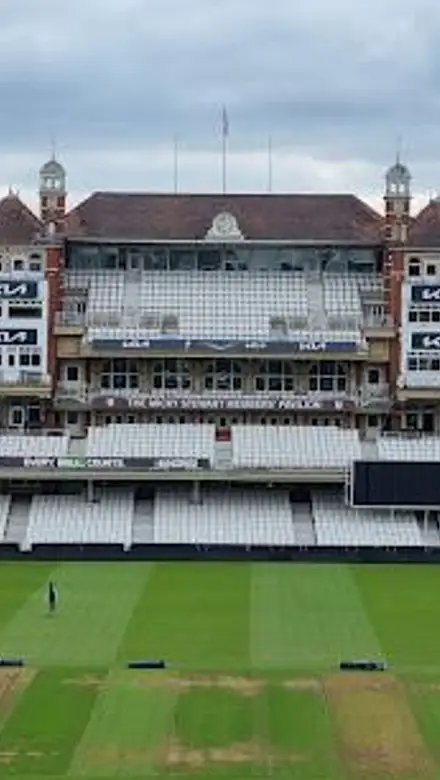
The Oval is one of England’s most important cricket grounds, a south London stadium where heritage, match-day noise and urban scenery meet. Home to Surrey County Cricket Club since 1845, it draws visitors for live cricket, guided tours and events rather than casual sightseeing. The gas holders beyond the stands give the place a distinctly London frame.
On-site amenities
 Restrooms
 Drink options
 Food options
 Seating areas
 Sheltered areas
 Trash bins
 Information boards
 Visitor centre
- Address
- Kennington Oval London
- Phone
- Website
Getting there
Tube
Rail
Bus
Cycle or taxi
Discover more about The Oval
What it is
The Oval, officially the Kia Oval, is a major cricket stadium in Kennington and the long-time home of Surrey County Cricket Club. It is first and foremost a working sports ground, but it also functions as a visitor attraction through guided tours, hospitality spaces and event use. Its reputation rests on cricket history: this is one of the country’s most significant grounds, associated with major milestones in the game and with Surrey’s presence here since 1845.
What it feels like
The atmosphere changes sharply with the calendar. On match days the ground is noisy, social and tightly organised, with queues at gates, movement through concourses and a steady pull toward food counters, bars and fixed seats. On quieter tour days the mood is more measured and informative, with a guide leading visitors through selected behind-the-scenes areas. The experience is not contemplative; it is structured around sport, crowds and the practical rhythm of a stadium in use.
The setting
The Oval sits in an urban pocket of south London rather than a scenic parkland setting. Stands, internal walkways and hospitality areas form a contained bowl, while rail lines, roads and the famous gas holders shape the wider view. That contrast is part of its character: the pitch and stands feel enclosed and purposeful, but the skyline beyond remains unmistakably London. Photographs tend to work best on the exterior approaches, around heritage details, or from elevated seating where the geometry of the ground is clear.
Why people come
Most visitors come for live cricket, especially major fixtures, but the ground also appeals to people interested in sporting history and London’s civic identity. Tours suit those who want context rather than spectacle, while match tickets turn the visit into a longer, more immersive outing. The Oval is a strong choice for a day trip or a half-day visit if you want a place where the city’s transport network, stadium culture and cricket tradition all meet in one compact site.
Practical expectations
Access is straightforward by London standards, with Oval and Vauxhall stations both useful and buses stopping nearby. Walking, cycling and public transport are the sensible options; driving is poor on major event days because parking is limited and road closures may apply. The venue is cashless, has accessible toilets and sheltered seating areas, and offers food and drink on event days. Expect the best experience in mild, dry weather, and the busiest conditions before play starts and during breaks when spectators move around the ground.
Evendo Review Centre
 Google
Guest reviews
Best time to go
Quietest: Jan, Feb & Dec · before 9am or from 10pm
Busy times are Evendo estimates for a typical year, to help you plan. Actual crowds vary with events, school holidays and the weather.
Explore The Oval on the map
A handpicked selection of must-see spots near The Oval, mapped for you.
Get your free copy of our complete guide to The Oval, delivered straight to you.
Everything on this page, from opening hours and how to get there to Eve’s tips and the best time to go, in one PDF you can read offline, print or share.
Already have an account? Sign in
Your The Oval guide is ready.
We'll send it to · Not you? Sign out

Getting your guide ready…
We are putting together a fresh copy of the The Oval guide. This can take up to a minute.
This can take a few moments. If your browser asks, choose Allow so the download can start. You'll find the guide in your Downloads folder.
Nothing happened? Download it again
Sorry, the guide is taking longer than usual. Please try again in a minute, or get it by email instead.
Unlock the best of The Oval
Skip-the-line tickets, guided tours with entry, and walking tours of the area, booked in a few clicks.
 Tour with entry
Kia Oval Cricket Ground Tours
from $27.84 Tour with entry
Go City London Explorer Pass: 2-7 Things To do including Shard
from $82.25 Tour with entry
The London Pass®: 100+ Things To Do - Includes Tower Bridge
from $132.86 Tour with entry
Private E-Bike Cycling Tour Destination London
from $411.23
Other nearby places you may find interesting
The closest places of the same kind, if this one is not quite what you had in mind.
-
-
-
-
-


Swipe for more places
More to explore near The Oval

 Best experiences near The Oval
 Best hotels near The Oval
 Best landmarks near The Oval
 Best attractions near The Oval
 Best shops near The Oval
 Best restaurants near The Oval
 Best bars near The Oval
Do you manage this location?
Take control to get all the benefits, like improved information, better appearance, and stronger visibility across AI-powered discovery.
Explore more

Explore more of London
Explore London: A city of iconic landmarks, rich history, vibrant culture, and endless attractions that cater to every taste, making it a must-visit destination.
Explore London
Explore more of United Kingdom
Discover the United Kingdom: A blend of rich history, stunning landscapes, and vibrant cities, offering a unique travel experience for every visitor.
Explore United Kingdom