Manchester United, Manchester Travel Guide
Free Guide: Experience the legendary 'Theatre of Dreams,' home to Manchester United since 1910, where football history and passion come alive.


A brief summary of Manchester United
Experience the legendary 'Theatre of Dreams,' home to Manchester United since 1910, where football history and passion come alive.
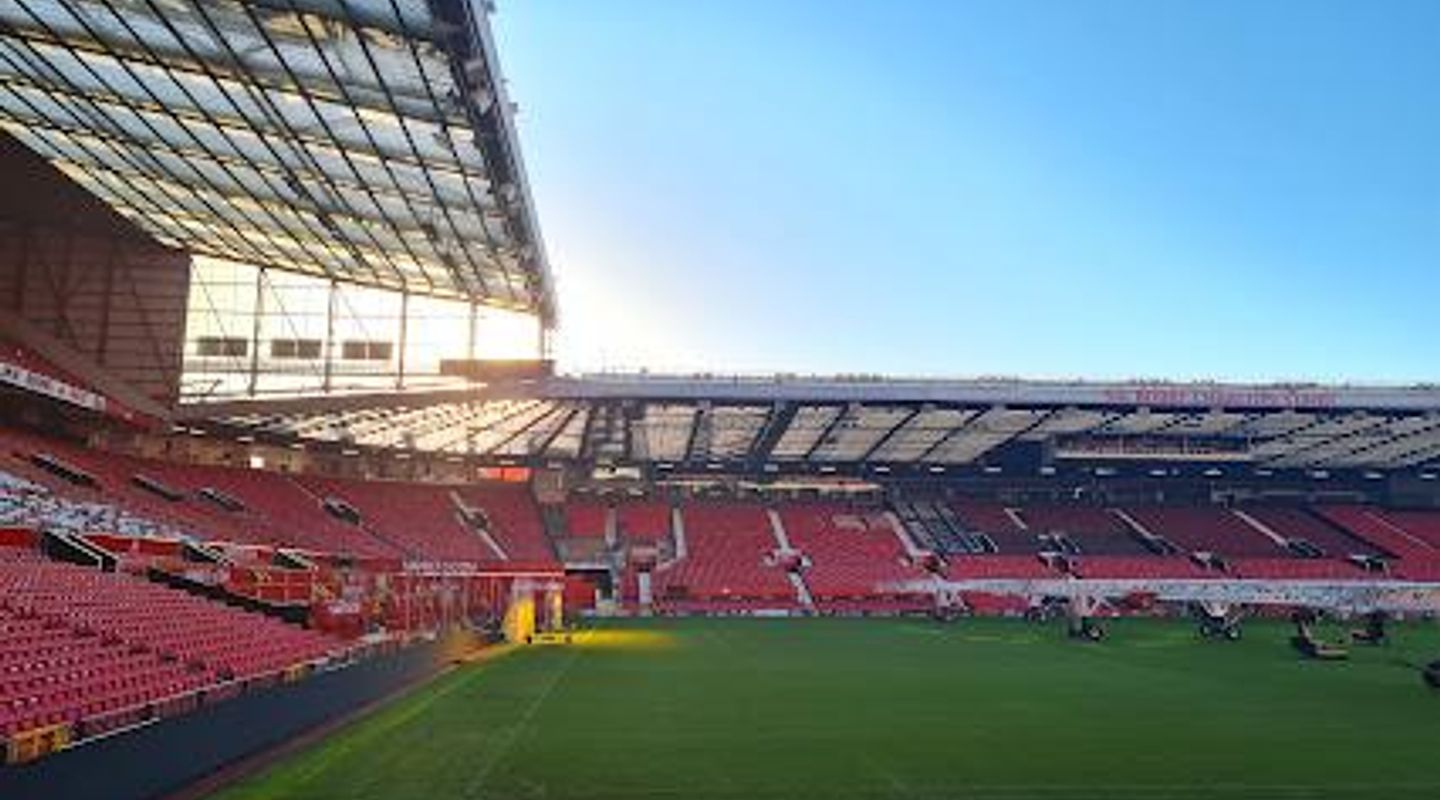
Old Trafford, located on Sir Matt Busby Way in Manchester, is the iconic home stadium of Manchester United Football Club since 1910. Known as the 'Theatre of Dreams,' it boasts a seating capacity of around 74,000 and has witnessed historic football moments, legendary players, and continuous evolution through renovations and technological upgrades. The stadium blends rich heritage with modern amenities, making it a must-visit landmark for football fans worldwide.
On-site amenities
 Restrooms
 Drink options
 Food options
 Seating areas
 Trash bins
 Information boards
 Visitor centre
Opening hours
- Every day9 am–5 pm
Opening hours as listed on the venue’s Google Business Profile. Hours can change for services and special events, so check with the venue before you go.
- Address
- Sir Matt Busby Way, Old Trafford, Stretford, Manchester M16 0RA
- Phone
- Website
Getting there
Public Transport
Bus
Taxi or Rideshare
Walking
Discover more about Manchester United
Origins and Architectural Heritage
Old Trafford was conceived in the early 20th century to accommodate Manchester United’s growing fan base. Designed by the renowned architect Archibald Leitch, the stadium was constructed between 1909 and 1910 and officially opened on 19 February 1910 with a match against Liverpool. Originally, it had a capacity of approximately 80,000, featuring a covered seating stand and open terraces on the other sides. Its classic rectangular layout with curved corners and multi-span stands reflected the architectural style of early football grounds, setting a precedent for stadium design in England.
Resilience Through History
Old Trafford’s history is marked by resilience and renewal. During World War II, the stadium suffered severe damage from German air raids, particularly in 1940 and 1941, which destroyed much of the main stand. For eight years, Manchester United played their home matches at rivals Manchester City's Maine Road while Old Trafford was rebuilt. The stadium reopened in 1949 with a smaller capacity but retained its historic essence. Over the decades, it has hosted not only football matches but also significant events such as World Cup games and major concerts, cementing its status as a cultural landmark.
Modernization and Expansion
From the 1960s onwards, Old Trafford underwent several expansions and renovations. Notable developments include the addition of roofs over terraces, the construction of the ultra-modern two-tiered United Road Stand in the 1960s, and the introduction of executive suites. The 1990s saw a major transformation to an all-seater stadium, including the replacement of the famous Stretford End terraces. By 2006, the stadium reached its current capacity of around 74,000 seats with the addition of upper-tier corners. The North Stand was renamed the Sir Alex Ferguson Stand in 2011 in honor of the legendary manager.
Legacy and Cultural Significance
Nicknamed the 'Theatre of Dreams' by Sir Bobby Charlton, Old Trafford embodies the spirit and legacy of Manchester United. It has witnessed the careers of football legends such as George Best, Eric Cantona, Cristiano Ronaldo, and Sir Bobby Charlton himself. The stadium is not only a sporting venue but also a symbol of community pride and football heritage. Its location on Sir Matt Busby Way honors the transformative manager who led the club to its first league title in 1952 and the European Cup in 1968.
Fan Experience and Innovations
Old Trafford continually enhances the fan experience through technological upgrades like floodlights, digital screens, Wi-Fi connectivity, and improved hospitality suites. Despite its historic fabric, the stadium integrates modern comforts and accessibility features. Future plans aim to expand seating capacity further and incorporate sustainable practices, ensuring Old Trafford remains at the forefront of football venues worldwide.
Atmosphere and Visitor Appeal
Visiting Old Trafford offers an immersive experience into football culture and history. The stadium’s grand scale, passionate crowds, and iconic status create a unique ambience. Beyond match days, tours and events allow visitors to explore behind the scenes, deepening appreciation for the club’s heritage and the stadium’s architectural grandeur. Old Trafford stands as a living monument to the enduring allure of football and Manchester United’s global influence.
Evendo Review Centre
 Google
Guest reviews
Best time to go
Quietest: Jan, Feb & Jul · before 6am or from 11pm
Busy times are Evendo estimates for a typical year, to help you plan. Actual crowds vary with events, school holidays and the weather.
Explore Manchester United on the map
A handpicked selection of must-see spots near Manchester United, mapped for you.
Get your free copy of our complete guide to Manchester United, delivered straight to you.
Everything on this page, from opening hours and how to get there to Eve’s tips and the best time to go, in one PDF you can read offline, print or share.
Already have an account? Sign in
Your Manchester United guide is ready.
We'll send it to · Not you? Sign out

Getting your guide ready…
We are putting together a fresh copy of the Manchester United guide. This can take up to a minute.
This can take a few moments. If your browser asks, choose Allow so the download can start. You'll find the guide in your Downloads folder.
Nothing happened? Download it again
Sorry, the guide is taking longer than usual. Please try again in a minute, or get it by email instead.
Other nearby places you may find interesting
The closest places of the same kind, if this one is not quite what you had in mind.
-
-
-
-
-


Swipe for more places
More to explore near Manchester United

 Best experiences near Manchester United
 Best hotels near Manchester United
 Best landmarks near Manchester United
 Best attractions near Manchester United
 Best shops near Manchester United
 Best restaurants near Manchester United
 Best bars near Manchester United
Do you manage this location?
Take control to get all the benefits, like improved information, better appearance, and stronger visibility across AI-powered discovery.
Explore more

Explore more of Manchester
Discover Manchester, the dynamic city where industrial heritage meets modern culture, offering a unique blend of history, sports, music, and gastronomy in Northern England.
Explore Manchester
Explore more of United Kingdom
Discover the United Kingdom: A blend of rich history, stunning landscapes, and vibrant cities, offering a unique travel experience for every visitor.
Explore United Kingdom