Reconstruction of Mamucium Roman Fort Wall, Manchester Travel Guide
Explore Manchester’s Roman roots at Mamucium, a reconstructed fort showcasing ancient military might and early urban life.
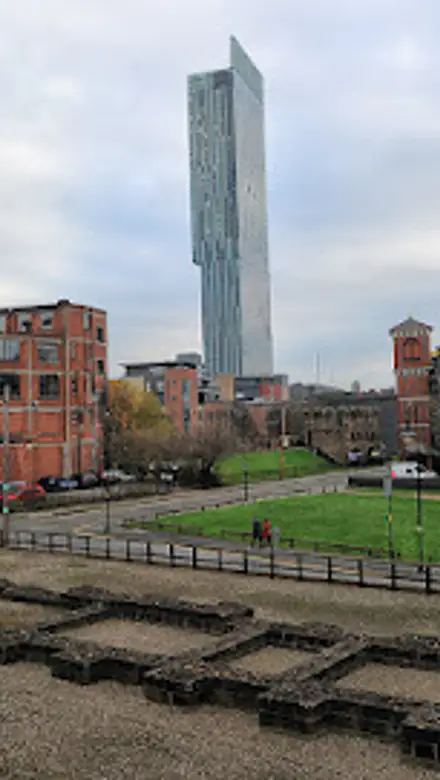
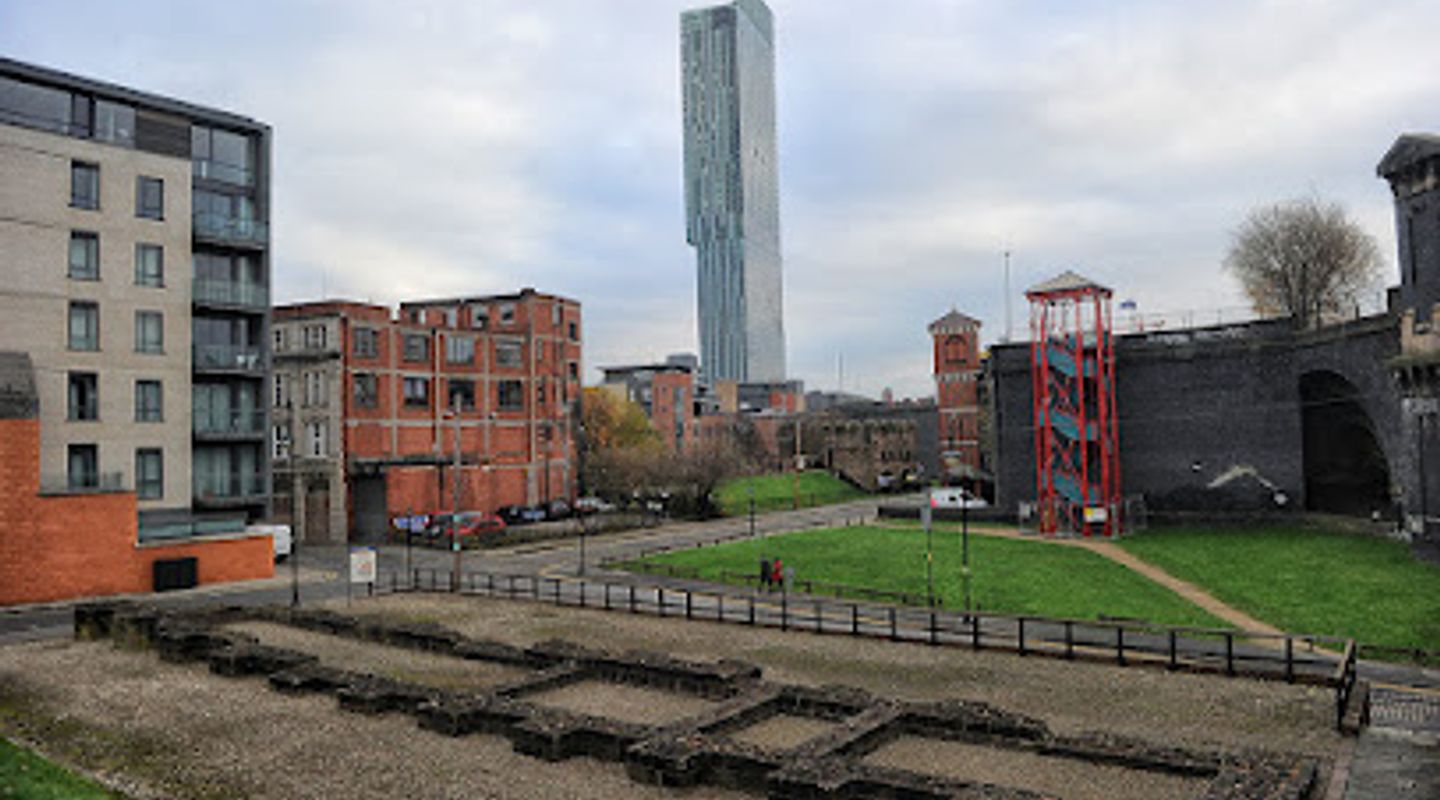
The Reconstruction of Mamucium Roman Fort Wall in Manchester preserves the remains of a Roman auxiliary fort established around AD 79. The site features reconstructed stone ramparts and original foundations, illustrating the fort's evolution from timber to stone over three centuries. It stands within Castlefield, the UK's first Urban Heritage Park, offering insight into Roman military strategy and early settlement that shaped Manchester's origins.
A brief summary to Reconstruction of Mamucium Roman Fort Wall
- Beaufort St, Manchester, GB
- Click to display
- Duration: 0.5 to 1.5 hours
- Free
-
 Outdoor
- Mobile reception: 4 out of 5

Know before you go
Hi, I'm Eve. Here are a few practical things to know before exploring Reconstruction of Mamucium Roman Fort Wall.
- Visit during daylight hours to fully appreciate the reconstructed walls and interpretive displays.
- Combine your visit with a walk around Castlefield Urban Heritage Park to experience Manchester’s layered history.
- Look for the granary foundations and mural illustrating the fort’s construction phases.
- Bring comfortable shoes for walking along the reconstructed ramparts and exploring the surrounding site.
Do you manage this location?
Take control to get all the benefits, like improved information, better appearance, and stronger visibility across AI-powered discovery. Learn more about listing your business on Evendo
Activate your presenceOther nearby places you may find interesting
The closest places of the same kind, if this one is not quite what you had in mind.


Explore Reconstruction of Mamucium Roman Fort Wall on the Map
A handpicked selection of must-see spots near Reconstruction of Mamucium Roman Fort Wall, mapped for you.
Getting There
-
Tram
Take the Manchester Metrolink tram to Deansgate-Castlefield stop, a 5-minute walk from the fort. Trams run frequently, with a single fare costing around £2.50. The stop is accessible and convenient for visitors.
-
Bus
Bus service 33 stops on Liverpool Road near Castlefield. The journey from Manchester city center takes approximately 15–20 minutes. Tickets cost about £2.50. Note that bus frequency may be lower in evenings and weekends.
-
Train
Deansgate train station is a 10-minute walk from Mamucium. Trains connect Manchester with regional destinations. Walking routes are mostly flat but may be busy during peak hours.
-
Walking
From central Manchester, a 20–30 minute walk along mostly paved paths leads to Castlefield. The terrain is flat and suitable for most visitors, offering views of the city’s historic canals and bridges.
For the on-the-go comforts that matter to you
-
 Information Boards
-
 Seating Areas
-
 Trash Bins
Discover more about Reconstruction of Mamucium Roman Fort Wall
Origins and Strategic Importance of Mamucium
Mamucium Roman Fort, founded circa AD 79 under Governor Julius Agricola, was a key military installation guarding the northern frontier of Roman Britain. Positioned on a sandstone outcrop near the confluence of the Rivers Irwell and Medlock, the fort commanded critical Roman roads linking Chester (Deva Victrix) and York (Eboracum), facilitating control over the Brigantes tribe and securing vital supply routes. Its name, possibly derived from a Celtic term meaning 'breast-shaped hill,' reflects the distinctive topography of the site.Architectural Evolution and Military Role
Initially constructed as a timber and turf fort to house an auxiliary cohort of approximately 500 foreign soldiers, Mamucium underwent multiple reconstructions. Around AD 160, the fort expanded with the addition of granaries, reflecting its growing logistical significance. By AD 200, under Emperor Septimius Severus, the fort was rebuilt with stone ramparts up to 2.7 meters thick, replacing earlier wooden defenses. The fort's layout, covering roughly 2 hectares, included defensive ditches and gatehouses, some of which have been reconstructed for modern visitors to experience.The Vicus and Civilian Life Around the Fort
Surrounding Mamucium was a civilian settlement or vicus, which flourished alongside the military presence. This settlement spanned approximately 26 hectares on the fort’s north, east, and west sides and featured timber-framed buildings, a Roman temple, a mansio (inn), and workshops. Archaeological evidence reveals an early industrial estate with metalworking furnaces supplying the Roman army. The vicus was a cosmopolitan hub, hosting merchants and soldiers from across the empire, contributing to the area's cultural and economic vitality.Decline, Abandonment, and Legacy
By the mid-3rd century, the vicus began to decline, with many buildings dismantled and repurposed. Despite this, a reduced military presence likely persisted into the late 4th century. The fort was eventually abandoned around the end of Roman Britain circa AD 410. Subsequent centuries saw the rise of medieval Manchester nearby, but the Roman fort site remained a significant archaeological and historical landmark, preserving the earliest known settlement in the city.Modern Preservation and Visitor Experience
Today, the site lies within Castlefield, the UK's first Urban Heritage Park, where visitors can explore reconstructed sections of the fort’s stone walls and gatehouse, original foundations, and excavated granaries. Interpretive murals and information boards detail the fort’s phases and significance. The surrounding area, once industrial and railway-heavy, has been transformed into a vibrant cultural and leisure destination, blending Manchester’s Roman heritage with its industrial past.Significance in Roman Britain and Manchester’s History
Mamucium exemplifies Roman military engineering and frontier strategy in Britain. It served as a critical node in the Roman network of forts, securing northern territories and facilitating trade and military operations. Its continuous occupation for over three centuries laid the groundwork for Manchester’s development, linking ancient history to the modern cityscape. The fort’s remains offer a tangible connection to the Roman era, enriching understanding of Manchester’s origins and historical landscape.More to explore near Reconstruction of Mamucium Roman Fort Wall
-

Best experiences near Reconstruction of Mamucium Roman Fort Wall
-

Best hotels near Reconstruction of Mamucium Roman Fort Wall
-

Best attractions near Reconstruction of Mamucium Roman Fort Wall
-

Best shops near Reconstruction of Mamucium Roman Fort Wall
-

Best restaurants near Reconstruction of Mamucium Roman Fort Wall
-

Best bars near Reconstruction of Mamucium Roman Fort Wall







Your all‑in‑one travel companion app
Explore expert travel guides, compare and book tours, experiences, hotels, and more—all from the palm of your hand. Download now for seamless trip planning wherever your wanderlust takes you.


Explore More of Manchester

Looking beyond Reconstruction of Mamucium Roman Fort Wall? Discover Manchester for broader travel guides, local hot-spots, and regional highlights.
Explore Manchester
Step inside a historic Victorian police station and magistrates court to explore Greater Manchester’s rich policing history and archives.
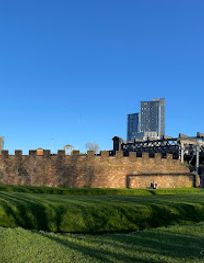
Discover Manchester’s Roman past through tranquil gardens featuring reconstructed fortifications and ancient pathways in the heart of Castlefield.