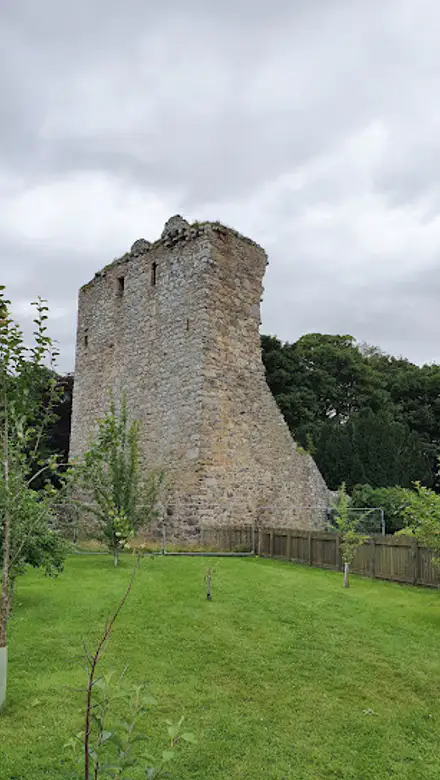
Drumin Castle, Morayshire Travel Guide
Explore the evocative ruins of Drumin Castle, a 15th-century tower house tied to Scotland’s fierce Wolf of Badenoch, set amid stunning Highland landscapes.
Drumin Castle is a ruined 15th-century fortified tower house perched on a ridge above the confluence of the Livet and Avon rivers near Ballindalloch, Scotland. Originally built by Alexander Stewart, the infamous Wolf of Badenoch, it occupies a strategic site with commanding views. Though largely in ruins, the castle's remaining walls showcase medieval defensive features and a rich history tied to Scottish clan struggles and royal grants.
A brief summary to Drumin Castle
- Ballindalloch, GB
- Duration: 1 to 2 hours
- Budget
-
 Outdoor
- Mobile reception: 4 out of 5

Know before you go
Hi, I'm Eve. Here are a few practical things to know before exploring Drumin Castle.
- Wear sturdy footwear for the 500-meter uphill path through woodland to the castle ruins.
- Visit in summer months for best access and to enjoy the surrounding estate’s natural beauty.
- Bring a camera to capture panoramic views of the Glenlivet Estate from the castle’s vantage point.
- Access for disabled visitors is available only via the farm, not the public footpaths.
Do you manage this location?
Take control to get all the benefits, like improved information, better appearance, and stronger visibility across AI-powered discovery. Learn more about listing your business on Evendo
Activate your presenceOther nearby places you may find interesting
The closest places of the same kind, if this one is not quite what you had in mind.
Explore Drumin Castle on the Map
A handpicked selection of must-see spots near Drumin Castle, mapped for you.
Getting There
-
Car
Driving from Ballindalloch, expect a 15 to 20-minute journey along local roads to the Glenlivet Estate car park near the River Livet. Parking is available but limited, so arrive early during peak season. The final 500-meter path to the castle is a steep woodland trail unsuitable for vehicles.
-
Bus and Walking
Take a regional bus from Elgin to Ballindalloch, which takes about 40 to 50 minutes. From Ballindalloch, a taxi or local shuttle can be arranged to the Glenlivet Estate car park. From there, a 500-meter uphill walk through woodland leads to the castle ruins. The path is uneven and not suitable for wheelchairs.
-
Taxi
Taxis from Ballindalloch or Grantown-on-Spey to the Glenlivet Estate car park take approximately 15 to 25 minutes. This is a convenient option if public transport schedules are limited. Note that the final approach to the castle involves a steep footpath.
For the on-the-go comforts that matter to you
-
 Restrooms
-
 Seating Areas
-
 Information Boards
Discover more about Drumin Castle
A Strategic Stronghold Rooted in Medieval Power
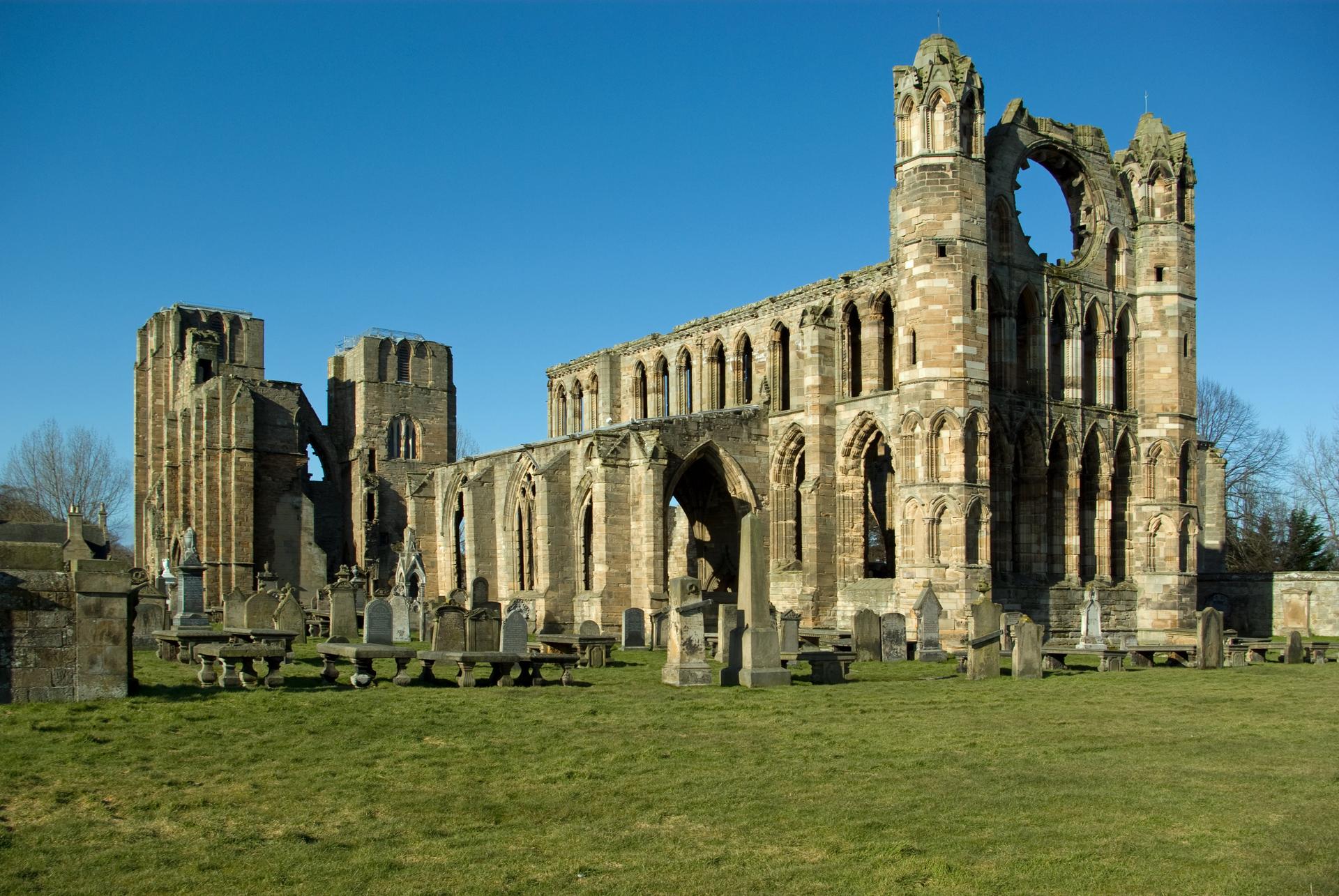
Drumin Castle stands on a prominent ridge overlooking the meeting point of the Livet and Avon rivers, a location chosen for its natural defensive advantages. The site likely hosted earlier fortifications, possibly an Iron Age dun, before the stone tower house was constructed in the late 14th or 15th century. King Robert II granted the lands of Strathavon, including Drumin, to his son Alexander Stewart in 1372. Alexander, better known as the Wolf of Badenoch, was a powerful and notorious figure in Scottish history, infamous for his ruthless actions such as the burning of Elgin Cathedral in 1390. Though Alexander Stewart may not have resided permanently at Drumin, the castle was one of his key strongholds, symbolizing his regional authority.Architectural Remnants and Defensive Features
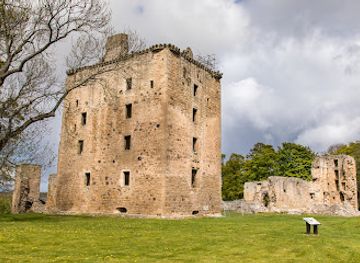
The castle was rebuilt or substantially updated in the late 1400s by Sir Walter Stewart, Alexander’s grandson. It was designed as a fortified tower house, a common style in Scotland during this period. Today, only two walls remain standing, including the northwest wall which retains features such as a corbelled parapet, machicolation (a defensive overhang for dropping projectiles), and a bartizan turret at the western corner. The castle originally included a single barrel-vaulted cellar measuring approximately 11 by 6 meters, with multiple floors above that housed halls and chambers. Although much of the southeast, southwest, and parts of the northeast walls have vanished, the ruins still convey the castle’s former strength and strategic importance.Clan History and Later Decline
After passing from the Stewarts to the Gordons in the late 15th century, Drumin Castle remained occupied by the Stewart family until the early 1700s. The last known resident was Gordon Stewart. The castle fell into disuse shortly thereafter and gradually deteriorated over the next two centuries. Stones from the ruin were repurposed for nearby farm buildings, including a farmhouse built in the early 19th century. The castle also played a minor role in regional conflicts, such as when the Marquis of Argyll stopped there before the Battle of Glenlivet in 1594.Preservation and Public Access
Recognized as a Scheduled Monument, Drumin Castle underwent stabilization efforts between 1999 and 2003 led by Historic Scotland and The Crown Estate to preserve its remaining structure. In 2005, HRH Prince Andrew officially reopened the site after restoration work, honoring local supporters who helped protect the castle. Today, visitors can access the castle via a footpath through mature woodland and an old walled kitchen garden. While the site is open year-round, access for disabled visitors is limited to a route through the adjacent farm. The castle offers a striking glimpse into Scotland’s turbulent medieval past amid scenic Highland surroundings.Setting and Surrounding Landscape
The castle’s elevated position provides panoramic views over the Glenlivet Estate and the surrounding Moray countryside. The natural beauty of the area complements the historic atmosphere, with rivers, wooded slopes, and open fields creating a tranquil yet evocative environment. Nearby attractions include other historic castles and distilleries, making Drumin Castle a meaningful stop for those exploring the cultural heritage of the Scottish Highlands.Legacy of the Wolf of Badenoch
Drumin Castle is closely associated with Alexander Stewart, the Wolf of Badenoch, whose fierce reputation and dramatic exploits have become part of Scottish lore. The castle stands as a testament to the power struggles and clan dynamics of medieval Scotland, inviting visitors to reflect on the complex history that shaped the region. Despite its ruined state, Drumin Castle remains a captivating symbol of resilience and historical intrigue.












Your all‑in‑one travel companion app
Explore expert travel guides, compare and book tours, experiences, hotels, and more—all from the palm of your hand. Download now for seamless trip planning wherever your wanderlust takes you.


Explore More of Morayshire
Looking beyond Drumin Castle? Discover Morayshire for broader travel guides, local hot-spots, and regional highlights.
Explore Morayshire