

HMS TERN (RNAS Twatt) Travel Guide
Free Guide: Explore HMS Tern, Orkney’s preserved WWII naval air station, where history and rugged landscapes meet in a unique wartime heritage site.


A brief summary of HMS TERN (RNAS Twatt)
Explore HMS Tern, Orkney’s preserved WWII naval air station, where history and rugged landscapes meet in a unique wartime heritage site.
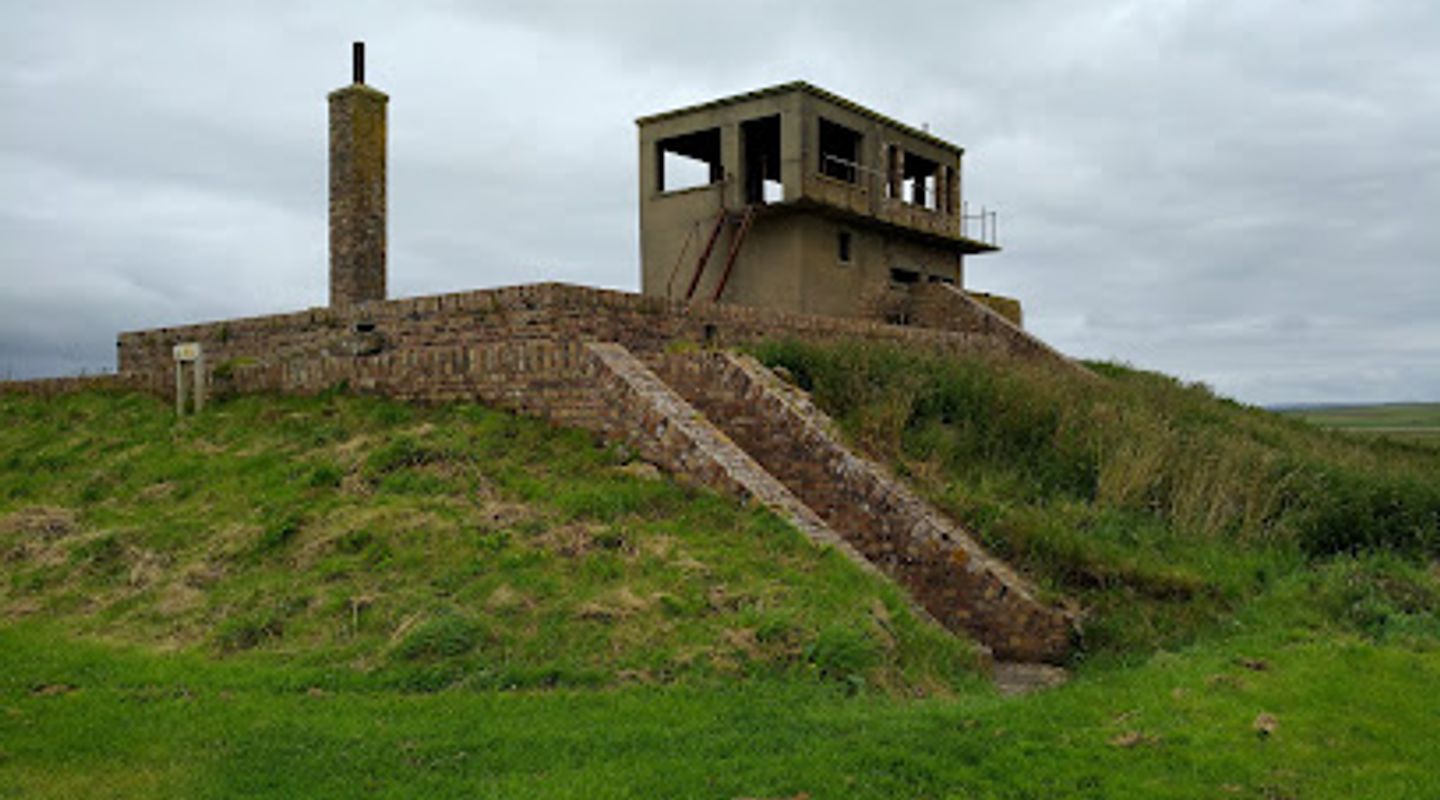
HMS Tern, also known as Royal Naval Air Station Twatt, is a historic WWII naval airfield near Twatt, Orkney. Established in 1941, it served as a key training and operational base for the Royal Navy’s Fleet Air Arm, supporting squadrons from the Home Fleet. Many original buildings remain, including a distinctive bomb-defended control tower, offering a poignant glimpse into wartime aviation history amid Orkney’s rugged landscape.
On-site amenities
 Information boards
Opening hours
- Every dayOpen 24 hours
Opening hours as listed on the venue’s Google Business Profile. Hours can change for services and special events, so check with the venue before you go.
- Address
- Twatt, Orkney KW17 2JH
- Phone
- Website
Getting there
Bus
Car
Taxi
Discover more about HMS TERN (RNAS Twatt)
Origins and Strategic Role in WWII
Royal Naval Air Station Twatt, commissioned as HMS Tern in April 1941, was constructed to bolster the Royal Navy’s air capabilities in Orkney during World War II. Situated near Twatt on Mainland Orkney, it was part of a network of airfields supporting the Home Fleet anchored in Scapa Flow, a crucial naval base. HMS Tern primarily functioned as a training airfield and a staging ground for squadrons disembarking from aircraft carriers, providing vital support to naval aviation operations in the North Atlantic.
Architectural Features and Surviving Structures
The airfield’s layout included runways, hangars, barracks, and operational buildings, many of which survive today. The most iconic structure is the control tower, uniquely designed with an exposed upper floor serving as the control room, protected by earth banks to deflect bomb blasts. Though the control tower is only accessible externally, its preservation offers a tangible connection to the wartime environment. Other remnants include the camp cinema’s front facade and memorials that enrich the site’s historical atmosphere.
Military Units and Aircraft
HMS Tern hosted several Fleet Air Arm squadrons, including the 771 Naval Air Squadron, which relocated here in 1942. The base was equipped to accommodate amphibious aircraft such as the Supermarine Walrus, used for reconnaissance and fleet support. The station played a pivotal role in training and preparing aircrew for operations, supporting the Royal Navy’s strategic objectives in the region until its closure in 1945, with maintenance continuing until the late 1950s.
Postwar Legacy and Preservation
After WWII, HMS Tern was placed on care and maintenance before closing fully in the mid-20th century. Proposals to expand the site into a NATO base were ultimately abandoned. Today, the airfield is a historical landmark, with many original buildings standing as silent witnesses to Orkney’s wartime past. Guided tours and self-guided visits enable visitors to explore the site’s layout and reflect on its role in naval aviation history.
Setting and Visitor Experience
Nestled in Orkney’s scenic West Mainland, HMS Tern offers a tranquil yet evocative environment. The site lies near the Loch of Isbister and is surrounded by rugged landscapes typical of Orkney. Visitors can appreciate the juxtaposition of natural beauty with remnants of military infrastructure, gaining insight into the challenges faced by service personnel stationed here during the war.
Commemorative Elements and Cultural Importance
Memorials on site honor those who served and sacrificed during the air station’s operational years. The preserved structures and interpretive materials contribute to the cultural heritage of Orkney, highlighting the strategic significance of the islands in WWII. HMS Tern stands as a testament to the resilience and dedication of the Royal Navy’s Fleet Air Arm and remains a key historical attraction for military history enthusiasts and visitors to Orkney alike.
Evendo Review Centre
 Google
Guest reviews
Best time to go
Quietest: Jan, Feb & Dec · before 6am or at 9pm
Busy times are Evendo estimates for a typical year, to help you plan. Actual crowds vary with events, school holidays and the weather.
Explore HMS TERN (RNAS Twatt) on the map
A handpicked selection of must-see spots near HMS TERN (RNAS Twatt), mapped for you.
Get your free copy of our complete guide to HMS TERN (RNAS Twatt), delivered straight to you.
Everything on this page, from opening hours and how to get there to Eve’s tips and the best time to go, in one PDF you can read offline, print or share.
Already have an account? Sign in
Your HMS TERN (RNAS Twatt) guide is ready.
We'll send it to · Not you? Sign out

Getting your guide ready…
We are putting together a fresh copy of the HMS TERN (RNAS Twatt) guide. This can take up to a minute.
This can take a few moments. If your browser asks, choose Allow so the download can start. You'll find the guide in your Downloads folder.
Nothing happened? Download it again
Sorry, the guide is taking longer than usual. Please try again in a minute, or get it by email instead.
Other nearby places you may find interesting
The closest places of the same kind, if this one is not quite what you had in mind.
-
Grain Earth House Explore Kirkwall’s hidden Iron Age subterranean marvel, Grain Earth House, where ancient stone pillars guard secrets beneath a modern industrial estate.
-
The Cannon Historic cannon from an American privateer, set against the stunning backdrop of Stromness harbour’s maritime heritage.
-
First Nations And Orcadian Totem Pole A striking wooden monument in Orkney symbolizing friendship and shared heritage between First Nations and Orcadian cultures.
-
Rennibister Earth House Explore Rennibister Earth House, a mysterious Iron Age underground passage in Orkney, where ancient human remains reveal a haunting prehistoric story.
-
Cuween Hill Chambered Cairn A 5,000-year-old Neolithic tomb where ancient rituals and mysteries still whisper from the darkness.
Swipe for more places
More to explore near HMS TERN (RNAS Twatt)

 Best experiences near HMS TERN (RNAS Twatt)
 Best hotels near HMS TERN (RNAS Twatt)
 Best landmarks near HMS TERN (RNAS Twatt)
 Best attractions near HMS TERN (RNAS Twatt)
 Best shops near HMS TERN (RNAS Twatt)
 Best restaurants near HMS TERN (RNAS Twatt)
 Best bars near HMS TERN (RNAS Twatt)
Do you manage this location?
Take control to get all the benefits, like improved information, better appearance, and stronger visibility across AI-powered discovery.
Explore more

Explore more of Orkney
Discover Orkney: A magical blend of ancient history, stunning landscapes, and vibrant local culture in Scotland's enchanting archipelago.
Explore Orkney
Explore more of United Kingdom
Discover the United Kingdom: A blend of rich history, stunning landscapes, and vibrant cities, offering a unique travel experience for every visitor.
Explore United Kingdom
