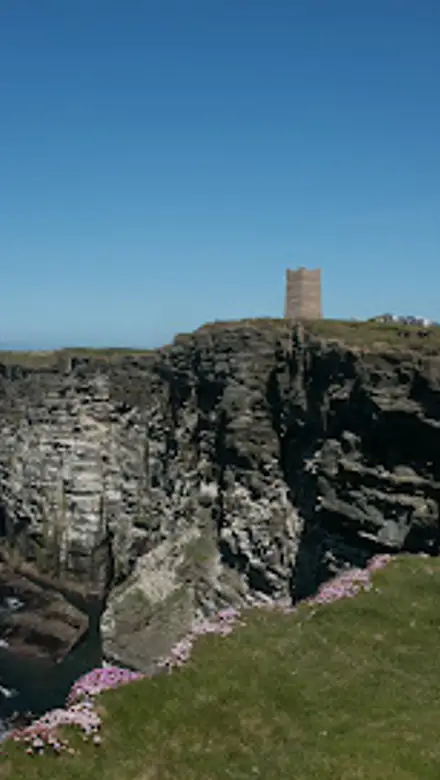
Marwick Head Travel Guide
Free Guide: Dramatic cliffs, vast seabird colonies, and a poignant WWI memorial converge at Orkney’s breathtaking Marwick Head.


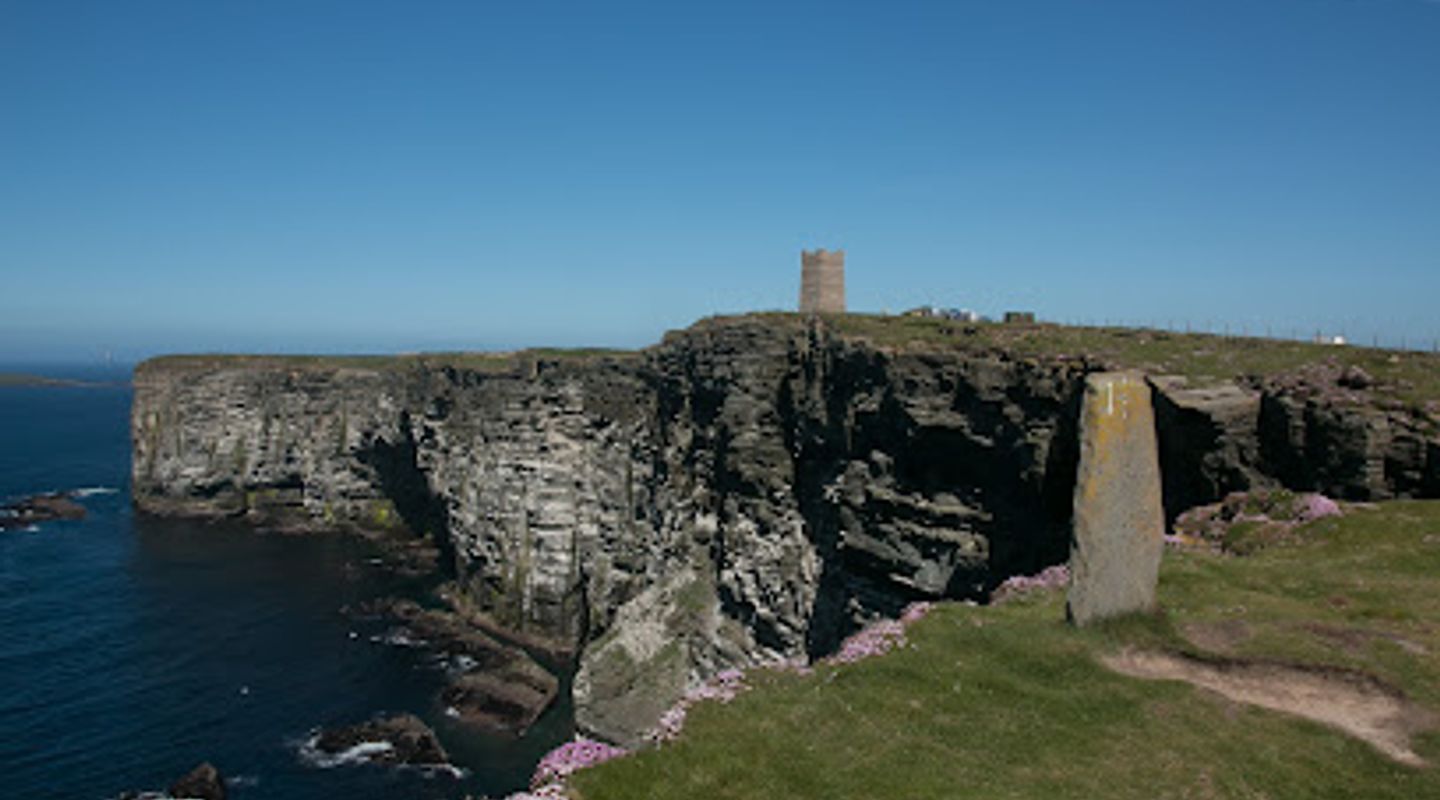
A brief summary of Marwick Head
Dramatic cliffs, vast seabird colonies, and a poignant WWI memorial converge at Orkney’s breathtaking Marwick Head.
Marwick Head is a striking peninsula on Orkney’s West Mainland, renowned for its towering 90m cliffs, vast seabird colonies, and the poignant Kitchener Memorial. This RSPB nature reserve offers breathtaking panoramic views of the Atlantic, diverse wildlife including puffins and rare bumblebees, and a rich World War I history. Visitors can enjoy scenic cliff walks, abundant birdwatching opportunities, and sweeping vistas of the Old Man of Hoy and surrounding islands.
On-site amenities
 Parking
 Information boards
- Address
- Orkney KW17 2ND
Getting there
Bus
Car
Walking
Discover more about Marwick Head
Majestic Cliffs and Wildlife Haven
Marwick Head rises dramatically from the Atlantic Ocean with cliffs soaring nearly 90 meters above the sea, creating one of Orkney’s most spectacular coastal landscapes. This peninsula is a vital RSPB nature reserve, hosting the largest cliff-nesting seabird colony on the Orkney mainland. During spring and summer, thousands of birds including fulmars, guillemots, razorbills, kittiwakes, puffins, and Arctic skuas fill the skies and sandstone ledges. The air carries a distinctive 'fishy' scent from the abundant birdlife, while the grassy slopes are alive with rabbits and the rare Great Yellow Bumblebee, found only in northern Scotland.
Historical Significance of the Kitchener Memorial
Atop the cliffs stands the 48-foot-high Kitchener Memorial, erected in 1926 to honor Lord Kitchener, the British Secretary of State for War, and the 736 men who perished when HMS Hampshire struck a mine off Marwick Head in 1916 during World War I. The memorial was restored in 2016 and now includes a commemorative wall for the crew of HMS Hampshire and the Laurel Crown, lost while minesweeping nearby. This poignant monument offers a solemn reminder of the area's maritime history amid the natural grandeur.
Scenic Walks and Panoramic Views
Visitors can access Marwick Head via a steep but rewarding walk from Marwick Bay or the smaller Cumlaquoy car park. The path leads through grassy terrain with some slippery inclines and narrow gates, culminating at the cliff-top viewpoint near the memorial. From here, on clear days, you can see iconic landmarks such as the Old Man of Hoy and Brough of Birsay. The walk combines natural beauty, wildlife observation, and history, making it a quintessential Orkney experience.
Conservation and Visitor Guidance
As a protected nature reserve, Marwick Head encourages responsible access in line with the Scottish Outdoor Access Code. Visitors are urged to keep dogs on short leads during the bird breeding season (April to mid-August) and to avoid approaching the fragile cliff edges due to erosion risks. Barbecues and fires are prohibited to protect the delicate habitats. Facilities are limited, with parking available at Marwick Bay and Cumlaquoy, and the nearest toilets located several miles away.
Wildlife Beyond Birds
Beyond the seabird spectacle, Marwick Head supports a rich biodiversity including wading birds such as turnstones, purple sandpipers, and ringed plovers in winter, as well as sea ducks offshore. The reserve’s varied habitats provide a refuge for rare insects like the Great Yellow Bumblebee and a thriving population of rabbits, adding to the area's ecological importance and visitor appeal.
Unforgettable Natural and Cultural Experience
Marwick Head offers an immersive experience where dramatic natural beauty meets poignant history. The combination of towering cliffs, vibrant wildlife, and the solemn memorial creates a unique atmosphere that captures the essence of Orkney’s rugged coast and rich heritage. It is a must-visit destination for nature lovers, history enthusiasts, and photographers seeking breathtaking views and meaningful stories.
Evendo Review Centre
 Google
Guest reviews
Best time to go
Quietest: Jan, Feb & Dec · before 3am
Busy times are Evendo estimates for a typical year, to help you plan. Actual crowds vary with events, school holidays and the weather.
Explore Marwick Head on the map
A handpicked selection of must-see spots near Marwick Head, mapped for you.
Get your free copy of our complete guide to Marwick Head, delivered straight to you.
Everything on this page, from opening hours and how to get there to Eve’s tips and the best time to go, in one PDF you can read offline, print or share.
Already have an account? Sign in
Your Marwick Head guide is ready.
We'll send it to · Not you? Sign out

Getting your guide ready…
We are putting together a fresh copy of the Marwick Head guide. This can take up to a minute.
This can take a few moments. If your browser asks, choose Allow so the download can start. You'll find the guide in your Downloads folder.
Nothing happened? Download it again
Sorry, the guide is taking longer than usual. Please try again in a minute, or get it by email instead.
Other nearby places you may find interesting
The closest places of the same kind, if this one is not quite what you had in mind.
-
-
-
-
-


Swipe for more places
More to explore near Marwick Head

 Best experiences near Marwick Head
 Best hotels near Marwick Head
 Best landmarks near Marwick Head
 Best attractions near Marwick Head
 Best shops near Marwick Head
 Best restaurants near Marwick Head
 Best bars near Marwick Head
Do you manage this location?
Take control to get all the benefits, like improved information, better appearance, and stronger visibility across AI-powered discovery.
Explore more

Explore more of Orkney
Discover Orkney: A magical blend of ancient history, stunning landscapes, and vibrant local culture in Scotland's enchanting archipelago.
Explore Orkney
Explore more of United Kingdom
Discover the United Kingdom: A blend of rich history, stunning landscapes, and vibrant cities, offering a unique travel experience for every visitor.
Explore United Kingdom