Dalquharran Castle, Ross Shire Travel Guide
Explore the evocative ruins of Dalquharran Castle, a neo-classical masterpiece turned romantic ruin nestled in Ayrshire’s scenic countryside.
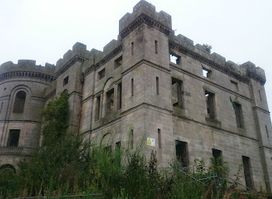
Dalquharran Castle, near Girvan in South Ayrshire, Scotland, is a striking late 18th-century neo-classical mansion designed by Robert Adam. Though now a roofless ruin, it offers evocative remnants of grand architecture and landscaped gardens, standing close to the ruins of the older medieval Dalquharran Castle. The estate reflects centuries of Scottish noble history and the changing fortunes of the Kennedy family.
A brief summary to Dalquharran Castle
- Girvan, KA26 9SW, GB
- Duration: 1 to 3 hours
- Budget
-
 Outdoor
- Mobile reception: 3 out of 5

Know before you go
Hi, I'm Eve. Here are a few practical things to know before exploring Dalquharran Castle.
- Wear sturdy footwear as the terrain around the ruins can be uneven and some areas may be unsafe.
- Visit during daylight hours to fully appreciate the architectural details and surrounding landscape.
- Bring a camera to capture the atmospheric ruins and panoramic views over the Water of Girvan.
- Combine your visit with a walk from the nearby village of Dailly for a pleasant countryside experience.
Do you manage this location?
Take control to get all the benefits, like improved information, better appearance, and stronger visibility across AI-powered discovery. Learn more about listing your business on Evendo
Activate your presenceOther nearby places you may find interesting
The closest places of the same kind, if this one is not quite what you had in mind.
Explore Dalquharran Castle on the Map
A handpicked selection of must-see spots near Dalquharran Castle, mapped for you.
Getting There
-
Car
Driving from Girvan, the castle is approximately a 20-minute drive via local roads. Limited parking is available near the village of Dailly, from where visitors walk to the site. Note that the final approach involves crossing fields and a footbridge, so parking close to the castle itself is not possible.
-
Bus and Walking
Take a regional bus from Girvan to Dailly village, a journey of about 15–25 minutes depending on service. From Dailly, it is a 20-minute flat walk across fields and a footbridge to the castle ruins. The walking path is generally easy but may be muddy in wet weather.
-
Walking
For active visitors, a scenic 1.5-hour walk from Girvan to Dalquharran Castle follows rural lanes and footpaths. The terrain is mostly flat with some uneven ground near the castle. Suitable footwear is recommended.
For the on-the-go comforts that matter to you
-
 Restrooms
-
 Seating Areas
-
 Information Boards
Discover more about Dalquharran Castle
A Tale of Two Castles on the Girvan Water
Dalquharran Castle encompasses two distinct historic sites: the ruined Old Dalquharran Castle and the later grand mansion known as the New Dalquharran Castle. The old castle, dating from the 15th century, was originally a fortified tower house with an L-plan design and corbelled battlements. It was expanded in the late 17th century and surrounded by gardens and parkland. Around 1790, the Kennedy family abandoned the old castle in favor of a newly built mansion nearby, designed by the renowned architect Robert Adam.Robert Adam’s Neo-Classical Vision
The New Dalquharran Castle was commissioned by Thomas Kennedy of Dunure between 1785 and 1790 as a grand country house. Adam’s design echoed his work at Culzean Castle, featuring a symmetrical layout around a central entrance hall with a top-lit spiral staircase. The mansion had four floors, with classical interiors, a drawing room in a round bastion turret, and a large oval dining room. The roof was removed in 1967 to avoid property taxes, leaving the building a haunting shell.Historical Significance and Ownership
The estate belonged to the Kennedy family, influential Scottish nobility, who also owned nearby Culzean Castle. The old castle was a symbol of their medieval power, while the new mansion reflected 18th-century tastes and wealth. The property passed through various hands in the 20th century, serving as a youth hostel and a school for the deaf during World War II. Eventually, the high upkeep costs led to its abandonment.Architectural Features and Landscape Setting
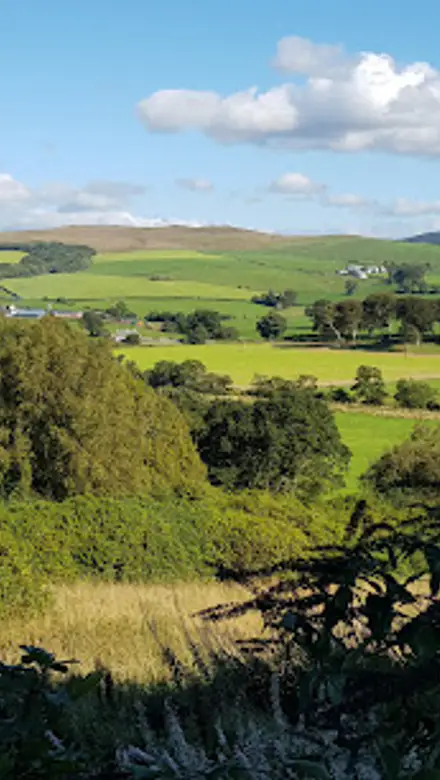
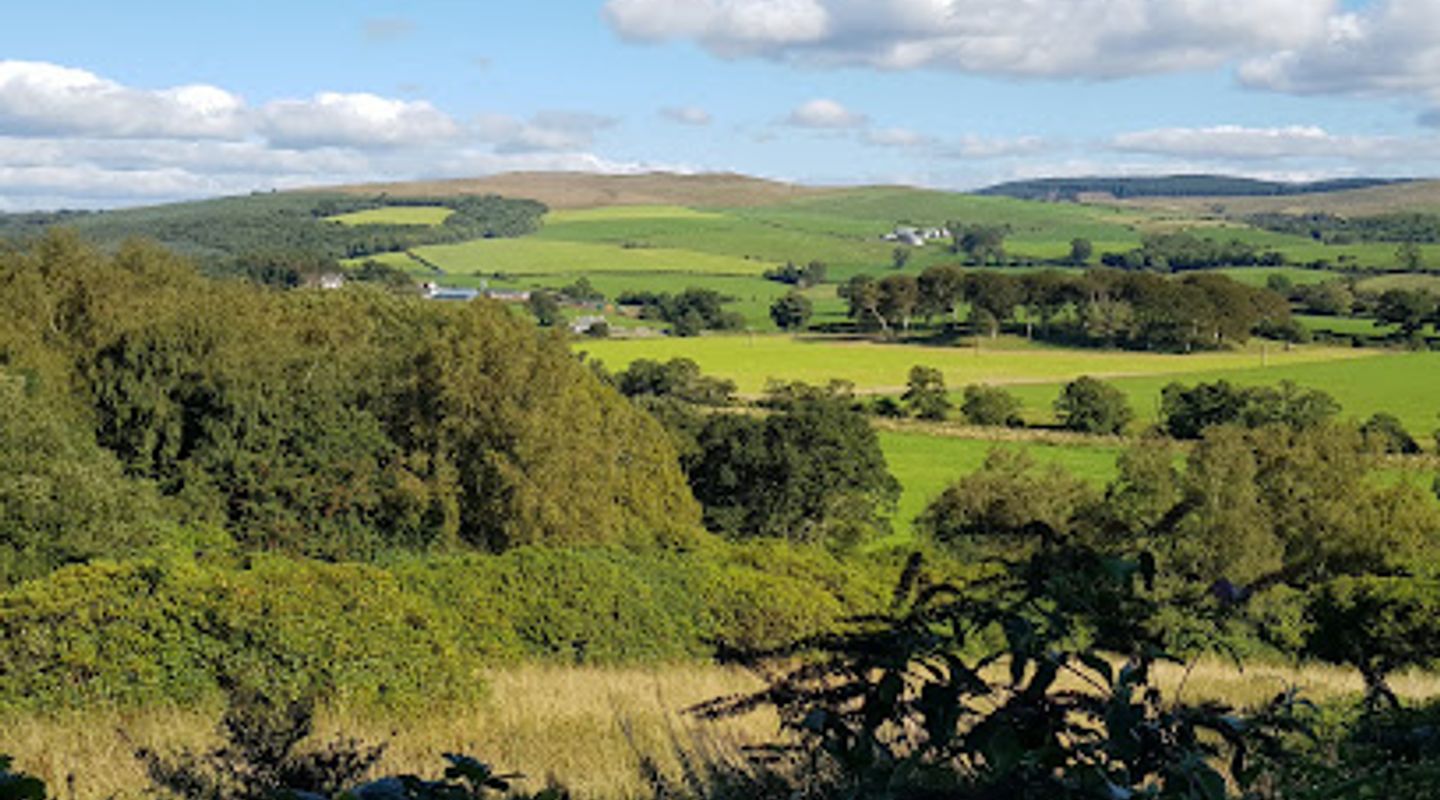
The ruins of both castles stand amid rolling Ayrshire countryside, overlooking the Water of Girvan. The old castle’s vaulted basement and crenellated parapets remain visible, while the new castle’s battlemented walls and round towers hint at its former grandeur. The estate’s landscaped gardens and surrounding parkland add to the atmospheric charm, inviting exploration of the remnants of towers, walls, and garden features.Current Condition and Visitor Experience
Today, Dalquharran Castle is a romantic ruin accessible via well-maintained walking routes from nearby villages. Visitors can wander through the estate fields, cross the river by footbridge, and explore the evocative stone remains that tell stories of Scotland’s architectural evolution and noble lineage. While some areas are unsafe, the site’s quiet ambiance and scenic views make it a compelling destination for history enthusiasts and photographers.Future Prospects and Preservation Challenges
Plans to redevelop the estate, including proposals for housing and a golf course, have been considered but remain unrealized. The castle’s fragile state and lack of a roof pose conservation challenges. Nonetheless, Dalquharran Castle endures as a poignant symbol of Scotland’s layered past, offering a window into aristocratic life and architectural ambition from centuries ago.












Your all‑in‑one travel companion app
Explore expert travel guides, compare and book tours, experiences, hotels, and more—all from the palm of your hand. Download now for seamless trip planning wherever your wanderlust takes you.


Explore More of Ross Shire
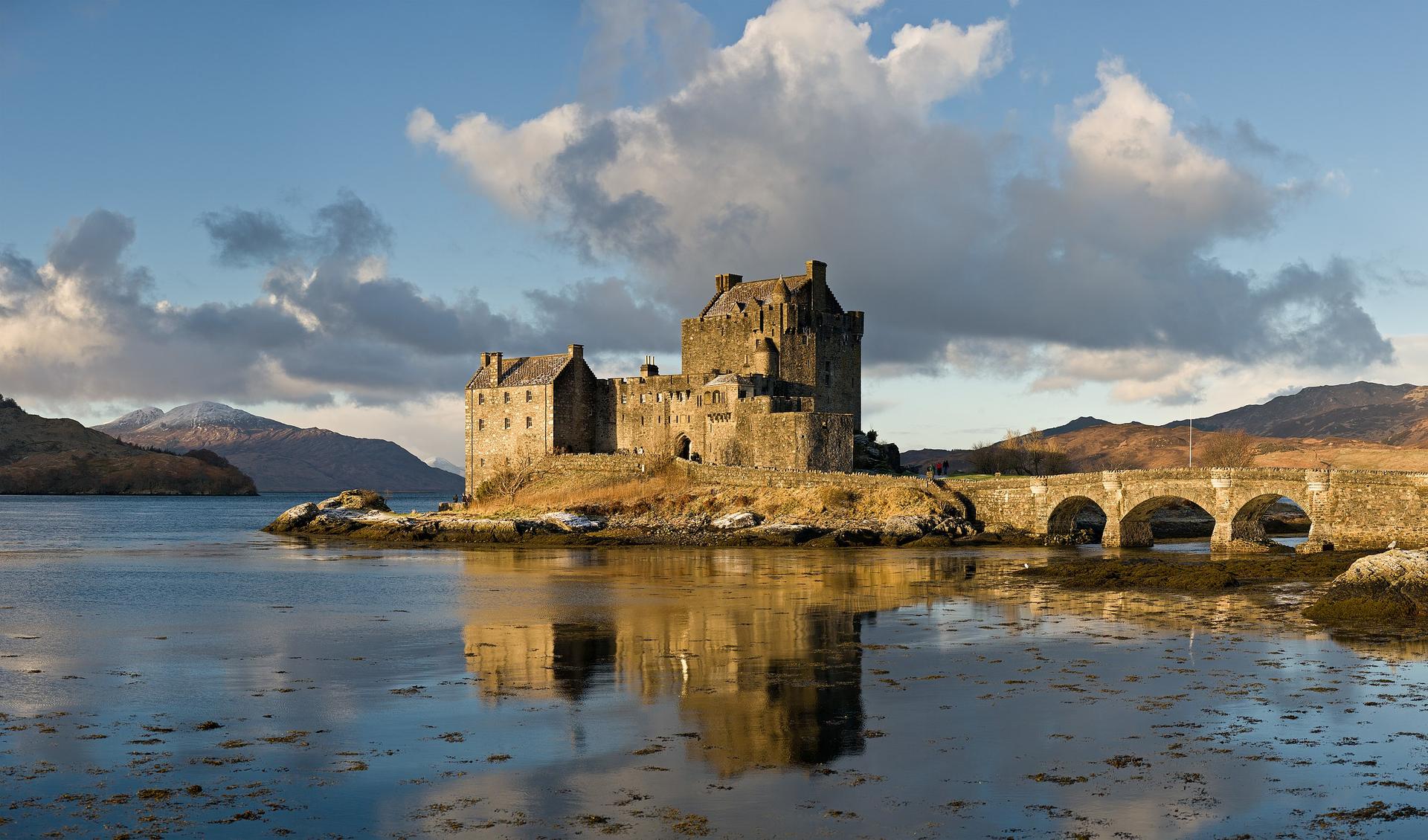
Looking beyond Dalquharran Castle? Discover Ross Shire for broader travel guides, local hot-spots, and regional highlights.
Explore Ross Shire