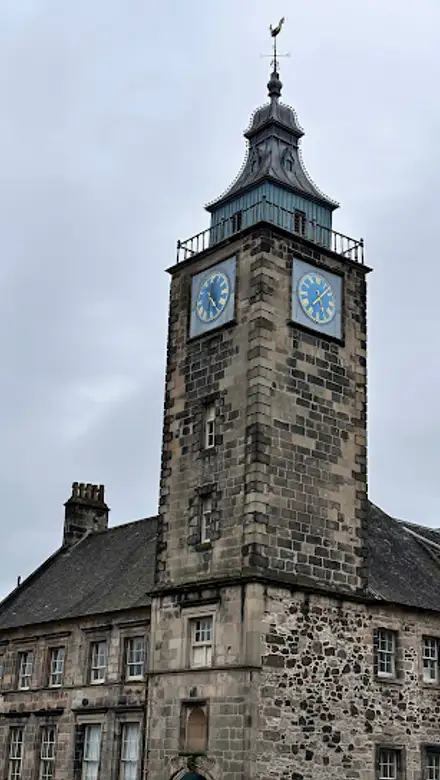
Stirling - Lower Castlehill, Stirling Travel Guide
Free Guide: Scotland's most iconic fortress where Renaissance splendour meets medieval might atop a volcanic crag.



A brief summary of Stirling - Lower Castlehill
Scotland's most iconic fortress where Renaissance splendour meets medieval might atop a volcanic crag.
Stirling Castle stands majestically atop a volcanic crag in central Scotland, one of the nation's most historically significant fortresses. Once the favoured residence of Stewart kings and queens, this iconic stone castle has witnessed coronations, royal celebrations, and pivotal moments in Scottish history. Today, visitors explore its three main enclosures, the splendidly refurbished Royal Palace, the Great Hall with its distinctive hammer-beam roof, and the Chapel Royal. Costumed interpreters bring 16th-century court life to vivid reality, while interactive exhibitions and guided tours reveal centuries of intrigue and grandeur.
On-site amenities
 Restrooms
 Drink options
 Food options
 Seating areas
 Sheltered areas
 Picnic areas
 Trash bins
 Information boards
 Visitor centre
Opening hours
- Every dayOpen 24 hours
Opening hours as listed on the venue’s Google Business Profile. Hours can change for services and special events, so check with the venue before you go.
- Address
- 14B Lower Castlehill, Stirling FK8 1EN
Getting there
Train from Edinburgh
Bus from Edinburgh
Car from Edinburgh or Glasgow
Guided tour from Edinburgh
Discover more about Stirling - Lower Castlehill
A Fortress Shaped by Centuries of Scottish Royalty
Stirling Castle's volcanic crag has been fortified since ancient times, but the castle reached its zenith of importance during the 1500s when it became the beloved residence of Scotland's Stewart dynasty. Generations of Scottish monarchs enlarged, adapted, and embellished the fortress, transforming it into a symbol of royal power and artistic sophistication. The castle's three main enclosures tell the story of medieval military architecture evolving into Renaissance grandeur, each layer revealing how successive rulers left their mark on this extraordinary stronghold.The castle's significance extends far beyond its stone walls. It witnessed the baptism of Prince Henry in the Chapel Royal, hosted the childhood years of Mary Queen of Scots within its Royal Palace, and served as the backdrop for countless royal celebrations from christenings to coronations. The strategic location commanding views across central Scotland made it invaluable during periods of conflict, yet its transformation into a palace demonstrates how Scottish monarchs balanced military necessity with courtly elegance.
The Royal Palace and Great Hall: Renaissance Splendour
The Royal Palace stands as the jewel of Stirling Castle, its lavish design drawing inspiration from European Renaissance fashions to showcase James V's power and refined taste. The palace has been meticulously refurbished to recreate how it appeared during its golden age, with period furnishings and decorative schemes that transport visitors into the opulent world of 16th-century Scottish royalty. Costumed interpreters—bodyguards, court officials, maids of honour, and servants—inhabit these rooms, engaging visitors in conversations about palace life and the intrigues that unfolded within these walls.The Great Hall, completed for James IV in 1503, remains the largest medieval banqueting hall ever constructed in Scotland. Its four pairs of tall windows at the dais end once framed the king and queen during grand feasts, while the distinctive Royal Gold harling on the exterior walls replicates the castle's original appearance. The hall's hammer-beam roof represents a masterpiece of medieval carpentry, and afternoon light streaming through its windows creates an atmosphere that connects modern visitors directly to centuries of royal gatherings.
Interactive Experiences and Living History
Stirling Castle excels at bringing history to life through immersive experiences designed for all ages. The Palace Vaults feature interactive exhibitions where children can try period costumes, play medieval instruments, and discover the music, paints, tools, and humour of the 1500s. The Castle Exhibition traces the fortress's evolution from earliest times to the present, exploring how the castle changed hands eight times in fifty years and revealing the story of mysterious medieval burials beneath a lost royal chapel.Guided tours departing every thirty minutes provide expert context and entertaining anecdotes that transform stone and history into compelling narratives. Self-guided audio tours in multiple languages allow visitors to explore at their own pace, while the Chapel Royal—built in just seven months for James VI's son—stands as one of Scotland's first Protestant kirks and the last royal building constructed at the castle. The Queen Anne Gardens offer peaceful respite, with a beech tree over two hundred years old providing shade and the family trail in the Unicorn Garden entertaining younger visitors.
Practical Visitor Experience and Amenities
The castle's esplanade provides accessible parking with five dedicated spaces located approximately sixty-five metres from the entrance, though the approach involves a steep hill from both the nearby Stirling Bus and Train Stations. The cobbled route through the castle has a maximum gradient of 1:15, with the castle entrance situated 180 metres from the furthest car park point. Four manual wheelchairs are available on a first-come, first-served basis, and a mobility vehicle can transport visitors to the Inner Close upon request, subject to staff availability.The Unicorn Café serves hot and cold refreshments, with food quality praised by visitors, while three gift shops stock souvenirs and merchandise. An adapted toilet is available in the first courtyard, and the Unicorn Café features ramped access with level flooring throughout. The castle's security protocols prohibit suitcases and large rucksacks (30 litres or over), and bag searches may occur at the entrance. Staff control visitor flow and provide additional assistance as needed, ensuring a safe and manageable experience even during peak periods.
Evendo Review Centre
 Google
Guest reviews
Best time to go
Quietest: Jan, Feb & Mar · before 7am or at 8pm
Busy times are Evendo estimates for a typical year, to help you plan. Actual crowds vary with events, school holidays and the weather.
Explore Stirling - Lower Castlehill on the map
A handpicked selection of must-see spots near Stirling - Lower Castlehill, mapped for you.
Get your free copy of our complete guide to Stirling - Lower Castlehill, delivered straight to you.
Everything on this page, from opening hours and how to get there to Eve’s tips and the best time to go, in one PDF you can read offline, print or share.
Already have an account? Sign in
Your Stirling - Lower Castlehill guide is ready.
We'll send it to · Not you? Sign out

Getting your guide ready…
We are putting together a fresh copy of the Stirling - Lower Castlehill guide. This can take up to a minute.
This can take a few moments. If your browser asks, choose Allow so the download can start. You'll find the guide in your Downloads folder.
Nothing happened? Download it again
Sorry, the guide is taking longer than usual. Please try again in a minute, or get it by email instead.
Other nearby places you may find interesting
The closest places of the same kind, if this one is not quite what you had in mind.
-
-
-
-
-


Swipe for more places
More to explore near Stirling - Lower Castlehill
-
 Best experiences near Stirling - Lower Castlehill
-
 Best hotels near Stirling - Lower Castlehill
-
 Best landmarks near Stirling - Lower Castlehill
-
 Best attractions near Stirling - Lower Castlehill
-
 Best shops near Stirling - Lower Castlehill
-
 Best restaurants near Stirling - Lower Castlehill
-
 Best bars near Stirling - Lower Castlehill


Do you manage this location?
Take control to get all the benefits, like improved information, better appearance, and stronger visibility across AI-powered discovery.
Explore more

Explore more of Stirling
Discover Stirling: A city where history comes alive amidst stunning landscapes and cultural richness in the heart of Scotland.
Explore Stirling
Explore more of United Kingdom
Discover the United Kingdom: A blend of rich history, stunning landscapes, and vibrant cities, offering a unique travel experience for every visitor.
Explore United Kingdom