Robert the Bruce Statue, Stirlingshire Travel Guide
A commanding 19th-century statue honoring Robert the Bruce, Scotland’s legendary king, overlooking Stirling Castle and the historic Bannockburn Battlefield.
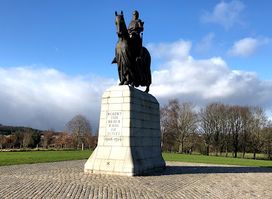
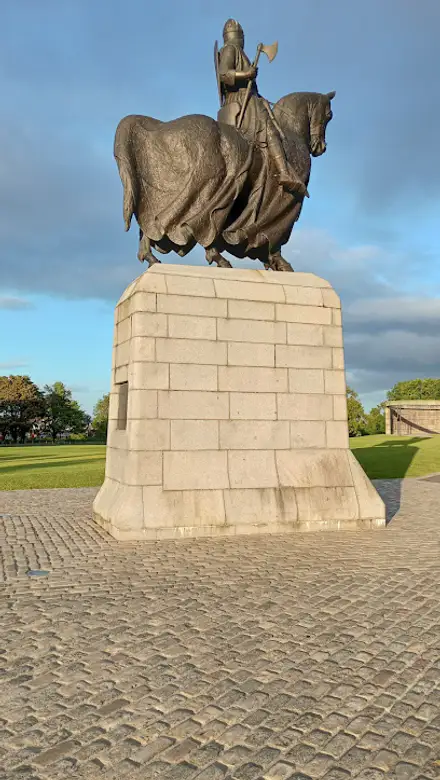
The Robert the Bruce Statue at Stirling Castle is a commanding 19th-century monument honoring Scotland’s legendary king who secured Scottish independence. Sculpted by Andrew Currie in 1876-77, the statue depicts Bruce clad in chain mail, hand resting on his sword’s pommel, with his shield and axe at his feet. Facing south towards Bannockburn Battlefield, it symbolizes Bruce’s pivotal victory in 1314. Located on the esplanade of Stirling Castle, it offers a powerful connection to Scotland’s medieval past and royal heritage.
A brief summary to Robert the Bruce Statue
- 35 Borestone Pl, Stirling, FK7 0PP, GB
- Click to display
- Duration: 0.5 to 1.5 hours
- Free
-
 Outdoor
- Mobile reception: 4 out of 5

Know before you go
Hi, I'm Eve. Here are a few practical things to know before exploring Robert the Bruce Statue.
- Visit early in the day to enjoy the statue with fewer crowds and capture the morning light on the stone figure.
- Take time to explore the nearby Stirling Castle and the Wallace Monument to deepen your understanding of Scotland’s medieval history.
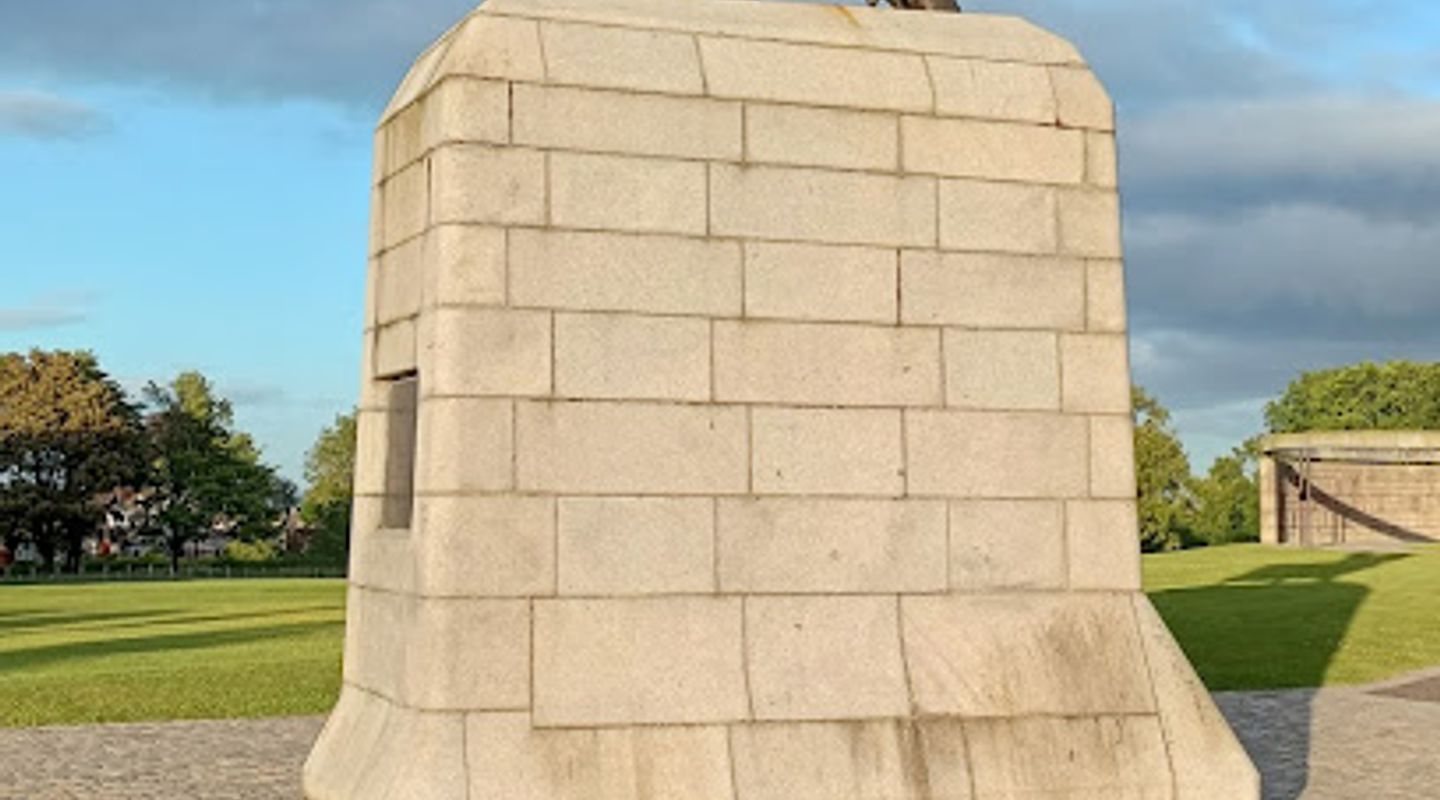
- Look for the Lion Rampant emblem on the statue’s pedestal, symbolizing Scottish royalty and Bruce’s kingship.
- Combine your visit with the Bannockburn Visitor Centre to see the equestrian statue and learn more about the Battle of Bannockburn.
Do you manage this location?
Take control to get all the benefits, like improved information, better appearance, and stronger visibility across AI-powered discovery. Learn more about listing your business on Evendo
Activate your presenceOther nearby places you may find interesting
The closest places of the same kind, if this one is not quite what you had in mind.
Explore Robert the Bruce Statue on the Map
A handpicked selection of must-see spots near Robert the Bruce Statue, mapped for you.
Unlock the Best of Robert the Bruce Statue
Buy tickets
-
No tickets available
Book tours with entry


Book tours without entry

Getting There
-
Bus
Take the local bus service from Stirling city center to Stirling Castle bus stop, approximately a 10-15 minute ride. Buses run frequently during the day with a single fare around £2-£3 GBP. The stop is a short walk to the statue on the castle esplanade.
-
Train and Walk
From Stirling railway station, a 25-30 minute walk uphill leads to Stirling Castle and the Robert the Bruce Statue. The walk is on paved paths but includes some steep sections. Train fares vary by origin, with Stirling well connected to major Scottish cities.
-
Car
Driving to Stirling Castle is possible with parking available at nearby public car parks about 5-10 minutes on foot from the statue. Parking fees typically range from £3-£7 GBP depending on duration. Note that the castle esplanade itself is pedestrian-only.
For the on-the-go comforts that matter to you
-
 Restrooms
-
 Information Boards
-
 Seating Areas
-
 Trash Bins
Discover more about Robert the Bruce Statue
A Monument to Scotland’s Warrior King
The Robert the Bruce Statue at Stirling Castle stands as a solemn tribute to one of Scotland’s most revered historical figures. Created between 1876 and 1877 by sculptor Andrew Currie and designed by illustrator George Cruikshank, the statue captures Bruce in a moment of poised strength. He is depicted wearing chain mail armor, his hand firmly resting on the pommel of his sword, while his shield and axe lie at his feet. The pedestal prominently features a replica of Bruce's shield emblazoned with the Lion Rampant, a symbol of Scottish royalty. Some metal elements, such as the axe head and parts of the sword and shield, add authenticity and depth to the sculpture.Historical Significance and Symbolism
Positioned on the esplanade of Stirling Castle, the statue faces southward towards the Bannockburn Battlefield, the site of Bruce’s decisive victory over English forces in 1314. This battle was a turning point in the Wars of Scottish Independence, cementing Bruce’s legacy as a national hero. The statue’s location near Stirling Castle—one of Scotland’s most important royal residences and fortresses—reinforces its symbolic weight, linking Bruce’s reign and military triumphs to the heart of Scottish sovereignty.Artistic and Cultural Context
The statue emerged during the 19th century, a period marked by a revived public interest in Scotland’s medieval history and national identity. Funded by public subscription, it reflects the era’s romanticized view of Scotland’s past and its heroes. The statue serves as a counterpart to the larger equestrian statue of Robert the Bruce at the Bannockburn Visitor Centre, created in 1964 by Pilkington Jackson, which depicts Bruce on horseback wielding a war axe.Visitor Experience and Surroundings
Visitors encounter the statue on the approach to Stirling Castle, making it an integral part of the castle’s historic atmosphere. The statue’s imposing presence commands attention, inviting reflection on Scotland’s turbulent history and Bruce’s role in shaping it. Nearby, plaques provide historical context, and the views from the castle esplanade include the Wallace Monument, enriching the sense of Scotland’s layered heritage.Legacy of Robert the Bruce
Robert the Bruce’s life was marked by struggle and triumph. After killing his rival John Comyn in 1306, he was declared king but initially faced setbacks and exile. His eventual return led to a series of military victories culminating in Bannockburn. Beyond the battlefield, Bruce’s legacy includes the 1320 Declaration of Arbroath, a letter asserting Scottish independence. The statue at Stirling Castle is one of several commemorations across Scotland celebrating his enduring influence.Preservation and Cultural Importance
The statue has undergone restoration to preserve its condition, ensuring it remains a lasting symbol of Scottish pride. It stands not only as a historical monument but also as a cultural icon, inspiring visitors to explore Scotland’s rich medieval past and the enduring story of its fight for freedom.More to explore near Robert the Bruce Statue













Your all‑in‑one travel companion app
Explore expert travel guides, compare and book tours, experiences, hotels, and more—all from the palm of your hand. Download now for seamless trip planning wherever your wanderlust takes you.


Explore More of Stirlingshire
Looking beyond Robert the Bruce Statue? Discover Stirlingshire for broader travel guides, local hot-spots, and regional highlights.
Explore Stirlingshire