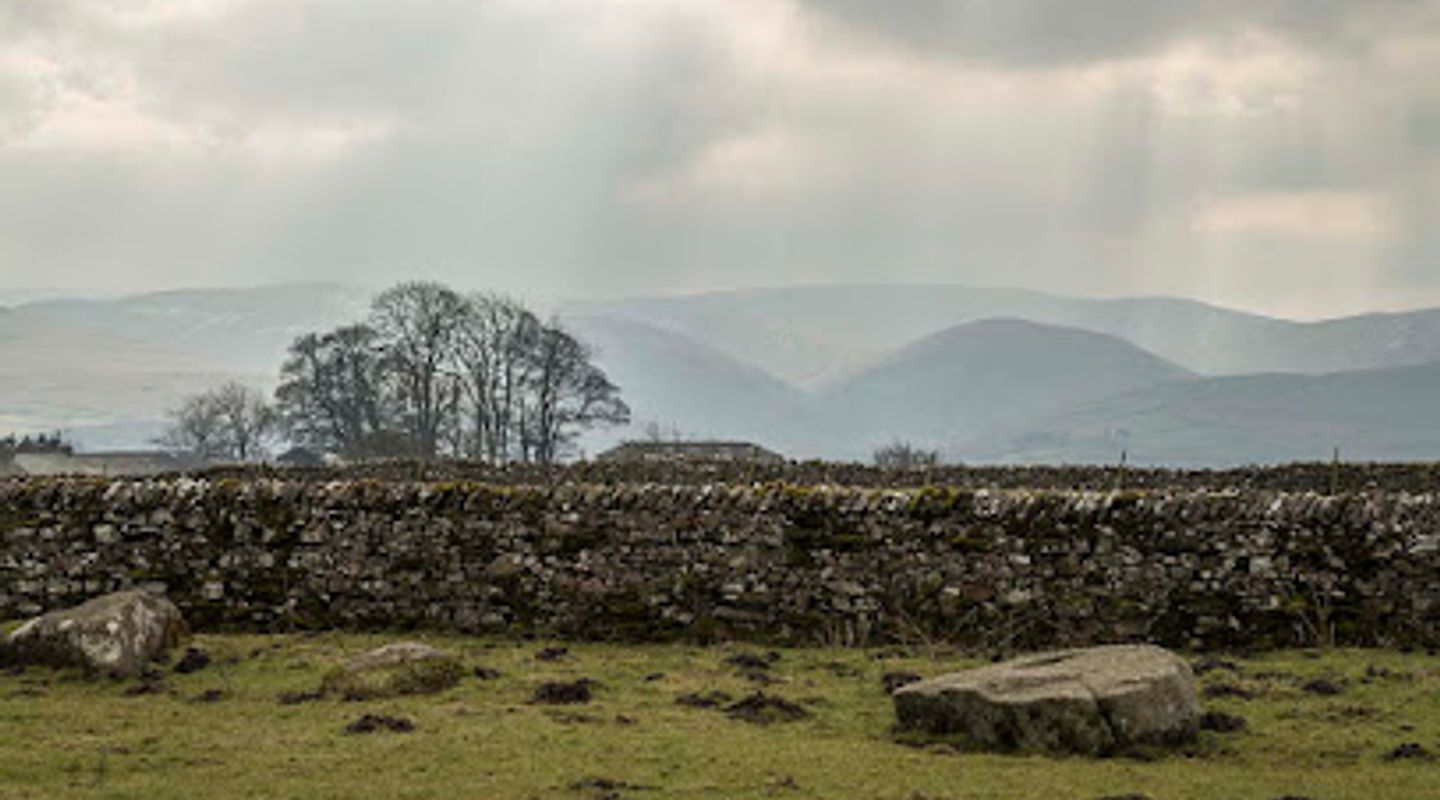
Gamelands Stone Circle, Westmorland Travel Guide
Explore Cumbria’s largest prehistoric stone circle, a mysterious embanked monument steeped in ancient history and rural charm.
Gamelands Stone Circle, near Orton in Penrith, Cumbria, is a large embanked prehistoric stone circle dating from the Late Neolithic to Early Bronze Age (c. 2400-1000 BC). Though many stones now lie recumbent due to 19th-century disturbances, the circle’s outline remains visible, offering a glimpse into ancient ritual landscapes. Surrounded by the tranquil Cumbrian countryside, it stands as the largest stone circle in Cumbria, rich in archaeological significance and local legend.
A brief summary to Gamelands Stone Circle
- Penrith, Orton, GB
- Duration: 0.5 to 1.5 hours
- Free
-
 Outdoor
- Mobile reception: 4 out of 5

Know before you go
Hi, I'm Eve. Here are a few practical things to know before exploring Gamelands Stone Circle.
- Visit during daylight hours to fully appreciate the circle’s layout and surrounding countryside.
- Bring sturdy footwear as the terrain around the circle is grassy and uneven.
- Use the nearby free car park for convenient access.
- Combine your visit with other nearby prehistoric sites in Cumbria for a fuller experience.
Do you manage this location?
Take control to get all the benefits, like improved information, better appearance, and stronger visibility across AI-powered discovery. Learn more about listing your business on Evendo
Activate your presenceOther nearby places you may find interesting
The closest places of the same kind, if this one is not quite what you had in mind.
Explore Gamelands Stone Circle on the Map
A handpicked selection of must-see spots near Gamelands Stone Circle, mapped for you.
Getting There
-
Car
Driving from Penrith to Gamelands Stone Circle takes approximately 25 to 35 minutes. There is a free car park near the site, but parking is limited and can fill quickly during peak times. The rural roads are narrow and may require cautious driving.
-
Bus and Walk
Take a local bus from Penrith to Orton, which takes about 40 to 50 minutes depending on the service. From Orton, the stone circle is reachable by a 20-minute walk over grassy terrain, which may be uneven and muddy in wet weather. Bus services may be infrequent, so check schedules in advance.
-
Walking
For active walkers, a countryside hike from nearby villages can take 1 to 2 hours depending on the starting point. Paths are mostly grassy and may be uneven, requiring suitable footwear. This option offers a scenic route through the rural landscape.
For the on-the-go comforts that matter to you
-
 Restrooms
-
 Seating Areas
-
 Trash Bins
-
 Information Boards
Discover more about Gamelands Stone Circle
Origins and Historical Context of Gamelands Stone Circle
Gamelands Stone Circle is a prehistoric monument located near Orton, Penrith, in Cumbria, England. It dates back to the Late Neolithic to Early Bronze Age period, approximately between 2400 and 1000 BC. This era marked a significant shift in human activity, as communities transitioned from mobile hunter-gatherers to more settled agricultural societies who constructed monumental stone circles for ritual and social purposes. Gamelands is considered the largest stone circle in Cumbria, emblematic of the region’s rich prehistoric heritage.Physical Characteristics and Archaeological Features
The circle is embanked, meaning it is surrounded by a raised earth bank, which adds to its distinctive profile in the landscape. The stones themselves are primarily made of red granite, typical of local geology. Unfortunately, in the 1860s, many of the stones were deliberately pulled down, buried, or even blasted with gunpowder, severely impacting the original structure. Despite this, the outline of the circle remains clearly visible, allowing visitors to appreciate its impressive scale and layout. The stones today mostly lie recumbent, and it is uncertain if they were originally erected upright or placed flat.Significance and Theories Behind Stone Circles
Stone circles like Gamelands are thought to have served multiple purposes. Archaeologists suggest they were likely focal points for communities to gather for ceremonies, rituals, and social exchange. Some theories propose astronomical alignments related to solar and lunar events, such as solstices, which may have been important in prehistoric calendars and agricultural cycles. Others argue that stone circles marked territorial boundaries or places of trade and communication among different groups. The exact original intent remains a subject of ongoing research and debate.Local Legends and Cultural Importance
The name "Gamelands" may derive from historical landowners, such as Gamel de Pennington, a medieval lord associated with the area. Local folklore often surrounds stone circles, imbuing them with mystical qualities or stories of supernatural interference. While specific legends about Gamelands are sparse, similar circles in Cumbria have tales of stones sinking into the earth or being moved by otherworldly forces. These narratives reflect the enduring cultural resonance of such ancient sites.Visiting Experience and Surroundings
Situated in a peaceful rural setting near Orton, the stone circle is accessible via a free car park nearby, making it a convenient stop for travelers exploring Cumbria’s prehistoric sites. The surrounding landscape is typical of the Lake District’s gentle hills and pastoral fields, offering a tranquil and contemplative atmosphere. Although the stones are not standing, the site’s scale and setting provide a powerful sense of connection to the distant past.Preservation and Modern Archaeological Efforts
The site has suffered from agricultural activity and 19th-century damage, but local efforts have aimed to preserve its outline and raise awareness of its importance. Archaeological projects have sought to better understand the circle’s construction and context within the broader prehistoric landscape of Cumbria. Visitors are encouraged to respect the site’s fragile nature and contribute to its ongoing protection.












Your all‑in‑one travel companion app
Explore expert travel guides, compare and book tours, experiences, hotels, and more—all from the palm of your hand. Download now for seamless trip planning wherever your wanderlust takes you.


Explore More of Westmorland

Looking beyond Gamelands Stone Circle? Discover Westmorland for broader travel guides, local hot-spots, and regional highlights.
Explore Westmorland
Experience authentic farm-fresh food and heartfelt hospitality at Tebay Services Southbound, a unique motorway stop rooted in Cumbrian farming tradition.

A family-run farm shop and motorway service offering authentic local produce, handmade food, and a warm Cumbrian welcome since 1972.