199 Steps Travel Guide
Free Guide: Climb the legendary 199 Steps in Whitby, where history, faith, and Dracula’s shadow converge atop the scenic East Cliff.


A brief summary of 199 Steps
Climb the legendary 199 Steps in Whitby, where history, faith, and Dracula’s shadow converge atop the scenic East Cliff.
The 199 Steps in Whitby, North Yorkshire, are a historic stone staircase connecting the Old Town to St Mary's Church and Whitby Abbey. Dating back to at least the 14th century, these steps were once wooden and served as a test of Christian faith and a route for funeral processions. Famous for their connection to Bram Stoker's Dracula, they offer visitors a climb steeped in history, spirituality, and stunning views over Whitby.
On-site amenities
 Seating areas
 Information boards
Opening hours
- Every dayOpen 24 hours
Opening hours as listed on the venue’s Google Business Profile. Hours can change for services and special events, so check with the venue before you go.
- Address
- Whitby YO22 4DE
- Website
Getting there
Bus
Walking
Taxi
Discover more about 199 Steps
Ancient Origins and Spiritual Significance
The 199 Steps have been an integral part of Whitby's landscape since at least the 14th century, with records dating back to 1340 and some historians suggesting an even earlier origin. Originally constructed from wood, these steps provided the most direct path from the Old Town to St Mary's Church and the adjoining Whitby Abbey, a site founded in the 7th century by St Hilda. The climb was historically seen as a test of Christian faith, with pilgrims ascending the steps as a demonstration of their devotion. The wooden steps were replaced by durable Sneaton stone in 1774, preserving the route for future generations.
A Route Marked by Tradition and Ceremony
Beyond their spiritual role, the steps played a practical part in Whitby’s funeral customs. Until the early 20th century, coffins were carried up the steep flight to the churchyard. To ease this arduous task, stone benches—originally wooden planks—were installed along the climb to allow pallbearers to rest. This tradition, deeply embedded in local culture, ended in 1933 with the funeral of Reverend George Austen. The steps also feature level platforms where mourners could pause, underscoring the physical and emotional challenge of the ascent.
Literary Fame and Gothic Atmosphere
The 199 Steps gained international recognition through Bram Stoker’s 1897 novel Dracula. Stoker, who stayed in Whitby during the 1890s, drew inspiration from the town’s dramatic cliffs and ancient ruins. In the novel, Dracula famously ascends the steps in the form of a black dog after a shipwreck, cementing the staircase’s place in Gothic literature and popular culture. Visitors today can imagine the eerie atmosphere that captivated Stoker and influenced his iconic vampire tale.
Architectural and Historical Preservation
The steps have undergone several restorations, including a significant renovation in 1988 supported by Prince Charles. In 2004, concerns over structural safety led to a public fundraising campaign that raised funds from 199 donors, each contributing £1,000, to stabilize the staircase. The steps are a Grade I listed structure, recognized for their historical and architectural importance, and remain under the care of the Church of St Mary’s parochial council.
Visitor Experience and Scenic Rewards
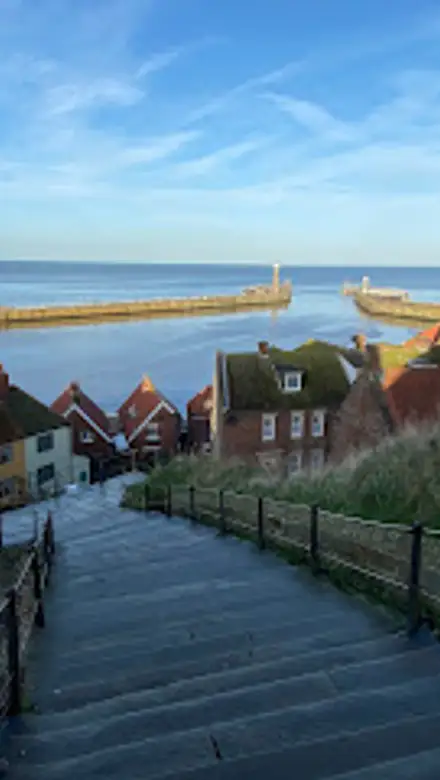
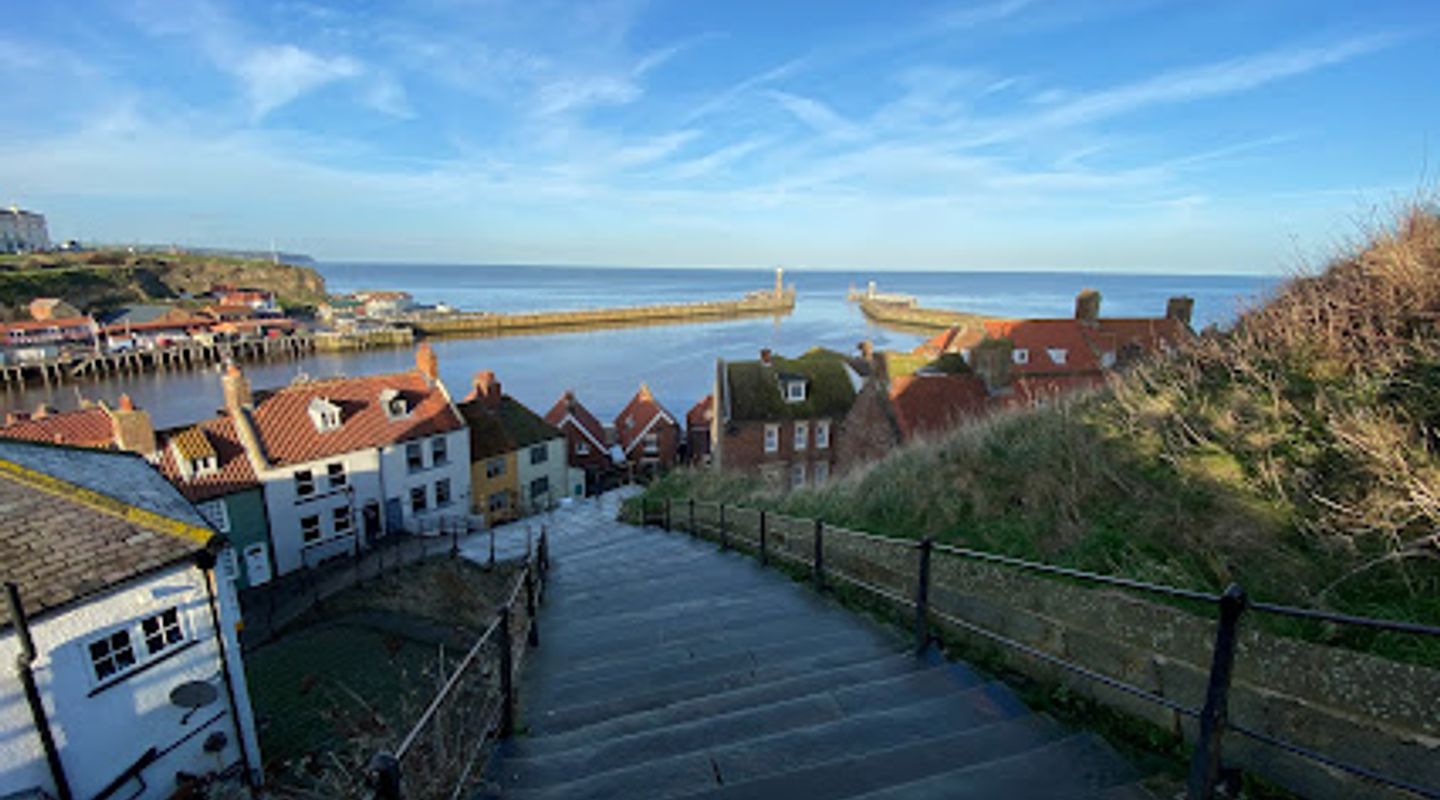
Climbing the 199 Steps offers visitors not only a physical challenge but also breathtaking views of Whitby’s harbor, coastline, and the ruins of Whitby Abbey. The ascent is punctuated by the historic benches and platforms, inviting rest and reflection. At the summit, St Mary’s Churchyard awaits, a place rich with history and panoramic vistas. The steps are a must-visit for those interested in history, literature, and the unique charm of this Yorkshire coastal town.
Ongoing Mystique and Cultural Legacy
Despite its name, the exact number of steps has been debated for centuries, with counts ranging from 190 to 200. This ambiguity adds to the staircase’s mystique. The 199 Steps continue to be a symbol of Whitby’s heritage, blending myth, religion, and literary fame. They stand as a testament to the town’s enduring cultural landscape, inviting visitors to partake in a journey through time and story.
Evendo Review Centre
 Google
Guest reviews
Best time to go
Quietest: Jan, Feb & Dec · before 6am or at 10pm
Busy times are Evendo estimates for a typical year, to help you plan. Actual crowds vary with events, school holidays and the weather.
Explore 199 Steps on the map
A handpicked selection of must-see spots near 199 Steps, mapped for you.
Get your free copy of our complete guide to 199 Steps, delivered straight to you.
Everything on this page, from opening hours and how to get there to Eve’s tips and the best time to go, in one PDF you can read offline, print or share.
Already have an account? Sign in
Your 199 Steps guide is ready.
We'll send it to · Not you? Sign out

Getting your guide ready…
We are putting together a fresh copy of the 199 Steps guide. This can take up to a minute.
This can take a few moments. If your browser asks, choose Allow so the download can start. You'll find the guide in your Downloads folder.
Nothing happened? Download it again
Sorry, the guide is taking longer than usual. Please try again in a minute, or get it by email instead.
Unlock the best of 199 Steps
Skip-the-line tickets, guided tours with entry, and walking tours of the area, booked in a few clicks.


Other nearby places you may find interesting
The closest places of the same kind, if this one is not quite what you had in mind.
-
-
-
-
-


Swipe for more places
More to explore near 199 Steps

 Best experiences near 199 Steps
 Best hotels near 199 Steps
 Best landmarks near 199 Steps
 Best attractions near 199 Steps
 Best shops near 199 Steps
 Best restaurants near 199 Steps
 Best bars near 199 Steps
Do you manage this location?
Take control to get all the benefits, like improved information, better appearance, and stronger visibility across AI-powered discovery.
Explore more

Explore more of Whitby
Discover Whitby: A picturesque coastal town where history meets the sea, offering breathtaking views, charming streets, and a touch of Gothic allure.
Explore Whitby
Explore more of United Kingdom
Discover the United Kingdom: A blend of rich history, stunning landscapes, and vibrant cities, offering a unique travel experience for every visitor.
Explore United Kingdom