Baile Hill, York Travel Guide
Free Guide: A wooded Norman motte hidden in plain sight, offering quiet history and sweeping views of York Minster.


A brief summary of Baile Hill
A wooded Norman motte hidden in plain sight, offering quiet history and sweeping views of York Minster.
Baile Hill is a tree-covered Norman motte rising 8 metres above the landscape in York's Bishophill area, marking the site of William the Conqueror's second defensive castle built in 1069. Now incorporated into York's historic city walls, this quiet historical gem offers an accessible walk along medieval ramparts with sweeping views of York Minster. Free to visit and largely overlooked by tourists, it provides an intimate connection to the city's layered past spanning Roman, Viking, Norman, and Civil War periods.
On-site amenities
 Information boards
 Seating areas
 Trash bins
Opening hours
- Every day8 am–7 pm
Opening hours as listed on the venue’s Google Business Profile. Hours can change for services and special events, so check with the venue before you go.
- Address
- York YO1 6DU
- Phone
- Website
Getting there
City Bus from York City Centre
Walking from York City Centre
Taxi or Ride-Share from York Station
Cycling from York City Centre
Discover more about Baile Hill
A Forgotten Fortress of the Norman Conquest
Baile Hill stands as a quiet testament to William the Conqueror's iron grip on northern England. Built in 1069, just one year after the Norman invasion, this motte-and-bailey castle was constructed on the west bank of the River Ouse as part of a strategic defensive system. William had already built York Castle (Clifford's Tower) on the opposite bank in 1068, but when a violent rebellion erupted in 1069—joined by Danish raiders and English insurgents—the Norman king responded with devastating force. The "Harrying of the North" saw much of York burned, including the Normans' own fortifications. Baile Hill was rebuilt and served as a crucial stronghold for the next century, controlling the western approaches to the city and demonstrating Norman military dominance through its prominent positioning across the river from its twin fortress.
From Medieval Power to Quiet Decline
In its heyday, Baile Hill would have been an imposing structure, comparable in size to other major motte-and-bailey castles of the 1100s. Excavations in 1979 uncovered remnants of timber buildings and a sturdy palisade fence at the summit, along with a staircase carved into the mound itself. The surrounding bailey was defended by earthen banks built atop the earlier Roman city wall. By the 13th century, however, Baile Hill's fortunes had reversed. While York Castle across the river received substantial investment and was eventually rebuilt in stone, Baile Hill fell from favor—possibly due to geography, as York Castle's position between two rivers offered superior defence, or perhaps because King Henry III simply preferred the rival fortress. By 1300, the castle was all but abandoned, its strategic importance eclipsed by its more celebrated counterpart.
Repurposing and Resilience Through the Centuries
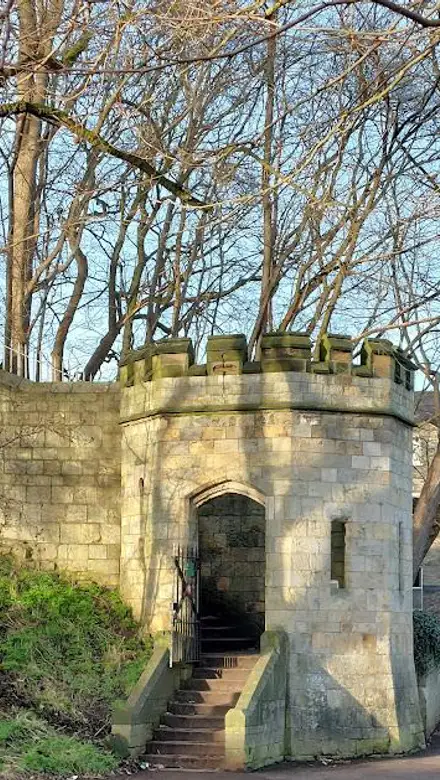
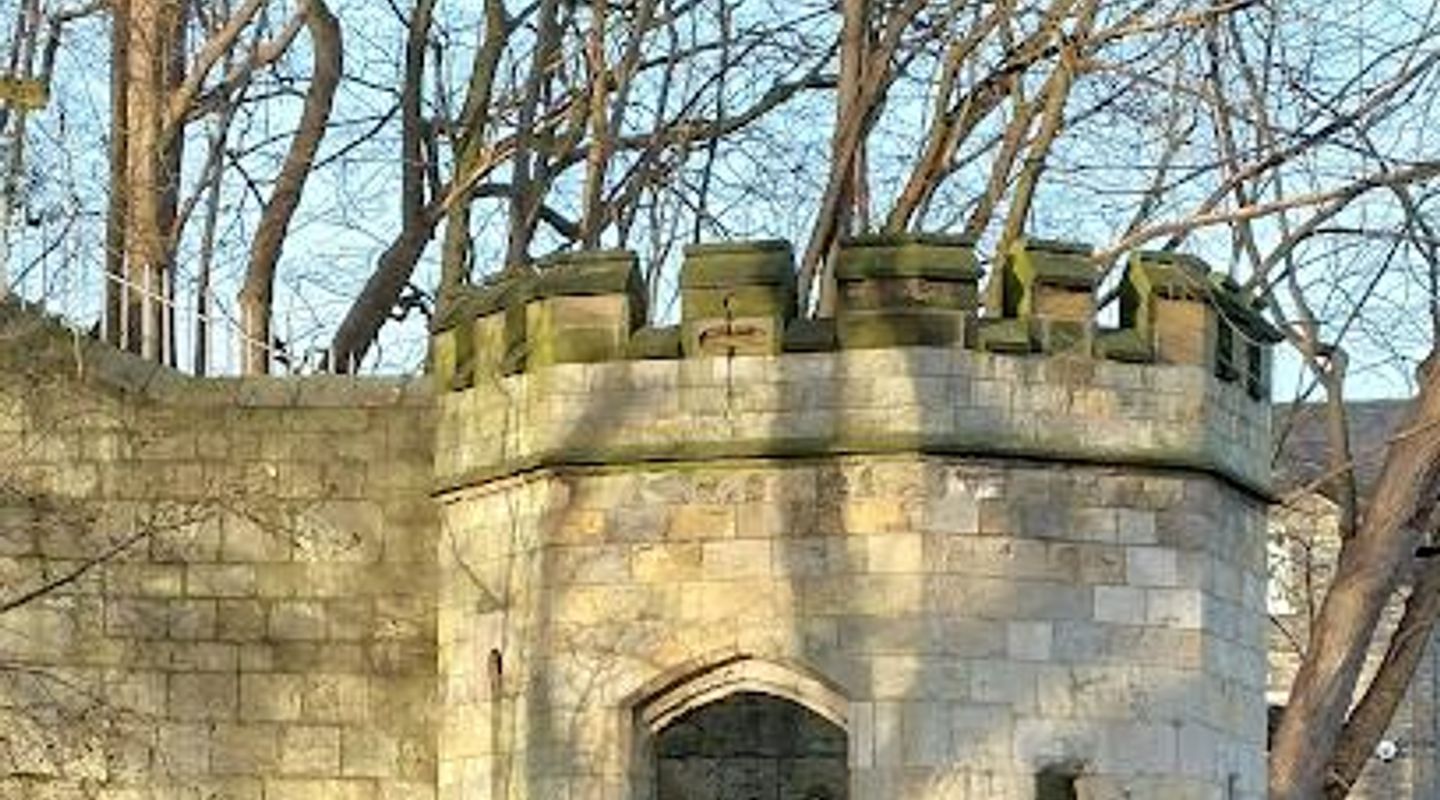
As Baile Hill's military significance waned, the site found new purposes. For centuries it served the local community as a venue for archery practice, a common recreational use for abandoned medieval fortifications. During the English Civil War of 1644, when York fell under Royalist control and faced siege by Parliamentary and Scottish forces, Baile Hill experienced a final moment of martial relevance. Two cannons were positioned on the mound to fire upon the besieging army, requiring the reshaping of the earthwork to accommodate the artillery. After the Royalists lost the city, a watch tower was constructed at the site. By the 19th century, much of the bailey had been built over with residential housing, and a crenellated tower was added at the base of the mound.
Integration into York's City Walls
Today, Baile Hill exists as an integral part of York's remarkable city walls—one of the most complete medieval defensive circuits in England. The mound, now standing approximately 8 metres high and densely wooded, has been seamlessly incorporated into the walking route that encircles the city centre. Information panels positioned around the site explain its Norman origins and medieval significance. The road named "Baile Hill" actually follows the course of the castle's original ditches, a ghostly echo of the fortification's former extent. Walking the city walls here offers visitors an accessible, manageable route with minimal climbing, making it suitable for most abilities. The path unfolds with views across York's residential neighbourhoods, past Victorian terraces that now occupy what was once the castle's bailey, and culminates in a spectacular vista of York Minster rising majestically above the medieval cityscape.
A Hidden Gem Overlooked by History
What makes Baile Hill remarkable is precisely what makes it easy to overlook. While Clifford's Tower across the river stands as a prominent stone keep and major tourist attraction, Baile Hill remains largely invisible to casual visitors—a wooded mound that could easily be mistaken for a natural feature. Few people realise they are walking past the ruins of one of England's most significant Norman fortifications. This obscurity, however, is part of its charm. Baile Hill offers a more intimate, contemplative experience than York's busier attractions, allowing visitors to stand on the same earthwork where Norman soldiers once kept watch, where medieval archers practiced their craft, and where Civil War cannons thundered across the river. It is a place where over 950 years of history lie compressed into a modest green mound, waiting to be discovered by those who pause to read the plaques and imagine the fortress that once dominated this corner of the city.
Evendo Review Centre
 Google
Guest reviews
Best time to go
Quietest: Jan, Feb & Dec · before 7am or at 9pm
Busy times are Evendo estimates for a typical year, to help you plan. Actual crowds vary with events, school holidays and the weather.
Explore Baile Hill on the map
A handpicked selection of must-see spots near Baile Hill, mapped for you.
Get your free copy of our complete guide to Baile Hill, delivered straight to you.
Everything on this page, from opening hours and how to get there to Eve’s tips and the best time to go, in one PDF you can read offline, print or share.
Already have an account? Sign in
Your Baile Hill guide is ready.
We'll send it to · Not you? Sign out

Getting your guide ready…
We are putting together a fresh copy of the Baile Hill guide. This can take up to a minute.
This can take a few moments. If your browser asks, choose Allow so the download can start. You'll find the guide in your Downloads folder.
Nothing happened? Download it again
Sorry, the guide is taking longer than usual. Please try again in a minute, or get it by email instead.
Unlock the best of Baile Hill
Skip-the-line tickets, guided tours with entry, and walking tours of the area, booked in a few clicks.


Other nearby places you may find interesting
The closest places of the same kind, if this one is not quite what you had in mind.
-
-
-
-
-


Swipe for more places
More to explore near Baile Hill

 Best experiences near Baile Hill
 Best hotels near Baile Hill
 Best landmarks near Baile Hill
 Best attractions near Baile Hill
 Best shops near Baile Hill
 Best restaurants near Baile Hill
 Best bars near Baile Hill
Do you manage this location?
Take control to get all the benefits, like improved information, better appearance, and stronger visibility across AI-powered discovery.
Explore more
Explore more of York
Explore York, a captivating city where medieval history meets modern charm. Discover York Minster, The Shambles, and a vibrant food scene in this must-visit UK destination.
Explore York
Explore more of United Kingdom
Discover the United Kingdom: A blend of rich history, stunning landscapes, and vibrant cities, offering a unique travel experience for every visitor.
Explore United Kingdom