

Free Kashkadarya Region Travel Guide & Mobile App
Explore Kashkadarya Region with free travel guides. Discover regional history, expert tips, proposed trips, and audio guides on web or mobile app.


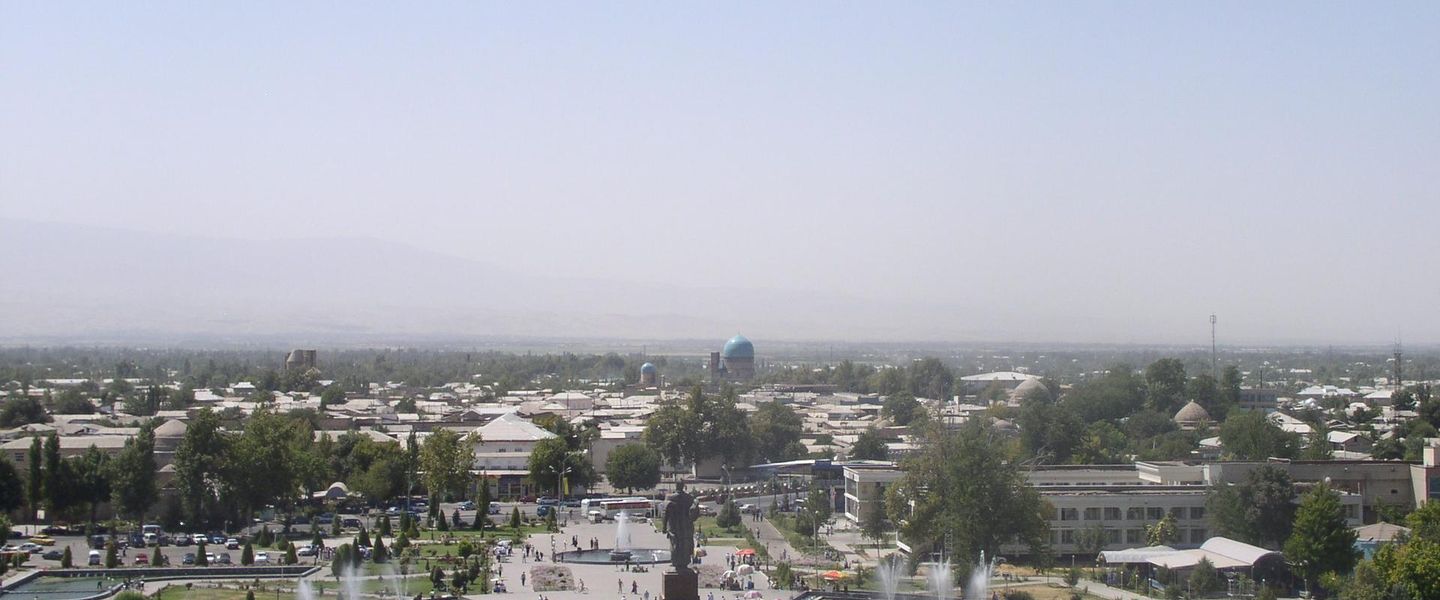


Kashkadarya Region brings together Timurid Shahrisabz, Qarshi's oasis heritage, mountain scenery, Silk Road history and southern Uzbek cuisine.
Read more about Kashkadarya Region
When is the best time to visit Kashkadarya Region?
Best: May, September–October · 19–27°C| Month | High (°C) | Rainfall (mm) |
|---|---|---|
| January | 5 | 28 |
| February | 9 | 30 |
| March | 15 | 38 |
| April | 20 | 34 |
| May (best) | 26 | 28 |
| June | 32 | 10 |
| July | 34 | 5 |
| August | 34 | 5 |
| September (best) | 27 | 8 |
| October (best) | 19 | 18 |
| November | 11 | 23 |
| December | 5 | 25 |
Getting to and around Kashkadarya Region
How to get there
Transportation
Top city travel guides in Kashkadarya Region
The cities of Kashkadarya Region, and the easiest places to base yourself.
-

-

-

-

-

-


Swipe for more cities
Destinations in Kashkadarya Region
Resorts, valleys and scenic spots worth a trip of their own.

Swipe for more destinations
Best attractions in Kashkadarya Region
Kashkadarya's attractions range from Timurid architecture and Islamic memorials to geological landscapes and the open terrain of the Qarshi steppe. Shahrisabz is the region's principal historic destination, with the remains of Ak-Saray, the Dorut Tilovat complex and the Dorus Saodat ensemble forming the core of its heritage appeal. Qarshi offers urban history through mosques, mausoleums, bridges and traditional neighbourhoods, although its monuments are more dispersed and less monumental than those of Shahrisabz. Around Kitab and the eastern foothills, the Kitab State Geological Reserve presents exposed rock sequences and mountain scenery of scientific interest; access arrangements should be made locally. Rural districts provide opportunities to observe irrigation agriculture, orchards and village life, while the Hissar foothills support walking and nature-oriented excursions. The region is not primarily a resort destination, and distances, heat and limited visitor infrastructure shape the experience. Its strongest appeal lies in combining major Timurid remains with the less formal landscapes and communities of southern Uzbekistan.
-
Historical landmark
Ak-Saray Palace
Experience the grandeur of the Ak-Saray Palace in Shahrisabz, a UNESCO World Heritage site showcasing Uzbekistan's rich cultural heritage.
-
Monument
Statue of Amir Temur
Explore the grandeur of the Statue of Amir Temur in Shahrisabz, a monumental tribute to Uzbekistan's legendary conqueror and cultural heritage.
-
Mountain peak
Chimtarga
Discover the breathtaking landscapes of Chimtarga, the majestic peak in Tajikistan that offers adventure, stunning views, and a connection to nature.
-
Hiking area
Takhtakoracha
Explore the breathtaking trails of Takhtakoracha in Qashqadaryo Region, Uzbekistan, where adventure meets stunning natural beauty.


Best landmarks in Kashkadarya Region
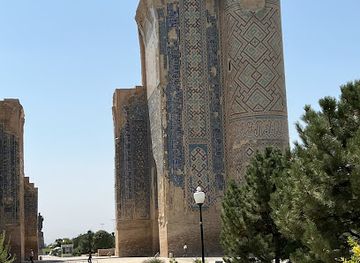
The surviving Ak-Saray portal in Shahrisabz is Kashkadarya's most recognisable architectural landmark. Built for Timur's vast palace complex, its immense scale and surviving glazed-tile decoration convey the ambition of the Timurid court even though the palace itself has disappeared. Nearby, the Dorut Tilovat ensemble gathers important religious and funerary architecture, including the Kok Gumbaz Mosque and mausoleums associated with the Timurid and earlier Chagatai traditions. The Dorus Saodat complex, linked to dynastic burial and remembrance, adds a more solemn dimension to the historic centre. In Qarshi, historic mosques, mausoleums and the old bridge over the Kashka-Darya reflect the city's role as an oasis settlement and regional capital, though they are encountered within a living modern city rather than a wholly preserved old quarter. East of Shahrisabz, the mountain valleys and exposed geological strata around Kitab form natural landmarks of a different kind: their importance lies in deep earth history, changing relief and the contrast they create with the flat Qarshi plain.
-
Historical landmark
Ak-Saray Palace
Discover the majestic Ak-Saray Palace in Shahrisabz, a historical landmark that embodies the grandeur of the Timurid dynasty and offers rich cultural insights.
-
Monument
Statue of Amir Temur
Experience the grandeur of the Statue of Amir Temur, a monumental tribute to Uzbekistan's legendary conqueror and a key highlight in Shahrisabz.
-
Mosque
Kok Gumbaz Mosque
Explore the breathtaking Kok Gumbaz Mosque in Shahrisabz, Uzbekistan, a stunning example of Islamic architecture and a cultural landmark rich in history.
-
Park
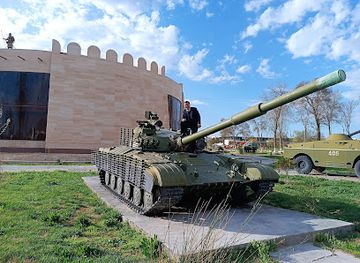
Vatanparvarlar Bog'i
Explore the tranquil beauty of Vatanparvarlar Bog'i in Qarshi, where lush landscapes meet historical military exhibits, creating a unique cultural experience.


Explore Kashkadarya Region on the map
Plan your trip on one map. See where the top cities, national parks and sights are, and book hotels and experiences in a few clicks.
Best hotels in Kashkadarya Region
Best restaurants in Kashkadarya Region
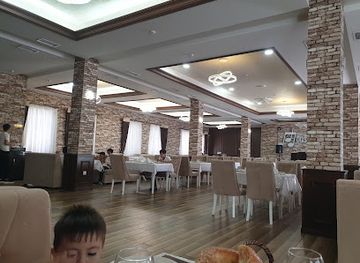
Dining in Kashkadarya is rooted in the broader Uzbek table but reflects the produce and hospitality of a southern agricultural region. Osh, the rice dish commonly known internationally as plov, is widely available, alongside shashlik, lagman, mastava, dimlama, soups, fresh salads and oven-baked or tandoor breads. Shahrisabz and Qarshi have the widest choice of cafés, family restaurants and traditional teahouses, while smaller towns offer simpler cooking and fewer written menus. Local meals may include seasonal fruit, melons, grapes, dairy products and vegetables from irrigated settlements. Green tea and non bread are customary companions to food, and bread is treated with respect. Visitors should expect plentiful meat-based dishes, though vegetable soups, salads and rice dishes can often be adapted on request. Markets are useful for fruit, nuts and bread, but prepared food should be chosen from busy, clean stalls. Regional dining is generally informal, with the setting and shared table often as important as the menu.
-
Restaurant
Katta tosh tandir
Experience authentic Uzbek cuisine at Katta Tosh Tandir in Kishlyk - home to exquisite tandir dishes and warm hospitality.
-
Restaurant
Chorsu
Experience authentic Uzbek cuisine at Chorsu in Qarshi - where every dish tells a story.
-
Restaurant
"MOSCOW" Restaurant
Discover the rich flavors of Uzbekistan at 'MOSCOW' Restaurant in Qarshi - where tradition meets taste.
-
Restaurant
Oqsaroy Family Restaurant
Experience authentic Uzbek cuisine at Oqsaroy Family Restaurant in Qarshi—where tradition meets flavor in a welcoming atmosphere.


Best bars in Kashkadarya Region
Nightlife in Kashkadarya is relatively restrained and concentrated in Qarshi and, to a lesser extent, Shahrisabz. Evening outings usually centre on cafés, restaurants, tea houses, hotel lounges and family-oriented venues rather than a large club circuit. Qarshi offers the greatest choice of contemporary restaurants and places for a late meal, while Shahrisabz becomes quieter after visitors leave its historic centre. Alcohol is available in some licensed restaurants and hotels, but it is not central to public life and expectations vary between venues. Live entertainment may appear in restaurants or cultural settings, particularly during holidays, although programmes and opening arrangements are changeable. In smaller towns and rural districts, evenings are generally social and domestic, with tea, conversation and shared meals providing the main forms of leisure. Visitors should dress neatly, respect local sensitivities around alcohol and religious occasions, and ask accommodation staff for current recommendations rather than relying on outdated listings.
-
Bar
ORIF oilaviy choyxona
Discover the cozy ambiance and local flavors at ORIF Oilaviy Choyxona, a charming bar in Kasan, Uzbekistan, perfect for relaxing and socializing.
-
Bar
Sava choyxona
Discover the charm of local culture at Sava Choyxona, a cozy bar in Qarshi offering a taste of Uzbekistan's vibrant hospitality.
-
Karaoke bar
“Narmin” karaoke bar
Discover the vibrant nightlife at Narmin Karaoke Bar in Qarshi, Uzbekistan, where every night is a celebration of music and fun.
-
Bar
JURA BOBO
Discover the vibrant atmosphere of Jura Bobo, a bar in Yakkabog, Uzbekistan, where authentic local flavors and friendly service await every visitor.


Best nightclubs in Kashkadarya Region
Nightlife in Kashkadarya is relatively restrained and concentrated in Qarshi and, to a lesser extent, Shahrisabz. Evening outings usually centre on cafés, restaurants, tea houses, hotel lounges and family-oriented venues rather than a large club circuit. Qarshi offers the greatest choice of contemporary restaurants and places for a late meal, while Shahrisabz becomes quieter after visitors leave its historic centre. Alcohol is available in some licensed restaurants and hotels, but it is not central to public life and expectations vary between venues. Live entertainment may appear in restaurants or cultural settings, particularly during holidays, although programmes and opening arrangements are changeable. In smaller towns and rural districts, evenings are generally social and domestic, with tea, conversation and shared meals providing the main forms of leisure. Visitors should dress neatly, respect local sensitivities around alcohol and religious occasions, and ask accommodation staff for current recommendations rather than relying on outdated listings.
-
Night club
Bassiani night club
Experience Samarkand's vibrant nightlife at Bassiani Night Club, where music and culture collide for an unforgettable night out.
-
Night club
Yetti go'zal/Disco
Experience the vibrant nightlife of Bukhara at Yetti go'zal/Disco, where music, dance, and culture collide for an unforgettable night.
-
Disco club
Rubai Klub
Rubai Klub: Dance the night away in Qarshi's premier disco club, where vibrant music and an electrifying atmosphere await.
-
Night club
Baliq xona Burxon aka
Discover the vibrant nightlife at Baliq xona Burxon aka, a premier night club in Talimardzhan, Uzbekistan, where unforgettable experiences await.


Best shops in Kashkadarya Region
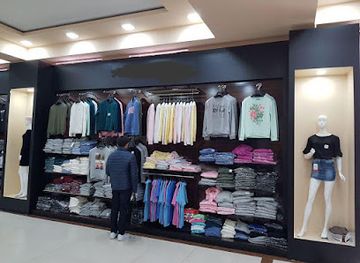
Shopping in Kashkadarya is strongest in the traditional markets and everyday commercial streets of Qarshi and Shahrisabz rather than in large, specialised retail districts. Qarshi is the practical place to buy dried fruit, nuts, spices, bread, seasonal produce and household goods, while Shahrisabz's markets and souvenir stalls are oriented more towards visitors to its Timurid monuments. Look for Uzbek textiles, embroidered items, ceramics, carved wooden objects and small decorative pieces, but check workmanship and ask whether an item is genuinely locally made. Food products make useful regional purchases: dried fruit, melons when in season, nuts, spices and sweets travel more easily than fragile crafts. Rural bazaars around the eastern districts can be interesting for produce and local trade, though market days and stock vary. Bargaining may be possible in informal markets, but it is not necessary in fixed-price shops. Carry cash in so'm, especially outside Qarshi, and pack ceramics or other breakable goods carefully for onward travel.
-
Shopping mall
"Eski shahar" buyum bozori
Explore Eski Shahar Buyum Bozori in Qarshi, Uzbekistan, where local culture meets modern shopping in a vibrant atmosphere.
-
Shopping mall
Obikanda
Explore Obikanda, Tuyavoshi's premier shopping mall, where modern retail meets the charm of Uzbekistan's culture, dining, and entertainment.
-
Dress store
ADORA
Discover unique fashion at ADORA, Qarshi's premier dress store, blending traditional Uzbek styles with contemporary designs.
-
Store
Dehqonobod
Experience the rich local culture and unique craftsmanship at Dehqonobod in Uzbekistan's Qashqadaryo Region.



Get your free copy of our complete guide to Kashkadarya Region, delivered straight to you.
Everything on this page, from attractions and restaurants to essentials and local phrases, in one PDF you can read offline, print or share.
Already have an account? Sign in
Your Kashkadarya Region guide is ready.
We'll send it to · Not you? Sign out

Getting your guide ready…
We are putting together a fresh copy of the Kashkadarya Region guide. This can take up to a minute.
This can take a few moments. If your browser asks, choose Allow so the download can start. You'll find the guide in your Downloads folder.
Nothing happened? Download it again
Sorry, the guide is taking longer than usual. Please try again in a minute, or get it by email instead.
Kashkadarya Region essentials
Currency and Payment
Safety
Emergency Situations
Do's and Don'ts
Local Tips
From Eve
Local phrases worth knowing
You don't need to get them perfect. A few words go a long way, and locals appreciate the effort.
Basics
| English | Local | Say it |
|---|---|---|
| Hello | Салом | [Salom] |
| Goodbye | Хайр | [Xayr] |
| Yes | Ҳа | [Ha] |
| No | Йўқ | [Yoq] |
| Please/You're welcome | Илтимос | [Iltimos] |
| Thank you | Раҳмат | [Rahmat] |
| Excuse me/Sorry | Кечирасиз | [Kechirasiz] |
| How are you? | Сиз қандайсиз? | [Siz qandaysiz?] |
| Fine. And you? | Яхши. Сиз ҳам? | [Yaxshi. Siz ham?] |
| Do you speak English? | Сиз инглизча гапирасизми? | [Siz inglizcha gapirasizmi?] |
| I don't understand | Мен тушунмайман | [Men tushunmayman] |
Eating & Drinking
| English | Local | Say it |
|---|---|---|
| I'd like to see the menu, please | Менюни кўрмоқчи ман, илтимос | [Menyunı ko'rmoqchi man, iltimos] |
| I don't eat meat | Мен гўшт ёймайман | [Men go'sht yemayman] |
| Cheers! | Саломат бўлинг! | [Salomat bo'ling!] |
| I would like to pay, please | Мен тўлашни хохлайман, илтимос | [Men to'lashni xohlayman, iltimos] |
Emergencies
| English | Local | Say it |
|---|---|---|
| Help! | Ёрдам беринг! | [Yordam bering!] |
| Go away! | Кетинг! | [Keting!] |
| Call the Police! | Полицияни чақиринг! | [Politsiyani chaqiring!] |
| Call a doctor! | Шифокорни чақиринг! | [Shifokorni chaqiring!] |
| I'm lost | Мен йўқолдим | [Men yo'qoldim] |
| I'm ill | Мен беморман | [Men bemorman] |
Shopping
| English | Local | Say it |
|---|---|---|
| I'd like to buy... | Мен ... харид қилишни хохлайман | [Men ... xarid qilishni xohlayman] |
| I'm just looking | Мен фақат қараяпман | [Men faqat qarayapman] |
| How much is it? | Нега бу? | [Nega bu?] |
| That's too expensive | Бу жуда қиммат | [Bu juda qimmat] |
| Can you lower the price? | Нарҳини камайтиришингиз мумкинми? | [Narxini kamaytirishingiz mumkinmi?] |
Time & Numbers
| English | Local | Say it |
|---|---|---|
| What time is it? | Соат неча? | [Soat necha?] |
| It's one o'clock | Бир соат | [Bir soat] |
| Half past (10) | Ўн бир ярим | [O'n bir yarim] |
| Morning | Эрталаб | [Ertalab] |
| Afternoon | Кундуз | [Kunduz] |
| Evening | Кеча | [Kechasi] |
| Yesterday | Кеча | [Kechasi] |
| Today | Бугун | [Bugun] |
| Tomorrow | Эртага | [Ertaga] |
| 1 | 1 | [Birinchi] |
| 2 | 2 | [Ikkinchi] |
| 3 | 3 | [Uchinchi] |
| 4 | 4 | [To'rtinchi] |
| 5 | 5 | [Beshinchi] |
| 6 | 6 | [Oltinchi] |
| 7 | 7 | [Yettinchi] |
| 8 | 8 | [Sakkizinchi] |
| 9 | 9 | [To'qqizinchi] |
| 10 | 10 | [O'ninchi] |
Transport & Directions
| English | Local | Say it |
|---|---|---|
| Where's a/the...? | Нерда ...? | [Nerda ...?] |
| What's the address? | Манзилингиз нима? | [Manzilingiz nima?] |
| Can you show me (on the map)? | Менга кўрсата оласизми (харитада)? | [Menga ko'rsata olasizmi (xaritada)?] |
| When's the next (bus)? | Келгуси (автобус) қачон? | [Kelgusi (avtobus) qachon?] |
| A ticket (to ....) | Билет (га ....) | [Bilet (ga ....)] |
History of Kashkadarya Region
Ancient Oasis and Sogdian Kesh
The Kashka-Darya basin has supported settled communities since antiquity, when irrigation made agriculture possible in an otherwise dry environment. The eastern area around modern Shahrisabz was known as Kesh, while the lower oasis developed around Nakhshab, the predecessor of Qarshi and an important centre in the wider Sogdian world. Fortified settlements, agricultural systems and trade routes connected the region with Bactria, Sogdiana and the wider lands of Central Asia. Archaeological remains demonstrate that Kashkadarya was not a peripheral desert but a long-established zone of urban and rural life.
Imperial Routes and Medieval Nasaf
The region changed hands under successive Central Asian and Iranian powers, including the Achaemenids, the Hellenistic kingdoms that followed Alexander's conquests, and later Arab and Islamic dynasties. Nasaf became a significant medieval town and an important centre of Islamic scholarship, while caravan routes linked the Kashka-Darya oasis with Samarkand, Bukhara, Balkh and Afghanistan. The spread of Islam reshaped education, law, architecture and burial traditions, leaving a legacy visible in the region's mosques, madrasas and mausoleums.
The Mongol Era and Chagatai Rule
The Mongol conquests of the early thirteenth century brought severe disruption to many Central Asian cities and agricultural systems. Kashkadarya subsequently formed part of the Chagatai ulus, the Central Asian realm associated with the descendants of Chagatai Khan. Political authority remained fluid, but oasis agriculture and urban life gradually recovered. The period helped establish the political conditions from which the later Timurid state emerged, with local towns, military elites and trade routes again becoming important in the competition for power across Transoxiana.
Timur and the Monumental Kesh of Shahrisabz
Timur was born near Kesh in 1336 and made the city, which he renamed Shahrisabz, a major centre of dynastic commemoration. He sponsored palaces, mosques, memorial complexes and gardens on a scale intended to proclaim the authority of his family and empire. The Ak-Saray palace, begun in the late fourteenth century, was especially ambitious; its surviving entrance portal conveys the size and decorative richness of the lost complex. Dorut Tilovat and Dorus Saodat preserve the religious and dynastic dimensions of Timurid Shahrisabz.
Khanates, Caravan Trade and the Qarshi Oasis
After the Timurid period, Kashkadarya was governed within the changing political structures of the Uzbek khanates, including the Khanate of Bukhara. Qarshi grew in importance as a town of the lower Kashka-Darya oasis and as a point on routes connecting Bukhara with southern Central Asia and Afghanistan. Irrigation, pastoralism, craft production and trade shaped local life. The region's history during these centuries was marked by the interaction of settled farming communities, mobile pastoral groups and rulers competing for control of water, towns and caravan routes.
Russian Conquest and Soviet Transformation
Russian imperial influence reached the Bukhara region in the nineteenth century, and the Emirate of Bukhara became a Russian protectorate in 1868. The revolutionary period and the creation of Soviet administrative structures then brought far-reaching change to southern Uzbekistan. Collectivised agriculture, expanded irrigation and cotton production altered the countryside, while new schools, roads and industrial facilities changed urban life. Soviet development also strengthened the role of Qarshi as an administrative and economic centre, although it placed heavy demands on land and water.
Modern Agriculture, Energy and Heritage Conservation
Since Uzbekistan became independent in 1991, Kashkadarya has remained important for agriculture, natural gas and regional trade while building a stronger cultural-tourism profile. Shahrisabz's historic centre was inscribed on the UNESCO World Heritage List in 2000, bringing international attention to its Timurid monuments and also prompting debate about conservation and urban change. Qarshi and the surrounding districts continue to develop as centres of education, industry and administration, while mountain landscapes and archaeological sites are increasingly considered alongside the region's established heritage attractions.
Kashkadarya Region in Photos
Browse through our photo collection highlighting the charm and character of the destination.
Neighbouring regions of Kashkadarya Region
The closest regions to Kashkadarya Region, if you have time for more than one.
-

-

-

-

-


Swipe for more regions
Explore more
Explore more of Uzbekistan
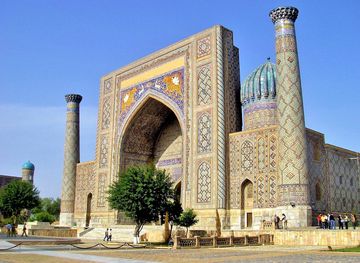
Discover Uzbekistan: A land of ancient cities, vibrant culture, and breathtaking landscapes, where history comes alive along the legendary Silk Road.
Explore Uzbekistan