

Private Walking Tour with a Local Tour Guide in Nafplio
 Nafplion, GR
 100% of travellers recommend this


Highlights
- Discover the real Nafplio with a local guide
- Learn about the city's long history
- Explore Syntagma Square and its architecture
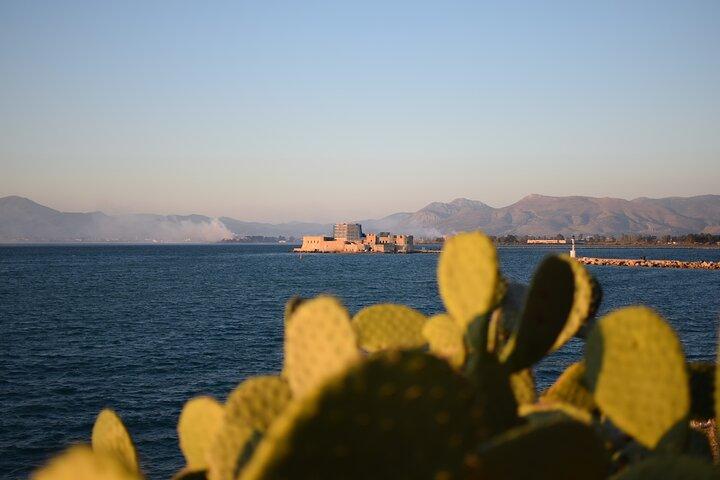
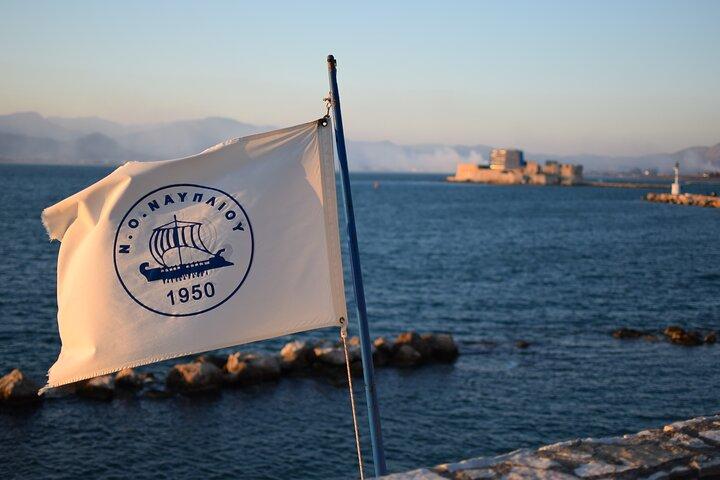
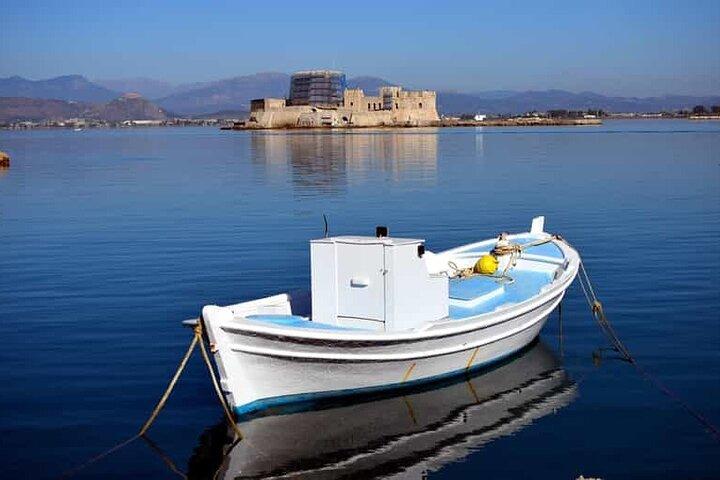
- Visit the iconic Bourtzi castle at the port
- Enjoy a personalized 3-hour walking tour
-
Private Tour
-
Duration 2-3 hours
-
Live English Guide
-
Includes snacks and water
-
Surprise gift included
-
Hotel pickup available
Embark on a thrilling private walking tour with a local guide in Nafplio, the enchanting Venetian city of Greece. Immerse yourselves in the rich history of Nafplio as you explore iconic landmarks like the Land Gate and Syntagma Square. Your knowledgeable guide will lead you to the Bourtzi castle, a stunning Venetian fortress set on a picturesque island in the port of the city. With live guide language options in English and Greek, along with bottled water and snacks included, this 3-hour tour promises an unforgettable experience for all travelers. Don't miss out on this opportunity to discover the hidden gems of Nafplio with a personalized touch.
At a Glance
-
 Free cancellation
-
 2 hours
-
 Instant Confirmation
-
 Available in English
-
 Mobile voucher
-
 Private Tour
-
 Guided
-
 Family friendly

Featured Reviews

Explore the romantic Nafplio on a private walking tour with a local guide, uncovering its rich history and charming sights.
Included
-
 Bottled water
 -
Snacks
-
Surprise gift
-
Live guide language available: English, Greek
Excluded
-
 Breakfast
Meeting Point
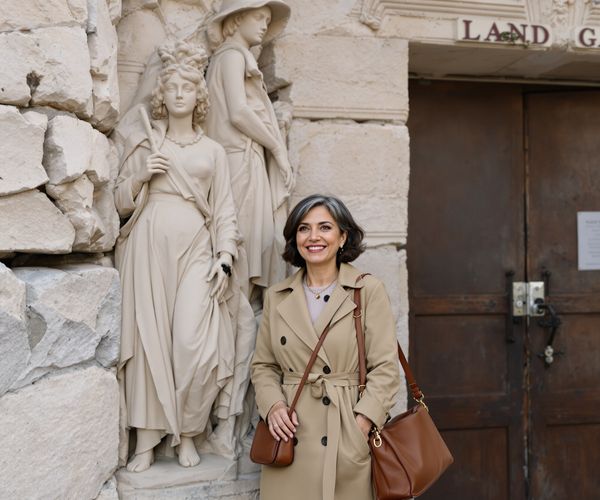
Underneath the imposing walls of Acronafplia, opposite the Judicial Palace and in front of the first buildings of the Old City, there is a monument which will definitely capture your sight; it is the Land Gate. It is next to Skarpeta restaurant and near the Bus Station.

Unnamed Road, Nafplio 211 00 , Greece

End Point

Dervenakion 3, Nafplio 211 00 , Greece
Pickup
Check if pick-up is available from your location, you will select during checkout (providers may allow other pickup locations)

What to expect
Land Gate
The Land Gate was built in 1708, by the French engineer, and succeeded the earlier gate dating from the first Venetian occupation. It was the only entrance to the city by land and, in fact, the gate would be closed at sunset. Whoever remained outside after that time was obliged to spend the night outside the city, usually in the Pronia suburb. In front of the gate was a moat filled with seawater, which ran along the eastern wall of the city. Access was only possible via a wooden drawbridge.
15 minutes
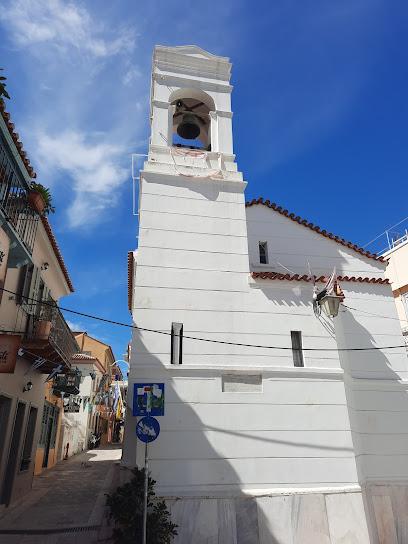
One of the darkest pages of modern Greek history unfolded outside the entrance of Agios Spyridon. There, on September 27th 1831, the first Governor of the liberated Greece, Ioannis Kapodistrias, was shot dead by the Mavromichali brothers, on his arrival at the church of Agios Spyridon to attend the Mass, as he used to do every Sunday; in the church, which was dedicated to the patron saint of his birthplace, the island of Corfu. At the entrance of the temple, however, his assassins had set him up and after greeting him, they attacked him: Konstantinos Mavromichalis with a pistol and Georgios Mavromichalis with a knife. The death of the Governor was instantaneous. Konstantinos Mavromichalis was persecuted and killed by the enraged crowd, while George Mavromichalis was executed a few days later.
10 minutes
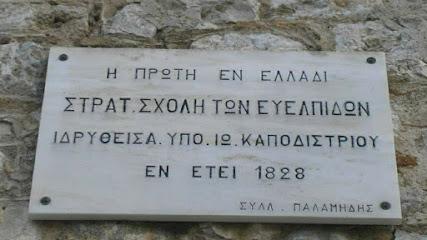
The War Museum is housed in the two storey neo-classical building, where from 1828 to 1834 the first ‘Cadet School’ or ‘Central Military School’ operated. The founder was the first governor of Greece, Ioannis Kapodistrias, and the school’s mission was to provide the army with suitably educated recruits. The ‘Cadet School’ has been restored and since November 1988 has housed the war museum, a branch of the War Museum of Athens.
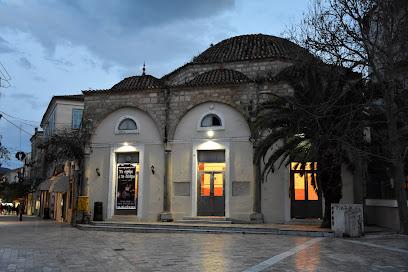
The building which is known today as the ‘Trianon’, from the name of the cinema which was housed here, is of special interest, as much for its architectural design as for its history. It is the oldest mosque still surviving in the city and was strongly influenced by Byzantine church architecture. It dates from the time of the first Turkish occupation, probably the second half of the 16th century, and is possibly the only building in the city to survive from that time. It differs from the great mosque in Syntagma Square, the Parliament, as in the latter the Ottoman style of architecture seems to have taken over.
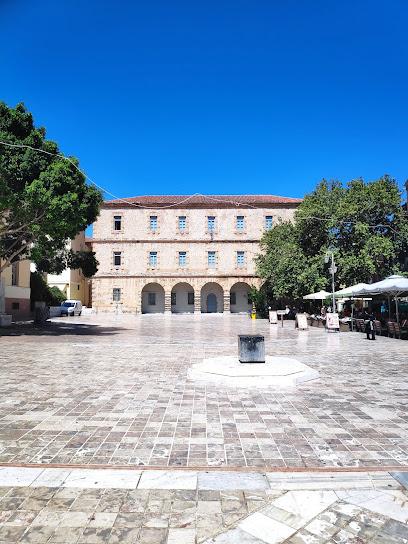
The building that today houses the Archaeological Museum is one of the most splendid of the Venetian buildings in the city, and marks the end of the ‘Megalos Dromos’ or ‘Great Road’. On the façade of the building there is a Latin inscription which informs us that the building was constructed in 1713, by the Venetian Superintendent of the Fleet, Agostino Sagredo, to be used as a warehouse for the fleet.
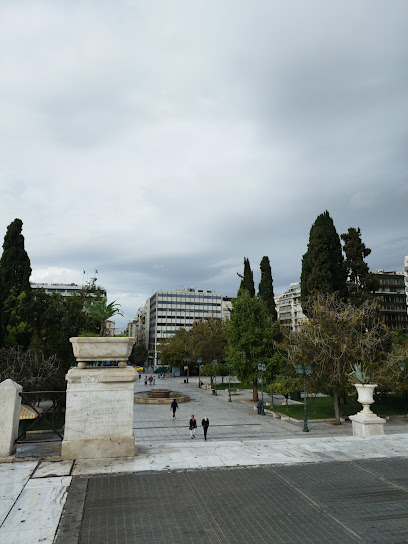
Syndagma Square, the most important and historic square in Nafplio, comprises the centre of the city. It is assumed that from 1540, the time of the first Turkish occupation, the Turkish commander of the Peloponnese, Mora-Pasha, had his seraglio here. The importance of the square is also demonstrated by the number of times it has undergone a change of name. In the 19th century it was known as ‘Platanos Square’ or simply ‘Platanos’, for the plane tree which once occupied the centre, in the shade of which national politicians made speeches. In 1843 the name was changed to ‘Ludwig Square’, in honour of Ludwig, father of King Otto, who had then visited the city. In the same year, after the revolution of 3rd September 1843, when the Greeks demanded that Otto grant them a constitution, the name was changed first to Syntagma (or constitution) Square, then ‘Stratonas Square’, and ‘King George II Square’.
20 minutes
The Parliament building, which is located in the south-west sector of Syntagma Square, holds a special place in Greek history, as it was here that the parliament of the rebellious Greeks met. It dates from 1730, the time of the second Turkish occupation of the city, and was originally built as a mosque.
5 minutes
Filellinon Square
Old customs building since 1830 and many other monuments of incompatible beauty.
5 minutes
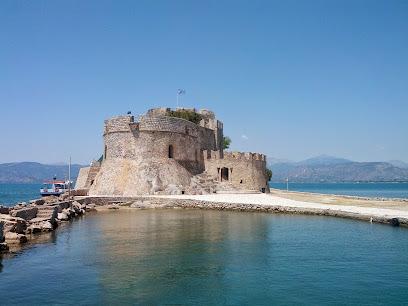
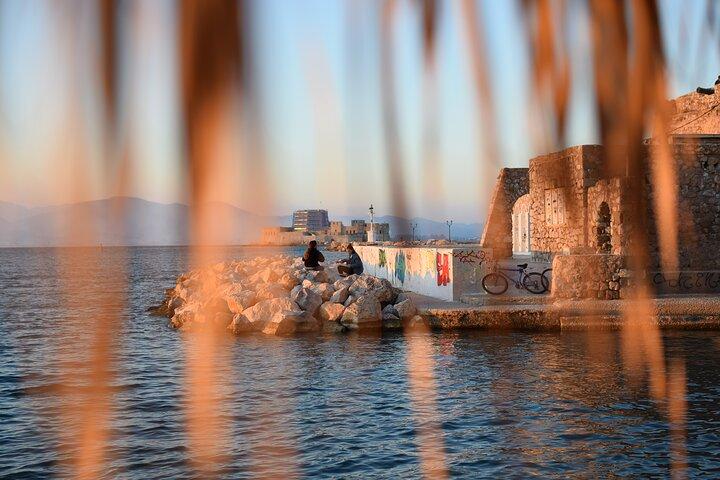
The Castello dello Soglio, as the Venetian castle was first called, has had a mixed past (from prison to hotel to concert venue) and is worth visiting by boat. But just gazing at it is enough to form a postcard-perfect memory of Nafplio. In this tour, we admire and talk about this landmark without visiting the islet.
10 minutes
 Admission Not Included
Five Brothers
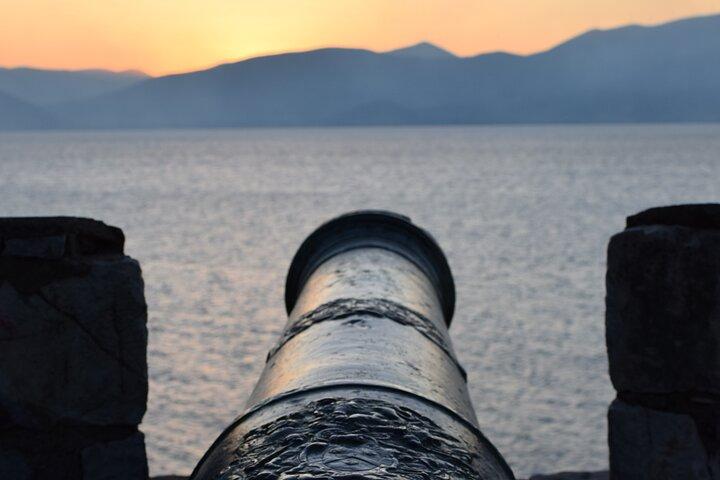
The five cannons that once protected the western side of the town and the entrance to the harbour. It’s the only Venetian bastion that escaped destruction.
15 minutes
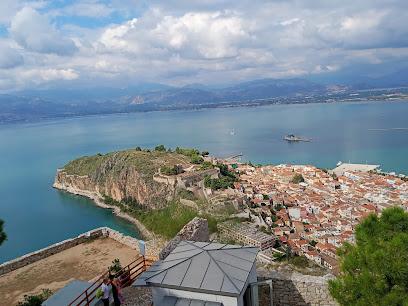
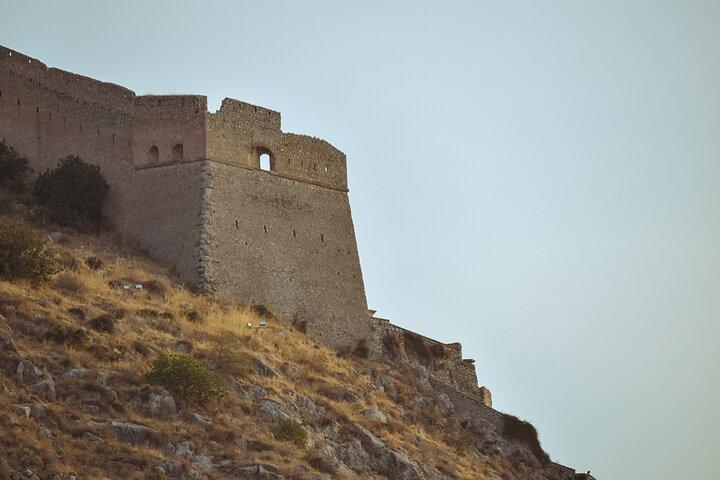
Originally built by the Romans and Byzantines, is the oldest of Nafplion's three castles and until the arrival of the Venetians, the town was restricted within its walls. The Turks called it Ic Kale (meaning inner castle). It was used as a Greek political prison from 1936 to 1956.
30 minutes
Dimarchio Nafpliou
Three Admirals Square is surrounded by important historical and public buildings such as the first high school, the town hall and the Grand Street or King Constantine, which is also the most touristic street of Nafplion, passes in front of it
15 minutes
Platia Kapodistria
Let's meet the first governor of Greece, Mr. Ioannis Kapodistrias at Kapodistria's Square and enjoy an ice-cream at Kolokotronis Park.
10 minutes
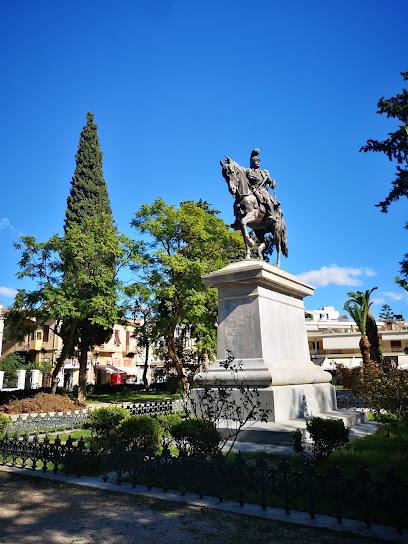
The centre of the park is dominated by a monumental statue on horseback: the hero of the Greek revolution, Theodoros Kolokotronis. It is one of the most important works of neo-Hellenic sculpture and was created by the Tinian sculptor Lazaros Sochos in Paris. It is made of a copper alloy and is placed on a monumental stone pedestal. The ‘old man of Moria’, as Theodoros Kolokotronis was known, is depicted on horseback, holding the reins in his left hand and showing the way forward with his right. The whole work is impressive and the proud form of Kolokotronis exudes an air of greatness. The cost for the acquisition of the statue was exceptionally high, and a nationwide appeal was necessary to raise the funds. It was moulded in 1894 at the Thiebaut foundry in Paris and in 1895 it was transported to Greece.
10 minutes
Megaro Armansberg
This is one of the most important mansions from the reign of Otto to be found in Nafplio. The building originally dates from the second Venetian occupation, but it was rebuilt in 1831 and the second floor was added. The house was home to the president of the regency, Count Joseph Ludwig von Armansperg, during 1833 and 1834. Armansperg was a highly controversial personality, and he has remained best known for the conspiratorial and autocratic nature of his policies. According to witnesses of the time, the house was one of the largest in the city and the interior decoration left nothing to be desired in comparison to the greatest houses in Europe; it hosted receptions and balls with rare, for the time, musical accompaniment on the piano.
Church of Panaghia
The Church of Panaghia, consecrated to the Presentation of the Virgin Mary, is one of the oldest and most beautiful churches in the city. The original church, which dates from the 15th century, to the time of the first Venetian occupation, was smaller and belonged to the Orthodox Church. In around 1700, during the time of the second Venetian occupation, the church took its current form, a three-aisled basilica. The interior has a beautiful wooden chancel in the eptanisian style and was created in the 19th century. The pulpit and bishop’s throne are also in the same style. The narthex is a later addition, while the bell tower dates from 1907. The Church of Panaghia also celebrates the memory of Aghios Anastasios, the Patron Saint of the City. Every year, on 1st February, the saint’s feast day, there is a great procession of the icon of the protector of the city.
5 minutes
The experience can be subject to change due to bad weather or unforseen circumstances. We always endeavour to give you the best possible experience.
Additional Information
-
 Important information: When you finalize the reservation, please contact us so that we can agree on the exact time you want to take place. Entrance in sights: it is a walking tour so we do not enter in sights with admission fees. In particular, we do not enter in the Archaeological Museum, the Bourtzi Castle, the War Museum. We DO enter at the rest of the sights (except they are closed). Pick up from your hotel inside the city of Nafplion, the Port or central meeting point (Land Gate)
 -
Infants and small children can ride in a pram or stroller
-
Public transportation options are available nearby
-
Service animals allowed
-
Suitable for all physical fitness levels
What our experts say
-
 Visit Skarpeta restaurant nearby.
 -
Check out the local markets for snacks.
-
Wear comfortable shoes for walking.
-
Bring a camera for stunning views.
-
Ask your guide for hidden gems in Nafplio.

More About this Experience
Introduction
Explore the enchanting city of Nafplio on a private walking tour led by a knowledgeable local tour guide. Immerse yourself in the rich history and romantic ambiance of this Venetian city as you uncover hidden gems and iconic landmarks along the way.What to expect?
Embark on a 3-hour journey through Nafplio, starting at the historic Land Gate and delving into tales of the city's past. Stroll through Syntagma Square, marvel at Venetian and neoclassical architecture, and learn about the fascinating Bourtzi castle perched on an island in the port. Enjoy a personalized experience with a live guide in English or Greek, complete with bottled water and a snack to keep you energized.Who is this for?
This private walking tour in Nafplio is perfect for travelers of all kinds seeking a deeper understanding of the city's culture and heritage. Whether you're a history buff, architecture enthusiast, or simply someone who enjoys exploring new destinations on foot, this experience offers something special for everyone.Why book this?
Step into the past and uncover the secrets of Nafplio with a local guide who brings history to life. From the Venetian influences to the captivating stories behind each landmark, this tour promises an immersive and unforgettable experience that will leave you with a newfound appreciation for this charming city.Good to know
As you wander through Nafplio, take note of the picturesque surroundings and soak in the beauty of its historic sites. Be sure to wear comfortable shoes and bring a camera to capture the memorable moments along the way. Don't miss the chance to explore the Land Gate, Syntagma Square, and the imposing Bourtzi castle during this enriching walking tour.Reviews
Travelers who have embarked on this private walking tour in Nafplio rave about the insightful commentary provided by the local guide and the immersive experience of discovering the city's hidden gems. Many visitors commend the personalized touch of the tour and the opportunity to explore Nafplio's history in a unique and engaging way. Overall, participants express their satisfaction with the tour and highly recommend it to fellow travelers looking to delve into the heart of Nafplio.Journals from our explorers at this location








This is a popular product and the date you are looking for just sold out. Next available date is
