

Free Malanje Plateau Travel Guide & Mobile App
Explore Malanje Plateau with free travel guides. Discover regional history, expert tips, proposed trips, and audio guides on web or mobile app.


Explore Malanje Plateau in Angola for Kalandula Falls, Pungo Andongo’s granite scenery, Mbundu heritage and expansive inland landscapes.
Read more about Malanje Plateau
When is the best time to visit Malanje Plateau?
Best: June–August · 28°C| Month | High (°C) | Rainfall (mm) |
|---|---|---|
| January | 29 | 150 |
| February | 29 | 140 |
| March | 30 | 130 |
| April | 30 | 120 |
| May | 29 | 70 |
| June (best) | 28 | 30 |
| July (best) | 28 | 15 |
| August (best) | 28 | 15 |
| September | 28 | 30 |
| October | 29 | 70 |
| November | 29 | 110 |
| December | 29 | 130 |
Getting to and around Malanje Plateau
How to get there
Transportation
Best attractions in Malanje Plateau
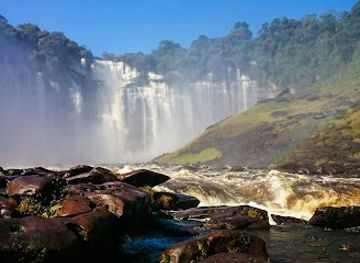
The Malanje Plateau’s attractions are spread across a large inland landscape rather than concentrated in one visitor district. Kalandula Falls is the principal natural draw, with broad cascades on the Lucala River and viewpoints overlooking a deeply cut, wooded valley. Pungo Andongo offers a contrasting experience: massive dark granite formations rise from open country, combining geological interest with historical associations surrounding Queen Njinga. Around Malanje, markets, churches, civic buildings and everyday urban life provide context for the region’s development as an interior administrative and commercial centre. Cangandala National Park is important for conservation and for the protection of the giant sable antelope, although wildlife viewing requires realistic expectations, prior arrangements and patience. Rural drives reveal cultivated fields, woodland and settlements, while the wider plateau suits photography, birdwatching, landscape observation and carefully planned overland excursions. The region is not organised around a dense network of ticketed museums or polished resort attractions; its appeal lies in the relationship between dramatic natural sites, historical memory and the scale of the countryside.
-
Tourist attraction
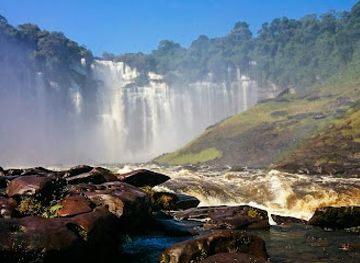
Calandula Falls
Discover Calandula Falls: One of Africa's largest waterfalls, offering breathtaking views and a serene natural escape in Angola's Malanje Province.
-
Tourist attraction
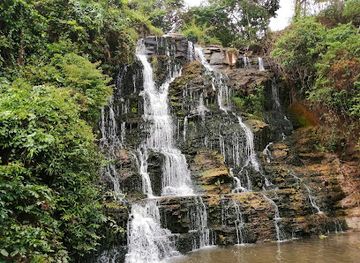
Quedas do Musseleje
Discover the serene beauty of Quedas do Musseleje in Malanje, Angola, a hidden gem offering tranquility and natural splendor away from the crowds.
-
Catholic church
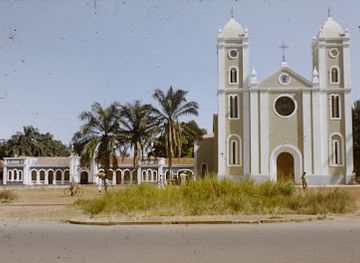
Catedral de Malange
Discover the Catedral de Malanje, a historical and religious landmark showcasing Angola's rich cultural heritage and architectural beauty.
-
Tourist attraction
Dala Waterfalls
Discover the majestic Dala Waterfalls in Angola, a stunning natural wonder offering breathtaking views and a refreshing escape.
Best landmarks in Malanje Plateau
Kalandula Falls is the Malanje Plateau’s most recognisable natural landmark, a broad sequence of cascades where the Lucala River cuts through the uplands. Its scale and setting have made it an enduring symbol of inland Angola, while the surrounding valley gives the site geographical importance beyond the viewpoint itself. The granite formations of Pungo Andongo form another defining landmark: tall, dark outcrops stand prominently above the surrounding landscape and carry historical associations with Queen Njinga and the former Ndongo political world. In Malanje city, the central urban area, churches and surviving colonial-period structures reflect the region’s role as an administrative centre, although they should be read alongside Angola’s post-independence and post-war transformation rather than as a preserved colonial ensemble. Cangandala’s woodland landscape is less visually monumental but has strong ecological significance because of its connection with the giant sable, a species central to Angola’s conservation identity. Together, these landmarks express the plateau’s principal themes: river erosion, granite geology, political memory, urban change and wildlife protection.
-
Observatory
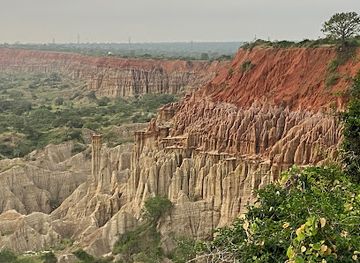
Viewpoint of the Moon
Discover the breathtaking views and unique geological formations at the Viewpoint of the Moon in Belas, a stunning natural attraction for every traveler.
-
Tourist attraction
Calandula Falls
Discover the awe-inspiring Calandula Falls, a natural wonder in Angola that offers breathtaking views and a serene escape into nature.
-
National park
Parque Nacional do Quicama
Explore the breathtaking landscapes and rich biodiversity of Parque Nacional do Quicama, Angola's stunning national park and wildlife haven.
-
Tourist attraction
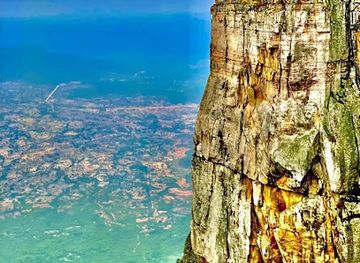
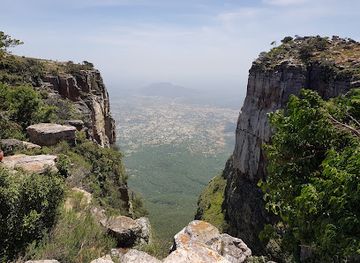
Tundavala Gap
Discover the breathtaking views of Tundavala Gap, a natural wonder in Angola's highlands, where adventure and stunning landscapes await.
Explore Malanje Plateau on the map
Plan your trip on one map. See where the top cities, national parks and sights are, and book hotels and experiences in a few clicks.
Best hotels in Malanje Plateau
Best restaurants in Malanje Plateau
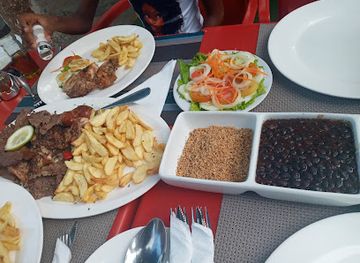
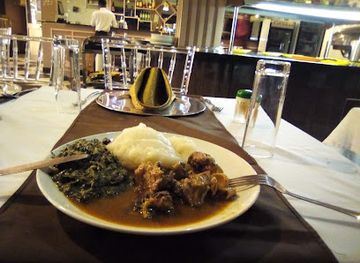
Dining in the Malanje Plateau is centred on straightforward Angolan cooking, local markets, cafés and informal restaurants rather than a large international restaurant scene. Visitors may encounter funge, a firm cassava- or maize-based accompaniment, served with stews, beans, fish or meat, as well as rice, grilled chicken and dishes using locally available vegetables. Cassava, maize, plantains and seasonal produce are important in the wider agricultural economy, while roadside stalls and markets can provide fruit, snacks and drinks during journeys. Restaurants in Malanje offer the greatest choice, but selection becomes limited near Kalandula Falls, Pungo Andongo and conservation areas, making it sensible to carry provisions. Portuguese culinary influence is visible in some breads, pastries and restaurant dishes, but the region’s everyday food culture is grounded in local ingredients and practical home-style cooking. Confirm prices and availability before ordering, and treat bottled or reliably treated water as the safer choice for visitors unfamiliar with local supplies.
-
Restaurant
Restaurante O Quintal
Experience authentic Angolan cuisine at Restaurante O Quintal in Malanje – where every meal tells a story.
-
Restaurant
Restaurante Triângulo
Discover authentic Angolan cuisine at Restaurante Triângulo in Malanje – where every dish tells a story.
-
Restaurant
Kanawa Restaurant
Experience the rich flavors of Angola at Kanawa Restaurant in Belas - where tradition meets taste.
-
Restaurant
Cantinho do Marimba
Discover authentic Angolan cuisine at Cantinho do Marimba in Malanje – where every dish tells a story.
Best bars in Malanje Plateau
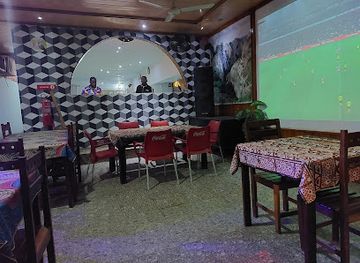
Evening life on the Malanje Plateau is modest and concentrated mainly in Malanje city. Local bars, small restaurants and informal social venues are more characteristic than a large nightclub circuit, with music and conversation often forming the focus of the evening. Some establishments may serve Angolan beer, soft drinks and simple snacks, while nightlife in smaller settlements is limited and may finish early. Around Kalandula Falls, Pungo Andongo and Cangandala, visitors should not expect a developed evening-entertainment infrastructure; accommodation and organised dinners are generally more realistic options. Standards, opening arrangements and payment methods can change, so local advice is useful. Dress neatly, keep valuables secure and arrange transport before going out, particularly where street lighting and late-night taxis are limited. The best way to experience the region after dark is usually through its relaxed local dining and social atmosphere rather than by seeking a dedicated club district.
-
Hotel
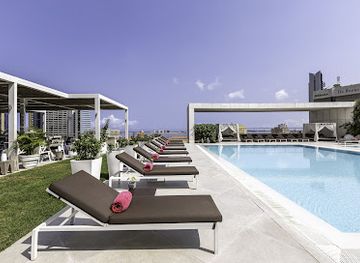
EPIC SANA Luanda Hotel
Discover luxury and vibrant nightlife at EPIC SANA Luanda Hotel - your perfect retreat in Angola's capital.
-
Restaurant
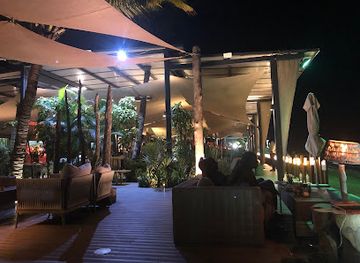
Restaurante Café Del Mar
Experience exquisite dining with breathtaking ocean views at Café Del Mar, Luanda's premier restaurant for locals and tourists alike.
-
Seafood
Restaurante la Vigia
Discover the finest seafood at Restaurante la Vigia, a culinary gem in Luanda offering authentic Angolan flavors and a vibrant dining experience.
-
Bar
BAR BAR
Discover the lively nightlife at BAR BAR in Luanda, where vibrant cocktails and friendly vibes create unforgettable evenings.
Best nightclubs in Malanje Plateau
Evening life on the Malanje Plateau is modest and concentrated mainly in Malanje city. Local bars, small restaurants and informal social venues are more characteristic than a large nightclub circuit, with music and conversation often forming the focus of the evening. Some establishments may serve Angolan beer, soft drinks and simple snacks, while nightlife in smaller settlements is limited and may finish early. Around Kalandula Falls, Pungo Andongo and Cangandala, visitors should not expect a developed evening-entertainment infrastructure; accommodation and organised dinners are generally more realistic options. Standards, opening arrangements and payment methods can change, so local advice is useful. Dress neatly, keep valuables secure and arrange transport before going out, particularly where street lighting and late-night taxis are limited. The best way to experience the region after dark is usually through its relaxed local dining and social atmosphere rather than by seeking a dedicated club district.
-
Rock music club
Black Wonder Musick
Immerse yourself in the energetic ambiance of Black Wonder Musick, Malanje's top rock music club, where live performances ignite the night.
-
 Bar
BarD' Jovem
Experience the vibrant nightlife of Malanje at D' Jovem, where local culture and delicious drinks come together in a lively atmosphere.
-
Bar
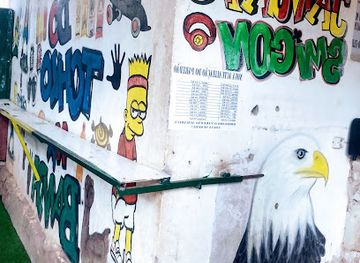
Paredão Do Tchilo Na Banda
Explore the vibrant social scene at Paredão Do Tchilo Na Banda, a lively bar in Malanje offering delicious local drinks and an inviting atmosphere.
Best shops in Malanje Plateau
Shopping in the Malanje Plateau is practical and locally focused. Malanje’s markets and high-street shops are the best places to buy fruit, bread, drinks, basic travel supplies and everyday clothing, while smaller settlements offer a narrower selection. Markets provide a closer view of regional agriculture, with cassava, maize, vegetables and seasonal produce often more prominent than dedicated tourist merchandise. Visitors may find carved objects, woven goods or other locally made items, but quality and provenance vary, so purchases should be made respectfully and without removing cultural or archaeological material from historic landscapes. Packaged Angolan coffee, where available through reputable sellers, can make a useful regional purchase, although production and availability are not uniform across the plateau. Formal retail is limited compared with Luanda, and remote attractions generally have few shops, so obtain cash, water, snacks and personal necessities in Malanje before travelling into the countryside. Bargaining may occur in informal markets, but it should be conducted courteously and with clear agreement on the final price.
-
Hotel
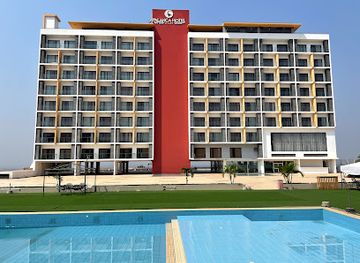
Palanca Hotel
Experience comfort and convenience at Palanca Hotel in Malanje, Angola, your ideal base for exploring the region's beauty.
-
Grocery store
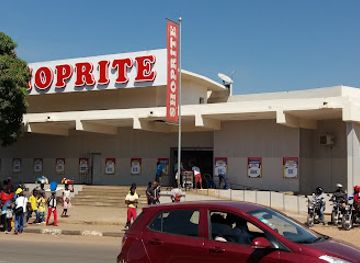
Shoprite Mini Malange
Explore Malanje's vibrant culture at Shoprite Mini Malange, your go-to grocery store and local hub for fresh produce, baked goods, and travel services.
-
Shopping mall
Ginga Shopping
Discover the vibrant shopping scene at Ginga Shopping in Luanda, where local culture meets international brands in a lively atmosphere.
-
Hotel
Malanje Hotel
Discover the warmth and charm of Malanje Hotel, your perfect base for exploring the stunning landscapes and vibrant culture of Malanje.
Get your free copy of our complete guide to Malanje Plateau, delivered straight to you.
Everything on this page, from attractions and restaurants to essentials and local phrases, in one PDF you can read offline, print or share.
Already have an account? Sign in
Your Malanje Plateau guide is ready.
We'll send it to · Not you? Sign out

Getting your guide ready…
We are putting together a fresh copy of the Malanje Plateau guide. This can take up to a minute.
This can take a few moments. If your browser asks, choose Allow so the download can start. You'll find the guide in your Downloads folder.
Nothing happened? Download it again
Sorry, the guide is taking longer than usual. Please try again in a minute, or get it by email instead.
Malanje Plateau essentials
Currency and Payment
Safety
Emergency Situations
Do's and Don'ts
Local Tips
From Eve
Local phrases worth knowing
You don't need to get them perfect. A few words go a long way, and locals appreciate the effort.
Basics
| English | Local | Say it |
|---|---|---|
| Hello | Olá | [oh-lah] |
| Goodbye | Adeus | [ah-deh-oos] |
| Yes | Sim | [seem] |
| No | Não | [now] |
| Please/You're welcome | Por favor | [por fah-vor] |
| Thank you | Obrigado | [oh-bree-gah-doo] |
| Excuse me/Sorry | Desculpe | [deh-scool-peh] |
| How are you? | Como você está? | [koh-mo voh-seh es-tah] |
| Fine. And you? | Bem. E você? | [baym. ee voh-seh] |
| Do you speak English? | Você fala inglês? | [voh-seh fah-lah een-glays] |
| I don't understand | Eu não entendo | [eh-oo now en-ten-doo] |
Eating & Drinking
| English | Local | Say it |
|---|---|---|
| I'd like to see the menu, please | Gostaria de ver o menu, por favor | [goh-stah-ree-ah jeh vehr oo meh-noo, por fah-vor] |
| I don't eat meat | Eu não como carne | [eh-oo now koh-moo kar-nee] |
| Cheers! | Saúde! | [sah-oo-deh] |
| I would like to pay, please | Gostaria de pagar, por favor | [goh-stah-ree-ah jeh pah-gar, por fah-vor] |
Emergencies
| English | Local | Say it |
|---|---|---|
| Help! | Ajuda! | [ah-zhoo-dah] |
| Go away! | Vá embora! | [vah em-boh-rah] |
| Call the Police! | Chame a polícia! | [sha-meh ah poh-lee-see-ah] |
| Call a doctor! | Chame um médico! | [sha-meh oom meh-dee-coh] |
| I'm lost | Estou perdido | [es-toh pair-jee-doo] |
| I'm ill | Estou doente | [es-toh do-ehn-chee] |
Shopping
| English | Local | Say it |
|---|---|---|
| I'd like to buy... | Gostaria de comprar... | [goh-stah-ree-ah jeh kohm-prar] |
| I'm just looking | Estou apenas olhando | [es-toh ah-peh-nas oh-lyan-doo] |
| How much is it? | Quanto custa? | [kwahn-toh koos-tah] |
| That's too expensive | É muito caro | [eh moo-ee-toh kah-roh] |
| Can you lower the price? | Você pode baixar o preço? | [voh-seh poh-jee bye-shar oo pray-soh] |
Time & Numbers
| English | Local | Say it |
|---|---|---|
| What time is it? | Que horas são? | [keh oh-ras sah-o] |
| It's one o'clock | É uma hora | [eh oo-mah oh-rah] |
| Half past (10) | Dez e meia | [dez ee may-ah] |
| Morning | Manhã | [mahn-yah] |
| Afternoon | Tarde | [tar-deh] |
| Evening | Noite | [noy-tch] |
| Yesterday | Ontem | [on-tem] |
| Today | Hoje | [oh-zhe] |
| Tomorrow | Amanhã | [ah-mahn-yah] |
| 1 | Um | [oom] |
| 2 | Dois | [doyz] |
| 3 | Três | [trays] |
| 4 | Quatro | [kwah-troh] |
| 5 | Cinco | [seen-koh] |
| 6 | Seis | [says] |
| 7 | Sete | [seh-chee] |
| 8 | Oito | [oy-toh] |
| 9 | Nove | [noh-veh] |
| 10 | Dez | [dez] |
Transport & Directions
| English | Local | Say it |
|---|---|---|
| Where's a/the...? | Onde está um/a...? | [on-deh es-tah oom/ah] |
| What's the address? | Qual é o endereço? | [kwahl eh oo in-deh-reh-soo] |
| Can you show me (on the map)? | Você pode me mostrar (no mapa)? | [voh-seh poh-jee meh mohs-trar (no mah-pah)] |
| When's the next (bus)? | Quando é o próximo (ônibus)? | [kwan-doo eh oo proh-see-mo (oh-nee-boos)] |
| A ticket (to ....) | Um bilhete (para....) | [oom bee-lyeh-teh (pah-rah)] |
History of Malanje Plateau
Early Mbundu societies and the Ndongo world
The plateau lies within the broader historical sphere of Mbundu-speaking peoples, whose communities developed farming, trading and political networks across north-central Angola. Before Portuguese territorial control, the region was connected to the Kingdom of Ndongo and neighbouring political systems rather than existing as an isolated upland. Agriculture, woodland resources and river routes shaped settlement, while oral traditions preserved the memory of rulers, conflicts and alliances. This cultural background remains important when interpreting place names, local customs and historical associations across Malanje.
Queen Njinga and the seventeenth-century conflicts
Queen Njinga, ruler and diplomat of Ndongo and Matamba, is one of Angola’s most influential historical figures. Her resistance to Portuguese expansion in the seventeenth century is strongly associated with the wider region around Malanje, including the granite formations of Pungo Andongo. Although later stories combine historical memory with legend, the landscape has become an important setting for understanding her political career, military strategy and negotiations with Portuguese authorities. Njinga’s legacy is central to Angola’s national historical consciousness and is particularly visible in the Malanje area.
Portuguese expansion and colonial administration
Portuguese influence in the interior expanded unevenly over several centuries, becoming more directly administered during the late nineteenth and early twentieth centuries. Fortified posts, missions, plantations and administrative settlements altered existing political and economic relationships. Malanje developed as a colonial centre serving a large interior hinterland, while roads and later rail connections tied the plateau more closely to coastal Angola. The colonial period also brought coercive labour systems, taxation and profound social disruption, alongside the infrastructure and urban forms that remain visible in parts of the region.
Agriculture, commerce and the arrival of rail
During the twentieth century, commercial agriculture and regional trade became increasingly important to Malanje’s economy. The railway from Luanda towards Malanje connected the interior to the coast and helped move agricultural produce, goods and people, although its operation and condition changed considerably over time. Cotton, coffee and food crops all featured in the wider economic history of the province, with benefits distributed unevenly under colonial rule. Malanje’s role as an inland market and administrative centre grew from these transport and agricultural connections.
Independence and the Angolan civil war
Angola became independent from Portugal in 1975 after a violent decolonisation struggle. The subsequent civil war affected transport, settlements, agriculture and public services throughout the interior, including Malanje and its surrounding districts. Roads and railways were disrupted, and access to many rural areas became difficult or unsafe. The conflict formally ended in 2002, beginning a long process of reconstruction. The plateau’s present travel infrastructure, changing towns and renewed conservation efforts need to be understood against this recent history.
Reconstruction, conservation and renewed access
Since the end of the civil war, investment in roads, urban services and transport has gradually improved connections between Malanje and other parts of Angola. The reopening and rehabilitation of transport links have made the province more accessible, although remote travel still requires preparation. Conservation has also gained prominence, particularly through Cangandala National Park and efforts to protect the giant sable antelope. Tourism remains developing rather than fully established, but the region’s natural and historical assets increasingly form part of Angola’s broader cultural and ecological identity.
Malanje Plateau in Photos
Browse through our photo collection highlighting the charm and character of the destination.
Neighbouring regions of Malanje Plateau
The closest regions to Malanje Plateau, if you have time for more than one.
-

-

-

-

-


Swipe for more regions
Explore more

Explore more of Angola
Discover Angola's vibrant cities, stunning coastlines, and rich cultural heritage. An African destination that combines urban excitement with natural wonders.
Explore Angola