Crystal Forest
Crystal Forest: A Glimpse into a Petrified Past


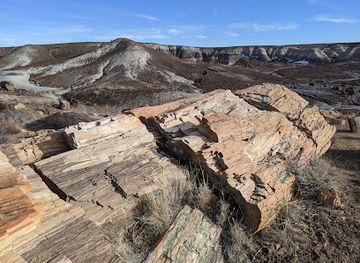
Witness a 225-million-year-old petrified tree forming a natural bridge in Petrified Forest National Park, a testament to time and preservation.
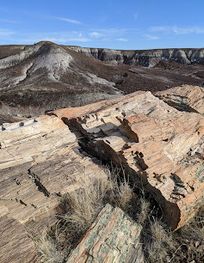
Agate Bridge is a 110-foot petrified log spanning a gully within Petrified Forest National Park. Once a popular spot for photos, it's now reinforced with concrete supports, a testament to early conservation efforts and a reminder of the park's ancient history.
Opening times, essentials, and a few local tips gathered into one calmer, easier-to-scan planning section.
Driving
Agate Bridge is located approximately 10 miles from the southern entrance of Petrified Forest National Park. From Interstate 40, take either Exit 311 (eastbound) or Exit 285 (westbound) and follow the signs to the park's entrance. Once inside the park, drive along the main park road (Petrified Forest Road) for about 10 miles. Agate Bridge will be on your right, with a small parking area nearby. The entrance fee to the park is $25 per vehicle, valid for seven days. Credit or debit cards are the only accepted forms of payment.
Walking
After parking, a short 125-foot paved path leads to the Agate Bridge overlook. The bridge is visible from the parking lot, but the path offers a closer view. Please note that walking on the bridge itself is prohibited to protect the fragile structure.
Use Agate Bridge as your starting point for nearby food, family ideas, nightlife, and more local discoveries.

Explore expert travel guides, compare and book tours, experiences, hotels, and more—all from the palm of your hand. Download now for seamless trip planning wherever your wanderlust takes you.
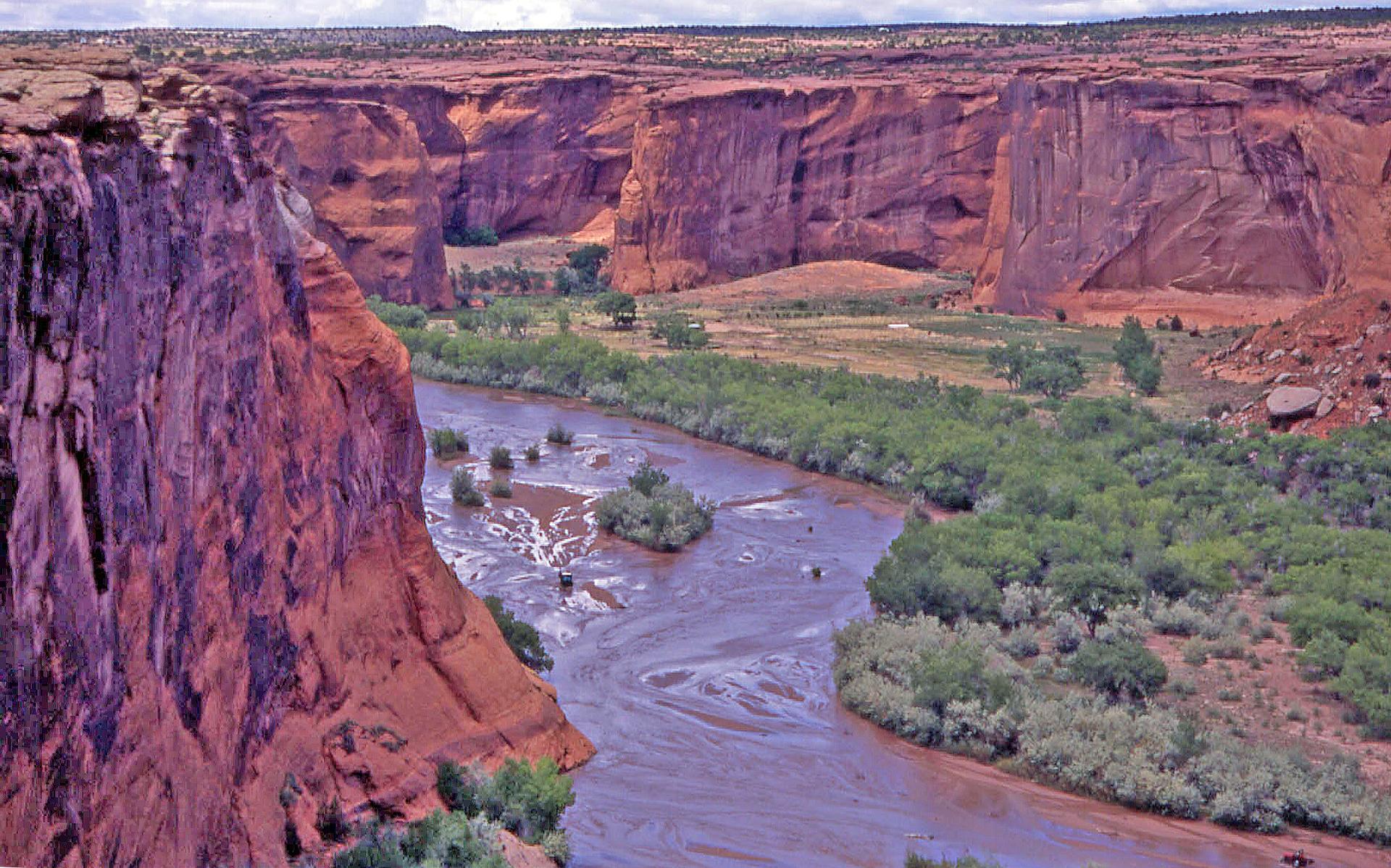
Discover the wonders of Apache County, Arizona: a land of ancient history, stunning landscapes, and rich Native American culture, perfect for outdoor adventures and cultural exploration.
Tell me more about Apache County