

Downtown Tempe (Tempe) Travel Guide - Free
Explore Downtown Tempe in Tempe with Evendo's free guide. Find the best shops, historic streets, restaurants, and gems on web or mobile.


Downtown Tempe blends Mill Avenue dining, ASU culture, A Mountain trails, Tempe Town Lake and Arizona nightlife in a compact, walkable city centre.
Mill Avenue and the University City
Downtown Tempe is the compact, walkable core of Tempe, Arizona, arranged around Mill Avenue, the Arizona State University campus and the Salt River corridor. Its personality shifts noticeably from block to block: student energy and independent businesses line Mill Avenue, civic and cultural venues gather around Tempe Town Lake, and the slopes of Hayden Butte—usually called A Mountain—rise immediately south of the central streets. This is a district shaped by movement, with pedestrians, cyclists, light-rail passengers and university life giving the area much of its daily rhythm.Read more about Downtown Tempe
Landmarks and Open Space
Food, Evening Life and Street Character
Best attractions in Downtown Tempe
Downtown Tempe's attractions are concentrated within a walkable area rather than spread across a large sightseeing zone. Mill Avenue provides the principal street scene, with restaurants, cafés, shops and the pedestrian flow associated with Arizona State University. At its northern end, Mill Avenue Bridge leads towards Tempe Beach Park and the paths around Tempe Town Lake, where visitors can walk, cycle and view the city from the river corridor. Hayden Butte, or A Mountain, rises directly south of the centre and offers a short but demanding desert hike with broad valley views. The surviving Hayden Flour Mill adds an industrial-historic note near the downtown edge, while ASU brings museums, galleries, public art and performance spaces into the local itinerary. Tempe Center for the Arts sits across the lake from the core and is best described as a nearby waterfront cultural venue rather than a Mill Avenue attraction.
-
Art museum
ASU Art Museum
Explore the vibrant art scene at ASU Art Museum in Tempe, Arizona, featuring contemporary exhibits and engaging community programs.
10 min walk · 0.8 km from neighbourhood centre
-
Historical place
Hayden Flour Mill
Explore the historic Hayden Flour Mill in Tempe, Arizona, a captivating landmark reflecting the region's agricultural heritage and scenic beauty.
5 min walk · 0.4 km from neighbourhood centre
-
Tourist attraction
Tempe Welcome Sign
Discover Tempe's vibrant spirit at the iconic Welcome Sign – a must-visit landmark showcasing local culture and inviting adventure.
5 min walk · 0.4 km from neighbourhood centre


Best landmarks in Downtown Tempe
The Hayden Flour Mill is Downtown Tempe's clearest physical link with its nineteenth-century agricultural and commercial origins, preserving an industrial presence beside newer development. Mill Avenue itself remains the district's defining urban landmark, following the historic route towards the Salt River and the surviving bridge that connects downtown with the Tempe Beach Park waterfront. Hayden Butte, known locally as A Mountain, is both a geological feature and a civic symbol, marked by the large letter A associated with Arizona State University. ASU's Tempe campus contributes a broad collection of academic buildings, landscaped spaces, public art and performance venues rather than a single uniform architectural ensemble. Along the lake, Tempe City Hall and Tempe Center for the Arts provide recognisable civic and cultural markers, although the latter stands north of the central downtown streets across the water.
-
Park
Tempe Beach Park
A historic and lively park in Tempe, AZ, offering recreation, events, and beautiful lakeside views for all ages.
9 min walk · 0.8 km from neighbourhood centre
-
Tourist attraction
Downtown Tempe
Experience the energy of Arizona State University, vibrant nightlife, outdoor recreation, and unique events in the heart of Tempe.
5 min walk · 0.4 km from neighbourhood centre
-
Historical place
Hayden Flour Mill
Explore Tempe's history at the iconic Hayden Flour Mill, a landmark showcasing the city's agricultural past and vibrant future.
5 min walk · 0.4 km from neighbourhood centre
-
Marketing agency
Tempe Tourism Office
Unlock Tempe's best: Expert travel info, maps, & local tips for an unforgettable Arizona adventure. Start your Tempe journey here!
6 min walk · 0.5 km from neighbourhood centre


Explore Downtown Tempe on the map
A handpicked selection of must-see spots in Downtown Tempe, mapped for you.
Best hotels in Downtown Tempe
Best restaurants in Downtown Tempe
Downtown Tempe's dining scene is shaped by Mill Avenue's student audience, the university's international community and the area's role as an evening entertainment district. Visitors will find casual Mexican and Southwestern cooking, pizza, burgers, cafés, bakeries, vegetarian-friendly menus, craft beer and contemporary small-plate restaurants within a few blocks of the central strip. Established names such as Cornish Pasty Co., Casey Moore's Oyster House and Four Peaks Brewing help illustrate the area's range, while the surrounding ASU campus adds further inexpensive and international choices. The emphasis is generally on relaxed, social eating rather than a formal restaurant quarter, and menus and businesses change as the district evolves. For a broader meal, follow Mill Avenue away from the busiest blocks and explore the side streets, where independent cafés and neighbourhood-oriented restaurants sit alongside the better-known student venues.
-
American
Culinary Dropout
Experience vibrant dining at Culinary Dropout in Tempe—where American flavors meet live music and an inviting atmosphere.
7 min walk · 0.5 km from neighbourhood centre
-
American
Perfect Pear Bistro
Experience the best of American cuisine at Perfect Pear Bistro in Tempe - where fresh ingredients meet creative culinary artistry.
10 min walk · 0.8 km from neighbourhood centre
-
Brunch
Daily Jam - Breakfast & Brunch Restaurant
Experience the best breakfast and brunch at Daily Jam in Tempe – where flavor meets family-friendly dining!
2 min walk · 0.2 km from neighbourhood centre
-
Mexican
Loco Patron
Discover Loco Patron in Tempe: A vibrant Mexican restaurant offering authentic cuisine and a festive atmosphere perfect for all visitors.
3 min walk · 0.2 km from neighbourhood centre


Best bars in Downtown Tempe
After dark, Downtown Tempe is one of the Phoenix area's most concentrated university-oriented entertainment districts, with bars, pubs, breweries, live-music rooms and late-night venues clustered around Mill Avenue and nearby east-west streets. Casey Moore's Oyster House and Four Peaks Brewing are long-established reference points, while the wider strip includes casual sports bars, dance-oriented venues and places built around DJs or live performance. ASU's calendar also brings concerts, theatre and other evening events to spaces such as ASU Gammage, creating a cultural night out distinct from bar-hopping. The atmosphere varies with the academic calendar and major events: central Mill Avenue can be loud and crowded, whereas the lakefront and residential streets are noticeably calmer. Venue access, age requirements and operating arrangements differ, so visitors should check current information rather than assume every establishment follows the same timetable.
-
Bar
Fat Tuesday
Experience the vibrant nightlife at Fat Tuesday, Tempe's top cocktail bar known for its frozen drinks and lively atmosphere.
2 min walk · 0.2 km from neighbourhood centre
-
Piano bar
Low Key Piano Bar
Experience the vibrant nightlife at Low Key Piano Bar in Tempe, where live music and great drinks create unforgettable nights.
1 min walk · 0.1 km from neighbourhood centre
-
Bar
Alibi
Discover Alibi, a trendy bar in Tempe, AZ, known for its craft cocktails and vibrant atmosphere, perfect for a night out in the city.
5 min walk · 0.4 km from neighbourhood centre
-
Grill
Sunbar Tempe
Discover Sunbar Tempe, a vibrant grill and event venue offering delicious food, live music, and an unforgettable nightlife experience in Arizona.
1 min walk · 0.1 km from neighbourhood centre


Best nightclubs in Downtown Tempe
After dark, Downtown Tempe is one of the Phoenix area's most concentrated university-oriented entertainment districts, with bars, pubs, breweries, live-music rooms and late-night venues clustered around Mill Avenue and nearby east-west streets. Casey Moore's Oyster House and Four Peaks Brewing are long-established reference points, while the wider strip includes casual sports bars, dance-oriented venues and places built around DJs or live performance. ASU's calendar also brings concerts, theatre and other evening events to spaces such as ASU Gammage, creating a cultural night out distinct from bar-hopping. The atmosphere varies with the academic calendar and major events: central Mill Avenue can be loud and crowded, whereas the lakefront and residential streets are noticeably calmer. Venue access, age requirements and operating arrangements differ, so visitors should check current information rather than assume every establishment follows the same timetable.
-
Bar
Fat Tuesday
Discover the essence of New Orleans with vibrant cocktails and a lively atmosphere at Fat Tuesday in Tempe, Arizona.
2 min walk · 0.2 km from neighbourhood centre
-
Piano bar
Low Key Piano Bar
Low Key Piano Bar in Tempe offers live music, handcrafted cocktails, and an inviting atmosphere for an unforgettable night out.
1 min walk · 0.1 km from neighbourhood centre
-
Night club
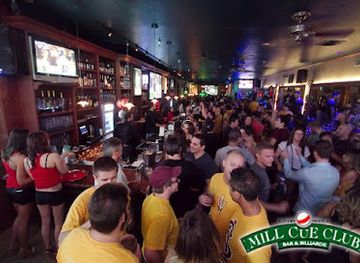
Mill Cue Club
Discover the vibrant nightlife of Mill Cue Club, a premier destination for pool, drinks, and unforgettable entertainment in Tempe, Arizona.
2 min walk · 0.2 km from neighbourhood centre
-
Lounge
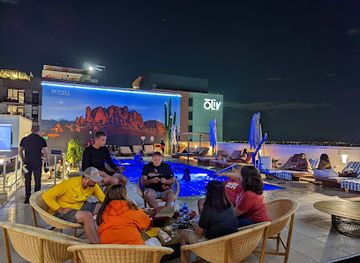
Skysill Rooftop Lounge
Discover the vibrant atmosphere and breathtaking views at Skysill Rooftop Lounge in Tempe, Arizona – a perfect destination for relaxation and socializing.
4 min walk · 0.3 km from neighbourhood centre


Best shops in Downtown Tempe
Shopping in Downtown Tempe is concentrated around Mill Avenue and the blocks adjoining the ASU campus, where independent retailers operate alongside national chains, cafés and service businesses. The selection tends towards university-oriented clothing, gifts, books, accessories, records, novelty items and small lifestyle goods rather than a traditional market or specialist antiques district. Mill Avenue is particularly useful for browsing between meals and evening venues, while campus-area shops reflect the practical needs of students and the neighbourhood's youthful audience. There is no permanent historic food bazaar defining the centre, although seasonal events, makers' markets and temporary street programmes may add stalls at particular times. For a more substantial retail excursion, visitors generally travel beyond Downtown Tempe to larger suburban shopping areas; the local appeal lies in a compact, walkable commercial street and its independent, student-influenced character.
-
Shopping mall
Centerpoint on Mill
Discover the vibrant shopping experience at Centerpoint on Mill, Tempe's premier destination for retail therapy and culinary delights.
4 min walk · 0.3 km from neighbourhood centre
-
Shopping mall
Mill Avenue Shops
Explore the vibrant shops and dining options at Mill Avenue Shops in Tempe, Arizona, where local culture and unique finds await every visitor.
1 min walk · 0.1 km from neighbourhood centre
-
Clothing store
Rave Circus (Powered by The Flow Shop)
Discover Rave Circus in Tempe, AZ, where fashion meets fun with unique clothing, accessories, and festival gear for every adventurous tourist.
1 min walk · 0.1 km from neighbourhood centre
-
Gift shop
Happy Healthy High Horny Herbs
Discover Happy Healthy High Horny Herbs in Tempe: Your go-to spot for herbal products, aromatherapy, unique gifts, and local treasures.
2 min walk · 0.2 km from neighbourhood centre


Downtown Tempe essentials
Getting There
Getting Around
Safety
Emergency Situations
Do's and Don'ts
Local Tips

From Eve
Local phrases worth knowing
You don't need to get them perfect. A few words go a long way, and locals appreciate the effort.
Basics
| English | Local | Say it |
|---|---|---|
| Hello | Hey | [hey] |
| Goodbye | Later | [lay-ter] |
| Yes | Yeah | [yeh] |
| No | Nah | [na] |
| Please/You're welcome | Please/No problem | [pleez/no prob-lem] |
| Thank you | Thanks | [thanks] |
| Excuse me/Sorry | Sorry | [sor-ry] |
| How are you? | How are you? | [how are you?] |
| Fine. And you? | Doing good. You? | [doo-ing good. you?] |
| Do you speak English? | Do you speak English? | [doo you speak ing-glish?] |
| I don't understand | I don't get it | [i don't get it] |
Eating & Drinking
| English | Local | Say it |
|---|---|---|
| I'd like to see the menu, please | Can I see the menu? | [can eye see the meh-nyoo?] |
| I don't eat meat | I'm vegetarian | [i'm ve-ji-te-ri-an] |
| Cheers! | Cheers! | [cheers!] |
| I would like to pay, please | I'll pay now | [i'll pay now] |
Emergencies
| English | Local | Say it |
|---|---|---|
| Help! | Help! | [help!] |
| Go away! | Get lost! | [get lost!] |
| Call the Police! | Call the cops! | [call the cops!] |
| Call a doctor! | Get a doctor! | [get a doc-tor!] |
| I'm lost | I'm lost | [i'm lost] |
| I'm ill | I'm sick | [i'm sick] |
Shopping
| English | Local | Say it |
|---|---|---|
| I'd like to buy... | I wanna buy... | [i wanna buy...] |
| I'm just looking | Just browsing | [just brow-zing] |
| How much is it? | How much does it cost? | [how much duz it cost?] |
| That's too expensive | That's too pricey | [that's too pri-see] |
| Can you lower the price? | Can you give a discount? | [can you give a dis-count?] |
Time & Numbers
| English | Local | Say it |
|---|---|---|
| What time is it? | What's the time? | [what's the time?] |
| It's one o'clock | It's one o'clock | [it's one o'clock] |
| Half past (10) | Ten thirty | [ten thur-tee] |
| Morning | Morning | [mor-ning] |
| Afternoon | Afternoon | [af-ter-noon] |
| Evening | Evening | [ee-ven-ing] |
| Yesterday | Yesterday | [yes-ter-day] |
| Today | Today | [to-day] |
| Tomorrow | Tomorrow | [to-mor-row] |
| 1 | One | [wun] |
| 2 | Two | [too] |
| 3 | Three | [three] |
| 4 | Four | [fore] |
| 5 | Five | [fiv] |
| 6 | Six | [siks] |
| 7 | Seven | [sev-en] |
| 8 | Eight | [ate] |
| 9 | Nine | [nine] |
| 10 | Ten | [ten] |
Transport & Directions
| English | Local | Say it |
|---|---|---|
| Where's a/the...? | Where's the...? | [where's the...?] |
| What's the address? | What's the address? | [what's the address?] |
| Can you show me (on the map)? | Can you show me (on the map)? | [can you show me (on the map)?] |
| When's the next (bus)? | When's the next (bus)? | [when's the next (bus)?] |
| A ticket (to ....) | A ticket (to ....) | [a ticket (to ....)] |
History of Downtown Tempe
Hohokam Irrigation Landscapes
Long before the modern town, the Salt River Valley was inhabited and cultivated by Hohokam communities, whose extensive canal systems supported agriculture in what is now the Tempe area. Although much of the historic landscape has been transformed by urban development, the relationship between settlement, irrigation and the river remains central to understanding Tempe's location. Downtown stands close to the Salt River and within a valley whose productive farmland later attracted settlers, mills and transport links. Archaeological evidence across the region records a deep history that predates the nineteenth-century town and is not reducible to the later Anglo-American foundation story.
Hayden's Ferry and Tempe's Foundation
The modern settlement grew around Charles Trumbull Hayden's ferry across the Salt River, established in the 1870s near the present downtown area. Hayden's commercial activities, including a flour mill, helped make the river crossing an economic centre for surrounding farms and settlements. The name Tempe was reportedly chosen by Hayden after the Vale of Tempe in Greece, reflecting the nineteenth-century habit of giving American settlements classical names. The river crossing, mill and early agricultural economy established the pattern later followed by roads, bridges and commercial streets around today's Mill Avenue.
Railways, Mills and a Town Centre
Tempe developed as a trading and agricultural service town as transport infrastructure improved and the railway connected the settlement with wider markets. Milling and farming gave the area an economic purpose beyond the ferry, while the commercial spine that became Mill Avenue concentrated shops, services and civic activity. The Hayden Flour Mill is the most visible surviving reminder of this period, though the downtown buildings around it have changed repeatedly. The town's location beside the Salt River and near the rising educational institution to the east helped preserve its role as a regional centre as metropolitan Phoenix expanded.
From Normal School to University City
Arizona State University's origins lie in the Tempe Normal School, founded in 1885, and the institution became an increasingly important influence on downtown's social and economic life. Student populations, academic buildings, performances and university events brought a dependable audience to Mill Avenue, while the surrounding town grew into part of the Phoenix metropolitan area. Downtown renewal in the late twentieth and early twenty-first centuries introduced new apartments, restaurants, public spaces and cultural facilities. Valley Metro light rail arrived in 2008, strengthening the area's regional connections, and the Tempe Streetcar began service in 2022, reinforcing downtown's role as a transit-linked university and civic district.
Downtown Tempe in Photos
Browse through our photo collection highlighting the charm and character of the destination.
Neighbourhoods near Downtown Tempe
The closest neighbourhoods to Downtown Tempe, if you have time for more than one stop.
-

-


Swipe for more neighbourhoods
Explore more
Explore more of Tempe
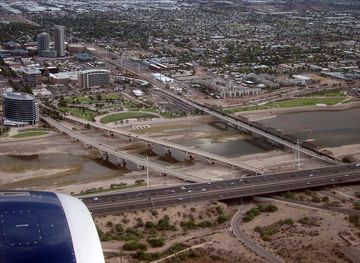
Tempe, Arizona combines ASU culture, desert landscapes, Tempe Town Lake, historic Mill Avenue, arts, dining and outdoor experiences near Phoenix.
Explore Tempe