

Free Grand Canyon Village Travel Guide & Mobile App
Plan your Grand Canyon Village trip with Evendo. Get free guides to top attractions, restaurants, hotels, and bars. Web access or download the mobile app.


Grand Canyon Village offers South Rim viewpoints, historic lodges, rim walks and access to the canyon’s geology, trails and Native heritage in Arizona.
Gateway to the South Rim
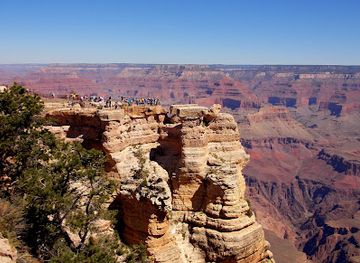
Grand Canyon Village occupies the central developed area of Grand Canyon National Park’s South Rim in northern Arizona, where a chain of viewpoints, historic buildings and wooded paths meets one of the world’s most dramatic landscapes. The settlement is not a conventional town: it is a small national-park community shaped around visitor services, accommodation, museums, restaurants and access to the canyon edge. Mather Point provides a celebrated first view, while the Rim Trail links overlooks, lodges and interpretive sites along the plateau.Read more about Grand Canyon Village
Architecture and Park History
Walking into the Landscape
When is the best time to visit Grand Canyon Village?
Best: May–June, September · 24–29°C| Month | High (°C) | Rainfall (mm) |
|---|---|---|
| January | 8 | 32 |
| February | 9 | 31 |
| March | 13 | 33 |
| April | 18 | 18 |
| May (best) | 24 | 11 |
| June (best) | 29 | 6 |
| July | 33 | 38 |
| August | 32 | 41 |
| September (best) | 27 | 33 |
| October | 20 | 25 |
| November | 12 | 24 |
| December | 7 | 34 |
Getting to and around Grand Canyon Village
How to get there
Transportation
Best attractions in Grand Canyon Village
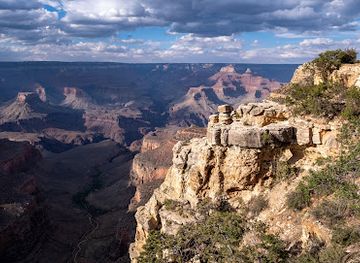
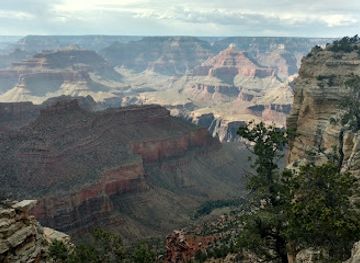
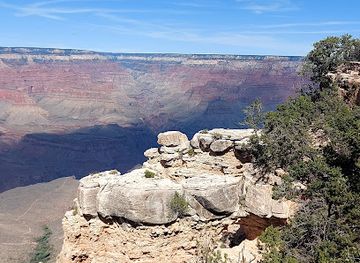
Grand Canyon Village’s principal attraction is the South Rim itself, where Mather Point, Yavapai Point and Yavapai Geology Museum offer different perspectives on the canyon’s immense scale and exposed rock layers. The Rim Trail provides an accessible route between viewpoints, historic buildings and wooded stretches, while the Bright Angel Trailhead introduces the physical experience of descending below the rim; even a short walk requires care because the return is uphill. The Grand Canyon Visitor Centre explains park geology, wildlife and practical orientation, and nearby historic lodges and studios reveal how tourism developed here. The Grand Canyon Railway depot adds a transport-history dimension, with trains linking the village to Williams. East of the village, Desert View and the stone Desert View Watchtower extend the South Rim experience, although they are separate park destinations reached along the rim road rather than attractions within the village centre.
-
Tourist attraction
Grand Canyon Railway
Ride a historic train through Arizona's stunning landscapes to the Grand Canyon South Rim. A unique and memorable adventure!
2 min walk · 0.1 km from city centre
-
Tourist attraction
South Rim Trail
Explore the South Rim Trail: A stunning hike showcasing the breathtaking beauty of the Grand Canyon, perfect for all adventurers.
9 min walk · 0.8 km from city centre
-
Visitor center
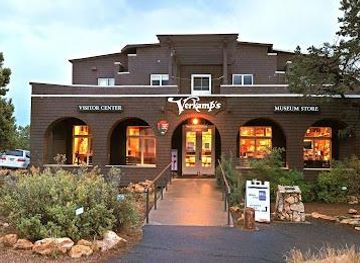
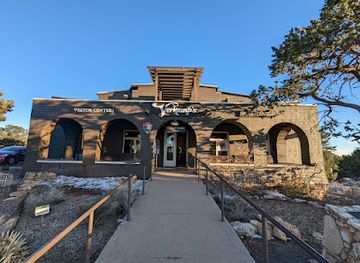
Verkamp's Visitor Center
Discover the rich history and breathtaking views at Verkamp's Visitor Center, your gateway to the Grand Canyon's wonders and adventures.
1 min walk · 0.1 km from city centre
-
Scenic spot
Grand Canyon South Rim
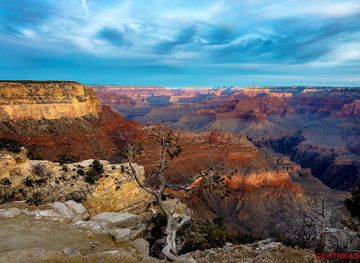
Experience the grandeur of the Grand Canyon at the South Rim: breathtaking views, historic landmarks, and endless adventures await!
5 min walk · 0.4 km from city centre

Best landmarks in Grand Canyon Village
Grand Canyon Village’s historic landmarks reflect the early period of South Rim tourism and the architectural ideas that shaped the national-park experience. El Tovar, completed in 1905, stands close to the rim as a landmark hotel associated with railway-era travel. Nearby Hopi House, also opened in 1905, was designed by Mary Colter as a trading and cultural building inspired by regional Indigenous forms. Bright Angel Lodge, Lookout Studio and Kolb Studio continue the story through rustic stone construction, canyon-edge viewpoints and the work of the Kolb brothers, photographers who documented the canyon. The Grand Canyon Railway depot represents the transport link that made the rim accessible to mass tourism, while the Desert View Watchtower, farther east in the park, is an important Colter-designed structure whose interior murals and high outlook connect architecture with landscape and regional cultural references.
-
Hiking area
Bright Angel Trailhead
Hike into the Grand Canyon's depths on this iconic trail, offering stunning views, historical significance, and a challenging adventure.
9 min walk · 0.7 km from city centre
-
Lodge
Bright Angel Lodge
Experience the Grand Canyon's rustic charm and history at Bright Angel Lodge, a National Historic Landmark on the South Rim.
6 min walk · 0.5 km from city centre
-
Train depot
Grand Canyon Railway
Ride the rails to the Grand Canyon: a historic train journey with stunning views & Wild West entertainment.
2 min walk · 0.1 km from city centre
-
Hiking area
South Rim Trail
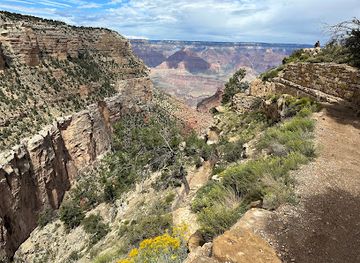
Experience the Grand Canyon's grandeur on this accessible, 13-mile trail with stunning views and convenient shuttle access.
9 min walk · 0.8 km from city centre

Explore Grand Canyon Village on the map
Plan your Grand Canyon Village trip on one map. See where the top attractions, landmarks, restaurants, bars and hotels are, find what's near where you're staying, and book hotels and experiences in a few clicks.
Best hotels in Grand Canyon Village
Best restaurants in Grand Canyon Village
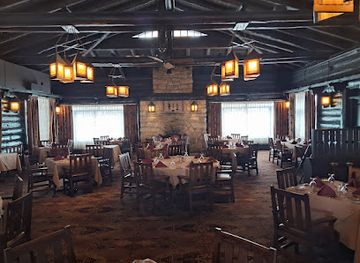
Dining in Grand Canyon Village is centred on park lodges, visitor facilities and the Market Plaza area rather than an independent restaurant district. Menus commonly draw on familiar American traditions suited to a remote visitor destination, with breakfasts, sandwiches, salads, burgers and substantial evening meals, while cafés and casual counters provide food for hikers and road travellers. El Tovar Dining Room occupies the park’s best-known historic hotel and offers a more formal setting, whereas Bright Angel Restaurant, the Maswik area and other lodge facilities provide practical, informal choices. Groceries, snacks and picnic supplies are available around Market Plaza, useful for early trail starts and long days at the rim. Nearby Tusayan broadens the selection with additional restaurants and casual dining, but the village itself remains shaped by national-park logistics, historic hospitality and the need to serve visitors spread across a large landscape.
-
Lodge
Bright Angel Lodge
Discover Bright Angel Lodge: A historic retreat at Grand Canyon with breathtaking views and access to unforgettable adventures.
6 min walk · 0.5 km from city centre
-
 Hotel
HotelEl Tovar Hotel
Discover luxury and history at El Tovar Hotel, your gateway to exploring the majestic Grand Canyon.
2 min walk · 0.2 km from city centre
-
Train depot
Grand Canyon Railway
Experience breathtaking views and rich history aboard the Grand Canyon Railway on your journey to one of nature's wonders.
2 min walk · 0.1 km from city centre
-
Fine Dining
El Tovar Dining Room
Experience fine dining at El Tovar Dining Room with breathtaking views of the Grand Canyon – where culinary excellence meets natural beauty.
2 min walk · 0.2 km from city centre
Best bars in Grand Canyon Village
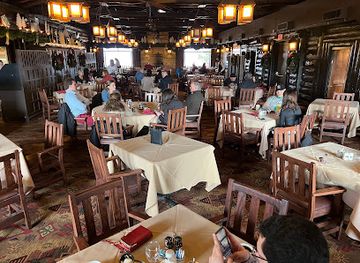
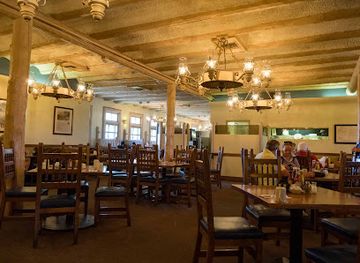
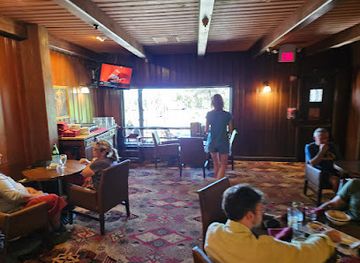
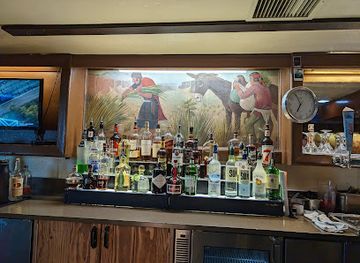
Grand Canyon Village has a restrained evening scene rather than a conventional nightlife district. The El Tovar Lounge and bars associated with the historic lodges provide places for a quiet drink, while Bright Angel Lodge and other park facilities offer relaxed social spaces after a day outdoors. Evening entertainment is more likely to involve conversation, a sunset walk, ranger programming or looking at the night sky than nightclubs and late music venues. The remote setting, wildlife considerations and national-park context mean that visitors should not expect a dense concentration of bars or establishments open late. Tusayan, just outside the park boundary, adds a small selection of restaurants and bars, but it remains a service town rather than a major entertainment centre. Conditions, seasonal programming and individual venue operations can vary, so evening plans should account for the distance between facilities.
-
Fine Dining
El Tovar Dining Room
Experience fine dining at El Tovar Dining Room with breathtaking views of the Grand Canyon, specializing in American and South American cuisine.
2 min walk · 0.2 km from city centre
-
Cafe
Harvey House Cafe
Experience the charm of Harvey House Cafe in Grand Canyon Village, where delicious food meets stunning views in a historic setting.
6 min walk · 0.5 km from city centre
-
Bar
El Tovar cocktail lounge
Discover the elegance of El Tovar Cocktail Lounge, where exquisite drinks meet breathtaking views in the heart of the Grand Canyon.
2 min walk · 0.2 km from city centre
-
Bar
Fred Harvey Tavern
Discover the rich heritage and culinary delights of Fred Harvey Tavern, a historic bar at the Grand Canyon offering stunning views and delicious food.
6 min walk · 0.5 km from city centre

Best nightclubs in Grand Canyon Village
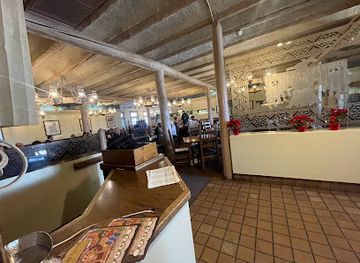
Grand Canyon Village has a restrained evening scene rather than a conventional nightlife district. The El Tovar Lounge and bars associated with the historic lodges provide places for a quiet drink, while Bright Angel Lodge and other park facilities offer relaxed social spaces after a day outdoors. Evening entertainment is more likely to involve conversation, a sunset walk, ranger programming or looking at the night sky than nightclubs and late music venues. The remote setting, wildlife considerations and national-park context mean that visitors should not expect a dense concentration of bars or establishments open late. Tusayan, just outside the park boundary, adds a small selection of restaurants and bars, but it remains a service town rather than a major entertainment centre. Conditions, seasonal programming and individual venue operations can vary, so evening plans should account for the distance between facilities.
-
Bar
El Tovar cocktail lounge
Experience the perfect blend of cocktails and breathtaking views at El Tovar Cocktail Lounge in the Grand Canyon.
2 min walk · 0.2 km from city centre
-
Bar
Fred Harvey Tavern
Experience the charm of Fred Harvey Tavern in Grand Canyon Village, where local flavors and welcoming ambiance await every traveler.
6 min walk · 0.5 km from city centre
-
Bar
Grand Canyon Beer Garden
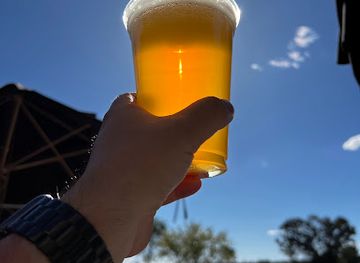
Discover the Grand Canyon Beer Garden, where local brews meet breathtaking views in Arizona's iconic landscape.
2 min walk · 0.2 km from city centre
Best shops in Grand Canyon Village
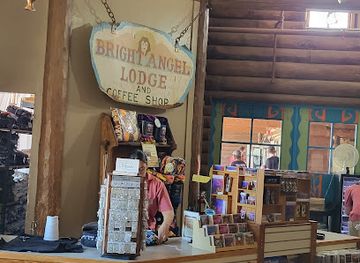
Shopping in Grand Canyon Village is concentrated around Market Plaza, the Canyon Village Marketplace, historic trading buildings and park gift shops. Visitors can find practical provisions, books, maps, outdoor supplies and souvenirs alongside Native arts and crafts, jewellery, prints and locally themed goods. Hopi House is particularly significant as an early trading venue and as part of the village’s historic architecture, although purchases should be assessed for authenticity and cultural respect rather than treated as generic souvenirs. Park bookstores and museums provide geology, natural-history and Indigenous-culture publications, while food shops offer provisions for picnics and trail days. Tusayan has additional convenience stores, galleries and visitor-oriented retail, but the village’s shopping character remains closely tied to national-park interpretation, historic trading traditions and the landscape rather than to fashion or large-scale commercial retail.
-
Train depot
Grand Canyon Railway
Discover the breathtaking landscapes of the Grand Canyon aboard the historic Grand Canyon Railway, where adventure and nostalgia meet.
2 min walk · 0.1 km from city centre
-
Hiking area
South Rim Trail
Experience the awe-inspiring views and rich biodiversity along the South Rim Trail, a premier hiking destination at the Grand Canyon.
9 min walk · 0.8 km from city centre
-
Scenic spot
Grand Canyon South Rim
Discover the breathtaking beauty of the Grand Canyon South Rim, a natural wonder that offers stunning vistas and unforgettable experiences for all travelers.
5 min walk · 0.4 km from city centre
-
Visitor center
Verkamp's Visitor Center
Discover the heart of the Grand Canyon at Verkamp's Visitor Center, where history meets breathtaking views and adventure awaits.
1 min walk · 0.1 km from city centre
Get your free copy of our complete guide to Grand Canyon Village, delivered straight to you.
Everything on this page, from attractions and restaurants to essentials and local phrases, in one PDF you can read offline, print or share.
Already have an account? Sign in
Your Grand Canyon Village guide is ready.
We'll send it to · Not you? Sign out

Getting your guide ready…
We are putting together a fresh copy of the Grand Canyon Village guide. This can take up to a minute.
This can take a few moments. If your browser asks, choose Allow so the download can start. You'll find the guide in your Downloads folder.
Nothing happened? Download it again
Sorry, the guide is taking longer than usual. Please try again in a minute, or get it by email instead.
Grand Canyon Village essentials
Currency and Payment
Safety
Emergency Situations
Do's and Don'ts
Local Tips
From Eve
Local phrases worth knowing
You don't need to get them perfect. A few words go a long way, and locals appreciate the effort.
Basics
| English | Local | Say it |
|---|---|---|
| Hello | Ya'at'eeh | [yah-ah-tay] |
| Goodbye | Yá'át'ééh | [yah-ah-tay] |
| Yes | Haa | [haa] |
| No | Dibé | [dee-bay] |
| Please/You're welcome | Ahe'hee | [ah-hay-hee] |
| Thank you | Ahéhee' | [ah-hay-hee] |
| Excuse me/Sorry | Shík'éí | [shee-keh-ee] |
| How are you? | Naa'azh | [nah-ah-zhah] |
| Fine. And you? | Doo náhodíílida. Áádóó náhodíílida? | [doh nah-ho-dee-lee-dah. ah-doh nah-ho-dee-lee-dah] |
| Do you speak English? | Bizaad nolyééh? | [bee-zahd noh-lee-yay] |
| I don't understand | Bilasáana | [bee-lah-sah-nah] |
Eating & Drinking
| English | Local | Say it |
|---|---|---|
| I'd like to see the menu, please | Nihí nóó xániilwoh, doo shanine' | [nee-hee noh-ho shah-nee-loh-ho, doh shah-nee-nay] |
| I don't eat meat | Bééhózin da níyol | [bay-ho-zin dah nee-yohl] |
| Cheers! | Ahe'hee | [ah-hay-hee] |
| I would like to pay, please | Nihí nóó yá'át'ééh, doo shanine' | [nee-hee noh-ho yah-ah-tay, doh shah-nee-nay] |
Emergencies
| English | Local | Say it |
|---|---|---|
| Help! | Ánóo'sí | [ah-noh-shee] |
| Go away! | Háyó | [hah-yoh] |
| Call the Police! | Bii' yá'át'ééh | [bee yah-ah-tay] |
| Call a doctor! | Bii' dibé | [bee dee-bay] |
| I'm lost | Bééhózin da níłch'i | [bay-ho-zin dah neel-chee] |
| I'm ill | Hwííł da | [hwee-eel dah] |
Shopping
| English | Local | Say it |
|---|---|---|
| I'd like to buy... | Nihí nóó baa házhoh, doo shanine' | [nee-hee noh-ho bah-hay-zhoh, doh shah-nee-nay] |
| I'm just looking | Doo yish'į́ | [doh yish-ihn] |
| How much is it? | Bilasáana bizí | [bee-lah-sah-nah bee-zee] |
| That's too expensive | T'áá hwííł | [taa hwee-eel] |
| Can you lower the price? | Bilasáana baa hózhǫ́ | [bee-lah-sah-nah bah ho-zhohn] |
Time & Numbers
| English | Local | Say it |
|---|---|---|
| What time is it? | T'áá hwóósh | [taa hwoh-sh] |
| It's one o'clock | Ndaa | [ndah] |
| Half past (10) | Ndaa shádi'ááh | [ndah shah-dee-ahh] |
| Morning | T'áá hwóósh | [taa hwoh-sh] |
| Afternoon | T'áá hwóósh | [taa hwoh-sh] |
| Evening | T'áá hwóósh | [taa hwoh-sh] |
| Yesterday | T'áá hwóósh | [taa hwoh-sh] |
| Today | T'áá hwóósh | [taa hwoh-sh] |
| Tomorrow | T'áá hwóósh | [taa hwoh-sh] |
| 1 | Ndaa | [ndah] |
| 2 | Ndaa bítsii' | [ndah bee-tsee] |
| 3 | Ndaa náhást'éí | [ndah nah-hast-ay] |
| 4 | Ndaa dį́į́' | [ndah deen] |
| 5 | Ndaa ashdlá' | [ndah ash-dlah] |
| 6 | Ndaa hastą' | [ndah has-tan] |
| 7 | Ndaa tseebítsii' | [ndah tsee-bee-tsee] |
| 8 | Ndaa táá' | [ndah tah-ah] |
| 9 | Ndaa náhookos' | [ndah nah-hoo-kos] |
| 10 | Ndaa dashicheii | [ndah dah-shee-chay] |
Transport & Directions
| English | Local | Say it |
|---|---|---|
| Where's a/the...? | Ahe'hee | [ah-hay-hee] |
| What's the address? | Ahe'hee | [ah-hay-hee] |
| Can you show me (on the map)? | Ahe'hee | [ah-hay-hee] |
| When's the next (bus)? | Ahe'hee | [ah-hay-hee] |
| A ticket (to ....) | Ahe'hee | [ah-hay-hee] |
History of Grand Canyon Village
Ancestral Puebloan Presence
The Grand Canyon region has been inhabited and travelled by Indigenous peoples for thousands of years. Archaeological evidence on the South Rim includes the Tusayan Ruin, a small ancestral Puebloan settlement dating from the late twelfth century, while the canyon remains connected to the histories and living cultures of the Hopi, Havasupai, Hualapai, Southern Paiute, Navajo and other peoples. These relationships predate the modern park and extend beyond archaeological remains: the canyon is a cultural landscape, not simply a scenic formation. The South Rim’s museums and interpretive displays place the later development of tourism within this much longer human history, although visitors should recognise that no single museum can represent every Indigenous perspective associated with the Grand Canyon.
Exploration and Mapping
Spanish expeditions reached the Grand Canyon in the sixteenth century, but detailed outside mapping came much later. In 1869, John Wesley Powell led an expedition through the canyon by boat, producing widely circulated accounts that helped bring the landscape to wider public attention. Powell’s work was part of a broader period of surveying and scientific exploration across the American West, rather than the beginning of the canyon’s history. Geologists and naturalists subsequently studied its exposed rock layers, waterways and ecosystems, helping establish the scientific importance of the region. The South Rim’s geology displays this layered record particularly clearly, and later visitor institutions continue to explain how erosion by the Colorado River shaped the canyon.
Railway and Early Tourism
The arrival of the railway from Williams in 1901 transformed access to the South Rim. Visitors no longer had to undertake a long stagecoach journey across northern Arizona, and a planned tourist settlement began to develop around the rail terminus and canyon overlooks. The Santa Fe Railway supported hotels, services and visitor facilities, while the Fred Harvey Company became closely associated with hospitality at the rim. El Tovar opened in 1905 as a grand hotel built near the canyon edge, and Hopi House opened the same year as a trading and cultural venue. The surviving train depot and historic lodges recall the period when rail travel established Grand Canyon Village as a major destination.
A National Park Landscape
Grand Canyon National Park was established in 1919, following earlier federal protection as a forest reserve, game reserve and national monument. National-park status brought a stronger framework for conserving the canyon’s scenery, wildlife, geology and archaeological resources while accommodating growing visitation. During the early twentieth century, roads, trails and buildings expanded, and the National Park Service developed a distinct architectural language for the South Rim. Mary Colter’s buildings, including Bright Angel Lodge, Lookout Studio and Hermit’s Rest, helped give the visitor area a regional identity. The resulting village combines practical park infrastructure with historic structures that chart the changing relationship between conservation, tourism and the American West.
Modern Conservation and Access
Grand Canyon Village has continued to evolve as visitation, transportation and conservation priorities have changed. The South Rim’s developed area now includes visitor centres, shuttle routes, museums, accommodation and carefully managed trail access, while historic buildings are preserved as part of the park’s cultural landscape. The Grand Canyon Railway resumed passenger service between Williams and the South Rim in 1989, reviving a historic connection in a modern form. Contemporary management also addresses water use, wildlife, trail safety, erosion and the protection of archaeological sites. The village remains a working park community rather than a conventional municipality, and its present character reflects both the demands of international tourism and the need to safeguard a landscape of enduring scientific and cultural significance.
Grand Canyon Village in Photos
Browse through our photo collection highlighting the charm and character of the destination.
Cities near Grand Canyon Village
The closest cities to Grand Canyon Village, if you have time for more than one stop.
-

-

-

-

-


Swipe for more cities
Explore more

Explore more of Arizona
Discover Arizona: From the majestic Grand Canyon and red rocks of Sedona to the vibrant cities of Phoenix and Scottsdale, explore the diverse beauty and culture of the Grand Canyon State.
Explore Arizona