

Devil's Den State Park Travel Guide - Free Web & App
Your ultimate guide to Devil's Den State Park. Discover top landmarks, proposed trips, and local tips. Free on the web or via the Evendo companion app.


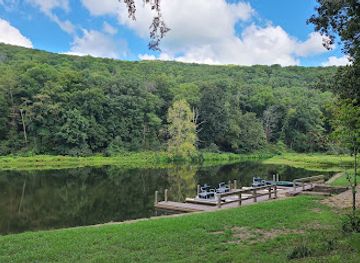
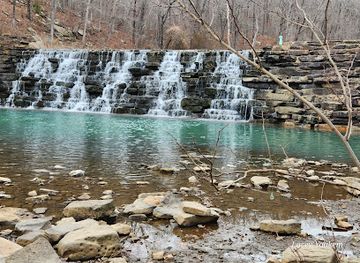
Devil's Den State Park in Arkansas combines Ozark trails, CCC stonework, caves, Lake Devil and forested scenery near Fayetteville and West Fork.
An Ozark Landscape
Devil's Den State Park occupies a rugged fold of the western Ozark Mountains near West Fork in north-west Arkansas. Its landscape of sandstone ridges, forested hollows, rocky outcrops and clear streams reflects the folded geology of the Boston Mountains, while the park's centre is shaped by Lee Creek and the small waters of Lake Devil. Short distances can involve steep grades, uneven ground and exposed rock, giving the area a more rugged character than its modest size might suggest.Read more about Devil's Den State Park
A Park Shaped by the Civilian Conservation Corps
Trails, Water and Caves
When is the best time to visit Devil's Den State Park?
Best: April, September–October · 22–29°C| Month | High (°C) | Rainfall (mm) |
|---|---|---|
| January | 11 | 82 |
| February | 14 | 87 |
| March | 18 | 117 |
| April (best) | 22 | 111 |
| May | 27 | 127 |
| June | 31 | 104 |
| July | 34 | 89 |
| August | 33 | 78 |
| September (best) | 29 | 91 |
| October (best) | 23 | 101 |
| November | 16 | 106 |
| December | 11 | 94 |
Getting to and around Devil's Den State Park
How to get there
Transportation
Best attractions in Devil's Den State Park
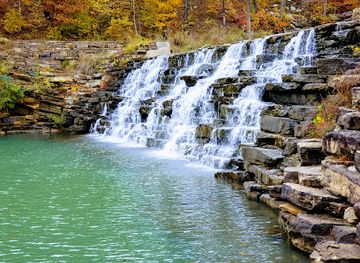
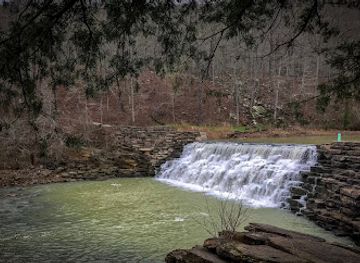
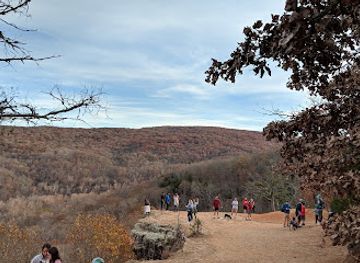
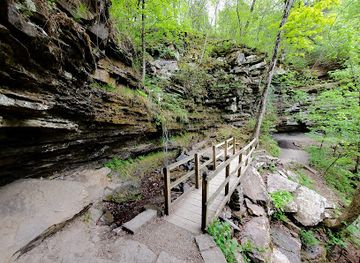
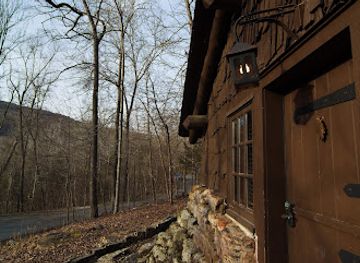
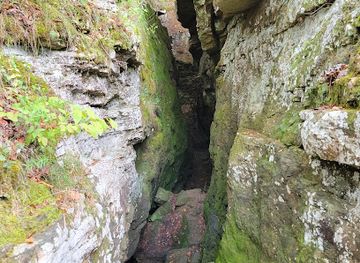
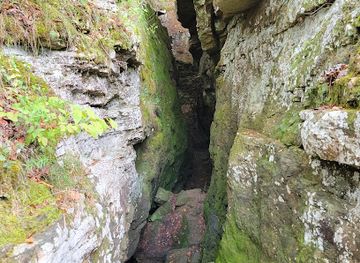
Devil's Den State Park's principal attractions are its interlinked trails, rocky Ozark scenery and historic recreation landscape. The Yellow Rock Trail leads through woodland and up to a prominent sandstone overlook, while shorter routes explore Lee Creek, the lake area and the park's caves and rock formations. Lake Devil provides a focal point for fishing and other permitted water recreation, with wooded shores that are especially appealing for quiet walks and wildlife observation. The park's Civilian Conservation Corps district adds a cultural dimension: stone cabins, bridges, walls and other structures are integrated into the hillsides rather than treated as separate monuments. Cave entrances and underground features are among the area's defining natural sights, but access and protection measures can change, so visitors should follow current park guidance. Beyond the park, Fayetteville offers museums, restaurants and cultural attractions, but it is a regional gateway rather than part of Devil's Den itself.
-
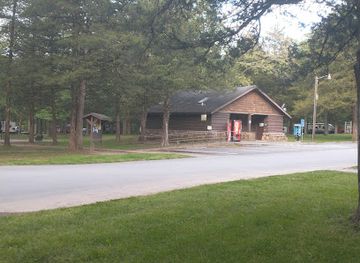
Visitor center
Visitor Center
Explore the heart of Devil's Den State Park: history, trails, and natural wonders await in the Ozark Mountains of Arkansas.
-
Hiking area
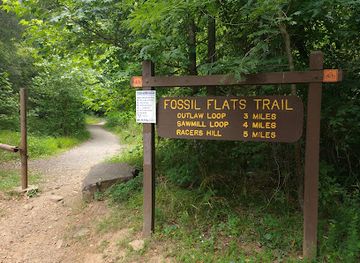
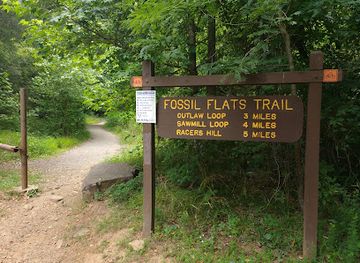
Fossil Flats Trailhead
Explore ancient fossils and rugged trails at Fossil Flats Trailhead in Devil's Den State Park, a natural and historical treasure of the Ozarks.
-
Scenic spot
Yellow Rock Overlook
Hike the iconic Yellow Rock Trail in Devil's Den State Park for panoramic views of the Ozark's Lee Creek Valley and historic CCC structures.
-
Hiking area
Devil's Den Trail
Hike through stunning rock formations and explore the historic legacy of the Civilian Conservation Corps in the heart of the Ozark Mountains.
Explore Devil's Den State Park on the map
Plan your trip on one map. See where the top attractions, landmarks, restaurants and hotels are, and book hotels and experiences in a few clicks.
Best hotels in Devil's Den State Park
Best restaurants in Devil's Den State Park
Dining within Devil's Den State Park is limited compared with an urban destination, and visitors should not expect a continuous choice of restaurants beside the trails or lake. The practical approach is to bring food for day excursions or use the nearest communities for meals, with West Fork providing basic local options and Fayetteville offering the broadest selection of cafés, restaurants, bakeries and takeaway food. North-west Arkansas dining reflects the wider American South, including barbecue, burgers, catfish, biscuits, fried chicken and other casual comfort food, alongside increasingly varied contemporary cooking in Fayetteville. Farm shops and local producers in the surrounding rural area may also provide regional groceries and prepared food, though availability is seasonal and location-specific. Anyone camping or staying in a cabin should plan provisions in advance rather than relying on park facilities for every meal.
-
Restaurant
Ridgerunner Cafe
Discover Ridgerunner Cafe in West Fork, Arkansas - where great food meets breathtaking natural beauty.
Best bars in Devil's Den State Park
Evenings at Devil's Den are centred on quiet campsites, cabins, woodland sounds and dark skies rather than a developed nightlife scene. The park does not function as a bar or nightclub district, and evening entertainment is generally self-directed, subject to park rules and consideration for other campers. West Fork has a small-town atmosphere with limited hospitality, while Fayetteville is the nearest place with a broader choice of pubs, bars, live music, breweries and late-evening food. Those venues are outside Devil's Den State Park and require a drive, so visitors planning an evening in the city should arrange transport rather than expecting regular nightlife links from the park. Seasonal events and performances in the wider Fayetteville area may change, and current local listings are more reliable than assuming a fixed programme.
-
Visitor center
Visitor Center
Experience the beauty of the Ozark Mountains at Devil's Den Visitor Center, your gateway to Arkansas' outdoor adventures and stunning landscapes.
-
Hiking area
Fossil Flats Trailhead
Discover the breathtaking trails and geological wonders at Fossil Flats Trailhead in Arkansas, a perfect adventure for hiking enthusiasts and nature lovers.
-
Hiking area
Devil's Den Trail
Discover the breathtaking landscapes and diverse wildlife of Devil's Den Trail, a premier hiking destination in the Ozark Mountains of Arkansas.
-
Campground
Devils Den Campground E
Discover the natural beauty and outdoor adventures awaiting at Devils Den Campground in the scenic Ozark Mountains of Arkansas.
Best nightclubs in Devil's Den State Park
Evenings at Devil's Den are centred on quiet campsites, cabins, woodland sounds and dark skies rather than a developed nightlife scene. The park does not function as a bar or nightclub district, and evening entertainment is generally self-directed, subject to park rules and consideration for other campers. West Fork has a small-town atmosphere with limited hospitality, while Fayetteville is the nearest place with a broader choice of pubs, bars, live music, breweries and late-evening food. Those venues are outside Devil's Den State Park and require a drive, so visitors planning an evening in the city should arrange transport rather than expecting regular nightlife links from the park. Seasonal events and performances in the wider Fayetteville area may change, and current local listings are more reliable than assuming a fixed programme.
-
Campground
Devil’s Den Area A
Discover the serene beauty and outdoor adventure waiting for you at Devil’s Den Area A in Arkansas, a perfect camping getaway for nature lovers.
-
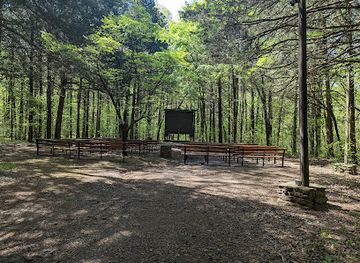
Amphitheater
Amphitheater at Devil's Den State Park
Discover the Amphitheater at Devil's Den State Park, a stunning venue for outdoor performances amidst the breathtaking beauty of Arkansas's Ozark Mountains.
Best shops in Devil's Den State Park
Shopping inside Devil's Den State Park is modest, with visitor-oriented purchases and park supplies taking precedence over a broad retail scene. The park shop or reception facilities, where operating, may provide practical items and souvenirs, but visitors should check current arrangements and bring specialist hiking, camping or food supplies from elsewhere. West Fork is the nearest small-town source for everyday needs, while Fayetteville has the region's widest range of outdoor retailers, independent shops, galleries, bookstores, markets and food producers. Regional purchases may include Arkansas-made food, craft goods, artwork and Ozark-themed souvenirs, although particular products and markets vary by season. The strongest sense of place comes from the park's own CCC stonework and forest setting rather than from a concentrated shopping district, so retail planning is best combined with a wider visit to north-west Arkansas.
-
Visitor center
Visitor Center
Explore the breathtaking trails and rich history at the Devil's Den Visitor Center, your gateway to the Ozarks’ natural beauty.
-
State park
Devil's Den State Park
Explore the stunning landscapes and diverse wildlife of Devil's Den State Park in the Ozark Mountains, a perfect escape for outdoor enthusiasts.
-
Hiking area
Fossil Flats Trailhead
Explore Fossil Flats Trailhead: A Scenic Hiking Destination in Arkansas with Rich Geological History and Stunning Natural Beauty.
-
Hiking area
Devil's Den Trail
Explore the scenic wonders of Devil's Den Trail in the Ozark Mountains, where nature's beauty and adventure await every hiker.
Get your free copy of our complete guide to Devil's Den State Park, delivered straight to you.
Everything on this page, from attractions and restaurants to essentials and local phrases, in one PDF you can read offline, print or share.
Already have an account? Sign in
Your Devil's Den State Park guide is ready.
We'll send it to · Not you? Sign out

Getting your guide ready…
We are putting together a fresh copy of the Devil's Den State Park guide. This can take up to a minute.
This can take a few moments. If your browser asks, choose Allow so the download can start. You'll find the guide in your Downloads folder.
Nothing happened? Download it again
Sorry, the guide is taking longer than usual. Please try again in a minute, or get it by email instead.
Devil's Den State Park essentials
Currency and Payment
Safety
Emergency Situations
Do's and Don'ts
Local Tips
From Eve
Local phrases worth knowing
You don't need to get them perfect. A few words go a long way, and locals appreciate the effort.
Basics
| English | Local | Say it |
|---|---|---|
| Hello | Howdy | [hah-dee] |
| Goodbye | See ya later | [see yuh lay-tur] |
| Yes | Yep | [yep] |
| No | Nah | [na] |
| Please/You're welcome | Please/You're welcome | [Please/You're welcome] |
| Thank you | Thanks a lot | [thanks uh lot] |
| Excuse me/Sorry | Excuse me/Sorry | [Excuse me/Sorry] |
| How are you? | How y'all doin'? | [how y'all doin'] |
| Fine. And you? | Fine. And you? | [Fine. And you?] |
| Do you speak English? | Ya speak English? | [ya speak English?] |
| I don't understand | I ain't gettin' it | [I ain't get-tin' it] |
Eating & Drinking
| English | Local | Say it |
|---|---|---|
| I'd like to see the menu, please | Let me see what y'all got to eat | [let me see what y'all got to eat] |
| I don't eat meat | I don't eat meat | [I don't eat meat] |
| Cheers! | Cheers! | [Cheers!] |
| I would like to pay, please | I need to settle up | [I need to settle up] |
Emergencies
| English | Local | Say it |
|---|---|---|
| Help! | Help! | [Help!] |
| Go away! | Git outta here! | [git out-ta here!] |
| Call the Police! | Call the Sheriff! | [Call the Sheriff!] |
| Call a doctor! | Get a doc out here! | [get a doc out here!] |
| I'm lost | I'm turned around | [I'm turned around] |
| I'm ill | I'm feelin' poorly | [I'm feelin' poorly] |
Shopping
| English | Local | Say it |
|---|---|---|
| I'd like to buy... | I reckon I'll take... | [I reckon I'll take...] |
| I'm just looking | Just browsin' | [just browsin'] |
| How much is it? | How much for this? | [how much for this?] |
| That's too expensive | That's too high | [that's too high] |
| Can you lower the price? | Can you do better on the price? | [can you do better on the price?] |
Time & Numbers
| English | Local | Say it |
|---|---|---|
| What time is it? | What time is it? | [What time is it?] |
| It's one o'clock | It's one o'clock | [It's one o'clock] |
| Half past (10) | Half past (10) | [Half past (10)] |
| Morning | Mornin' | [Mornin'] |
| Afternoon | Afternoon | [Afternoon] |
| Evening | Evenin' | [Evenin'] |
| Yesterday | Yesterday | [Yesterday] |
| Today | Today | [Today] |
| Tomorrow | Tomorrow | [Tomorrow] |
| 1 | One | [One] |
| 2 | Two | [Two] |
| 3 | Three | [Three] |
| 4 | Four | [Four] |
| 5 | Five | [Five] |
| 6 | Six | [Six] |
| 7 | Seven | [Seven] |
| 8 | Eight | [Eight] |
| 9 | Nine | [Nine] |
| 10 | Ten | [Ten] |
Transport & Directions
| English | Local | Say it |
|---|---|---|
| Where's a/the...? | Where's a/the...? | [Where's a/the...?] |
| What's the address? | What's the address? | [What's the address?] |
| Can you show me (on the map)? | Can you show me (on the map)? | [Can you show me (on the map)?] |
| When's the next (bus)? | When's the next (bus)? | [When's the next (bus)?] |
| A ticket (to ....) | A ticket (to ....) | [A ticket (to ....)] |
History of Devil's Den State Park
An Ancient Ozark Foundation
Devil's Den lies within the Boston Mountains, an uplifted and deeply dissected part of the Ozarks formed from ancient sedimentary rocks. Over geological time, erosion shaped the ridges, hollows, rock shelters and underground openings that define the park's terrain. Sandstone outcrops and cave-forming features are therefore part of a much older landscape than the human history recorded in the area.
Indigenous Homelands and Early Settlement
The Ozark uplands were used and travelled by Indigenous peoples long before the arrival of Euro-American settlers. The wider region later saw homesteading, small-scale farming, timber use and the development of local roads through difficult terrain. Lee Creek and the surrounding hollows influenced settlement and movement, while the forest supplied building materials and supported rural livelihoods.
Creation of an Arkansas State Park
Devil's Den became one of Arkansas's early state parks during the 1930s, when public investment and federal relief programmes expanded access to outdoor recreation. Its development formed part of a broader effort to conserve representative landscapes while creating facilities for visitors. The park's rugged setting, water resources and distinctive rock formations made it particularly suitable for a recreation area in the western Ozarks.
Civilian Conservation Corps Craftsmanship
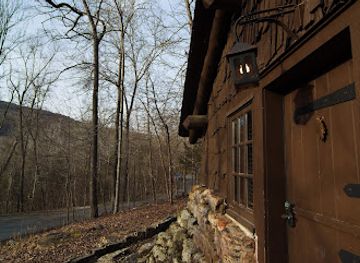
Civilian Conservation Corps workers constructed roads, trails, cabins, bridges, retaining walls and other park features during the New Deal era. They used local stone and adapted buildings to the surrounding terrain, producing the rustic architecture now strongly associated with Devil's Den. The surviving structures and landscape planning illustrate how conservation, employment and public recreation were combined in Arkansas during the 1930s.
The Lake and Modern Recreation
The park's modern recreational focus developed around the impoundment known as Lake Devil, together with its trail network, campsites and cabin areas. Over subsequent decades, Devil's Den became an important destination for hiking, camping, fishing and quiet woodland recreation in north-west Arkansas. Maintenance and conservation work continue to balance public access with the protection of caves, water quality, historic structures and Ozark habitats.
Devil's Den State Park in Photos
Browse through our photo collection highlighting the charm and character of the destination.
Neighbouring destination travel guides
The closest destinations to Devil's Den State Park, if you have time for more than one.
-

-

-

-

-


Swipe for more destinations
Explore more

Explore more of Arkansas Valley
Explore Arkansas Valley landscapes, frontier history, mountain parks, river towns, wildlife refuges and lake recreation across west-central Arkansas.
Explore Arkansas Valley
Explore more of Arkansas
Explore Arkansas: The Natural State with its stunning landscapes, rich history, and vibrant cultural experiences. Perfect for adventurers and culture seekers alike.
Explore Arkansas