

Free Blue Mountains Travel Guide & Mobile App
Explore Blue Mountains with free travel guides. Discover regional history, expert tips, proposed trips, and audio guides on web or mobile app.


Explore the Blue Mountains for eucalyptus forests, sandstone cliffs, waterfalls, Aboriginal heritage, scenic walks and mountain-town culture near Sydney.
Read more about Blue Mountains
When is the best time to visit Blue Mountains?
Best: December–February · 22–24°C| Month | High (°C) | Rainfall (mm) |
|---|---|---|
| January (best) | 24 | 110 |
| February (best) | 23 | 100 |
| March | 20 | 100 |
| April | 17 | 80 |
| May | 13 | 70 |
| June | 10 | 70 |
| July | 9 | 70 |
| August | 10 | 70 |
| September | 14 | 80 |
| October | 17 | 90 |
| November | 20 | 100 |
| December (best) | 22 | 110 |
Getting to and around Blue Mountains
How to get there
Transportation
Destinations in Blue Mountains
Resorts, valleys and scenic spots worth a trip of their own.

Swipe for more destinations
Best attractions in Blue Mountains
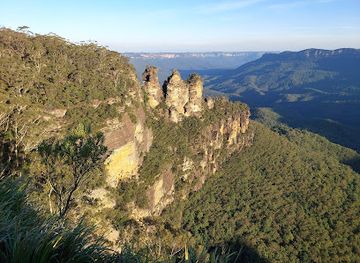
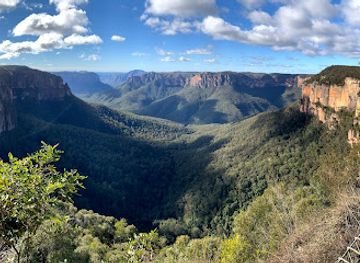
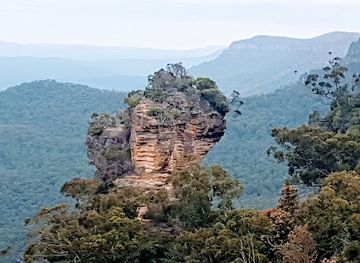
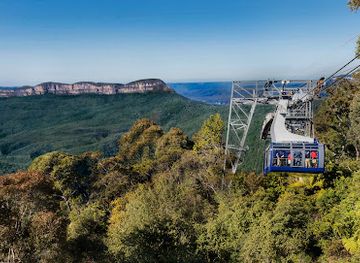
Blue Mountains attractions range from major scenic viewpoints to long, demanding walks through protected wilderness. Katoomba's Echo Point provides the classic view of the Three Sisters and the Jamison Valley, while nearby Scenic World offers cableway, railway and skyway experiences above the escarpment. Wentworth Falls combines a substantial waterfall with walking routes through cliff-top heath and forest. Around Blackheath, lookouts such as Govetts Leap and the Pulpit Rock area reveal the Grose Wilderness from different angles. The national park also supports bushwalking, canyoning, climbing, birdwatching and photography, although many activities require preparation and suitable conditions. In the townships, visitors can explore heritage streets, galleries, gardens, cafés and small museums, with Leura particularly associated with gardens and independent cultural businesses. The attraction landscape is defined by its contrast between accessible viewpoints close to railway stations and remote valleys reached only on foot. Weather, fire danger and track conditions are central to planning, so a visit should include both a primary route and a lower-risk alternative.
-
 Tourist attraction
Three Sisters walk
Experience the majesty of the Blue Mountains with a walk to the iconic Three Sisters rock formation and stunning Jamison Valley views.
-
Tourist attraction
Echo Point Lookout (Three Sisters)
Experience the majestic beauty of the Blue Mountains at Echo Point Lookout, home to the iconic Three Sisters rock formation.
-
National park
Blue Mountains National Park
Explore the breathtaking landscapes and diverse wildlife of Blue Mountains National Park, a stunning UNESCO World Heritage site in New South Wales.
-
Tourist attraction
Katoomba Falls
Explore the breathtaking Katoomba Falls in the Blue Mountains, a perfect blend of natural beauty and outdoor adventure for every traveler.
Best landmarks in Blue Mountains
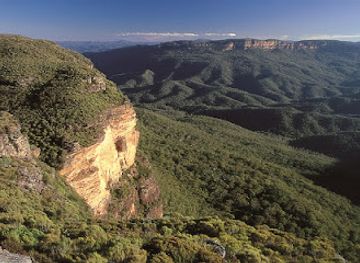
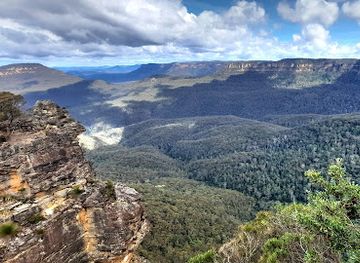
The Three Sisters at Echo Point are the defining natural landmark of the Blue Mountains, their weathered sandstone forms standing above the Jamison Valley and carrying significance in both tourism and Aboriginal cultural interpretation. Govetts Leap near Blackheath is another major landmark, where the escarpment opens over the Grose Wilderness and Bridal Veil Falls. Wentworth Falls is important not only as a cascade but as a geological and scenic feature associated with the eastern plateau. The sheer cliffs, narrow ridges and layered sandstone walls around Katoomba and Blackheath express the region's underlying geology more clearly than any single building. Human landmarks include the railway stations and resort-era streetscapes of Katoomba and Leura, which record the growth of mountain tourism after rail access from Sydney. In Glenbrook and Springwood, older civic and residential buildings reflect the earlier development of the route across the mountains. Together these places show why the region is valued as a cultural landscape as well as a collection of scenic lookouts.
-
Tourist attraction
Three Sisters walk
Explore the breathtaking Three Sisters walk in Blue Mountains, a scenic hiking trail rich in natural beauty and Aboriginal heritage.
-
Tourist attraction
Scenic World
Experience the breathtaking views of Australia's Blue Mountains at Scenic World, where nature meets adventure in a stunning landscape.
-
National park
Blue Mountains National Park
Explore the breathtaking Blue Mountains National Park, a UNESCO World Heritage site filled with stunning vistas, rich Aboriginal culture, and diverse outdoor adventures.
-
Tourist attraction
Katoomba Falls
Experience the breathtaking beauty of Katoomba Falls, a stunning natural landmark in the heart of the Blue Mountains, New South Wales.
Explore Blue Mountains on the map
Plan your trip on one map. See where the top cities, national parks and sights are, and book hotels and experiences in a few clicks.
Best hotels in Blue Mountains
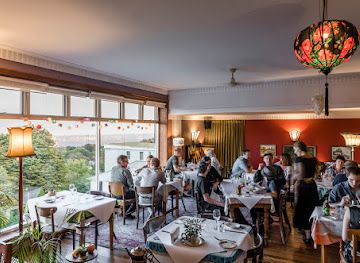
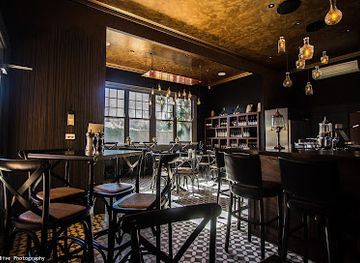
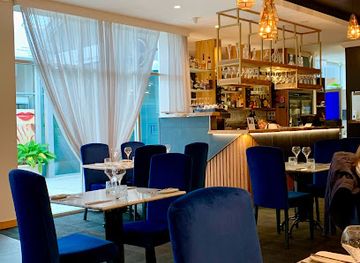
Best restaurants in Blue Mountains
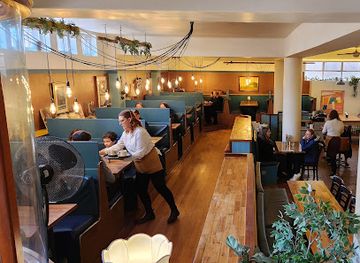
Dining in the Blue Mountains is concentrated in Katoomba, Leura, Blackheath and the other railway towns, with a mixture of cafés, bakeries, pubs, casual restaurants, contemporary dining rooms and rural-style venues. Menus often draw on wider Australian produce rather than a single exclusive mountain cuisine, but local and regional ingredients such as mushrooms, orchard fruit, berries, preserves, sourdough baking, cheeses and craft beverages appear regularly. Expect strong café culture around the town centres, practical meals near major visitor sites, and more leisurely dining in guesthouses and established hotels. Vegetarian, vegan and international options are common in the larger towns, while smaller settlements have fewer choices and may require planning outside peak service times. Markets and farm-gate producers, where operating, can provide a useful way to encounter preserves, baked goods and seasonal produce, although availability varies. Booking is sensible for popular restaurants at weekends and during school holidays.
-
Restaurant
Aunty Ed's Restaurant and Bar
Discover Aunty Ed's Restaurant and Bar in Katoomba – where delicious food meets vibrant nightlife amidst stunning Australian landscapes.
-
Restaurant
Avalon Restaurant & Cocktail Bar
Discover culinary delights at Avalon Restaurant & Cocktail Bar in Katoomba - where exceptional cuisine meets vibrant nightlife.
-
Restaurant
Polar Bear Of Leura
Experience delightful dining at Polar Bear of Leura—where local flavors meet exceptional service in a charming atmosphere.
-
Fine Dining
Arrana
Discover exquisite Australian-native cuisine at Arrana – where fine dining meets local flavors in Springwood.
Best bars in Blue Mountains
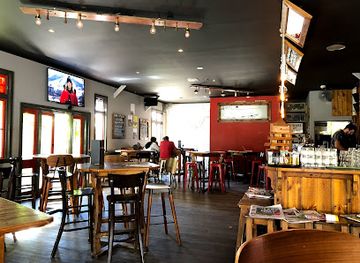
Evening life in the Blue Mountains is centred on pubs, hotel bars, restaurants, cafés, live music and community arts rather than a large nightclub circuit. Katoomba has the broadest late-evening choice, with long-established hotels, casual bars, small performance venues and cultural events, while Leura and Blackheath offer quieter dining and drinking settings. Some venues feature local beer, Australian wine or spirits, but alcohol is not essential to the region's evening character; galleries, cinemas, theatre and night walks or stargazing can provide alternatives when conditions permit. Mountain towns generally become quiet earlier than central Sydney, and opening arrangements vary by day and season. Visitors heading back to accommodation outside the main centres should plan transport in advance, as late public-transport options are more limited than in the capital.
-
Bar
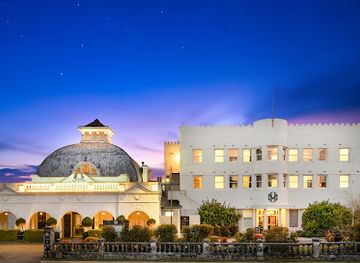
The Hydro Majestic Hotel Blue Mountains
Discover the grandeur of The Hydro Majestic Hotel, where history meets luxury in the stunning Blue Mountains of Australia.
-
Bar
Station Bar & Woodfired Pizza
Experience the best woodfired pizzas and a vibrant bar atmosphere in Katoomba's scenic Blue Mountains.
-
Bar
Aunty Ed's Restaurant and Bar
Discover Aunty Ed's Restaurant and Bar in Katoomba, where delightful dining meets live music in a vibrant atmosphere.
-
Bar
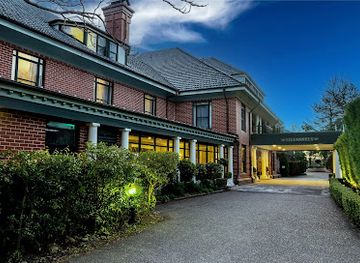
Lilianfels Blue Mountains Resort & Spa
Experience unparalleled luxury and breathtaking views at Lilianfels Blue Mountains Resort & Spa, your perfect getaway in the heart of nature.

Best nightclubs in Blue Mountains
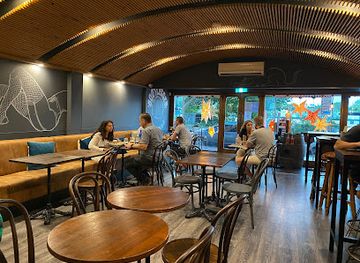
Evening life in the Blue Mountains is centred on pubs, hotel bars, restaurants, cafés, live music and community arts rather than a large nightclub circuit. Katoomba has the broadest late-evening choice, with long-established hotels, casual bars, small performance venues and cultural events, while Leura and Blackheath offer quieter dining and drinking settings. Some venues feature local beer, Australian wine or spirits, but alcohol is not essential to the region's evening character; galleries, cinemas, theatre and night walks or stargazing can provide alternatives when conditions permit. Mountain towns generally become quiet earlier than central Sydney, and opening arrangements vary by day and season. Visitors heading back to accommodation outside the main centres should plan transport in advance, as late public-transport options are more limited than in the capital.
-
RSL Club
Katoomba RSL
Discover Katoomba RSL: A welcoming RSL Club and restaurant offering delicious local cuisine and vibrant entertainment in the heart of Katoomba, NSW.
-
Grill
The Bootlegger Bar Katoomba
Experience the vibrant atmosphere of The Bootlegger Bar in Katoomba, where delicious grilled food meets live music and local charm.
-
Club
Springwood Sports Club
Discover Springwood Sports Club: A vibrant hub of dining, entertainment, and community spirit in the heart of the Blue Mountains.
-
Restaurant
Echoes Restaurant & Bar Blue Mountains
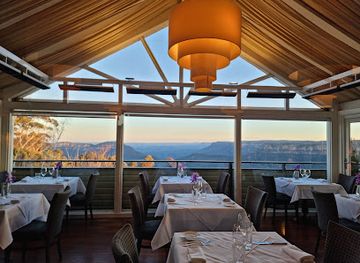
Experience exquisite dining and breathtaking views at Echoes Restaurant & Bar, the perfect culinary destination in the Blue Mountains.

Best shops in Blue Mountains
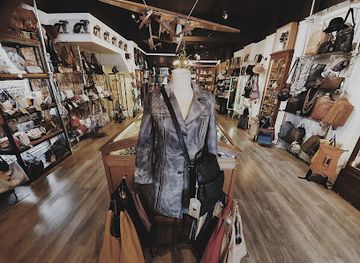
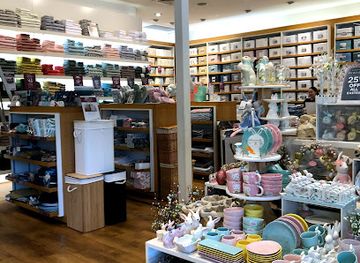
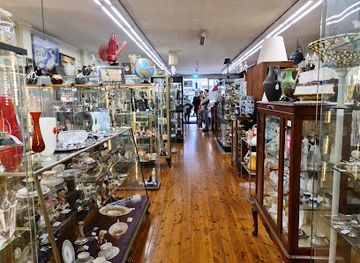
Shopping in the Blue Mountains is led by independent town-centre businesses rather than major retail complexes. Leura is particularly associated with small boutiques, homewares, galleries, bookshops, cafés and gift shops, while Katoomba has a more varied high-street character with arts businesses, outdoor equipment, second-hand goods, books and practical visitor supplies. Blackheath and the smaller settlements offer a more limited but locally oriented selection, including galleries, craft outlets and food businesses. Regional products may include preserves, honey, baked goods, teas, locally made drinks, ceramics, textiles, jewellery and artwork inspired by sandstone country and eucalyptus forest. Markets and seasonal community events can add craft and produce stalls, but their dates and scale change, so they should be checked locally rather than assumed to operate every week. For useful souvenirs, favour durable work by local artists or edible produce over generic items, and remember that national-park rules prohibit removing natural materials such as rocks, plants or fallen timber.
-
Shopping mall
Katoomba Village
Discover Katoomba Village, a vibrant shopping hub in the Blue Mountains, offering unique shops, delightful cafes, and local charm.
-
Gift shop
Teddy Sinclair
Discover unique gifts, stylish clothing, and handcrafted treasures at Teddy Sinclair in Leura, a gem for every tourist's shopping list.
-
Shopping mall
Leura Shopping Centre
Discover the unique shops and delightful cafes at Leura Shopping Centre, a charming destination in the heart of the Blue Mountains.
-
Book Shop
Mr Pickwick's Fine Old Books
Discover literary treasures and a cozy atmosphere at Mr Pickwick's Fine Old Books in Katoomba, the ultimate book lover's paradise.
Get your free copy of our complete guide to Blue Mountains, delivered straight to you.
Everything on this page, from attractions and restaurants to essentials and local phrases, in one PDF you can read offline, print or share.
Already have an account? Sign in
Your Blue Mountains guide is ready.
We'll send it to · Not you? Sign out

Getting your guide ready…
We are putting together a fresh copy of the Blue Mountains guide. This can take up to a minute.
This can take a few moments. If your browser asks, choose Allow so the download can start. You'll find the guide in your Downloads folder.
Nothing happened? Download it again
Sorry, the guide is taking longer than usual. Please try again in a minute, or get it by email instead.
Blue Mountains essentials
Currency and Payment
Safety
Emergency Situations
Do's and Don'ts
Local Tips
From Eve
Local phrases worth knowing
You don't need to get them perfect. A few words go a long way, and locals appreciate the effort.
Basics
| English | Local | Say it |
|---|---|---|
| Hello | G'day | [g'day] |
| Goodbye | See ya | [see ya] |
| Yes | Yeah | [yeah] |
| No | Nah | [nah] |
| Please/You're welcome | No worries | [no worries] |
| Thank you | Cheers | [cheers] |
| Excuse me/Sorry | Sorry mate | [sorry mate] |
| How are you? | How ya going? | [how ya going] |
| Fine. And you? | Good, and you? | [good, and you] |
| Do you speak English? | You speak English? | [you speak English] |
| I don't understand | I don't get it | [I don't get it] |
Eating & Drinking
| English | Local | Say it |
|---|---|---|
| I'd like to see the menu, please | Can I see the menu? | [can I see the menu] |
| I don't eat meat | I'm a vegetarian | [I'm a vegetarian] |
| Cheers! | Cheers! | [cheers] |
| I would like to pay, please | Can I get the bill? | [can I get the bill] |
Emergencies
| English | Local | Say it |
|---|---|---|
| Help! | Help! | [help] |
| Go away! | Piss off! | [piss off] |
| Call the Police! | Call the coppers! | [call the coppers] |
| Call a doctor! | Get a doctor! | [get a doctor] |
| I'm lost | I'm a bit lost | [I'm a bit lost] |
| I'm ill | I'm not feeling well | [I'm not feeling well] |
Shopping
| English | Local | Say it |
|---|---|---|
| I'd like to buy... | I wanna buy... | [I wanna buy] |
| I'm just looking | Just browsing | [just browsing] |
| How much is it? | How much? | [how much] |
| That's too expensive | That's a bit steep | [that's a bit steep] |
| Can you lower the price? | Can you do a better price? | [can you do a better price] |
Time & Numbers
| English | Local | Say it |
|---|---|---|
| What time is it? | What’s the time? | [what's the time] |
| It's one o'clock | It's one o'clock | [it's one o'clock] |
| Half past (10) | Half past ten | [half past ten] |
| Morning | Morning | [morning] |
| Afternoon | Arvo | [arvo] |
| Evening | Evening | [evening] |
| Yesterday | Yesterday | [yesterday] |
| Today | Today | [today] |
| Tomorrow | Tomorrow | [tomorrow] |
| 1 | One | [one] |
| 2 | Two | [two] |
| 3 | Three | [three] |
| 4 | Four | [four] |
| 5 | Five | [five] |
| 6 | Six | [six] |
| 7 | Seven | [seven] |
| 8 | Eight | [eight] |
| 9 | Nine | [nine] |
| 10 | Ten | [ten] |
Transport & Directions
| English | Local | Say it |
|---|---|---|
| Where's a/the...? | Where's the...? | [where's the] |
| What's the address? | What’s the address? | [what's the address] |
| Can you show me (on the map)? | Can you show me on the map? | [can you show me on the map] |
| When's the next (bus)? | When's the next bus? | [when's the next bus] |
| A ticket (to ....) | A ticket to... | [a ticket to] |
History of Blue Mountains
Dharug and Gundungurra Country
The Blue Mountains are part of the traditional Country of Dharug and Gundungurra peoples, whose connections with the plateau, valleys, rivers, plants and animals continue today. Aboriginal knowledge includes detailed understanding of seasonal resources, travel routes and the mountains' cultural landscapes. European descriptions often treated the range as an imposing barrier, but it was already a lived and travelled environment. Visitors should understand that Aboriginal heritage is not confined to museum interpretation or isolated archaeological sites; it remains part of the region's living identity.
Crossing the mountain barrier, 1813–1818
European pastoral expansion around the early colony of New South Wales created pressure to find a route across the sandstone range west of Sydney. In 1813, Gregory Blaxland, William Lawson and William Charles Wentworth made the expedition traditionally credited with locating a practicable route over the mountains. Surveyor George Evans followed, and William Cox's road-building party completed a road to the Bathurst plains in 1815. The crossing opened the interior to intensified colonial settlement, with profound consequences for Aboriginal communities and Country.
Roads, inns and mountain settlement
Once a route crossed the range, roads and coaching services linked Sydney with the inland. Inns, farms and small settlements developed along the passage, although the rugged terrain continued to constrain movement. The later Great Western Road, and improvements associated with the construction of the railway, strengthened the connection between the mountain towns and Sydney. Relics of this period survive in historic streetscapes, early churches, former hotels and transport-related buildings, particularly in settlements such as Glenbrook, Wentworth Falls, Leura and Katoomba.
The railway and the rise of tourism
The railway reached the Blue Mountains in the nineteenth century and transformed the region's relationship with Sydney. Easier access encouraged guesthouses, hotels, artists, bushwalkers and residents seeking a cooler climate. Katoomba developed into the principal resort town, while Leura and other settlements acquired gardens and substantial houses associated with the mountain holiday tradition. Tourism was not separate from transport history: rail access made scenic lookouts, waterfalls and walking routes available to a much wider public and helped shape the region's economy.
Conservation and national-park protection
Public concern about the forests, escarpments and valleys grew alongside tourism and development. Blue Mountains National Park was gazetted in 1959, bringing large areas under formal protection, and later additions strengthened the conservation network. The park forms part of the Greater Blue Mountains World Heritage Area, inscribed in 2000 for its exceptional diversity of eucalypt habitats and associated ecosystems. Conservation remains an active responsibility because fire, invasive species, erosion, recreation and development all affect this environmentally sensitive landscape.
Contemporary cultural and environmental identity
Modern Blue Mountains life combines established mountain communities, a substantial visitor economy and continuing Aboriginal cultural presence. Walking, environmental education, creative practice and heritage tourism have become important complements to traditional resort travel. The region has also had to respond to bushfires, severe weather and changing pressures on housing, roads and protected areas. Its contemporary identity is therefore shaped not only by scenic tourism but also by debates about conservation, resilience, public access and the responsibility of living within a fire-prone World Heritage landscape.
Blue Mountains in Photos
Browse through our photo collection highlighting the charm and character of the destination.
Neighbouring regions of Blue Mountains
The closest regions to Blue Mountains, if you have time for more than one.
-

-

-

-

-


Swipe for more regions
Explore more

Explore more of Australia
Discover the diverse landscapes, vibrant cities, and unique wildlife of Australia, a captivating destination offering endless adventures and unforgettable experiences.
Explore Australia