

Free MacDonnell Ranges Travel Guide & Mobile App
Explore MacDonnell Ranges with free travel guides. Discover regional history, expert tips, proposed trips, and audio guides on web or mobile app.


Explore the MacDonnell Ranges from Alice Springs through red-rock gorges, Arrernte cultural sites, desert walks and ancient Central Australian landscapes.
Read more about MacDonnell Ranges
When is the best time to visit MacDonnell Ranges?
Best: April–May, September · 21–27°C| Month | High (°C) | Rainfall (mm) |
|---|---|---|
| January | 36 | 30 |
| February | 36 | 25 |
| March | 33 | 20 |
| April (best) | 27 | 15 |
| May (best) | 21 | 10 |
| June | 17 | 7 |
| July | 16 | 7 |
| August | 19 | 9 |
| September (best) | 25 | 15 |
| October | 29 | 20 |
| November | 33 | 25 |
| December | 35 | 30 |
Getting to and around MacDonnell Ranges
How to get there
Transportation
Top city travel guides in MacDonnell Ranges
The cities of MacDonnell Ranges, and the easiest places to base yourself.

Swipe for more cities
Best attractions in MacDonnell Ranges
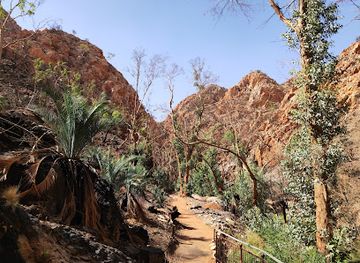
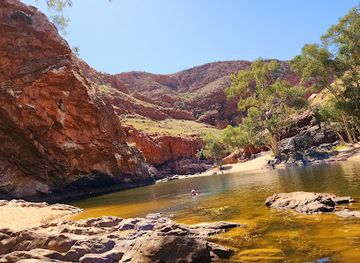
The MacDonnell Ranges combine outdoor adventure, Aboriginal cultural heritage and traces of exploration, mining and communications history. In the West MacDonnell country, Simpsons Gap is an accessible cleft in the range with a river-red-gum-lined approach, while Standley Chasm is an Aboriginal-owned attraction known for its narrow quartzite gorge and changing midday light. Ormiston Gorge offers a larger landscape of cliffs, walking tracks and a waterhole, and serves as one of the principal access points for the Larapinta Trail. The long-distance trail links lookouts, ridges and creek valleys for experienced walkers who have planned carefully for water and transport. East of Alice Springs, Emily and Jessie Gaps Nature Park, Corroboree Rock Conservation Reserve and Trephina Gorge show different geological forms and cultural settings. N'Dhala Gorge contains important rock engravings, while Arltunga Historical Reserve preserves the remains of an early gold-mining settlement. Birdwatching, day walks, photography and seasonal wildflowers reward patient visitors, although facilities and road surfaces vary considerably between sites.
-
Tourist attraction
Alice Springs Desert Park
Explore the captivating landscapes and wildlife of Alice Springs Desert Park, where nature meets culture in the heart of the Australian outback.
-
Tourist attraction
Alice Springs Telegraph Station Historical Reserve
Explore the historic Alice Springs Telegraph Station, where Australia's pioneering communication story comes to life amidst stunning Outback landscapes.
-
Public parking space
Kings Canyon Carpark
Explore the majestic Kings Canyon: Hike dramatic trails, discover ancient landscapes, and experience the heart of Australia's Northern Territory.
-
Tourist attraction
Standley Chasm
Discover the breathtaking Standley Chasm, a stunning gorge in the Northern Territory, where nature's beauty meets rich Aboriginal culture.

Best landmarks in MacDonnell Ranges
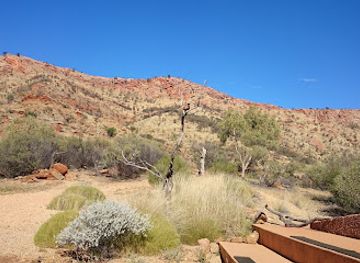
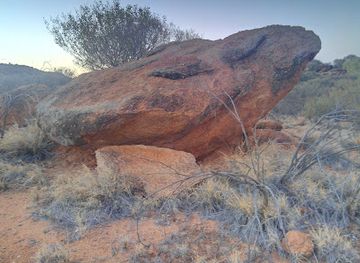
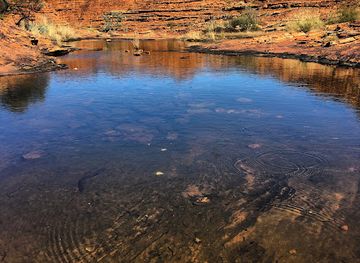
The MacDonnell Ranges are defined by a sequence of geological and cultural landmarks rather than by one central monument. The quartzite walls of Simpsons Gap form one of the most recognisable western entrances, while Standley Chasm is a narrow, sheer-sided cleft whose colour and shadow change through the day. Ormiston Gorge is a major natural landmark, with high layered cliffs enclosing a broad valley and watercourse. In the east, Trephina Gorge displays pale rock walls and sculpted creek scenery, while Emily and Jessie Gaps are important formations with Arrernte cultural associations. Corroboree Rock is a distinctive isolated outcrop protected within a conservation reserve and treated as a significant cultural place. Arltunga's stone ruins, mine workings and abandoned infrastructure are among the clearest historical landmarks in the ranges. The ridge-and-gap profile seen from Alice Springs and the long line of the Larapinta Trail provide a broader geographical identity, connecting individual sites into one ancient Central Australian landscape.
-
Tourist attraction
Alice Springs Desert Park
Experience the breathtaking beauty of Central Australia's landscapes and wildlife at Alice Springs Desert Park, where nature and culture unite.
-
Tourist attraction
Alice Springs Telegraph Station Historical Reserve
Explore the rich history of the Alice Springs Telegraph Station, an essential stop for understanding the heart of Australia's Outback heritage.
-
Public parking space
Kings Canyon Carpark
Explore Kings Canyon Carpark for breathtaking hikes and stunning natural beauty in the heart of Watarrka National Park, Northern Territory.
-
Tourist attraction
Standley Chasm
Explore Standley Chasm: A spectacular gorge with vibrant rock formations and rich biodiversity, perfect for nature lovers and photographers alike.
Explore MacDonnell Ranges on the map
Plan your trip on one map. See where the top cities, national parks and sights are, and book hotels and experiences in a few clicks.
Best hotels in MacDonnell Ranges
Best restaurants in MacDonnell Ranges
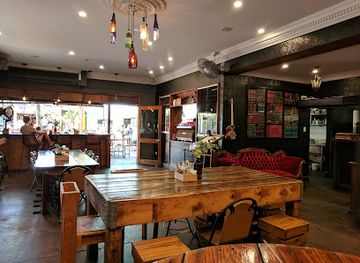
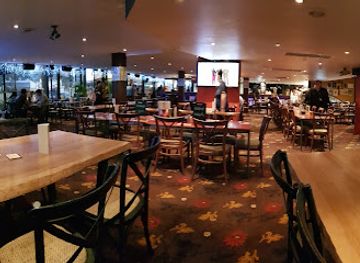
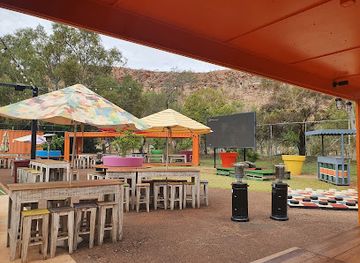
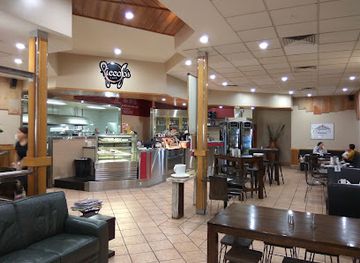
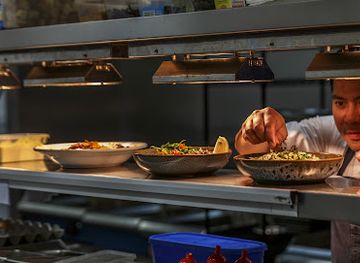
Dining in the MacDonnell Ranges is concentrated around Alice Springs, with only limited food services at selected attractions and accommodation areas, so self-sufficiency is important on longer drives. Alice Springs provides supermarkets, cafés, bakeries, pubs, contemporary restaurants and takeaway options, making it the practical place to assemble picnic supplies for gorge visits and walking trips. Menus reflect broader Northern Territory and Australian influences, including grilled meats, fresh salads, native ingredients and bush-food products, although not every item marketed as bush food is traditionally Arrernte cuisine. Remote stops may offer simple refreshments rather than a full restaurant service. Travellers should carry food and water for the day, particularly on the East MacDonnell routes and the Larapinta Trail. Outdoor meals are rewarding in the ranges, but all food should be secured from wildlife and every scrap of rubbish removed. Local Aboriginal-owned tourism businesses may provide cultural experiences or refreshments, with arrangements varying by site and season.
-
Restaurant
Epilogue Lounge & Rooftop Bar
Experience stunning views and delicious cuisine at Epilogue Lounge & Rooftop Bar in Alice Springs - your perfect dining destination.
-
Restaurant
Uncles Tavern
Experience authentic Australian cuisine at Uncle's Tavern in Alice Springs - where locals meet travelers for good food and great company.
-
Restaurant
Gap View Hotel
Experience the essence of Australian hospitality at Gap View Hotel - delicious BBQ meals, live music, and refreshing drinks await you!
-
Family-friendly
The Locals Alice Springs
Experience family-friendly dining at The Locals in Alice Springs - where great food meets local charm!
Best bars in MacDonnell Ranges
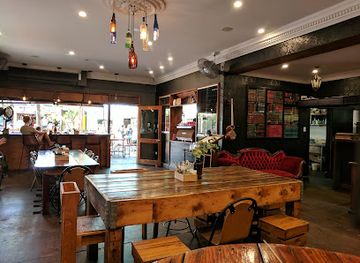
Nightlife in the MacDonnell Ranges themselves is minimal and generally ends with sunset, campfire regulations permitting, or the quiet of an established campsite. Most evening options are in Alice Springs, where traditional pubs, hotel bars, restaurants, live-music settings and a small selection of contemporary venues serve residents, travellers and tour groups. The town's evening culture is more substantial than that of the remote gorges, but it is not comparable with the nightclub scenes of Australia's major capitals. Some accommodation and visitor establishments outside Alice Springs may offer drinks or dinner, though services are widely spaced and can change seasonally. In the ranges, plan around daylight, wildlife on the road and early starts for walking rather than late-night travel. Drink-driving is especially hazardous on remote roads, and alcohol restrictions or local conditions may apply in particular communities and Aboriginal-owned places; follow posted guidance and local advice.
-
Bar
Epilogue Lounge & Rooftop Bar
Experience the vibrant atmosphere of Epilogue Lounge & Rooftop Bar in Alice Springs, where delicious tapas and stunning views await.
-
Bar
Uncles Tavern
Experience the lively atmosphere and delicious offerings at Uncle's Tavern, a must-visit bar and restaurant in Alice Springs, Northern Territory.
-
Cafe
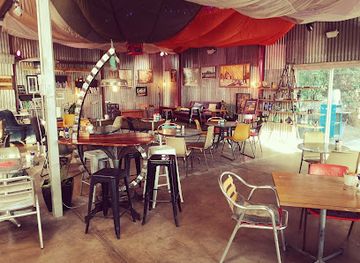
Watertank Café
Experience the perfect blend of breakfast, brunch, and coffee at Watertank Café in Ciccone, a must-visit for food lovers in Northern Territory.
-
Bar
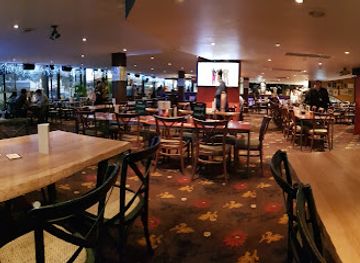
Gillen club
Explore the lively Gillen Club, a premier bar and club in Northern Territory, offering an unforgettable experience with great drinks, food, and entertainment.
Best nightclubs in MacDonnell Ranges
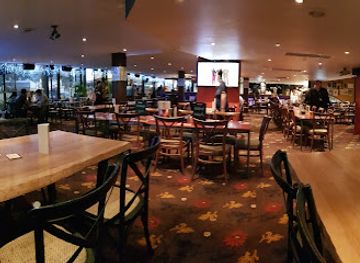
Nightlife in the MacDonnell Ranges themselves is minimal and generally ends with sunset, campfire regulations permitting, or the quiet of an established campsite. Most evening options are in Alice Springs, where traditional pubs, hotel bars, restaurants, live-music settings and a small selection of contemporary venues serve residents, travellers and tour groups. The town's evening culture is more substantial than that of the remote gorges, but it is not comparable with the nightclub scenes of Australia's major capitals. Some accommodation and visitor establishments outside Alice Springs may offer drinks or dinner, though services are widely spaced and can change seasonally. In the ranges, plan around daylight, wildlife on the road and early starts for walking rather than late-night travel. Drink-driving is especially hazardous on remote roads, and alcohol restrictions or local conditions may apply in particular communities and Aboriginal-owned places; follow posted guidance and local advice.
-
Restaurant
Epilogue Lounge & Rooftop Bar
Epilogue Lounge & Rooftop Bar offers a lively atmosphere with delicious tapas, refreshing drinks, and stunning views in the heart of Alice Springs.
-
Bar
Uncles Tavern
Experience the relaxed vibe and delicious offerings at Uncle's Tavern, a beloved bar and restaurant in Alice Springs, Northern Territory.
-
Club
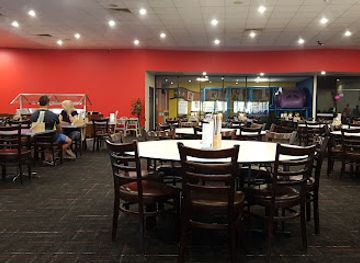
Gillen club
Experience the lively atmosphere of the Gillen Club, a perfect spot for drinks, dining, and local entertainment in the heart of Gillen.
-
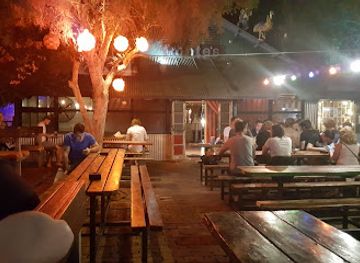
Bar
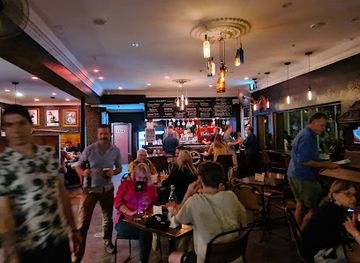
Monte's Lounge
Monte's Lounge: A lively bar and lounge in Alice Springs offering delicious food, drinks, and vibrant live music, perfect for tourists seeking local culture.
Best shops in MacDonnell Ranges
Shopping for the MacDonnell Ranges is centred on Alice Springs, where visitors can find supermarkets, outdoor equipment, books, galleries, Aboriginal art centres and shops selling locally produced food, crafts and souvenirs. Authentic Aboriginal art should be purchased through reputable galleries or community-controlled art centres, with clear information about the artist, community and provenance; bargain souvenirs of uncertain origin deserve caution. Markets and gallery precincts may offer paintings, prints, textiles, carvings, jewellery and other works, but availability and trading days vary. Practical purchases such as water containers, fuel supplies, sun protection, walking equipment and food are more important than souvenirs before heading into the ranges. Regional products may include bush-food ingredients and locally made crafts, while Alice Springs also has ordinary Australian high-street retail. Remote attractions generally have limited retail facilities, so do not assume that fuel, groceries or camping equipment will be available after leaving town.
-
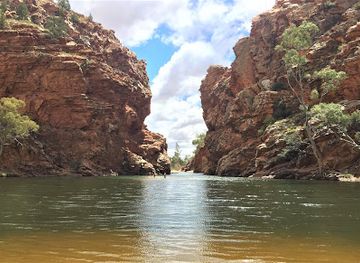
Tourist attraction
Ellery Creek Big Hole
Explore Ellery Creek Big Hole: A stunning natural oasis in the Northern Territory, perfect for swimming, hiking, and photography.
-
Shopping mall
Yeperenye Shopping Centre
Discover the vibrant Yeperenye Shopping Centre in Alice Springs, offering a delightful mix of shops, eateries, and local culture for every traveler.
-
Department store
Kmart Alice Springs
Discover Kmart Alice Springs, your one-stop shop for affordable clothing, homewares, and more in the heart of the Australian Outback.
-
National park
Tjoritja / West MacDonnell National Park
Explore the majestic Tjoritja / West MacDonnell National Park, home to stunning landscapes, rich wildlife, and unforgettable outdoor adventures.


Get your free copy of our complete guide to MacDonnell Ranges, delivered straight to you.
Everything on this page, from attractions and restaurants to essentials and local phrases, in one PDF you can read offline, print or share.
Already have an account? Sign in
Your MacDonnell Ranges guide is ready.
We'll send it to · Not you? Sign out

Getting your guide ready…
We are putting together a fresh copy of the MacDonnell Ranges guide. This can take up to a minute.
This can take a few moments. If your browser asks, choose Allow so the download can start. You'll find the guide in your Downloads folder.
Nothing happened? Download it again
Sorry, the guide is taking longer than usual. Please try again in a minute, or get it by email instead.
MacDonnell Ranges essentials
Currency and Payment
Safety
Emergency Situations
Do's and Don'ts
Local Tips
From Eve
Local phrases worth knowing
You don't need to get them perfect. A few words go a long way, and locals appreciate the effort.
Basics
| English | Local | Say it |
|---|---|---|
| Hello | G'day | [guh-day] |
| Goodbye | See ya | [see yah] |
| Yes | Yeah | [yeh] |
| No | Nah | [nah] |
| Please/You're welcome | No worries | [no wuh-ries] |
| Thank you | Cheers | [cheers] |
| Excuse me/Sorry | Sorry mate | [sorry mate] |
| How are you? | How ya goin'? | [how yah goin'?] |
| Fine. And you? | Good. And you? | [good. an' you?] |
| Do you speak English? | You speak English? | [you speak English?] |
| I don't understand | I don’t get it | [I don’t get it] |
Eating & Drinking
| English | Local | Say it |
|---|---|---|
| I'd like to see the menu, please | Can I see the menu? | [can I see the menu?] |
| I don't eat meat | I’m a vegetarian | [I'm a vege-tarian] |
| Cheers! | Cheers! | [cheers] |
| I would like to pay, please | Can I get the bill? | [can I get the bill?] |
Emergencies
| English | Local | Say it |
|---|---|---|
| Help! | Help! | [help] |
| Go away! | Go away! | [go away] |
| Call the Police! | Call the cops! | [call the cops] |
| Call a doctor! | Get a doctor! | [get a doctor] |
| I'm lost | I’m lost | [I'm lost] |
| I'm ill | I’m sick | [I'm sick] |
Shopping
| English | Local | Say it |
|---|---|---|
| I'd like to buy... | I want to buy... | [I want to buy...] |
| I'm just looking | Just browsing | [just browsing] |
| How much is it? | How much? | [how much?] |
| That's too expensive | That’s too pricey | [that's too pricey] |
| Can you lower the price? | Can you drop the price? | [can you drop the price?] |
Time & Numbers
| English | Local | Say it |
|---|---|---|
| What time is it? | What’s the time? | [what's the time?] |
| It's one o'clock | It’s one o’clock | [it's one o'clock] |
| Half past (10) | Half past ten | [half past ten] |
| Morning | Morning | [morning] |
| Afternoon | Arvo | [arvo] |
| Evening | Evening | [evening] |
| Yesterday | Yesterday | [yesterday] |
| Today | Today | [today] |
| Tomorrow | Tomorrow | [tomorrow] |
| 1 | One | [one] |
| 2 | Two | [two] |
| 3 | Three | [three] |
| 4 | Four | [four] |
| 5 | Five | [five] |
| 6 | Six | [six] |
| 7 | Seven | [seven] |
| 8 | Eight | [eight] |
| 9 | Nine | [nine] |
| 10 | Ten | [ten] |
Transport & Directions
| English | Local | Say it |
|---|---|---|
| Where's a/the...? | Where’s the...? | [where's the...?] |
| What's the address? | What’s the address? | [what's the address?] |
| Can you show me (on the map)? | Can you point it out? | [can you point it out?] |
| When's the next (bus)? | When’s the next bus? | [when's the next bus?] |
| A ticket (to ....) | A ticket to... | [a ticket to...] |
History of MacDonnell Ranges
Arrernte Country and Ancient Geological Landscapes
The MacDonnell Ranges are part of the traditional lands of the Arrernte people, whose communities have maintained cultural, spiritual and practical connections with the region for thousands of years. Waterholes, gaps, hills and travelling routes are associated with creation stories and continuing cultural responsibilities. The ranges themselves preserve a much older geological history: folded sedimentary rocks, quartzite ridges and eroded gorges record ancient marine and terrestrial environments, later uplift and prolonged desert erosion. Today, the cultural and geological stories of the ranges are best understood together, with many sites carrying significance beyond their scenic appearance.
European Exploration and the Stuart Route, 1860
John McDouall Stuart crossed Central Australia during his 1860 expedition and travelled through country near the MacDonnell Ranges. His journeys helped establish a route across the continent for later European expansion, although they depended on Aboriginal knowledge, water sources and established movement corridors. Stuart named the ranges after Richard MacDonnell, then Governor of South Australia. Exploration brought new mapping and transport ambitions, but also intensified disruption to Arrernte lands through pastoral occupation, mining and the establishment of colonial infrastructure.
The Overland Telegraph and Alice Springs, 1870s
The Overland Telegraph Line reached Central Australia in the early 1870s, connecting Adelaide with Darwin and creating a permanent communications corridor across the continent. The Alice Springs Telegraph Station, established beside a dependable waterhole north of the present town, became an important outpost near the MacDonnell Ranges. Telegraph workers, travellers and government officials relied on local water and transport routes, while the station also became a site of difficult and unequal encounters between Arrernte people and colonial authorities. Its surviving buildings and landscape illustrate the region's transition into a communications frontier.
Pastoral Expansion and Frontier Change
From the late nineteenth century, pastoral leases spread across Central Australia, bringing cattle, fences, stock routes and new economic relationships to the ranges and surrounding plains. Stations depended on scarce water and adapted to highly variable rainfall, while Aboriginal communities faced restrictions on movement and the disruption of established food-gathering patterns. The pastoral industry remains part of the wider regional economy, although conservation, tourism and Aboriginal land management now share the landscape. Old tracks, homesteads and stock infrastructure contribute to the layered history encountered along the ranges.
Arltunga and the Central Australian Gold Rush
Gold was discovered at Arltunga in 1887 in the East MacDonnell country, prompting one of Central Australia's earliest substantial mining rushes. The settlement attracted prospectors and small-scale miners who worked difficult deposits in an exceptionally remote environment. Water scarcity, transport problems and the limited scale of the field restricted its long-term growth, but Arltunga developed a store, government presence and other services. Remaining shafts, stone buildings and mining machinery at Arltunga Historical Reserve reveal the harsh realities of inland gold seeking and the region's brief transformation into a mining centre.
Conservation, Aboriginal Ownership and the Larapinta Era
During the twentieth century, growing recognition of the ranges' ecological, scenic and cultural importance led to the creation and expansion of conservation reserves, including West MacDonnell National Park and several East MacDonnell protected areas. Aboriginal land rights and land management have increasingly shaped how important sites are interpreted and cared for. The Larapinta Trail, developed as a long-distance walking route along the West MacDonnell spine, helped establish the ranges as a major destination for independent walkers while encouraging more structured management of campsites, access, water and cultural heritage.
MacDonnell Ranges in Photos
Browse through our photo collection highlighting the charm and character of the destination.
Neighbouring regions of MacDonnell Ranges
The closest regions to MacDonnell Ranges, if you have time for more than one.
-

-

-

-

-


Swipe for more regions
Explore more

Explore more of Australia
Discover the diverse landscapes, vibrant cities, and unique wildlife of Australia, a captivating destination offering endless adventures and unforgettable experiences.
Explore Australia