

Free Western Australia Travel Guide & Mobile App
Explore Western Australia with free travel guides. Discover regional history, expert tips, proposed trips, and audio guides on web or mobile app.


Explore Western Australia for Perth’s beaches, ancient deserts, coral reefs, towering forests, Aboriginal culture and long-distance road journeys.
Read more about Western Australia
When is the best time to visit Western Australia?
Best: April, September–October · 23–26°C| Month | High (°C) | Rainfall (mm) |
|---|---|---|
| January | 32 | 10 |
| February | 33 | 15 |
| March | 30 | 20 |
| April (best) | 26 | 25 |
| May | 22 | 30 |
| June | 19 | 35 |
| July | 18 | 40 |
| August | 20 | 35 |
| September (best) | 23 | 30 |
| October (best) | 26 | 25 |
| November | 29 | 20 |
| December | 31 | 15 |
Getting to and around Western Australia
How to get there
Transportation
Top city travel guides in Western Australia
The cities of Western Australia, and the easiest places to base yourself.
-
-


Swipe for more cities
Destinations in Western Australia
Resorts, valleys and scenic spots worth a trip of their own.
-

-

-

-

-

-


Swipe for more destinations
Best attractions in Western Australia
Western Australia’s attractions are defined by scale and contrast. Perth combines the Art Gallery of Western Australia, Kings Park and Botanic Garden, river scenery and Indian Ocean beaches, while nearby Fremantle offers museums, maritime history and nineteenth-century streets. Rottnest Island adds cycling, swimming and wildlife within a short ferry journey of the capital. The South West brings together Margaret River’s vineyards and caves, the tall forests around Pemberton and Walpole, coastal walks, whale-watching from Albany and the beaches of the south coast. Along the Coral Coast, Nambung National Park’s Pinnacles Desert, Kalbarri’s gorges and the Ningaloo Coast’s marine life form a varied northward route. Shark Bay offers important seagrass, island and wildlife environments, while the Pilbara introduces red escarpments, gorges and mining landscapes. Broome combines pearling history, distinctive tidal beaches and access to the wider Kimberley, although many remote experiences are seasonal or require guided transport. Inland, Kalgoorlie-Boulder interprets the goldfields and large-scale mining, while the Wheatbelt is particularly rewarding for wildflowers and broad agricultural scenery after winter rains.
-
Scenic spot
Echidna Chasm
Explore the breathtaking beauty of Echidna Chasm, a stunning natural marvel in Purnululu National Park with towering cliffs and vibrant landscapes.

Best landmarks in Western Australia
-
National park
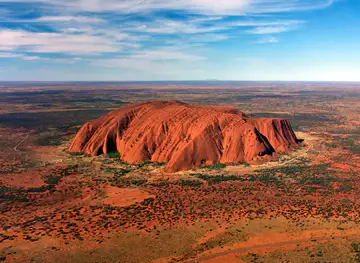
Uluṟu-Kata Tjuṯa National Park
Discover the stunning landscapes and rich culture of Uluṟu-Kata Tjuṯa National Park, a must-visit destination for nature lovers and adventure seekers in Australia.
-
Night market
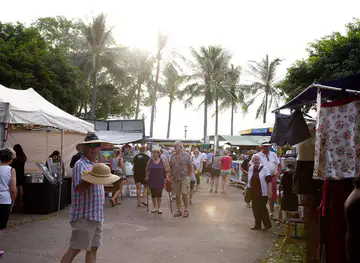
Mindil Beach Sunset Market
Discover the essence of Darwin at Mindil Beach Sunset Market, a vibrant night market filled with delicious food, unique crafts, and breathtaking sunsets.
-
Park
Darwin Waterfront Precinct
Explore the Darwin Waterfront Precinct: a vibrant hub of parks, dining, and recreation with stunning coastal views in the heart of Northern Territory.
-
Museum
Museum and Art Gallery of the Northern Territory
Explore the Museum and Art Gallery of the Northern Territory, where rich history and vibrant culture come alive through stunning exhibits and engaging experiences.


Explore Western Australia on the map
Plan your trip on one map. See where the top cities, national parks and sights are, and book hotels and experiences in a few clicks.
Best hotels in Western Australia
Best restaurants in Western Australia
Western Australian dining reflects the state’s long coastline, productive South West, multicultural cities and remote regional communities. Perth and Fremantle provide the broadest choice, from modern Australian cooking and Asian cuisines to bakeries, cafés, breweries and restaurants using local seafood and produce. Fremantle’s port history is visible in its seafood culture, while the South West is associated with Margaret River wine, artisan cheese, seasonal vegetables, chocolate, olive oil and premium pastured produce. Albany and other southern towns offer fish, shellfish and farm products, although availability varies with season and catch. In the north, Broome is known for pearling heritage and a diverse dining culture influenced by Asian and Australian traditions; chilled seafood, tropical fruit and locally inspired dishes appear alongside established cuisines. Regional pubs, roadhouses and country bakeries remain important on long drives. Farmers’ markets and cellar doors are useful places to understand local produce, but opening days and seasonal availability should be checked before travelling.
-
 Motel
Border Village Roadhouse
Discover comfort and hospitality at Border Village Roadhouse - your essential stop on the iconic Nullarbor Plain.
-
Motel
Eucla Motel
Experience comfort at Eucla Motel on Eyre Highway - your perfect stopover in Australia's stunning Nullarbor region.
-
Restaurant
PumpHouse Kununurra
Discover culinary delights at PumpHouse Kununurra, where stunning lake views meet exceptional local flavors in a relaxed setting.
-
Hotel
Kimberley Hotel
Discover unparalleled comfort and local charm at Kimberley Hotel in Halls Creek – your gateway to exploring Western Australia's breathtaking landscapes.


Best bars in Western Australia
Nightlife is concentrated in Perth and Fremantle, where visitors find small bars, breweries, wine venues, live music, theatres and restaurants alongside a modest club scene. Northbridge is Perth’s principal late-evening area, while Fremantle has a more relaxed mix of pubs, heritage venues, music rooms and waterfront dining. Other metropolitan centres such as Subiaco and Mount Lawley offer restaurants and bars rather than a single, dominant nightlife district. In Margaret River and the South West, evenings generally centre on cellar doors, breweries, restaurants, country pubs and live music, with a slower pace than the capital. Broome has seasonal bars, restaurants and hotel venues, and its evening atmosphere is influenced by the dry-season visitor calendar. In regional and remote towns, nightlife may consist mainly of a pub or club serving the local community; distances and limited transport make arranging a safe journey home important.
-
Modern Australian
O Bar and Dining
Experience the pinnacle of modern Australian cuisine at O Bar and Dining, where stunning views meet exquisite flavors high above Sydney.
-
Japanese
Bar Wa Izakaya
Experience the vibrant flavors of Japan at Bar Wa Izakaya, Hobart's premier izakaya and cocktail bar, featuring authentic dishes and unique drinks.
-
Oyster Bar
The Balcony Bar & Oyster Co.
Experience the essence of Byron Bay at The Balcony Bar & Oyster Co., where fresh oysters and creative cocktails meet stunning coastal views.
-
Pub
The Boundary Hotel
Experience the lively atmosphere, delicious food, and extensive drink selection at The Boundary Hotel in West End, Queensland.


Best nightclubs in Western Australia
-
National park
Litchfield National Park
Experience the breathtaking beauty and adventure of Litchfield National Park, a natural wonder in Australia's Northern Territory.
-
Swimming lake
Florence Falls Waterhole
Experience the beauty of Florence Falls Waterhole, a tranquil swimming lake surrounded by lush landscapes in Litchfield National Park.
-
Night club
Monsoons Darwin
Discover the lively atmosphere of Monsoons Darwin, a premier night club and entertainment venue offering great food, drinks, and live music in the heart of Darwin City.
-
Lodge
Cooinda Lodge Kakadu
Discover the heart of Kakadu National Park at Cooinda Lodge, where comfort meets nature in a stunning Australian landscape.


Best shops in Western Australia
Perth offers the widest range of shopping, from central department stores and arcades to independent boutiques, design shops, galleries and large suburban centres. Fremantle is particularly suited to browsing markets, vintage goods, books, art, craft and locally produced food, with the Fremantle Markets forming a long-established part of its visitor economy. In the South West, Margaret River and surrounding towns are known for wine, gourmet produce, ceramics, textiles, art and small-batch products sold through cellar doors and independent shops. Albany and Bunbury combine practical regional retail with galleries and local food outlets, while smaller country towns often have antiques, farm shops and community markets rather than extensive fashion shopping. Broome has shops and galleries associated with pearls, Aboriginal art and Kimberley-inspired design; buyers should seek clear provenance and purchase cultural material through reputable outlets. Regional products such as honey, olive oil, wine, preserves and locally made crafts travel well, but check quarantine rules before carrying food or plant material between Australian states and territories.
-
Shopping mall
Westfield Kotara
Explore Westfield Kotara for a unique shopping experience, diverse dining options, and entertainment in New South Wales.
-
Shop
Border Village Roadhouse
Discover the Border Village Roadhouse, a must-visit oasis on the Eyre Highway, offering meals, fuel, and the spirit of the Australian outback.
-
Shopping mall
Yeperenye Shopping Centre
Discover the vibrant Yeperenye Shopping Centre, offering local art, fashion, and culinary delights in the heart of Alice Springs.
-
Supermarket
Coles Kununurra
Explore local flavors and stock up on essentials at Coles Kununurra, the vibrant supermarket in the heart of Kununurra.


Get your free copy of our complete guide to Western Australia, delivered straight to you.
Everything on this page, from attractions and restaurants to essentials and local phrases, in one PDF you can read offline, print or share.
Already have an account? Sign in
Your Western Australia guide is ready.
We'll send it to · Not you? Sign out

Getting your guide ready…
We are putting together a fresh copy of the Western Australia guide. This can take up to a minute.
This can take a few moments. If your browser asks, choose Allow so the download can start. You'll find the guide in your Downloads folder.
Nothing happened? Download it again
Sorry, the guide is taking longer than usual. Please try again in a minute, or get it by email instead.
Western Australia essentials
Currency and Payment
Safety
Emergency Situations
Do's and Don'ts
Local Tips
From Eve
Local phrases worth knowing
You don't need to get them perfect. A few words go a long way, and locals appreciate the effort.
Basics
| English | Local | Say it |
|---|---|---|
| Hello | G'day | [g'day] |
| Goodbye | See ya | [see ya] |
| Yes | Yeah | [yeh] |
| No | Nah | [nah] |
| Please/You're welcome | No worries | [no worries] |
| Thank you | Cheers | [cheers] |
| Excuse me/Sorry | Sorry mate | [sorry mate] |
| How are you? | How's it going? | [how's it going?] |
| Fine. And you? | Good, you? | [good, you?] |
| Do you speak English? | Can you speak English? | [can you speak English?] |
| I don't understand | I don’t get it | [I don’t get it] |
Eating & Drinking
| English | Local | Say it |
|---|---|---|
| I'd like to see the menu, please | Can I see the menu, please? | [can I see the menu, please?] |
| I don't eat meat | I’m a vegetarian | [I’m a vegetarian] |
| Cheers! | Cheers! | [cheers] |
| I would like to pay, please | Can I get the bill, please? | [can I get the bill, please?] |
Emergencies
| English | Local | Say it |
|---|---|---|
| Help! | Help! | [help] |
| Go away! | Get lost! | [get lost] |
| Call the Police! | Call the cops! | [call the cops] |
| Call a doctor! | Get a doctor! | [get a doctor] |
| I'm lost | I’m lost | [I’m lost] |
| I'm ill | I’m sick | [I’m sick] |
Shopping
| English | Local | Say it |
|---|---|---|
| I'd like to buy... | I want to buy... | [I want to buy...] |
| I'm just looking | Just browsing, thanks | [just browsing, thanks] |
| How much is it? | How much? | [how much?] |
| That's too expensive | That's a bit rich | [that's a bit rich] |
| Can you lower the price? | Can you do a better price? | [can you do a better price?] |
Time & Numbers
| English | Local | Say it |
|---|---|---|
| What time is it? | What’s the time? | [what’s the time?] |
| It's one o'clock | It’s one o’clock | [it’s one o’clock] |
| Half past (10) | Half past ten | [half past ten] |
| Morning | Morning | [morning] |
| Afternoon | Arvo | [arvo] |
| Evening | Evening | [evening] |
| Yesterday | Yesterday | [yesterday] |
| Today | Today | [today] |
| Tomorrow | Tomorrow | [tomorrow] |
| 1 | One | [one] |
| 2 | Two | [two] |
| 3 | Three | [three] |
| 4 | Four | [four] |
| 5 | Five | [five] |
| 6 | Six | [six] |
| 7 | Seven | [seven] |
| 8 | Eight | [eight] |
| 9 | Nine | [nine] |
| 10 | Ten | [ten] |
Transport & Directions
| English | Local | Say it |
|---|---|---|
| Where's a/the...? | Where's the...? | [where's the...?] |
| What's the address? | What’s the address? | [what’s the address?] |
| Can you show me (on the map)? | Can you show me on the map? | [can you show me on the map?] |
| When's the next (bus)? | When’s the next bus? | [when’s the next bus?] |
| A ticket (to ....) | A ticket to... | [a ticket to...] |
History of Western Australia
Ancient Aboriginal Country
Aboriginal peoples have lived across the lands now called Western Australia for tens of thousands of years, developing detailed knowledge of deserts, rivers, coasts and seasonal resources. The state contains the traditional lands of many distinct language groups and cultural communities, including Noongar peoples in the South West and numerous Kimberley and Pilbara peoples. Rock art, songlines, customary practices and continuing cultural responsibilities remain part of living heritage rather than simply archaeological evidence. Visitors should understand that access to some places may be restricted and that Aboriginal history is not confined to the distant past.
Maritime Contact and Dutch Voyages
European knowledge of the western coast expanded through seventeenth-century Dutch voyages, including the journeys of Willem de Vlamingh and earlier navigators who charted sections of the coastline. These encounters left names on maps and accounts of difficult reefs, winds and unfamiliar landscapes, but did not amount to a settled Dutch colony. The coast’s relative isolation and challenging navigation helped shape Western Australia’s later development. Maritime history remains visible in museums, shipwreck sites and the names attached to islands, bays and coastal features.
The Swan River Colony, 1829
Britain established the Swan River Colony in 1829, centred on the Swan River and the settlements that became Perth and Fremantle. The colony’s creation displaced Noongar communities and brought violent conflict, contested land occupation and profound social disruption. Early settlers faced isolation, difficult agricultural conditions and limited infrastructure, while Fremantle developed as the principal port. Colonial buildings, river routes and historic streets survive, but interpreting them responsibly requires attention to both settler expansion and the continuing effects on Aboriginal communities.
Convict Labour and Colonial Expansion
Western Australia became a British penal colony in the 1850s, when transported convicts were used to address labour shortages and build roads, bridges, public buildings and other infrastructure. Fremantle Prison is the best-known surviving symbol of this period, while traces of convict construction appear elsewhere in the South West and around Perth. Convict labour helped the colony expand, but the system also involved coercion and harsh conditions. The period accelerated settlement and created built heritage that remains central to Western Australia’s historical interpretation.
Gold Rushes and the Rise of Kalgoorlie
Gold discoveries in the Eastern Goldfields during the 1890s transformed Western Australia. Kalgoorlie and Boulder grew rapidly, railways connected the mining districts with the coast, and population and investment surged. The wealth generated by gold helped fund public works and strengthened Perth’s development, while harsh working conditions, environmental damage and racial inequality shaped the mining economy. The Golden Mile around Kalgoorlie became one of Australia’s most significant gold-producing areas, and mining remains a major force in the state’s economy.
Ports, Agriculture and Regional Development
During the twentieth century, agriculture, pastoralism, ports and railways extended settlement beyond the metropolitan south-west. Wheat production shaped the Wheatbelt, while ports such as Bunbury, Albany, Geraldton and Port Hedland served different agricultural, fishing and resource economies. Road improvements and aviation later made long-distance travel more practical, although large areas remained sparsely populated. The state’s regional identity developed through strong connections between coastal cities, inland industries and remote communities rather than through one continuous urban corridor.
Mining, Conservation and Contemporary Western Australia
From the late twentieth century, iron ore, natural gas, gold and other resources brought major investment to the Pilbara, Kimberley and offshore areas, while Perth grew into a diverse international city. At the same time, national parks, marine reserves and conservation programmes protected important environments including Ningaloo Coast, Shark Bay and the South West forests. Contemporary Western Australia therefore combines a resource-based economy with tourism, science, agriculture, arts and Indigenous cultural renewal. Debates about land rights, heritage, environmental protection and sustainable development continue to shape the state.
Western Australia in Photos
Browse through our photo collection highlighting the charm and character of the destination.
Neighbouring regions of Western Australia
The closest regions to Western Australia, if you have time for more than one.
-

-
-

-

-


Swipe for more regions
Explore more

Explore more of Australia
Discover the diverse landscapes, vibrant cities, and unique wildlife of Australia, a captivating destination offering endless adventures and unforgettable experiences.
Explore Australia