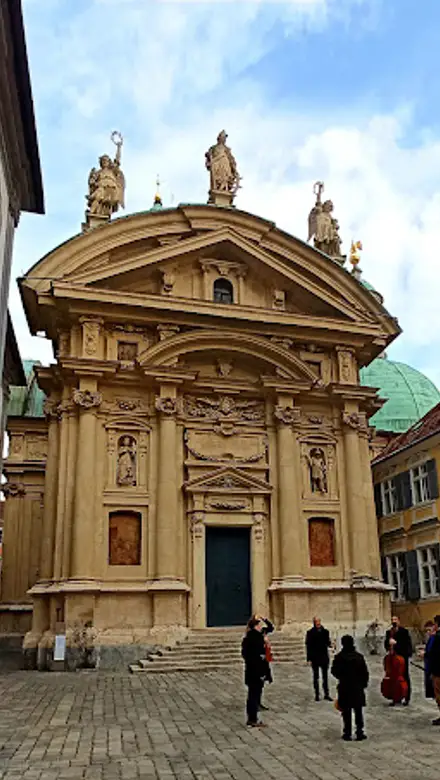
Mausoleum Kaiser Ferdinands II. Travel Guide
Free Guide: Discover the imperial grandeur of Graz in this Mannerist-Baroque masterpiece, the final resting place of Emperor Ferdinand II.


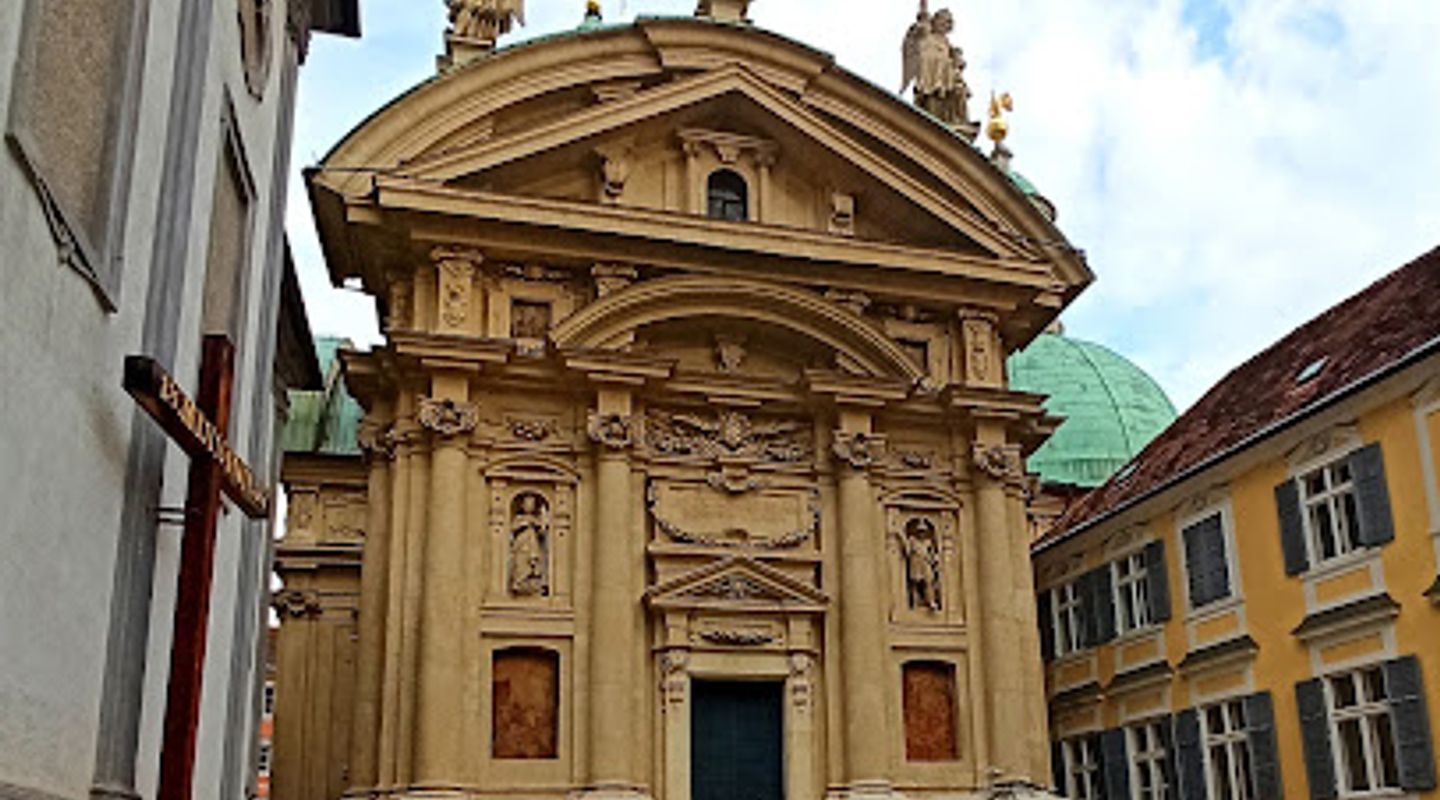
A brief summary of Mausoleum Kaiser Ferdinands II.
Discover the imperial grandeur of Graz in this Mannerist-Baroque masterpiece, the final resting place of Emperor Ferdinand II.
The Mausoleum of Kaiser Ferdinand II in Graz is a striking architectural monument blending Mannerist and early Baroque styles. Commissioned by Ferdinand II as his final resting place, it stands as a symbol of imperial power and religious conviction, showcasing elaborate decorations, frescoes, and the Habsburg dynasty's influence.
Opening hours
- MonClosed
- Tue9 am–5 pm
- Wed9 am–5 pm
- Thu9 am–5 pm
- Fri9 am–5 pm
- Sat9 am–5 pm
- Sun9 am–5 pm
Opening hours as listed on the venue’s Google Business Profile. Hours can change for services and special events, so check with the venue before you go.
- Address
- Burggasse 3, 8010 Graz
- Phone
- Website
Getting there
Walking
Public Transport
Taxi/Ride-Share
Discover more about Mausoleum Kaiser Ferdinands II.
Overview
The Mausoleum of Kaiser Ferdinand II, located in the heart of Graz, Austria, is an imposing structure that represents a significant chapter in the city's and the Habsburg dynasty's history. Conceived as a symbol of imperial power and religious conviction, the mausoleum is one of the most important buildings of the early 17th century in Austria. Its architectural style, a fusion of Mannerism and early Baroque, reflects the transitional period between the Renaissance and the full bloom of the Baroque era.The history of the Mausoleum is intertwined with the life and reign of Emperor Ferdinand II (1578-1637). Born in Graz, Ferdinand was a staunch Catholic and a key figure in the Counter-Reformation. He commissioned the mausoleum in 1614 as his final resting place and a testament to his faith. The construction was entrusted to Giovanni Pietro de Pomis, an Italian architect and painter who served as Ferdinand's court artist. De Pomis designed a complex consisting of St. Catherine's Church (Katharinenkirche) and the adjacent mausoleum chapel.The architecture of the Mausoleum is notable for its synthesis of Italian and Central European influences. The exterior is characterized by a symmetrical facade with classical elements such as columns, pilasters, and a triangular pediment. The use of light-colored stone and the articulation of the facade create a sense of grandeur and solemnity. The most striking feature of the Mausoleum is its turquoise dome, an oval structure that was the first of its kind built outside Italy. The dome not only dominates the Graz skyline but also symbolizes resurrection and eternal life. Inside, the Mausoleum is richly decorated with stucco work, frescoes, and sculptures. Johann Bernhard Fischer von Erlach's contributions are particularly noteworthy, as he created an elaborate decorative program that celebrates the Habsburg dynasty and the Catholic faith. The frescoes on the dome depict scenes from the life of St. Catherine of Alexandria, the patron saint of the adjacent church.The crypt beneath the chapel houses the remains of Emperor Ferdinand II, his first wife, Maria Anna of Bavaria, and other members of the Habsburg family. The most prominent feature of the crypt is the red marble sarcophagus of Maria of Bavaria, Ferdinand's mother. Ferdinand himself is buried in a more modest tomb in the wall of the chapel. Visiting the Mausoleum offers a unique opportunity to explore the intersection of art, history, and religion.
Evendo Review Centre
 Google
Guest reviews
Explore Mausoleum Kaiser Ferdinands II. on the map
A handpicked selection of must-see spots near Mausoleum Kaiser Ferdinands II., mapped for you.
Get your free copy of our complete guide to Mausoleum Kaiser Ferdinands II., delivered straight to you.
Everything on this page, from opening hours and how to get there to Eve’s tips and the best time to go, in one PDF you can read offline, print or share.
Already have an account? Sign in
Your Mausoleum Kaiser Ferdinands II. guide is ready.
We'll send it to · Not you? Sign out

Getting your guide ready…
We are putting together a fresh copy of the Mausoleum Kaiser Ferdinands II. guide. This can take up to a minute.
This can take a few moments. If your browser asks, choose Allow so the download can start. You'll find the guide in your Downloads folder.
Nothing happened? Download it again
Sorry, the guide is taking longer than usual. Please try again in a minute, or get it by email instead.
Unlock the best of Mausoleum Kaiser Ferdinands II.
Skip-the-line tickets, guided tours with entry, and walking tours of the area, booked in a few clicks.
 Tour with entry
Graz Schlossberg and Old Town - Audio Guide and Self Guided Tour
from $6.38 Tour with entry
Graz Jewish Quarter and Old Town Private Tour
from $418.80 Tour with entry
Graz WWII Themed Old Town Tour with Graz Museum
from $418.80 Tour with entry
Graz Private Family Friendly Walking Tour
from $418.80


Other nearby places you may find interesting
The closest places of the same kind, if this one is not quite what you had in mind.
-
-
-
-
-


Swipe for more places
More to explore near Mausoleum Kaiser Ferdinands II.
-
 Best experiences near Mausoleum Kaiser Ferdinands II.
-
 Best hotels near Mausoleum Kaiser Ferdinands II.
-
 Best landmarks near Mausoleum Kaiser Ferdinands II.
-
 Best attractions near Mausoleum Kaiser Ferdinands II.
-
 Best shops near Mausoleum Kaiser Ferdinands II.
-
 Best restaurants near Mausoleum Kaiser Ferdinands II.
-
 Best bars near Mausoleum Kaiser Ferdinands II.


Do you manage this location?
Take control to get all the benefits, like improved information, better appearance, and stronger visibility across AI-powered discovery.
Explore more

Explore more of Styria
Discover Styria: A picturesque region in Austria known for its lush landscapes, historic architecture, and exceptional wine. Perfect for both outdoor adventures and cultural experiences.
Explore Styria
Explore more of Austria
Discover Austria's blend of alpine landscapes, rich cultural heritage, and culinary delights, from Vienna's historic charm to Tyrol's dramatic beauty.
Explore Austria