

Graslei and Korenlei (Ghent) Travel Guide - Free
Explore Graslei and Korenlei in Ghent with Evendo's free guide. Find the best shops, historic streets, restaurants, and gems on web or mobile.


Graslei and Korenlei in Ghent pair medieval guild houses, canal views, boat tours and riverside cafés with easy access to Belgium’s historic centre.
Quays Shaped by Trade
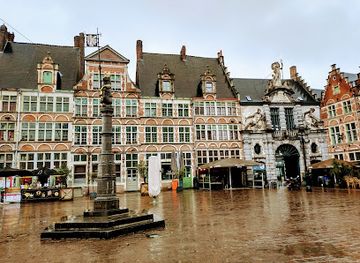
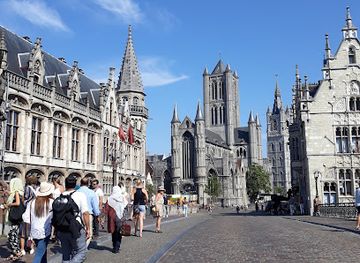
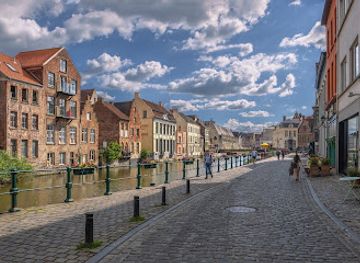
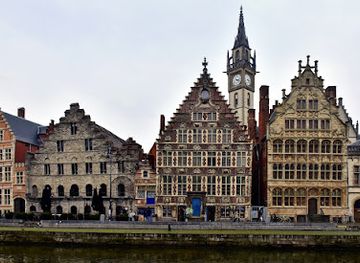
Graslei and Korenlei form one of Ghent’s most recognisable urban scenes: two historic quays facing one another across the Leie, with stepped gables, former guild houses and the towers of the old city rising behind them. Graslei lies on the eastern bank and Korenlei on the western; together they occupy the waterfront at the heart of Ghent’s historic centre, beside St Michael’s Bridge and within easy walking distance of Gravensteen and the Korenmarkt.Read more about Graslei and Korenlei
Architecture and Atmosphere
Ghent Seen from the Water
Best attractions in Graslei and Korenlei
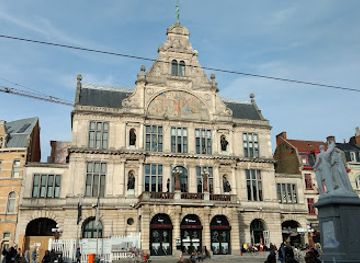
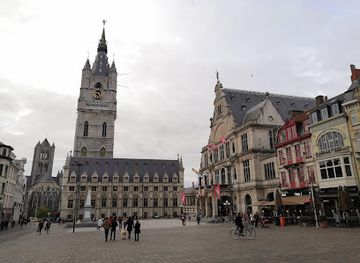
The principal attraction of Graslei and Korenlei is the waterfront itself, where two rows of historic façades face one another across the Leie. Walk along both banks to compare the former guild houses, warehouses and merchant buildings, then cross St Michael’s Bridge for one of Ghent’s defining city views. Canal cruises usually provide a different perspective on the façades, bridges and riverfront, while the nearby Design Museum Gent extends the area’s architectural and design interest. The quays also provide an easy route towards the Korenmarkt, the Patershol quarter and Gravensteen, although those destinations lie beyond the immediate waterfront. At the southern end, Het Pand and its historic complex add another layer of architectural interest. The experience is less about entering a single attraction than reading the relationship between river, trading houses, bridges and the surrounding medieval street plan.
-
Tourist attraction
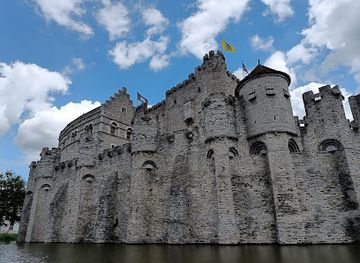
Gravensteen
Explore Gravensteen Castle in Ghent: a medieval fortress with a rich history, stunning architecture, and a unique glimpse into the past.
5 min walk · 0.4 km from neighbourhood centre
-
Tourist attraction
Saint Bavo's Cathedral
Discover the grandeur of Saint Bavo's Cathedral, Ghent's iconic Gothic marvel, and home to the famed 'Adoration of the Mystic Lamb' artwork.
5 min walk · 0.4 km from neighbourhood centre
-
Tourist attraction
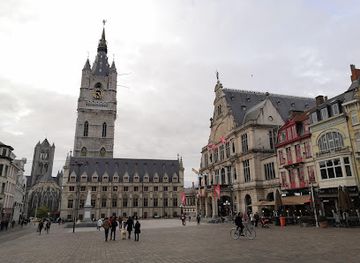
Belfry of Ghent
Discover Ghent's iconic Belfry: a UNESCO World Heritage Site offering panoramic views and a glimpse into the city's rich history and independence.
3 min walk · 0.3 km from neighbourhood centre
-
Tourist attraction
Graffiti Street
Explore Ghent's Graffiti Street, an open-air gallery bursting with dynamic street art that reflects the city's creative spirit and vibrant culture.
4 min walk · 0.3 km from neighbourhood centre
Best landmarks in Graslei and Korenlei
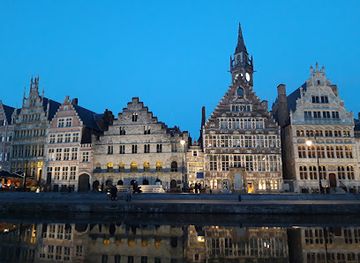
The defining landmarks are the paired quays and their continuous historic frontage rather than a single isolated monument. On Graslei, the façades traditionally associated with grain merchants, boatmen and other guilds illustrate the waterfront’s medieval commercial importance; Korenlei preserves a complementary line of former trading and residential buildings across the river. St Michael’s Bridge is both a practical crossing and a symbolic viewpoint, framing the Leie with the historic centre’s towers behind it. The former Grain Weigh House is among the buildings that evoke the regulation of trade, while the nearby complex of Het Pand reflects the layers of religious, institutional and later civic use found in central Ghent. Architectural details vary because the houses were changed and restored over centuries, so the landmark value lies in the ensemble: river, façades, bridges and the urban spaces that supported commerce.
-
Castle
Gravensteen
Explore the majestic Gravensteen Castle in Ghent, a historic gem that embodies the spirit of Belgium's medieval heritage.
5 min walk · 0.4 km from neighbourhood centre
-
Historical place
Belfry of Ghent
Explore Ghent's Belfry: A UNESCO World Heritage site showcasing medieval architecture and stunning city views.
3 min walk · 0.3 km from neighbourhood centre
-
Bridge
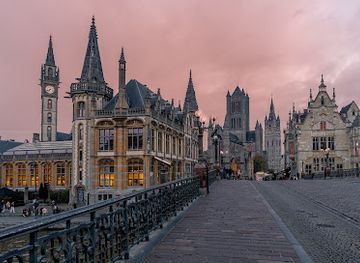
Saint Michael's Bridge
Discover the breathtaking views and rich history at Saint Michael's Bridge in Ghent, a must-see landmark for every tourist.
1 min walk · 0.1 km from neighbourhood centre
-
Art gallery
Graffiti Street
Discover the colorful expression of creativity at Graffiti Street in Ghent, a must-visit destination for street art enthusiasts and culture seekers.
4 min walk · 0.3 km from neighbourhood centre
Explore Graslei and Korenlei on the map
A handpicked selection of must-see spots in Graslei and Korenlei, mapped for you.
Best hotels in Graslei and Korenlei
Best restaurants in Graslei and Korenlei
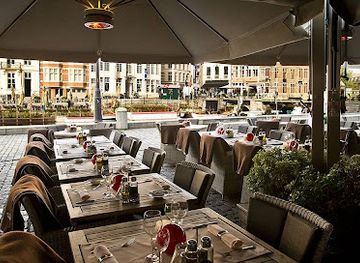
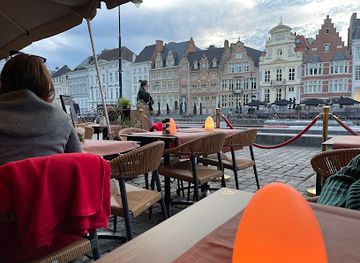
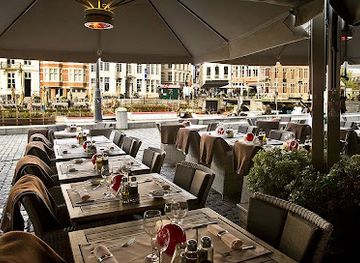
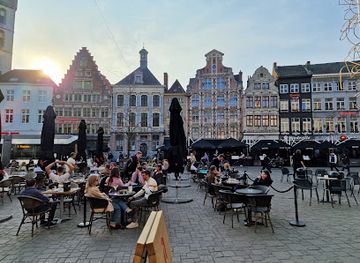
Dining around Graslei and Korenlei is shaped by the waterfront setting, with terraces, cafés and restaurants occupying a highly visited stretch of Ghent’s historic centre. Menus in the immediate area often introduce visitors to Belgian fare alongside contemporary European cooking, while nearby streets provide a broader choice of casual meals, bakeries, cafés and establishments serving local specialities. The quays are convenient for a drink or meal beside the Leie, but the most atmospheric tables are also exposed to crowds and passing foot traffic. For a more varied local food search, continue towards the Korenmarkt, the Patershol and the streets behind the river rather than judging Ghent’s dining culture from the waterfront alone. Look for dishes such as waterzooi or Belgian beer selections where they appear on menus, while remembering that individual offerings, opening arrangements and restaurant identities can change.
-
Hamburger
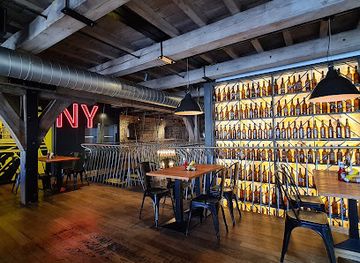
Manhattn's Burgers
Discover exceptional American burgers at Manhattn's in Ghent - where flavor meets local charm.
1 min walk · 0.1 km from neighbourhood centre
-
Restaurant
De Graslei
Experience authentic Belgian cuisine at De Graslei, where every meal comes with stunning canal views and warm hospitality.
2 min walk · 0.1 km from neighbourhood centre
-
Restaurant
De Witte Leeuw
Experience authentic Belgian cuisine with stunning canal views at De Witte Leeuw in Ghent.
2 min walk · 0.1 km from neighbourhood centre
-
French
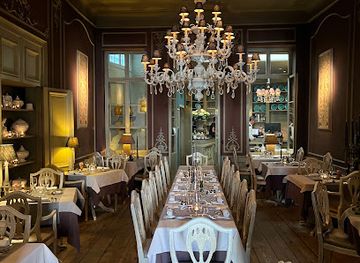
Allegro Moderato
Experience exquisite French cuisine at Allegro Moderato in Ghent—where culinary artistry meets stunning riverside views.
2 min walk · 0.2 km from neighbourhood centre
Best bars in Graslei and Korenlei
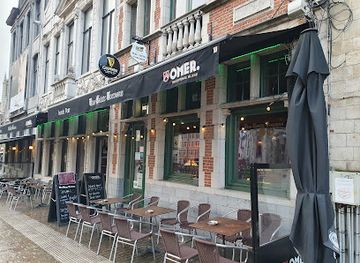
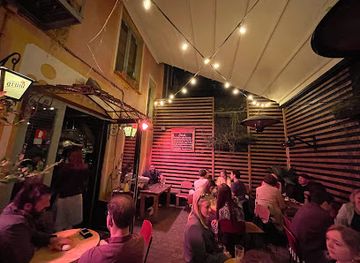
After dark, Graslei and Korenlei become a social promenade of illuminated façades, riverside terraces and restaurants rather than a dedicated nightclub district. The surrounding historic centre supplies many places for Belgian beer, wine and cocktails, with further evening options around the Korenmarkt, Vrijdagmarkt and nearby streets. The quays themselves are particularly suited to an early or relaxed evening, when the Leie reflects the lighting on the old buildings and St Michael’s Bridge remains a natural meeting point. Ghent’s larger student and live-music scene is dispersed across the city rather than concentrated solely on this waterfront. Visitors should distinguish between a riverside bar terrace and a late-night venue, check current arrangements locally, and keep conversations and departures considerate near residential buildings.
-
Restaurant
De Graslei
Experience the best of Belgian cuisine at De Graslei, a charming riverside brasserie in the heart of Ghent, perfect for tourists seeking authentic flavors.
2 min walk · 0.1 km from neighbourhood centre
-
Irish pub
The Celtic Towers Irish Pub
Discover the vibrant atmosphere of The Celtic Towers Irish Pub in Ghent, where authentic Irish cuisine and lively sports events come together.
1 min walk · 0.1 km from neighbourhood centre
-
Pub
De Alchemist
Discover De Alchemist in Ghent: A cozy pub perfect for beer lovers and social butterflies, capturing the city's vibrant nightlife.
4 min walk · 0.3 km from neighbourhood centre
-
Bar
De Maecht van Ghent
Discover the lively nightlife at De Maecht van Ghent, a top bar and club in the heart of Ghent, offering great drinks and vibrant atmosphere.
2 min walk · 0.1 km from neighbourhood centre
Best nightclubs in Graslei and Korenlei
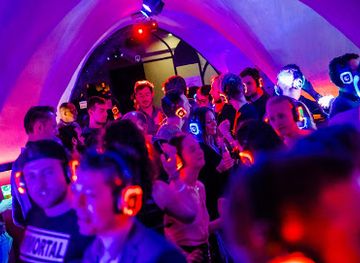
After dark, Graslei and Korenlei become a social promenade of illuminated façades, riverside terraces and restaurants rather than a dedicated nightclub district. The surrounding historic centre supplies many places for Belgian beer, wine and cocktails, with further evening options around the Korenmarkt, Vrijdagmarkt and nearby streets. The quays themselves are particularly suited to an early or relaxed evening, when the Leie reflects the lighting on the old buildings and St Michael’s Bridge remains a natural meeting point. Ghent’s larger student and live-music scene is dispersed across the city rather than concentrated solely on this waterfront. Visitors should distinguish between a riverside bar terrace and a late-night venue, check current arrangements locally, and keep conversations and departures considerate near residential buildings.
-
Jazz
Hot Club de Gand
Discover the vibrant jazz scene at Hot Club de Gand, Ghent's premier destination for live music and unforgettable nights.
4 min walk · 0.3 km from neighbourhood centre
-
Night club
Abacho
Discover the electrifying nightlife at Abacho, Ghent's top destination for dancing, drinks, and unforgettable memories.
3 min walk · 0.2 km from neighbourhood centre
-
Night club
‘t Koerke
Discover the vibrant nightlife at 't Koerke, Ghent's premier night club, known for its electrifying atmosphere and unforgettable dance parties.
4 min walk · 0.3 km from neighbourhood centre
-
Night club
Club Embassy
Discover the heartbeat of Ghent's nightlife at Club Embassy, where vibrant music and an electrifying atmosphere promise an unforgettable experience.
2 min walk · 0.1 km from neighbourhood centre

Best shops in Graslei and Korenlei
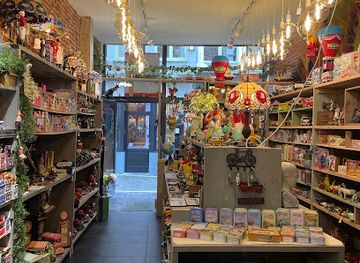
Graslei and Korenlei are primarily heritage and hospitality spaces, not a specialist shopping district, so retail within the immediate waterfront is limited compared with the streets around the Korenmarkt and Veldstraat. Visitors will find gifts, Belgian food products and design-led items in the wider historic centre, while independent shops, bookshops and specialist retailers are more rewarding when sought along the adjoining lanes rather than directly on the quays. The nearby Design Museum Gent gives the area a strong design context, although it is a cultural institution rather than a shopping venue. Shopping here works best as part of a walking circuit: admire the guild-house façades, continue through the central streets, and look for local beer, chocolate, linens or contemporary design objects without assuming that every product is made in Ghent.
-
Gift shop
Houthuis Gent - Retro Shop
Explore Houthuis Gent, a charming retro shop in the heart of Ghent, offering unique gifts and vintage treasures that capture the essence of Belgian culture.
2 min walk · 0.2 km from neighbourhood centre
-
Women's clothing store
Sissy-Boy
Explore Sissy-Boy in Ghent for a unique shopping experience with stylish clothing and accessories for the whole family.
1 min walk · 0.1 km from neighbourhood centre
-
Gift shop
Louise & Madeleine
Explore Louise & Madeleine, a charming gift shop in Ghent, offering a unique selection of homeware and fashionable souvenirs that reflect Belgian artistry.
5 min walk · 0.4 km from neighbourhood centre
-
Fashion accessories store
Cooremetershuys
Explore Cooremetershuys in Ghent for unique fashion accessories that blend local artistry with contemporary style.
1 min walk · 0.1 km from neighbourhood centre

Graslei and Korenlei essentials
Getting There
Getting Around
Safety
Emergency Situations
Do's and Don'ts
Local Tips

From Eve
Local phrases worth knowing
You don't need to get them perfect. A few words go a long way, and locals appreciate the effort.
Basics
| English | Local | Say it |
|---|---|---|
| Hello | Hallo | [ha-lo] |
| Goodbye | Tot ziens | [tot zeens] |
| Yes | Ja | [ya] |
| No | Nee | [nee] |
| Please/You're welcome | Alstublieft | [al-stu-bleeft] |
| Thank you | Dank u | [dank oo] |
| Excuse me/Sorry | Sorry | [so-ree] |
| How are you? | Hoe gaat het? | [hu gat het] |
| Fine. And you? | Goed. En met jou? | [huut. enn met yo] |
| Do you speak English? | Spreekt u Engels? | [spreekt uu engels] |
| I don't understand | Ik begrijp het niet | [ik buh-hrayp hut neet] |
Eating & Drinking
| English | Local | Say it |
|---|---|---|
| I'd like to see the menu, please | Mag ik de menukaart zien, alstublieft | [mah ik duh me-nuu-kart seen, al-stu-bleeft] |
| I don't eat meat | Ik eet geen vlees | [ik eet kheen flays] |
| Cheers! | Proost! | [prohst] |
| I would like to pay, please | Ik wil graag betalen, alstublieft | [ik vil khraahg buh-tahlen, al-stu-bleeft] |
Emergencies
| English | Local | Say it |
|---|---|---|
| Help! | Help! | [help] |
| Go away! | Ga weg! | [gaah vekh] |
| Call the Police! | Bel de politie! | [bel duh po-lee-see] |
| Call a doctor! | Bel een dokter! | [bel een dok-ter] |
| I'm lost | Ik ben verdwaald | [ik ben ver-dwahld] |
| I'm ill | Ik ben ziek | [ik ben zeek] |
Shopping
| English | Local | Say it |
|---|---|---|
| I'd like to buy... | Ik wil graag kopen... | [ik vil khraahg koh-pen] |
| I'm just looking | Ik kijk alleen maar | [ik kayk al-leen maar] |
| How much is it? | Hoeveel kost het? | [hu-vale kost hut] |
| That's too expensive | Dat is te duur | [dat is tuh dyoor] |
| Can you lower the price? | Kunt u de prijs verlagen? | [kunt uu duh prees ver-lah-ghen] |
Time & Numbers
| English | Local | Say it |
|---|---|---|
| What time is it? | Hoe laat is het? | [hu lahht is hut] |
| It's one o'clock | Het is een uur | [het is ayn oor] |
| Half past (10) | Half elf | [half elf] |
| Morning | Ochtend | [okh-tuhnt] |
| Afternoon | Middag | [mid-dahkh] |
| Evening | Avond | [ah-vohnt] |
| Yesterday | Gisteren | [khis-tuh-run] |
| Today | Vandaag | [vahn-dahkh] |
| Tomorrow | Morgen | [mohr-ghun] |
| 1 | Een | [ayn] |
| 2 | Twee | [tway] |
| 3 | Drie | [dree] |
| 4 | Vier | [veer] |
| 5 | Vijf | [vyeef] |
| 6 | Zes | [zehs] |
| 7 | Zeven | [zay-ven] |
| 8 | Acht | [ahkh-t] |
| 9 | Negen | [nay-khun] |
| 10 | Tien | [teen] |
Transport & Directions
| English | Local | Say it |
|---|---|---|
| Where's a/the...? | Waar is de...? | [vaar is duh] |
| What's the address? | Wat is het adres? | [vaht is hut ah-dres] |
| Can you show me (on the map)? | Kunt u mij dat tonen (op de kaart)? | [kunt uu may daht toh-nun (op duh kart)] |
| When's the next (bus)? | Wanneer is de volgende (bus)? | [ven-nair is duh vol-hen-duh (bus)] |
| A ticket (to ....) | Een ticket (naar ....) | [ayn tee-ket (nar)] |
History of Graslei and Korenlei
Medieval Harbour and Trade
The waterfront developed as part of Ghent’s medieval port and commercial system, linked to the Leie and to the waterways that connected the city with the surrounding region. The names Graslei and Korenlei reflect the trade once handled along these banks: grain was associated particularly with Korenlei, while Graslei is commonly connected with the transport and sale of goods including fodder. Merchants, boatmen and craft guilds used the quays for loading, storage and business, helping make this part of Ghent a centre of urban exchange. The surviving façades are reminders of that commercial role, although the buildings have been altered repeatedly over time.
Guild Houses and Urban Power
Between the later Middle Ages and the early modern period, the quays acquired the group of narrow, individually distinctive buildings that still defines their appearance. These properties served practical and institutional purposes as well as residential ones, reflecting the importance of guilds and merchants in Ghent’s civic life. The waterfront’s position beside the Korenmarkt, the river crossings and the routes towards the old port gave it exceptional visibility. Buildings such as the former Grain Weigh House and the guild houses associated with boatmen and grain merchants express the close relationship between commerce, regulation and architecture in the medieval city.
Neglect, Restoration and Preservation
As shipping patterns changed and newer parts of Ghent assumed greater commercial importance, the historic quays lost much of their original working-port function. Like many old urban areas, the waterfront experienced periods when buildings were altered, neglected or used for purposes far removed from their medieval origins. Growing appreciation of Ghent’s architectural heritage led to restoration and conservation, particularly around the historic centre. The quays were subsequently shaped into a public urban setting where the façades, river and bridges could be experienced together, preserving their historical character while allowing cafés, cultural uses and tourism to become part of the modern waterfront.
A Contemporary Civic Waterfront
Today, Graslei and Korenlei function as one of Ghent’s principal public spaces rather than as an active medieval harbour. Boats still use the Leie, but the visitor experience is centred on heritage, walking, hospitality and views across the water. St Michael’s Bridge, nearby cultural institutions and the routes towards the Korenmarkt and Patershol connect the quays to the wider historic centre. Their contemporary significance lies in this combination of preserved mercantile architecture and everyday urban use: residents, students and visitors share a waterfront that remains one of Ghent’s most visible links between the city’s commercial past and its present cultural life.
Graslei and Korenlei in Photos
Browse through our photo collection highlighting the charm and character of the destination.
Neighbourhoods near Graslei and Korenlei
The closest neighbourhoods to Graslei and Korenlei, if you have time for more than one stop.
-

-

-

-


Swipe for more neighbourhoods
Explore more

Explore more of Ghent
Ghent, Belgium, pairs medieval canals and landmark guildhalls with world-class art, inventive cuisine, lively student culture and atmospheric sightseeing.
Explore Ghent