

Free Cayo District Travel Guide & Mobile App
Explore Cayo District with free travel guides. Discover regional history, expert tips, proposed trips, and audio guides on web or mobile app.


Explore Belize’s Cayo District for Maya cities, limestone caves, jungle reserves, river adventures and the lively inland town of San Ignacio.
Read more about Cayo District
When is the best time to visit Cayo District?
Best: January–March · 28–30°C| Month | High (°C) | Rainfall (mm) |
|---|---|---|
| January (best) | 28 | 75 |
| February (best) | 28 | 50 |
| March (best) | 30 | 50 |
| April | 32 | 50 |
| May | 33 | 100 |
| June | 33 | 200 |
| July | 33 | 200 |
| August | 33 | 200 |
| September | 33 | 200 |
| October | 32 | 150 |
| November | 30 | 100 |
| December | 29 | 75 |
Getting to and around Cayo District
How to get there
Transportation
Top city travel guides in Cayo District
The cities of Cayo District, and the easiest places to base yourself.
-

-

-

-


Swipe for more cities
Destinations in Cayo District
Resorts, valleys and scenic spots worth a trip of their own.
-

-

-


Swipe for more destinations
Best attractions in Cayo District
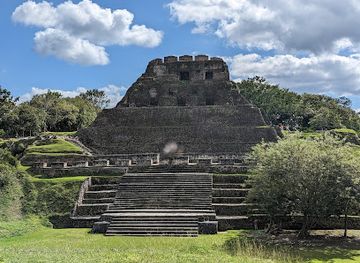
Cayo District offers one of Belize’s broadest mixes of archaeology and outdoor adventure. Cahal Pech, above San Ignacio, provides an accessible introduction to Maya architecture, while Xunantunich presents plazas, temples and the prominent El Castillo near the Mopan River. Caracol, reached through the Chiquibul Forest, is a more remote and extensive archaeological experience. The district’s cave attractions range from guided walks through Rio Frio Cave and canoe or river-based exploration at Barton Creek Cave to the demanding ceremonial expedition into Actun Tunichil Muknal. In the Mountain Pine Ridge Forest Reserve, visitors find pine woodland, granite formations, waterfalls and pools around sites such as Big Rock Falls. The Macal and Mopan rivers support canoeing, tubing and wildlife observation, while forest trails provide opportunities for birdwatching and guided walks. Small farms, community visits and cultural excursions add a human dimension beyond the headline sites. Because many attractions are separated by rough roads and substantial distances, the district is best explored through a combination of a San Ignacio base, pre-arranged guided trips and realistic time allowances.
-
Archaeological site
Xunantunich Mayan Ruins
Discover the archaeological wonders of Xunantunich in San Jose Succotz, Belize, where ancient Maya history meets breathtaking landscapes.
-
National reserve
Cahal Pech Archaeological Reserve
Explore the captivating ruins of Cahal Pech Archaeological Reserve, a national treasure revealing the rich history of the ancient Maya civilization.
-
National park
Parque Nacional Yaxha
Explore Laguna Yaxhá, a stunning national park in Guatemala filled with ancient Mayan ruins and lush, diverse wildlife in a tranquil setting.
-
Rio On Pools
Experience the natural tranquility and stunning beauty of Rio On Pools, a hidden gem in Douglas Da Silva, Belize, perfect for relaxation and adventure.


Best landmarks in Cayo District
The most recognisable historic landmark in Cayo is El Castillo at Xunantunich, a tall Maya temple whose position above the Mopan valley gives it broad visual presence and reflects the importance of the ancient city. Cahal Pech, set on a ridge over San Ignacio, is another defining site, with plazas and buildings integrated into the town’s landscape. Deep in the Chiquibul Forest, Caracol’s Caana rises above its surrounding plazas and remains one of the most imposing Maya structures in Belize. The Hawksworth Bridge between San Ignacio and Santa Elena is a practical modern landmark linking the district’s principal urban centres. In the western countryside, the Mopan River and the hand-operated ferry near Xunantunich express the region’s close relationship with water and transport. Natural landmarks include the granite outcrops and waterfalls of Mountain Pine Ridge, particularly the dramatic setting of Big Rock Falls, and the limestone chambers of Rio Frio Cave. Together these places show Cayo as both an archaeological heartland and a landscape shaped by rivers, forest and upland geology.
-
Archaeological site
Xunantunich Mayan Ruins
Explore Xunantunich Mayan Ruins: A breathtaking archaeological site in Belize that unveils the grandeur of ancient Mayan civilization amidst lush tropical beauty.
-
Zoo
The Belize Zoo and Tropical Education Center
Discover the beauty of Belize's wildlife at The Belize Zoo, a sanctuary for native species and a hub for conservation education.
-
Swimming facility
Old Belize
Experience the best of Belize at Old Belize: a vibrant swimming facility, delicious food court, rich museum, and scenic marina await you.
-
National reserve
Cahal Pech Archaeological Reserve
Discover the ancient wonders of Cahal Pech Archaeological Reserve in San Ignacio, Belize, where history and nature intertwine beautifully.


Explore Cayo District on the map
Plan your trip on one map. See where the top cities, national parks and sights are, and book hotels and experiences in a few clicks.
Best hotels in Cayo District
Best restaurants in Cayo District
Dining in Cayo District is concentrated around San Ignacio and Santa Elena, with additional meals available at hotels, jungle lodges and roadside establishments. Local menus commonly draw on Belizean, Maya and Mestizo traditions, including rice and beans, stewed chicken, tamales, tacos, garnaches, soups and fresh tropical juices. The nearby market area is useful for informal breakfasts, snacks and seasonal produce, while cafés and restaurants around the twin towns offer a wider range of international food for travellers. Inland Cayo is not primarily a seafood destination, although fish and other coastal ingredients may appear on menus alongside locally sourced meat, vegetables, citrus and cacao products. Rural inns and lodges often provide practical set meals for visitors heading to caves, ruins or forest reserves. Belizean staples are generally more distinctive than polished restaurant concepts, and asking about the day’s local dishes can reveal variations between Maya, Mestizo and Creole-influenced cooking. Confirm meal arrangements in advance when staying or touring far from San Ignacio.
-
Restaurant
The Guava Limb Restaurant & Café
Experience the fusion of local flavors and international cuisine at The Guava Limb Restaurant & Café in San Ignacio, Belize.
-
Restaurant
Ko-Ox Han Nah (Let's Go Eat)
Discover the culinary delights of Ko-Ox Han Nah in San Ignacio – where American and Latin American flavors come together.
-
Restaurant
Hode's Place
Discover authentic Belizean flavors at Hode's Place in San Ignacio – where every meal tells a story.
-
Resort hotel
Cahal Pech Village Resort
Hilltop haven in San Ignacio blending Mayan heritage, jungle adventures, and valley views with pools, spa, and Belizean flavors for unforgettable Cayo escapes.


Best bars in Cayo District
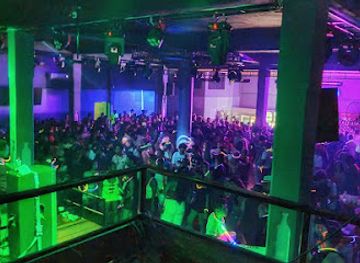
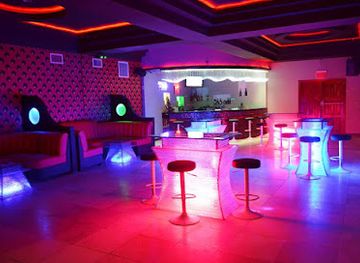
Cayo’s evening scene is centred on San Ignacio and Santa Elena rather than on a large nightclub circuit. Visitors will find relaxed bars, hotel lounges, casual restaurants and traditional Belizean pubs, with occasional live music and social events providing the main entertainment. A small number of venues cater to dancing or later nights, but schedules and opening arrangements can change, so local advice is more reliable than assuming a fixed nightlife district. Benque Viejo del Carmen has a more local, community-oriented evening character, while jungle lodges generally offer quiet drinks, dinner and opportunities to listen for nocturnal wildlife rather than a party atmosphere. Belizean beers, rum-based drinks and fruit juices are widely available, and some establishments showcase locally made products. Night travel in rural areas requires planning: arrange a taxi or return transfer and do not walk unfamiliar roads after dark. Evening life in Cayo is best understood as social and low-key, with conversation, food and music often more important than clubs.
-
Restaurant
The Guava Limb Restaurant & Café
Experience the vibrant flavors of Belize at The Guava Limb Restaurant & Café, where local ingredients meet international cuisine.
-
Grill
Tipsy Tuna
Experience the vibrant flavors of Belize in a stunning beachfront setting at Tipsy Tuna, the ultimate grill destination in Placencia.
-
Restaurant
Lola’s Restaurant and Bar
Discover the vibrant flavors of Belize at Lola's Restaurant and Bar in San Ignacio, where local ingredients meet international cuisine in a lively atmosphere.
-
Sports bar
Mike's Cue Club.Bar & Restaurant
Discover the lively atmosphere and delicious offerings of Mike's Cue Club, Belmopan's premier sports bar and restaurant.


Best nightclubs in Cayo District
Cayo’s evening scene is centred on San Ignacio and Santa Elena rather than on a large nightclub circuit. Visitors will find relaxed bars, hotel lounges, casual restaurants and traditional Belizean pubs, with occasional live music and social events providing the main entertainment. A small number of venues cater to dancing or later nights, but schedules and opening arrangements can change, so local advice is more reliable than assuming a fixed nightlife district. Benque Viejo del Carmen has a more local, community-oriented evening character, while jungle lodges generally offer quiet drinks, dinner and opportunities to listen for nocturnal wildlife rather than a party atmosphere. Belizean beers, rum-based drinks and fruit juices are widely available, and some establishments showcase locally made products. Night travel in rural areas requires planning: arrange a taxi or return transfer and do not walk unfamiliar roads after dark. Evening life in Cayo is best understood as social and low-key, with conversation, food and music often more important than clubs.
-
Lounge
Desire Lounge
Discover the vibrant nightlife and relaxed atmosphere at Desire Lounge, the perfect spot for cocktails and socializing in Belmopan.
-
Bar
Revolution Nightclub
Experience the vibrant nightlife of San Ignacio at Revolution Nightclub, where music, dance, and culture converge for an unforgettable evening.
-
Night club
Tequila Night Club
Discover the ultimate nightlife experience at Tequila Night Club in Red Creek, Belize, where vibrant music and a lively atmosphere await.
-
Night club
Club Next
Discover the vibrant nightlife at Club Next in San Ignacio, where fun, music, and unforgettable experiences await every visitor.


Best shops in Cayo District
Shopping in Cayo District is most varied in San Ignacio and Santa Elena, where market stalls, small grocers, craft outlets and independent shops serve local residents as well as visitors. The market area is a practical place to look for fruit, vegetables, prepared snacks, spices and everyday Belizean produce, while craft sellers may offer Maya-inspired textiles, carved items, baskets, jewellery and pottery. Visitors should ask about provenance and avoid buying ancient-looking artefacts or anything that may have been removed from an archaeological site. Bottles of local pepper sauces, cacao products, coffee, rum and other food specialities make more useful souvenirs than fragile forest or cave materials. Benque Viejo del Carmen has a more local shopping character and is also relevant for travellers continuing towards the Guatemalan border. Rural lodges and community enterprises sometimes sell handmade goods or farm products, but availability varies. Cayo is not a luxury-shopping destination; its appeal lies in informal markets, practical high streets and locally made items connected to Belizean foodways and craft traditions.
-
National reserve
Cahal Pech Archaeological Reserve
Experience the majesty of the ancient Maya civilization at Cahal Pech Archaeological Reserve in San Ignacio, Belize.
-
Supermarket
New Flags Supermarket
Experience the vibrant culture of Belize at New Flags Supermarket, your go-to destination for local and international goods in Santa Elena.
-
Gift shop
Art Box - Belize Artisan Store & Cafe
Explore Art Box in Belmopan, where local artistry meets delightful coffee in a vibrant artisan store and café.
-
Grocery store
A&R
Experience the flavors of Belize at A&R, your go-to grocery store in Santa Elena for local produce and international goods.


Get your free copy of our complete guide to Cayo District, delivered straight to you.
Everything on this page, from attractions and restaurants to essentials and local phrases, in one PDF you can read offline, print or share.
Already have an account? Sign in
Your Cayo District guide is ready.
We'll send it to · Not you? Sign out

Getting your guide ready…
We are putting together a fresh copy of the Cayo District guide. This can take up to a minute.
This can take a few moments. If your browser asks, choose Allow so the download can start. You'll find the guide in your Downloads folder.
Nothing happened? Download it again
Sorry, the guide is taking longer than usual. Please try again in a minute, or get it by email instead.
Cayo District essentials
Currency and Payment
Safety
Emergency Situations
Do's and Don'ts
Local Tips
From Eve
Local phrases worth knowing
You don't need to get them perfect. A few words go a long way, and locals appreciate the effort.
Basics
| English | Local | Say it |
|---|---|---|
| Hello | Hello | [Hello] |
| Goodbye | Goodbye | [Goodbye] |
| Yes | Yes | [Yes] |
| No | No | [No] |
| Please/You're welcome | Please/You’re welcome | [Please/You’re welcome] |
| Thank you | Thank you | [Thank you] |
| Excuse me/Sorry | Excuse me/Sorry | [Excuse me/Sorry] |
| How are you? | How you dih? | [How you dih?] |
| Fine. And you? | I good. An you? | [I good. An you?] |
| Do you speak English? | You speak English? | [You speak English?] |
| I don't understand | I noh understand | [I noh understand] |
Eating & Drinking
| English | Local | Say it |
|---|---|---|
| I'd like to see the menu, please | I wah si di menu, please | [I wah si di menu, please] |
| I don't eat meat | I noh eat meat | [I noh eat meat] |
| Cheers! | Cheers! | [Cheers!] |
| I would like to pay, please | I wah pay, please | [I wah pay, please] |
Emergencies
| English | Local | Say it |
|---|---|---|
| Help! | Help! | [Help!] |
| Go away! | Go way! | [Go way!] |
| Call the Police! | Call di Police! | [Call di Police!] |
| Call a doctor! | Call a doctor! | [Call a doctor!] |
| I'm lost | I lost | [I lost] |
| I'm ill | I sick | [I sick] |
Shopping
| English | Local | Say it |
|---|---|---|
| I'd like to buy... | I wah buy... | [I wah buy...] |
| I'm just looking | I jus looking | [I jus looking] |
| How much is it? | How much dis cost? | [How much dis cost?] |
| That's too expensive | Dat too expensive | [Dat too expensive] |
| Can you lower the price? | You can lower di price? | [You can lower di price?] |
Time & Numbers
| English | Local | Say it |
|---|---|---|
| What time is it? | Wah time it? | [Wah time it?] |
| It's one o'clock | It one o'clock | [It one o'clock] |
| Half past (10) | Half past ten | [Half past ten] |
| Morning | Morning | [Morning] |
| Afternoon | Afternoon | [Afternoon] |
| Evening | Evening | [Evening] |
| Yesterday | Yesterday | [Yesterday] |
| Today | Today | [Today] |
| Tomorrow | Tomorrow | [Tomorrow] |
| 1 | 1 | [1] |
| 2 | 2 | [2] |
| 3 | 3 | [3] |
| 4 | 4 | [4] |
| 5 | 5 | [5] |
| 6 | 6 | [6] |
| 7 | 7 | [7] |
| 8 | 8 | [8] |
| 9 | 9 | [9] |
| 10 | 10 | [10] |
Transport & Directions
| English | Local | Say it |
|---|---|---|
| Where's a/the...? | Weh deh di...? | [Weh deh di...?] |
| What's the address? | Wah di address? | [Wah di address?] |
| Can you show me (on the map)? | You can show me (pan di map)? | [You can show me (pan di map)?] |
| When's the next (bus)? | When di next (bus)? | [When di next (bus)?] |
| A ticket (to ....) | A ticket (to ....) | [A ticket (to ....)] |
History of Cayo District
Early Maya Settlement and the Classic Period
The valleys and uplands of present-day Cayo District formed part of the ancient Maya lowland world for many centuries. Communities developed around agriculture, water sources and trade, leaving behind ceremonial platforms, plazas, carved monuments and residential areas. Cahal Pech, overlooking modern San Ignacio, was occupied over a long period, while Xunantunich and Caracol grew into major centres during the Classic period. Their architecture and inscriptions show that western Belize was connected to powerful neighbouring kingdoms rather than existing as an isolated frontier.
Caracol and Regional Maya Power
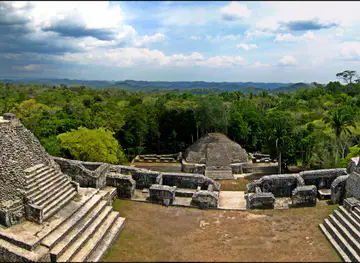
Caracol, deep in the Chiquibul Forest, became one of the most influential Maya cities in the region. Its rulers controlled a substantial territory and participated in political and military rivalries involving sites in present-day Guatemala and Mexico. Monumental buildings, causeways, reservoirs and carved stelae indicate a densely organised society with sophisticated engineering and ceremonial life. Although the ancient city declined over time, its remains represent one of the most significant archaeological legacies in Belize and continue to shape understanding of Maya history.
Spanish Missions and Colonial Frontier
Spanish missionaries and colonial authorities entered the interior from the sixteenth century onwards, encountering established Maya communities and difficult forest terrain. Their influence was uneven, and the region remained less intensively colonised than parts of the coast. The Mopan and other Maya peoples maintained deep connections with the landscape, while the frontier character of western Belize persisted. Later settlement patterns, place names and cultural traditions reflect overlapping Maya, Spanish-speaking and British colonial histories rather than a single uninterrupted colonial system.
Mahogany, Chicle and the Forest Economy
During the nineteenth and early twentieth centuries, forests in western Belize were drawn into commercial extraction, particularly for mahogany and chicle. Logging camps, river transport and seasonal labour linked the interior to the wider economy of British Honduras, as Belize was then known. Chicle, collected for chewing gum, also became an important forest product before synthetic materials reduced its commercial importance. These industries altered access routes and settlement patterns while leaving a complicated legacy of employment, exploitation and environmental change.
New Communities and Agricultural Development
Cayo’s modern population was shaped by the movement and settlement of several communities, including Maya and Mestizo families, English-speaking Belizeans and Mennonite groups. Agriculture expanded in parts of the district, with cattle, citrus and other crops contributing to the local economy. San Ignacio and Santa Elena developed as commercial and administrative centres, while Benque Viejo del Carmen grew near the Guatemalan border. The result is a region with distinct local identities and a cultural landscape that cannot be reduced to its archaeological heritage.
Independence, Conservation and Heritage Tourism
Belize became independent from the United Kingdom in 1981, and Cayo subsequently became increasingly important to national tourism and conservation. Archaeological research and restoration brought sites such as Xunantunich and Caracol to wider attention, while protected areas including the Mountain Pine Ridge Forest Reserve and Chiquibul Forest helped safeguard forests, watersheds and wildlife. Adventure tourism around caves, rivers and trails has grown alongside heritage travel, making Cayo a major inland destination while also highlighting the need for careful management of sensitive sites.
Cayo District in Photos
Browse through our photo collection highlighting the charm and character of the destination.
Neighbouring regions of Cayo District
The closest regions to Cayo District, if you have time for more than one.
-

-

-

-

-


Swipe for more regions
Explore more
Explore more of Belize
Discover Belize: A Caribbean paradise known for its stunning barrier reef, rich cultural heritage, and eco-friendly adventures in lush rainforests and pristine waters.
Explore Belize