

Free Northern Belize Travel Guide & Mobile App
Explore Northern Belize with free travel guides. Discover regional history, expert tips, proposed trips, and audio guides on web or mobile app.


Northern Belize combines Maya archaeological sites, New River wildlife, Corozal Bay and the distinctive culture of Belize’s northern borderlands.
Read more about Northern Belize
When is the best time to visit Northern Belize?
Best: December–February · 28–29°C| Month | High (°C) | Rainfall (mm) |
|---|---|---|
| January (best) | 28 | 50 |
| February (best) | 29 | 40 |
| March | 31 | 40 |
| April | 32 | 60 |
| May | 33 | 100 |
| June | 32 | 160 |
| July | 32 | 150 |
| August | 32 | 170 |
| September | 32 | 190 |
| October | 31 | 130 |
| November | 29 | 110 |
| December (best) | 28 | 60 |
Getting to and around Northern Belize
How to get there
Transportation
Top city travel guides in Northern Belize
The cities of Northern Belize, and the easiest places to base yourself.
-

-

-

-

-

-


Swipe for more cities
Destinations in Northern Belize
Resorts, valleys and scenic spots worth a trip of their own.
-

-

-


Swipe for more destinations
Best attractions in Northern Belize
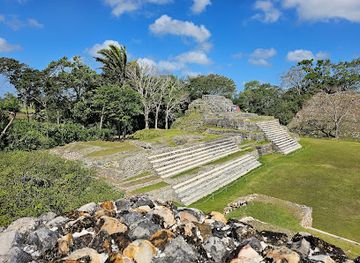
Northern Belize’s attractions combine Maya archaeology, river travel, wetlands and living agricultural landscapes. Lamanai is the region’s leading archaeological destination, with monumental temples, plazas and carved features set amid forest beside the New River; guided boat journeys to the site add a strong wildlife and landscape dimension. Near Corozal Town, Santa Rita offers a more compact archaeological visit on a hill overlooking the bay, while Cerros is reached by boat and is distinguished by its coastal setting and large sculpted masks. New River excursions provide opportunities to observe birds, iguanas, howler monkeys and crocodiles from the water, although wildlife sightings are never guaranteed. Corozal’s waterfront and surrounding bay offer a slower contrast to the inland river country, while nature reserves and wetlands in the district reward visitors interested in birdwatching. Orange Walk’s surrounding countryside reveals the importance of sugar cultivation, and visits to rural settlements can add context to the region’s agricultural and cultural diversity. The attraction landscape is dispersed, so guided transport and sensible planning are often more useful than attempting to see every site independently.
-
Tourist attraction
Zona Libre de Belice 2023
Experience the best of Belize at Zona Libre: a vibrant shopping destination blending local culture, unique crafts, and delicious cuisine in a tropical paradise.
-
Grill
Secret Beach Belize
Explore Belize's hidden gem, Secret Beach, a tranquil haven of crystal-clear waters and exceptional local cuisine on Ambergris Caye.
-
Historical landmark
Altun Ha
Explore Altun Ha, a captivating historical landmark in Belize, where ancient Maya civilization meets breathtaking natural beauty.
-
Archaeological site
Zona Arqueológica de Kohunlich
Discover the rich heritage of the ancient Maya at Kohunlich, an archaeological site filled with stunning ruins and lush jungle surroundings.


Best landmarks in Northern Belize
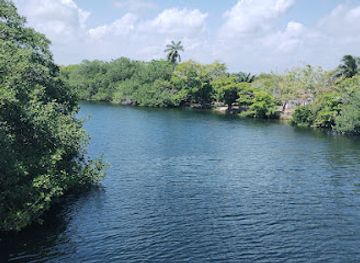
Lamanai’s High Temple and other major structures form Northern Belize’s most recognisable archaeological skyline, rising above forest and wetland beside the New River. At Cerros, monumental architecture and the surviving sculpted masks create a powerful landmark on the shore of Chetumal Bay, visible within a landscape that once connected ceremonial life to coastal trade. Santa Rita’s elevated ruins near Corozal Town are associated with an important Maya settlement overlooking the bay and remain a notable point of reference in the modern town’s surroundings. The New River itself is a defining natural landmark, winding through reeds, forest and lowland habitats on the route towards Lamanai. Corozal Bay and the Rio Hondo also give Northern Belize much of its geographical identity: one is an open coastal waterway, while the other forms the international boundary with Mexico. Together, these sites express the region’s distinctive combination of Maya monumental heritage, waterways and borderland geography rather than a concentration of grand colonial architecture.
-
Archaeological site
Xunantunich Mayan Ruins
Discover the ancient wonders of Xunantunich Mayan Ruins in Belize, a historical gem that offers breathtaking views and a rich cultural experience.
-
Grill
Secret Beach Belize
Experience the tranquil beauty of Secret Beach in Belize, a hidden paradise with stunning views, delicious grill cuisine, and a relaxed atmosphere.
-
Historical landmark
Altun Ha
Explore Altun Ha, an ancient Maya city in Belize, where history, architecture, and nature blend into an unforgettable experience.
-
Cruise terminal
Fort Street Tourism Village
Experience the vibrant culture and unique shopping at Fort Street Tourism Village, your gateway to the wonders of Belize.

Explore Northern Belize on the map
Plan your trip on one map. See where the top cities, national parks and sights are, and book hotels and experiences in a few clicks.
Best hotels in Northern Belize
Best restaurants in Northern Belize
Northern Belize’s food reflects the meeting of Belizean, Mestizo, Maya and Mexican-influenced traditions. In Corozal and Orange Walk, visitors commonly encounter rice and beans, stewed meats, grilled chicken, fresh tortillas, tamales, escabeche and other dishes associated with the region’s Mestizo communities. Local eateries and market stalls are often the best places to look for inexpensive breakfasts, soups, pastries and freshly prepared snacks, while waterfront restaurants in Corozal focus on relaxed dining rather than a formal restaurant district. Orange Walk’s position in an agricultural area means that produce, poultry and locally prepared foods are important to everyday dining. Menus may also include seafood from the coast and wider Belizean favourites, though the northern mainland is not solely a seafood destination. Cafés, family-run restaurants, roadside stands and traditional diners dominate outside the principal towns, with larger hotels and lodges providing more international choices. Ask about ingredients and spice levels, and carry cash for smaller food businesses and markets.
-
Grill
Secret Beach Belize
Experience the serene beauty of Secret Beach in Belize – a hidden gem with pristine waters perfect for relaxation and adventure.
-
Central American
Elvi's Kitchen
Experience the authentic flavors of Central America at Elvi's Kitchen in San Pedro, where fresh seafood meets vibrant culture.
-
Grill
Palapa Bar and Grill
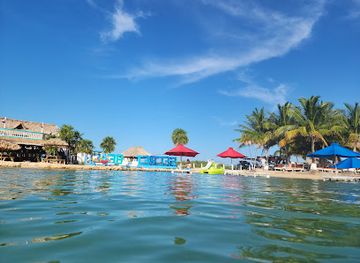
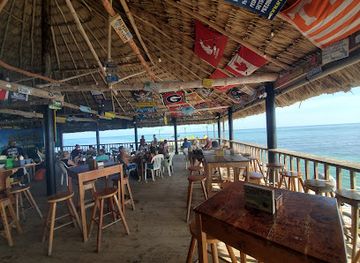
Discover the vibrant flavors and lively tunes at Palapa Bar and Grill - a perfect dining spot on San Pedro's scenic coastline.
-
Restaurant
The Guava Limb Restaurant & Café
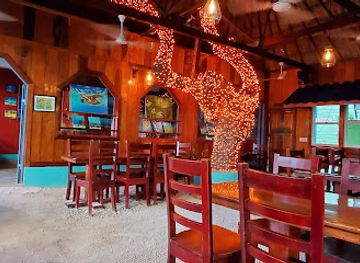
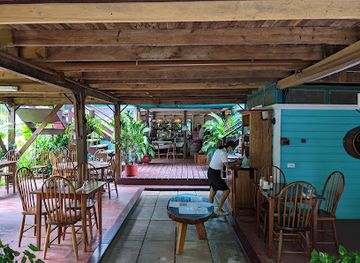
Experience the vibrant flavors of Belize at The Guava Limb Restaurant & Café in San Ignacio - a culinary haven for tourists.
Best bars in Northern Belize
Evenings in Northern Belize are generally sociable but low-key, centred on neighbourhood bars, restaurants, open-air seating and occasional live music rather than a large nightclub circuit. Orange Walk Town and Corozal Town have the broadest choice of places to eat and drink, while smaller settlements tend to close earlier and offer a more local, conversational atmosphere. Belizean beer, rum-based drinks and soft drinks are widely available, alongside Mexican-influenced beverages near the border. Some hotels and tour lodges provide a quieter evening setting after river excursions or archaeological visits. Nightlife can become busier around public holidays and local celebrations, but schedules and venues change, so ask accommodation staff for current information. Use a trusted taxi or arranged transfer at night, particularly when staying outside the town centres, and do not assume that rural attractions or restaurants remain open late.
-
Grill
Secret Beach Belize
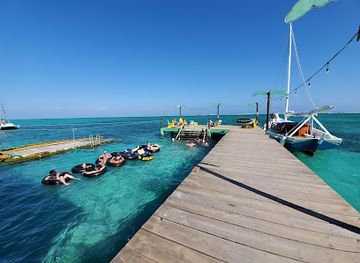
Experience the tranquility of Secret Beach Belize, a hidden paradise with stunning views, delicious grilled food, and a plethora of water activities.
-
Grill
Palapa Bar and Grill
Experience the vibrant flavors and lively atmosphere at Palapa Bar and Grill, a waterfront gem in San Pedro, Belize.
-
Grill
Tipsy Tuna
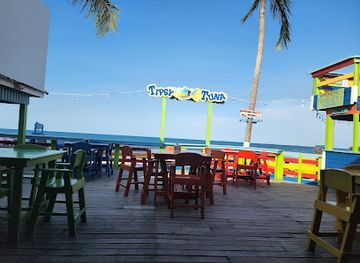
Discover the vibrant flavors and lively atmosphere of Tipsy Tuna, a beloved grill in Placencia, Belize, where every meal is a celebration.
-
Grill
Barefoot Beach Bar
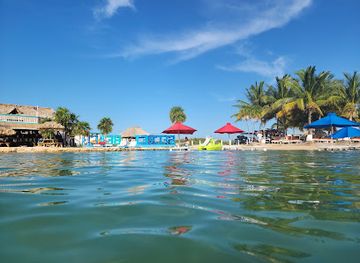
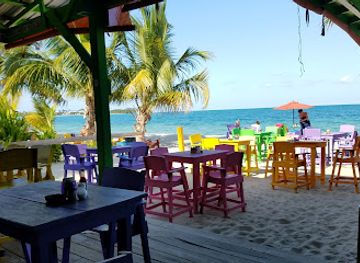
Experience the vibrant atmosphere and delicious Belizean cuisine at Barefoot Beach Bar, a must-visit grill on the shores of Placencia.
Best nightclubs in Northern Belize
Evenings in Northern Belize are generally sociable but low-key, centred on neighbourhood bars, restaurants, open-air seating and occasional live music rather than a large nightclub circuit. Orange Walk Town and Corozal Town have the broadest choice of places to eat and drink, while smaller settlements tend to close earlier and offer a more local, conversational atmosphere. Belizean beer, rum-based drinks and soft drinks are widely available, alongside Mexican-influenced beverages near the border. Some hotels and tour lodges provide a quieter evening setting after river excursions or archaeological visits. Nightlife can become busier around public holidays and local celebrations, but schedules and venues change, so ask accommodation staff for current information. Use a trusted taxi or arranged transfer at night, particularly when staying outside the town centres, and do not assume that rural attractions or restaurants remain open late.
-
Grill
Secret Beach Belize
Experience the tranquility of Secret Beach Belize, a hidden paradise on Ambergris Caye with stunning views, delicious cuisine, and vibrant marine life.
-
Grill
Palapa Bar and Grill
Palapa Bar and Grill: Savor delicious grilled dishes while enjoying live music and stunning ocean views in San Pedro, Belize.
-
Sports bar
Crocs Sunset Sports Bar
Discover Crocs Sunset Sports Bar in San Pedro—a lively sports bar featuring delicious food, refreshing drinks, and captivating live music for an unforgettable night out.
-
Restaurant
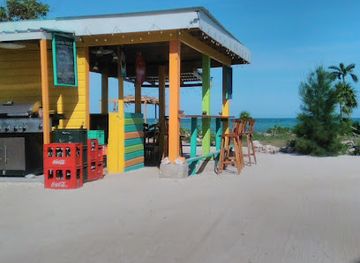
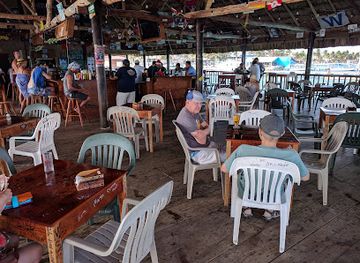
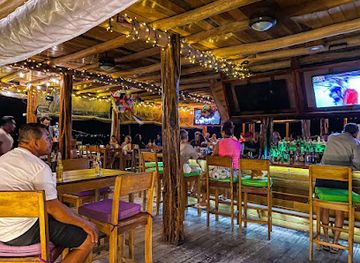
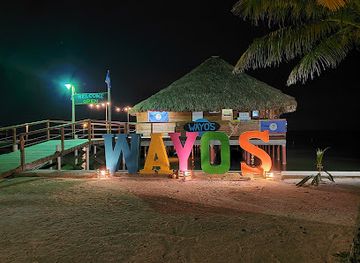
Wayo's Beach Bar
Experience the vibrant beach culture at Wayo's Beach Bar in San Pedro, Belize, where delicious food meets stunning ocean views in a lively atmosphere.
Best shops in Northern Belize
Shopping in Northern Belize is concentrated in the high streets, markets and small independent businesses of Corozal Town and Orange Walk Town. Visitors can find locally made food products, snacks, woven or carved crafts, clothing, books, household goods and souvenirs connected with Maya heritage, although retail choice is more practical and community-based than luxury-oriented. Corozal’s proximity to Mexico gives its commerce a clear border-town character, while Orange Walk serves a broad agricultural district and is useful for everyday supplies and locally produced foods. Market stalls and small shops may sell seasonal fruit, vegetables, tortillas, pastries and other provisions that convey more about local life than standard souvenir outlets. Look for handmade items through reputable sellers and ask about materials and place of production, particularly when buying crafts presented as Maya-inspired. Larger purchases and card transactions are more reliable in established shops; carry small amounts of cash for markets, roadside stands and independent vendors.
-
Department store
Mirab Department Store
Explore the vast selection of home goods, furniture, and more at Mirab Department Store, a premier shopping destination in Belize City.
-
Shopping mall
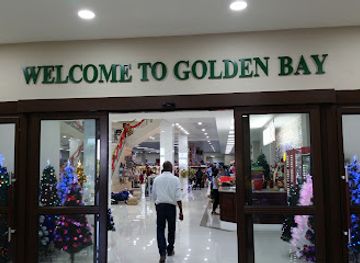
Golden Bay Store
Explore Golden Bay Store in Belize City for a unique shopping experience filled with local culture, delightful dining, and vibrant atmosphere.
-
Dive shop
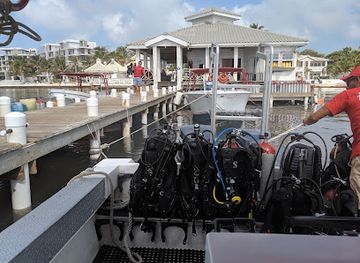
Belize Pro Dive Center
Explore the underwater wonders of Belize at Belize Pro Dive Center, your gateway to unforgettable diving adventures.
-
Shopping mall
Down Town Plaza
Experience the cultural heartbeat of Belize City at Down Town Plaza, a vibrant shopping mall filled with local shops, dining, and entertainment.

Get your free copy of our complete guide to Northern Belize, delivered straight to you.
Everything on this page, from attractions and restaurants to essentials and local phrases, in one PDF you can read offline, print or share.
Already have an account? Sign in
Your Northern Belize guide is ready.
We'll send it to · Not you? Sign out

Getting your guide ready…
We are putting together a fresh copy of the Northern Belize guide. This can take up to a minute.
This can take a few moments. If your browser asks, choose Allow so the download can start. You'll find the guide in your Downloads folder.
Nothing happened? Download it again
Sorry, the guide is taking longer than usual. Please try again in a minute, or get it by email instead.
Northern Belize essentials
Currency and Payment
Safety
Emergency Situations
Do's and Don'ts
Local Tips
From Eve
Local phrases worth knowing
You don't need to get them perfect. A few words go a long way, and locals appreciate the effort.
Basics
| English | Local | Say it |
|---|---|---|
| Hello | Béliz | [beh-leez] |
| Goodbye | Adiós | [ah-dee-ohs] |
| Yes | Sí | [see] |
| No | No | [noh] |
| Please/You're welcome | Por favor/De nada | [por fah-vor/de nah-dah] |
| Thank you | Gracias | [grah-syahs] |
| Excuse me/Sorry | Perdón | [per-dohn] |
| How are you? | ¿Cómo estás? | [koh-moh es-tahs] |
| Fine. And you? | Bien. ¿Y tú? | [byen. ee too] |
| Do you speak English? | ¿Hablas inglés? | [ah-blahs een-gles] |
| I don't understand | No entiendo | [noh en-tyen-doh] |
Eating & Drinking
| English | Local | Say it |
|---|---|---|
| I'd like to see the menu, please | Me gustaría ver el menú, por favor | [meh goos-tah-ree-ah vehr el meh-noo, por fah-vor] |
| I don't eat meat | No como carne | [noh koh-moh kar-neh] |
| Cheers! | ¡Salud! | [sah-lood] |
| I would like to pay, please | Me gustaría pagar, por favor | [meh goos-tah-ree-ah pah-gar, por fah-vor] |
Emergencies
| English | Local | Say it |
|---|---|---|
| Help! | ¡Ayuda! | [ah-yoo-dah] |
| Go away! | ¡Vete! | [veh-teh] |
| Call the Police! | ¡Llama a la policía! | [yah-mah ah lah poh-lee-see-ah] |
| Call a doctor! | ¡Llama a un doctor! | [yah-mah ah oon dok-tor] |
| I'm lost | Estoy perdido | [es-toy per-dee-doh] |
| I'm ill | Estoy enfermo | [es-toy en-fer-moh] |
Shopping
| English | Local | Say it |
|---|---|---|
| I'd like to buy... | Me gustaría comprar... | [meh goos-tah-ree-ah kom-prar] |
| I'm just looking | Solo estoy mirando | [soh-lo es-toy mee-ran-doh] |
| How much is it? | ¿Cuánto cuesta? | [kwahn-toh kwes-tah] |
| That's too expensive | Eso es muy caro | [eh-so es moo-ee kah-roh] |
| Can you lower the price? | ¿Puedes bajar el precio? | [pweh-des bah-har el preh-syo] |
Time & Numbers
| English | Local | Say it |
|---|---|---|
| What time is it? | ¿Qué hora es? | [keh oh-rah es] |
| It's one o'clock | Es la una | [es lah oo-nah] |
| Half past (10) | Y media (10) | [ee meh-dee-ah (diez)] |
| Morning | Mañana | [mah-nyah-nah] |
| Afternoon | Tarde | [tar-deh] |
| Evening | Noche | [noh-cheh] |
| Yesterday | Ayer | [ah-yer] |
| Today | Hoy | [oy] |
| Tomorrow | Mañana | [mah-nyah-nah] |
| 1 | Uno | [oo-noh] |
| 2 | Dos | [dohs] |
| 3 | Tres | [tres] |
| 4 | Cuatro | [kwah-tro] |
| 5 | Cinco | [seen-koh] |
| 6 | Seis | [says] |
| 7 | Siete | [syay-teh] |
| 8 | Ocho | [oh-choh] |
| 9 | Nueve | [nweh-beh] |
| 10 | Diez | [dyehs] |
Transport & Directions
| English | Local | Say it |
|---|---|---|
| Where's a/the...? | ¿Dónde está un/una...? | [dohn-deh es-tah oon/oo-nah] |
| What's the address? | ¿Cuál es la dirección? | [kwahl es lah dee-rek-syohn] |
| Can you show me (on the map)? | ¿Puedes mostrarme (en el mapa)? | [pweh-des mos-trar-meh (en el mah-pah)] |
| When's the next (bus)? | ¿Cuándo es el próximo (autobús)? | [kwahn-doh es el prohk-see-moh (ow-toh-boos)] |
| A ticket (to ....) | Un boleto (a....) | [oon bo-leh-toh (ah....)] |
History of Northern Belize
Early Maya Settlement and Trade
Northern Belize was occupied by Maya communities for many centuries before European contact. Its rivers, wetlands and coastal waters supported agriculture, fishing and trade, while sites such as Cerros, Santa Rita and Lamanai developed ceremonial and political importance. Lamanai was occupied for an exceptionally long period, from the Preclassic era into the centuries after Spanish arrival. The region’s location beside the Caribbean coast and near the Yucatán Peninsula connected it to wider networks of exchange, helping explain the scale and variety of its archaeological remains.
Cerros and the Rise of Regional Centres
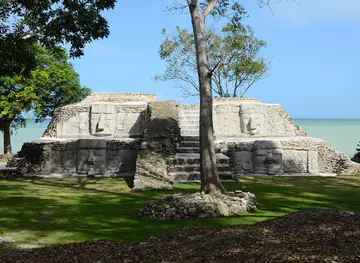
Cerros, on the shore of Chetumal Bay, flourished particularly during the Late Preclassic period, when Maya rulers commissioned monumental architecture and distinctive sculpted masks associated with the rising sun. Its coastal position linked ceremonial life with maritime and inland routes. Although the settlement later declined as a major centre, its plazas and surviving architectural decoration provide important evidence of early Maya political symbolism in northern Belize. The site’s location across the bay from Corozal also demonstrates how closely modern towns and ancient settlements occupy the same regional landscape.
Spanish Contact and Colonial Borderlands
Spanish expeditions and missionaries entered the wider Yucatán and Belize region from the sixteenth century, but sustained colonial control over northern Belize remained limited. Maya communities continued to inhabit and manage the area, while the Rio Hondo and Chetumal Bay became part of a shifting frontier between Spanish territories and the British settlement that developed farther south and east. The legacy of this period is visible in the region’s later cultural and linguistic connections with Mexico, as well as in the complex process through which British Honduras acquired its modern boundaries.
British Honduras, Logging and River Commerce
During the eighteenth and nineteenth centuries, British commercial interests in the wider colony focused heavily on timber, especially logwood and mahogany. Northern waterways and coastal routes helped move forest products, provisions and people, although the region was never simply a British-controlled commercial space. Maya and Mestizo communities, traders and workers shaped the borderlands alongside colonial officials and merchants. Corozal’s position near the Mexican frontier gave it particular importance as a place of exchange, migration and political tension during the changing history of the Yucatán Peninsula.
The Caste War and Mestizo Migration
The Caste War of Yucatán, which began in 1847, had a major effect on the population and culture of northern Belize. Maya resistance in Mexico drove movements of people across the Rio Hondo, and Mestizo communities became established in places including Corozal and Orange Walk. These migrations influenced language, food, farming and settlement patterns, adding enduring Mexican and Yucatec Maya elements to the region’s social character. The border therefore reflects not only a political division but also a history of movement and interlinked communities.
Sugar and the Modern Northern Economy
Sugar became a defining industry in northern Belize during the twentieth century, particularly around Orange Walk and the northern lowlands. Cane cultivation, processing and related transport reshaped the countryside and provided employment while linking local production to national export markets. Agriculture remains important, alongside commerce, tourism and cross-border trade. Today, the remains of Maya cities, the working agricultural landscape and the towns that grew around modern economic activity together reveal a region transformed by both ancient settlement and recent industry.
Northern Belize in Photos
Browse through our photo collection highlighting the charm and character of the destination.
Neighbouring regions of Northern Belize
The closest regions to Northern Belize, if you have time for more than one.
-

-
-

-

-


Swipe for more regions
Explore more
Explore more of Belize
Discover Belize: A Caribbean paradise known for its stunning barrier reef, rich cultural heritage, and eco-friendly adventures in lush rainforests and pristine waters.
Explore Belize