

Free Samdrup Jongkhar Travel Guide & Mobile App
Explore Samdrup Jongkhar with free travel guides. Discover regional history, expert tips, proposed trips, and audio guides on web or mobile app.


Samdrup Jongkhar combines Bhutanese border culture, subtropical forests, Dewathang history and access to the country’s eastern landscapes.
Read more about Samdrup Jongkhar
When is the best time to visit Samdrup Jongkhar?
Best: February–March, November · 21–24°C| Month | High (°C) | Rainfall (mm) |
|---|---|---|
| January | 20 | 10 |
| February (best) | 21 | 20 |
| March (best) | 24 | 30 |
| April | 28 | 50 |
| May | 31 | 80 |
| June | 33 | 150 |
| July | 33 | 200 |
| August | 32 | 200 |
| September | 31 | 150 |
| October | 28 | 80 |
| November (best) | 24 | 30 |
| December | 20 | 20 |
Getting to and around Samdrup Jongkhar
How to get there
Transportation
Top city travel guides in Samdrup Jongkhar
The cities of Samdrup Jongkhar, and the easiest places to base yourself.

Swipe for more cities
Destinations in Samdrup Jongkhar
Resorts, valleys and scenic spots worth a trip of their own.
-

-


Swipe for more destinations
Best attractions in Samdrup Jongkhar
Samdrup Jongkhar’s attractions are shaped by its subtropical environment, frontier position and access to eastern Bhutan rather than by a dense collection of monumental sights. Samdrup Jongkhar town offers a useful introduction through its market streets, Bhutanese public buildings and border-town atmosphere, while nearby Dewathang provides historical context connected with the 1865 battle and Bhutan’s modern eastern development. The district’s principal natural attractions lie in its forested south and foothills. Jomotsangkha Wildlife Sanctuary protects habitats that differ significantly from Bhutan’s high mountain landscapes, and parts of the wider Khaling forest environment offer opportunities for birdwatching and nature observation when access is permitted. These are conservation landscapes, not conventional safari parks, so visitors should travel with realistic expectations and local guidance. Rural roads reveal changing vegetation, agricultural communities and views across steeply folded terrain; some journeys are rewarding for the landscape alone. Visitors interested in culture can look for local monasteries, village temples and community life, although access and photography customs vary. The district is also a practical base for understanding the transition between the Indian plains and Bhutan’s eastern interior, with longer excursions best planned around road conditions and permits.
-
Tourist attraction
Chowki Picnic Spot
Experience the serene beauty of Chowki Picnic Spot in Manas National Park, a perfect retreat for nature lovers and adventure seekers alike.
-
Market
Samdrup Jongkhar Market
Discover the essence of Bhutan at Samdrup Jongkhar Market, where vibrant culture, fresh produce, and handcrafted goods come together in a lively atmosphere.
-
Border crossing station
Indo-Bhutan Gate, Samdrup Jongkhar.
Explore the Indo-Bhutan Gate in Samdrup Jongkhar, a vibrant symbol of friendship and cultural exchange between India and Bhutan, surrounded by stunning landscapes.
-
Buddhist temple
TEMPLE (Mani Dunkhor)
Discover the spiritual heart of Bhutan at Mani Dunkhor Temple, a serene Buddhist sanctuary in Samdrup Jongkhar, perfect for reflection and cultural immersion.


Best landmarks in Samdrup Jongkhar
The most historically significant landmark in Samdrup Jongkhar is the Dewathang area, associated with the Bhutanese victory over British forces during the Duar War in 1865. Its importance is political as well as military: the conflict led to the Treaty of Sinchula and permanently altered Bhutan’s southern frontier. Samdrup Jongkhar town itself is a recognisable modern landmark of Bhutan’s eastern border, defined by its position opposite Assam and by the roads, customs facilities and commercial buildings that connect the country with India. The town’s setting also makes the transition from the plains to the Bhutanese foothills immediately visible. In the wider district, the forested terrain of Jomotsangkha Wildlife Sanctuary forms a natural landmark rather than a single monument, representing one of Bhutan’s important subtropical conservation areas. The road north from the border reveals another defining feature of the district: settlements and cultivated slopes giving way to dense forest and folded hills. Local monasteries, temples and traditional-style public buildings add smaller cultural landmarks, but access can be dependent on local custom, religious activity and road conditions.
-
Buddhist temple
Punakha Dzong སྤུ་ན་ཁ་རྫོང་།
Discover the exquisite beauty and rich history of Punakha Dzong, Bhutan's iconic fortress-monastery at the confluence of two rivers.
-
Bridge
Punakha Suspension Bridge
Discover breathtaking views and cultural heritage at the Punakha Suspension Bridge, Bhutan's longest bridge connecting nature and tradition.
-
Market
Samdrup Jongkhar Market
Experience the vibrant culture and local flavors at Samdrup Jongkhar Market, a must-visit destination for an authentic Bhutanese adventure.
-
Tourist attraction
Phobjikha Valley
Discover the tranquility and scenic beauty of Phobjikha Valley, a haven for nature lovers and cultural enthusiasts in Bhutan.

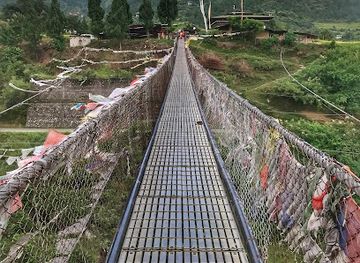


Explore Samdrup Jongkhar on the map
Plan your trip on one map. See where the top cities, national parks and sights are, and book hotels and experiences in a few clicks.
Best hotels in Samdrup Jongkhar
Best restaurants in Samdrup Jongkhar
Dining in Samdrup Jongkhar reflects both Bhutanese traditions and the district’s close relationship with Assam and the wider Indian plains. Local restaurants and hotel kitchens commonly serve rice with chilli-based dishes, vegetables, lentils, noodles and meat preparations, while southern Bhutan’s warmer climate supports produce and flavours that feel different from the high valleys. Ema datshi, the national chilli-and-cheese dish, is widely encountered, though recipes vary from kitchen to kitchen. Border-town eateries may also offer Indian and Assamese-influenced food, making the town more varied than a remote mountain settlement. Simple restaurants, tea shops and market stalls are generally more useful for experiencing everyday food culture than seeking formal dining. Travellers should ask about spice levels and keep dietary requirements clear, as menus may be limited outside the main town. Packaged snacks and local produce are available through markets, while hotel dining is the more predictable option in smaller settlements or when travelling towards forest areas.
-
Market
Samdrup Jongkhar Market
Explore Samdrup Jongkhar Market: A vibrant marketplace showcasing Bhutanese culture through food, crafts, and local interaction.
-
 Hotel
Tashi Gasel Lodge
Discover tranquility and authentic Bhutanese hospitality at Tashi Gasel Lodge – your gateway to Eastern Bhutan's natural beauty.
-
Hotel
Druk Mountain Hotel
Discover warmth and comfort at Druk Mountain Hotel in Samdrup Jongkhar—your perfect retreat in Bhutan.
-
Bed & breakfast
YOEZER HOTEL(swimming pool)
Discover comfort and authentic Bhutanese cuisine at YOEZER HOTEL, featuring a refreshing swimming pool in scenic Samdrup Jongkhar.


Best bars in Samdrup Jongkhar
Samdrup Jongkhar has a modest evening scene centred on restaurants, hotel lounges, local bars and Bhutanese social venues rather than a large nightclub circuit. The border town is livelier than rural parts of the district, with activity shaped by commerce, transport arrivals and the working week. Dewathang and smaller settlements generally offer quieter evenings, where conversation, tea, food and occasional local music are more typical than late-night entertainment. Some establishments serve beer and spirits, but drinking is not necessary to engage with the district’s culture, and visitors should observe Bhutanese laws and venue rules. Live performances and celebrations may occur during local or national occasions, although dates and arrangements can change. Because transport options become limited after dark outside the town, plan a safe return before going out and avoid assuming that rural restaurants or bars remain open late.
-
Market
Samdrup Jongkhar Market
Discover the vibrant colors, flavors, and cultural richness of Samdrup Jongkhar Market, a must-visit destination for every traveler in Bhutan.
-
Hotel
Tashi Gasel Lodge
Experience the serene beauty of Eastern Bhutan at Tashi Gasel Lodge, your peaceful retreat surrounded by nature and culture.
-
Bar
Mojo Park
Experience Thimphu's vibrant nightlife at Mojo Park, where local culture, live music, and delicious cuisine come together in a lively atmosphere.
-
Grocery store
Samdrup jongkhar town
Experience the vibrant culture and stunning landscapes of Samdrup Jongkhar Town, a gateway to Bhutan's unique heritage and natural beauty.


Best nightclubs in Samdrup Jongkhar
Samdrup Jongkhar has a modest evening scene centred on restaurants, hotel lounges, local bars and Bhutanese social venues rather than a large nightclub circuit. The border town is livelier than rural parts of the district, with activity shaped by commerce, transport arrivals and the working week. Dewathang and smaller settlements generally offer quieter evenings, where conversation, tea, food and occasional local music are more typical than late-night entertainment. Some establishments serve beer and spirits, but drinking is not necessary to engage with the district’s culture, and visitors should observe Bhutanese laws and venue rules. Live performances and celebrations may occur during local or national occasions, although dates and arrangements can change. Because transport options become limited after dark outside the town, plan a safe return before going out and avoid assuming that rural restaurants or bars remain open late.
-
Night club
Viva City
Experience the vibrant nightlife of Thimphu at Viva City, where music, dance, and local culture come together for an unforgettable evening.
-
Night club
Space 34 DOS
Discover the electric nightlife of Thimphu at Space 34 DOS, where music and dance create an unforgettable experience.
-
Night club
Zumthruel Karaoke
Experience the vibrant nightlife at Zumthruel Karaoke in Thimphu, where music, fun, and friendship come together for an unforgettable evening.
-
Night club
Charo Zomsa Karaoke Pub
Discover the lively Charo Zomsa Karaoke Pub in Samdrup Jongkhar, where music, fun, and unforgettable nights await every traveler.


Best shops in Samdrup Jongkhar
Shopping in Samdrup Jongkhar is concentrated in the border town, where markets and small commercial streets serve both local residents and cross-border trade. Visitors can find Bhutanese household goods, textiles, handicrafts, packaged foods and everyday provisions, but the selection is more practical than that of Bhutan’s major tourist centres. Small shops may stock woven products, prayer items, religious crafts and locally produced foods, although quality and availability vary. The market is also a useful place to observe the district’s blended commercial geography, with goods from Bhutan and India circulating alongside one another. Dewathang offers a smaller and quieter shopping experience, while rural settlements have limited retail options. When buying religious objects or antiques, ask about provenance and export restrictions rather than assuming that an attractive item can legally leave the country. Regional snacks, tea, woven goods and modest handicrafts make more responsible souvenirs than products made from protected plants or wildlife materials.
-
Market
Samdrup Jongkhar Market
Discover the rich culture of Bhutan at Samdrup Jongkhar Market, a lively hub of local commerce and community spirit.
-
Grocery store
Samdrup jongkhar town
Explore the vibrant market and rich cultural heritage of Samdrup Jongkhar, Bhutan's gateway to the east.
-
Bakery
Bhai Bakery
Discover the irresistible treats at Bhai Bakery in Samdrup Jongkhar, where every bite is a taste of local tradition and flavor.
-
General store
MOTH & COMPANY
Explore local culture and essentials at Moth & Company, Sashipur's beloved general store with a unique selection of goods.


Get your free copy of our complete guide to Samdrup Jongkhar, delivered straight to you.
Everything on this page, from attractions and restaurants to essentials and local phrases, in one PDF you can read offline, print or share.
Already have an account? Sign in
Your Samdrup Jongkhar guide is ready.
We'll send it to · Not you? Sign out

Getting your guide ready…
We are putting together a fresh copy of the Samdrup Jongkhar guide. This can take up to a minute.
This can take a few moments. If your browser asks, choose Allow so the download can start. You'll find the guide in your Downloads folder.
Nothing happened? Download it again
Sorry, the guide is taking longer than usual. Please try again in a minute, or get it by email instead.
Samdrup Jongkhar essentials
Currency and Payment
Safety
Emergency Situations
Do's and Don'ts
Local Tips
History of Samdrup Jongkhar
Early Himalayan and Duar Landscapes
The southern foothills of present-day Samdrup Jongkhar formed part of the wider Duars, a belt of fertile lowland and forest at the foot of the Himalaya. Communities in the region maintained connections with the Assam plains as well as with Bhutan’s interior valleys. Movement followed seasonal routes through forests and foothills, while control of the southern passes and revenue-producing lowlands was politically important. The landscape’s subtropical ecology and access to India have continued to distinguish this district from Bhutan’s higher, colder regions.
Bhutanese Consolidation in the East
During the formation and consolidation of the Bhutanese state, eastern valleys and foothill routes were brought into a political and religious system centred on local dzongs, monasteries and regional leaders. Authority was often exercised through a combination of administration, taxation and religious institutions rather than through dense settlement. Samdrup Jongkhar’s modern boundaries are more recent, but the district’s communities reflect these older links between southern trade routes, eastern Bhutanese valleys and the wider Himalayan cultural sphere.
The Duar War and the Battle of Dewathang, 1864–1865
The Anglo-Bhutan War arose from disputes over the Bhutanese Duars and British attempts to control the southern foothills. British forces occupied several areas, but Bhutanese forces won a notable victory at Dewathang in 1865. The subsequent Treaty of Sinchula required Bhutan to cede the Bengal and Assam Duars while receiving an annual subsidy from British India. The conflict reshaped Bhutan’s southern frontier and gave Dewathang an enduring place in the country’s political and military history.
Trade and the Southern Frontier
After the nineteenth-century settlement, the southern border remained important for commerce, movement and contact with the plains. The foothill routes linked Bhutanese agricultural communities with markets in Assam, where goods, labour and information circulated across the frontier. Samdrup Jongkhar’s later rise as an administrative and commercial centre grew from this geography. Its character remains closely connected with border exchange, even though modern customs, immigration controls and national regulations have formalised movement that was once more fluid.
Roads and Modern Administrative Development
Bhutan’s twentieth-century modernisation brought roads, schools, public administration and new market settlements to the east and south. Samdrup Jongkhar became increasingly important as a road-linked gateway to eastern Bhutan and as a centre for public services. Dewathang also developed as a planned settlement rather than simply an old village. These changes reduced the district’s isolation while leaving its terrain a major influence on travel, construction, settlement patterns and access to remote communities.
Protected Forests and Conservation
The subtropical forests around Samdrup Jongkhar became increasingly important within Bhutan’s modern conservation system. Jomotsangkha Wildlife Sanctuary protects a distinctive southern habitat, while Khaling Wildlife Sanctuary reaches into the district’s broader eastern forest environment. Conservation here reflects Bhutan’s effort to retain connected ecosystems across steep transitions from the Indian plains to Himalayan uplands. Protected-area management also affects roads, settlement expansion and visitor access, making environmental stewardship part of the district’s contemporary history.
The Border Town in Contemporary Bhutan
In recent decades Samdrup Jongkhar has developed as a significant eastern entry point, market centre and service town. Its role has expanded alongside improvements in roads, education, health services and cross-border trade. The town’s contemporary identity combines Bhutanese national institutions with the practical energy of a frontier settlement. At the same time, the district faces the challenges common to remote mountainous regions: maintaining transport links, supporting dispersed communities and balancing economic activity with the protection of tropical forests.
Samdrup Jongkhar in Photos
Browse through our photo collection highlighting the charm and character of the destination.
Neighbouring regions of Samdrup Jongkhar
The closest regions to Samdrup Jongkhar, if you have time for more than one.
-
-

-

-

-


Swipe for more regions
Explore more

Explore more of Bhutan
Experience the enchantment of Bhutan, a Himalayan paradise where tradition meets tranquility and Gross National Happiness reigns supreme.
Explore Bhutan