

Free Kgalagadi District Travel Guide & Mobile App
Explore Kgalagadi District with free travel guides. Discover regional history, expert tips, proposed trips, and audio guides on web or mobile app.


Explore Kgalagadi District for red Kalahari dunes, desert wildlife, remote camps and the vast, quiet landscapes of south-western Botswana.
Read more about Kgalagadi District
When is the best time to visit Kgalagadi District?
Best: April–May, September · 23–27°C| Month | High (°C) | Rainfall (mm) |
|---|---|---|
| January | 32 | 51 |
| February | 32 | 45 |
| March | 31 | 40 |
| April (best) | 27 | 21 |
| May (best) | 23 | 11 |
| June | 19 | 5 |
| July | 18 | 5 |
| August | 21 | 11 |
| September (best) | 26 | 21 |
| October | 29 | 40 |
| November | 31 | 45 |
| December | 31 | 51 |
Getting to and around Kgalagadi District
How to get there
Transportation
Destinations in Kgalagadi District
Resorts, valleys and scenic spots worth a trip of their own.

Swipe for more destinations
Best attractions in Kgalagadi District
Kgalagadi District’s principal attraction is its open Kalahari environment, experienced through wildlife drives, desert photography, birdwatching, four-wheel-drive routes and quiet nights beneath a wide sky. Kgalagadi Transfrontier Park provides the region’s major safari setting, with Botswana’s Mabuasehube area offering remote camps, sandy tracks and wildlife adapted to dry conditions. The park is not a conventional roadside attraction: visitors need advance planning, suitable vehicles and enough supplies for self-reliant travel. Tsabong provides access to local services and the Tsabong Camel Park, while the district’s smaller settlements offer a more direct encounter with everyday life in the south-west. Community-based activities, where available, can introduce visitors to local knowledge, crafts and the realities of living in an arid environment. The spaces between formal attractions are also significant, with dune fields, thorn scrub, cattle posts and seasonal watercourses forming a landscape best appreciated slowly. There are few large museums or dense entertainment complexes, so the appeal rests on wilderness, wildlife, cultural encounters and the contrast between modest service towns and extremely remote conservation areas.
-
Tourist attraction
Kgalagadi Transfrontier Park
Explore the untamed beauty of the Kalahari: vast landscapes, diverse wildlife, and unforgettable safari experiences in Botswana and South Africa.
-
 Lodge
LodgeTwee Rivieren Rest Camp
Explore the Kalahari from Twee Rivieren Rest Camp: Comfort, convenience, and wildlife encounters in the heart of the Kgalagadi Transfrontier Park.
-
Lodging
Nossob Rest Camp @ Kgalagadi Transfrontier Park
Experience thrilling predator sightings and serene Kalahari nights at Nossob Rest Camp in the heart of the Kgalagadi Transfrontier Park.
-
Lodging
Tashebube, Rooiputs Lodge
Experience the raw beauty of the Kalahari at Rooiputs Lodge, where luxury meets untamed wilderness in Botswana's Kgalagadi Transfrontier Park.

Best landmarks in Kgalagadi District
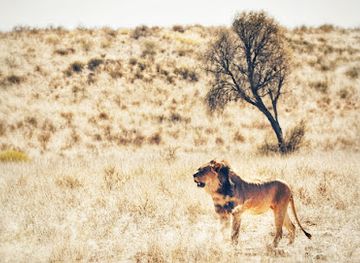
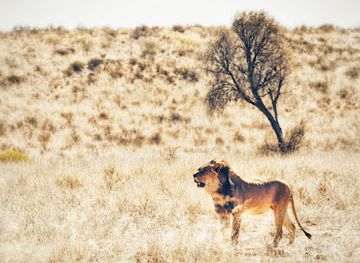
The most recognisable landmark of Kgalagadi District is the Kgalagadi Transfrontier Park, whose red dunes, dry river valleys and sparse thorn trees express the character of the wider south-western Kalahari. The Botswana-side Mabuasehube landscape is particularly associated with remote wildlife camps and deep sandy tracks, although its importance is ecological and experiential rather than architectural. Tsabong Camel Park is a distinctive local landmark linked to the town’s desert setting and offers a visitor focus outside the main wilderness area. Tsabong itself, as the district’s administrative centre, is marked by public institutions, local businesses and the practical infrastructure of a dispersed rural region rather than a preserved historic centre. Beyond these named places, the district’s natural forms are its defining visual markers: dune ridges, open grassland, thornveld and seasonal pans. Their appearance changes with light and rainfall, and their significance lies in the way they support wildlife, livestock and human movement across an environment with few permanent water sources.
-
National park
Kgalagadi Transfrontier Park
Discover the untamed beauty of Kgalagadi Transfrontier Park, where the Kalahari Desert teems with wildlife and rich cultural experiences await.
-
Lodge
Kgalagadi lifestyle Lodge
Experience комфорт and convenience near Kgalagadi Transfrontier Park. Your gateway to Kalahari's wilderness and adventure awaits!
-
Lodging
Nossob Rest Camp @ Kgalagadi Transfrontier Park
Experience thrilling predator sightings and serene desert nights at Nossob Rest Camp, in the heart of the Kgalagadi Transfrontier Park.
-
Lodging
Tashebube, Rooiputs Lodge
Experience luxury in the Kalahari at Rooiputs Lodge: panoramic views, exceptional wildlife, and a tranquil desert escape.
Explore Kgalagadi District on the map
Plan your trip on one map. See where the top cities, national parks and sights are, and book hotels and experiences in a few clicks.
Best hotels in Kgalagadi District
Best restaurants in Kgalagadi District
Dining in Kgalagadi District is functional, local and closely linked to the distances involved. Tsabong, Kang and Hukuntsi have cafés, takeaways, guesthouses and general restaurants where visitors may find familiar Botswana dishes alongside everyday southern African cooking. Beef and other locally available meats, maize or sorghum preparations, beans, vegetables and simple baked foods are more representative of the region than a specialised restaurant cuisine. Remote safari camps and lodges generally provide the most dependable meals for park visitors, often organised around game drives and advance bookings. Shops in the larger settlements are important for buying drinking water, packed food and basic supplies before entering isolated areas. Travellers should not expect a continuous chain of restaurants between towns, and self-drive expeditions need to carry much of their own food. Local markets and community events, when operating, can provide opportunities to encounter seasonal produce and home cooking, but availability varies and should not be assumed.
-
Restaurant
Bull & Bush
Experience the best of Botswana's flavors at Bull & Bush in Gaborone – where culinary tradition meets modern dining.
-
National park
Kgalagadi Transfrontier Park
Explore Kgalagadi Transfrontier Park: A Natural Wonderland of Wildlife and Scenic Beauty in Botswana.
-
Lodge
Twee Rivieren Rest Camp
Experience the breathtaking beauty and unique wildlife at Twee Rivieren Rest Camp in Kgalagadi Transfrontier Park.
-
Lodge
Kgalagadi lifestyle Lodge
Discover tranquility at Kgalagadi Lifestyle Lodge, where comfort meets adventure amidst South Africa's stunning Kalahari Desert.
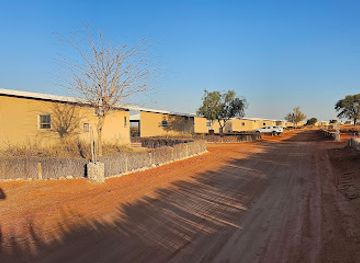
Best bars in Kgalagadi District
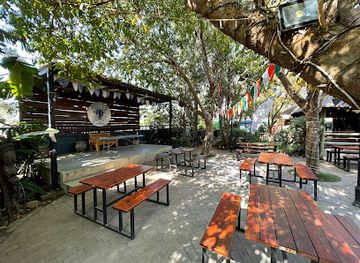
Evening life in Kgalagadi District is concentrated in Tsabong, Kang and Hukuntsi and tends to revolve around local bars, guesthouse restaurants, social venues and informal community gatherings rather than a large nightclub circuit. In smaller settlements, opening arrangements and entertainment options can change, so visitors should ask locally rather than rely on outdated listings. Safari camps and lodges offer a different kind of evening, with outdoor dining, conversation and stargazing replacing urban nightlife; strict wildlife rules apply, and guests should remain within designated areas. Some town venues may show sport or provide music, but nightlife is generally modest and locally oriented. Alcohol is not necessary to appreciate the district, and remote travellers should prioritise safe transport, water, charged communications and an early start for the following day.
-
National park
Kgalagadi Transfrontier Park
Explore Kgalagadi Transfrontier Park, a stunning national park in Botswana that offers breathtaking desert landscapes and diverse wildlife encounters.
-
Bar
Kang Ultra Stop
Experience the charm of Kang Ultra Stop, your ultimate travel pit stop on the Transkgalagadi highway in Botswana, featuring dining, lodging, and local treasures.
-
Lodging
Nossob Rest Camp @ Kgalagadi Transfrontier Park
Discover the tranquility of Nossob Rest Camp in Kgalagadi Transfrontier Park, where nature and adventure await every traveler.
-
Bar
Duck & Scrum
Discover the vibrant atmosphere of Duck & Scrum, a must-visit bar in Orapa offering a diverse selection of drinks and a cozy ambiance.
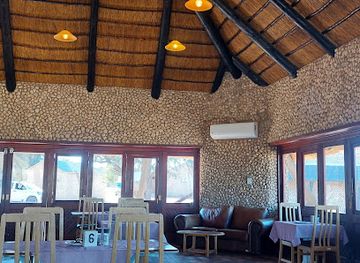
Best nightclubs in Kgalagadi District
Evening life in Kgalagadi District is concentrated in Tsabong, Kang and Hukuntsi and tends to revolve around local bars, guesthouse restaurants, social venues and informal community gatherings rather than a large nightclub circuit. In smaller settlements, opening arrangements and entertainment options can change, so visitors should ask locally rather than rely on outdated listings. Safari camps and lodges offer a different kind of evening, with outdoor dining, conversation and stargazing replacing urban nightlife; strict wildlife rules apply, and guests should remain within designated areas. Some town venues may show sport or provide music, but nightlife is generally modest and locally oriented. Alcohol is not necessary to appreciate the district, and remote travellers should prioritise safe transport, water, charged communications and an early start for the following day.
-
National park
Kgalagadi Transfrontier Park
Experience the breathtaking landscapes and rich wildlife of Kgalagadi Transfrontier Park, where adventure meets tranquility in Botswana's stunning wilderness.
-
Lodging
Tashebube, Rooiputs Lodge
Discover tranquility and adventure at Tashebube, Rooiputs Lodge, where luxury meets the wild beauty of Botswana, perfect for every traveler.
-
Lounge
Lagoon Lounge
Discover tranquility at Lagoon Lounge in Tshabong, Botswana, a perfect spot for relaxation with refreshing drinks and a welcoming atmosphere.
-
Night club
Galaxy Club
Discover the pulse of Jwaneng at Galaxy Club, where vibrant nightlife meets unforgettable experiences in Botswana's premier night club.
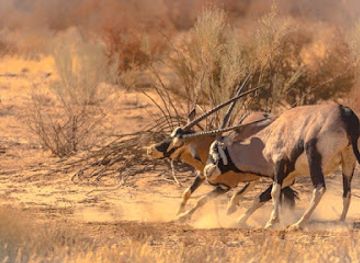
Best shops in Kgalagadi District
Shopping in Kgalagadi District is primarily practical, with Tsabong, Kang and Hukuntsi serving as the main places to buy food, fuel-related supplies, toiletries, clothing and other travel necessities. Independent shops, small supermarkets and local trading areas are more important than large shopping centres, and visitors entering remote park country should complete their major purchases before leaving the towns. Markets and community outlets may offer seasonal produce, prepared food or locally made crafts, but their stock and trading days can vary. Where available, baskets, textiles, small artworks or other handmade items provide more meaningful souvenirs than generic imported goods; buy directly and fairly, and ask about the maker and appropriate use of cultural designs. Visitors should also look for Botswana-made foods and crafts in established local businesses, while remembering that availability is limited compared with larger centres such as Gaborone. The district is not a destination for luxury retail, but its modest commercial landscape reflects the needs and rhythms of widely dispersed Kalahari communities.
-
National park
Kgalagadi Transfrontier Park
Discover the rugged beauty and diverse wildlife of Kgalagadi Transfrontier Park, a premier national park in Botswana, perfect for an unforgettable adventure.
-
Store
Kgalagadi lifestyle Lodge
Experience the beauty of the Kgalagadi desert at Kgalagadi Lifestyle Lodge, where adventure meets comfort in a stunning wildlife setting.
-
Supermarket
Sefalana Shopper
Explore local flavors and everyday essentials at Sefalana Shopper in Hukuntsi - a vibrant supermarket for all your shopping needs.
-
Supermarket
Choppies Tsabong
Discover the diverse offerings at Choppies Tsabong, Botswana's vibrant supermarket, perfect for stocking up on essentials and local delights.
Get your free copy of our complete guide to Kgalagadi District, delivered straight to you.
Everything on this page, from attractions and restaurants to essentials and local phrases, in one PDF you can read offline, print or share.
Already have an account? Sign in
Your Kgalagadi District guide is ready.
We'll send it to · Not you? Sign out

Getting your guide ready…
We are putting together a fresh copy of the Kgalagadi District guide. This can take up to a minute.
This can take a few moments. If your browser asks, choose Allow so the download can start. You'll find the guide in your Downloads folder.
Nothing happened? Download it again
Sorry, the guide is taking longer than usual. Please try again in a minute, or get it by email instead.
Kgalagadi District essentials
Currency and Payment
Safety
Emergency Situations
Do's and Don'ts
Local Tips
From Eve
Local phrases worth knowing
You don't need to get them perfect. A few words go a long way, and locals appreciate the effort.
Basics
| English | Local | Say it |
|---|---|---|
| Hello | Dumelang | [Doo-meh-lang] |
| Goodbye | Tsamaya sentle | [Tsah-mah-yah sen-tleh] |
| Yes | Ee | [Eh] |
| No | Nnyaa | [Nn-yah] |
| Please/You’re welcome | Tsweetswee | [Tswet-swee] |
| Thank you | Ke a leboga | [Kay ah leh-boh-gah] |
| Excuse me/Sorry | O iketle | [Oh ee-ket-leh] |
| How are you? | O kae? | [Oh kah-eh?] |
| Fine. And you? | Ke teng. Wena? | [Kay ten-g. Weh-nah?] |
| Do you speak English? | A o bua Seesimane? | [Ah oh boo-ah Seh-see-mah-neh?] |
| I don’t understand | Ke sitwa go utlwa | [Kay sit-wah go oot-lwah] |
Eating & Drinking
| English | Local | Say it |
|---|---|---|
| I’d like to see the menu, please | Nka rata go bona menyu, tsweetswee | [Nka rah-tah go boh-nah meh-nyoo, tsweet-swee] |
| I don’t eat meat | Ke sitwa go ja nama | [Kay sit-wah go jah nah-mah] |
| Cheers! | Tsamaya sentle! | [Tsah-mah-yah sen-tleh!] |
| I would like to pay, please | Nka rata go lefa, tsweetswee | [Nka rah-tah go leh-fah, tsweet-swee] |
Emergencies
| English | Local | Say it |
|---|---|---|
| Help! | Thusa! | [Too-sah!] |
| Go away! | Tsamaya! | [Tsah-mah-yah!] |
| Call the Police! | Bua mapodisa! | [Boo-ah mah-po-dee-sah!] |
| Call a doctor! | Bua ngaka! | [Boo-ah ngah-kah!] |
| I’m lost | Ke a sitwa | [Kay ah sit-wah] |
| I’m ill | Ke a bolawa | [Kay ah boh-lah-wah] |
Shopping
| English | Local | Say it |
|---|---|---|
| I’d like to buy... | Nka rata go reka... | [Nka rah-tah go reh-kah...] |
| I’m just looking | Ke ntse ke lebelela | [Kay n-tseh keh leh-beh-leh-lah] |
| How much is it? | Ke bokae? | [Kay boh-kah-eh?] |
| That’s too expensive | Se ke theko e kgethegileng | [Seh keh teh-koh eh keh-teh-hee-leng] |
| Can you lower the price? | A o ka fokotsa theko? | [Ah oh kah fo-kot-sah teh-koh?] |
Time & Numbers
| English | Local | Say it |
|---|---|---|
| What time is it? | Ke nako efe? | [Kay nah-koh eh-feh?] |
| It’s one o’clock | Ke ngwaga e le nngwe | [Kay ng-wah-gah eh leh nn-gweh] |
| Half past (10) | Ntlha ya (10) | [Ntlah yah (10)] |
| Morning | Mokhutswa | [Moh-khut-swah] |
| Afternoon | Motlhaka | [Moh-tlhah-kah] |
| Evening | Mantsiboya | [Mahn-tsee-boh-yah] |
| Yesterday | Maabane | [Mah-bah-neh] |
| Today | Kajeno | [Kah-yeh-noh] |
| Tomorrow | Kamoso | [Kah-moh-soh] |
| 1 | Nngwe | [Nn-gweh] |
| 2 | Nne | [Nn-neh] |
| 3 | Ntlhano | [Ntlah-noh] |
| 4 | Nnne | [Nn-neh] |
| 5 | Bophirima | [Boh-pee-ree-mah] |
| 6 | Nnang | [Nn-nahng] |
| 7 | Ntshebe | [Ntsheh-beh] |
| 8 | Borai | [Boh-rah-ee] |
| 9 | Borai | [Boh-rah-ee] |
| 10 | Leshomane | [Leh-shoh-mah-neh] |
Transport & Directions
| English | Local | Say it |
|---|---|---|
| Where's a/the...? | Tlhogile ... kae? | [Tlh-oh-gih-leh ... kah-eh?] |
| What's the address? | A lebitso la go ngwaga? | [Ah leh-bee-tsoh lah go ng-wah-gah?] |
| Can you show me (on the map)? | O ka mpontsha (mo mapeng)? | [Oh kah m-pont-shah (moh mah-peh-ng)?] |
| When's the next (bus)? | Bus e latelang e kae? | [Boo-s eh lah-teh-lah-ng eh kah-eh?] |
| A ticket (to ....) | Tiket (go ....) | [Tee-ket (go ....)] |
History of Kgalagadi District
Early Kalahari settlement and San heritage
The Kgalagadi landscape has long been occupied and travelled by San communities whose knowledge of plants, animals, water sources and seasonal movement developed in response to an exceptionally dry environment. Archaeological evidence across the wider Kalahari indicates a deep human history, although many traces are subtle and difficult to identify without specialist guidance. Hunting, gathering, exchange and later interaction with pastoral communities shaped social and economic life over many generations. This heritage remains important to understanding the district, but should not be reduced to a simple account of a vanished past.
Bakgalagadi communities and regional movement
Bakgalagadi communities became an important part of the social history of south-western Botswana. Different groups and settlements developed relationships with cattle keeping, small-scale agriculture where conditions allowed, hunting, gathering and regional trade. Movement between water sources and settlements was a practical necessity, and political authority was often influenced by access to people, livestock and reliable boreholes. The district’s contemporary communities reflect layered histories rather than a single cultural identity, with local languages, customs and family connections extending across present-day administrative and national borders.
The Bechuanaland Protectorate
From 1885, the area formed part of the Bechuanaland Protectorate administered by Britain. Colonial administration introduced new territorial boundaries and official systems while relying on local authorities and existing community structures in many aspects of governance. The dry south-west was remote from major administrative centres, and transport, water supply and communications developed slowly. The boundary with South West Africa and the later South African border also influenced movement and administration. Many present-day roads, district institutions and settlement patterns have roots in this period, although they were adapted after independence.
Water, cattle and the development of settlements
In an arid region, access to water has been central to settlement and economic change. Boreholes, livestock infrastructure, schools, clinics and roads gradually made permanent communities more viable across parts of Kgalagadi District. Cattle keeping became an important livelihood, alongside wage employment, small-scale trade and public-sector work. These developments also altered patterns of mobility and intensified questions about grazing, wildlife and access to natural resources. Tsabong, Kang and Hukuntsi grew as service centres for widely scattered populations rather than as large urban settlements.
Independence and the modern district
Botswana became independent in 1966, and the new nation inherited a vast, sparsely populated territory with limited infrastructure. National investment in roads, education, healthcare, water systems and local government gradually connected Kgalagadi communities more closely to the rest of the country. District administration helped provide services across great distances, while Tsabong developed as the principal administrative centre. The resulting landscape combines modern public institutions with cattle posts, traditional community relationships and remote settlements that remain strongly shaped by climate and geography.
Kgalagadi Transfrontier Park and conservation
The Kalahari’s wildlife areas were progressively organised into protected reserves, including Gemsbok National Park in Botswana and Kalahari Gemsbok National Park in South Africa. In 2000, the two reserves were joined as Kgalagadi Transfrontier Park, one of the early major examples of formal cross-border conservation in the region. The park reflects the ecological continuity of a landscape that predates national boundaries, while also requiring visitors to understand different access arrangements, border procedures and management rules. Conservation and community interests remain important considerations in the region’s future.
Kgalagadi District in Photos
Browse through our photo collection highlighting the charm and character of the destination.
Neighbouring regions of Kgalagadi District
The closest regions to Kgalagadi District, if you have time for more than one.
-

-

-

-

-


Swipe for more regions
Explore more
Explore more of Botswana
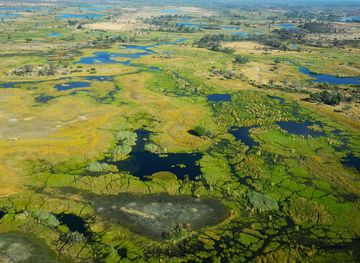
Explore Botswana: A land of stunning contrasts, rich wildlife, and cultural heritage. Discover the Okavango Delta, Kalahari Desert, and immerse in sustainable tourism.
Explore Botswana