

Free Amazon Rainforest Travel Guide & Mobile App
Explore Amazon Rainforest with free travel guides. Discover regional history, expert tips, proposed trips, and audio guides on web or mobile app.


Explore Brazil's Amazon Rainforest through river journeys, wildlife-rich reserves, Indigenous cultures and Manaus's jungle gateways.
Read more about Amazon Rainforest
When is the best time to visit Amazon Rainforest?
Best: July–September · 30–31°C| Month | High (°C) | Rainfall (mm) |
|---|---|---|
| January | 30 | 250 |
| February | 31 | 230 |
| March | 31 | 250 |
| April | 31 | 250 |
| May | 30 | 230 |
| June | 30 | 200 |
| July (best) | 30 | 170 |
| August (best) | 30 | 170 |
| September (best) | 31 | 180 |
| October | 31 | 200 |
| November | 31 | 230 |
| December | 31 | 250 |
Getting to and around Amazon Rainforest
How to get there
Transportation
Destinations in Amazon Rainforest
Resorts, valleys and scenic spots worth a trip of their own.
-

-

-


Swipe for more destinations
Best attractions in Amazon Rainforest
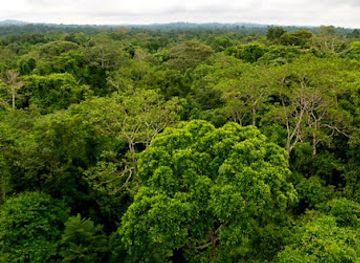
The Brazilian Amazon's attractions are primarily ecological and river-based rather than concentrated in conventional sightseeing districts. Around Manaus, excursions may include the Meeting of the Waters, forest trails, canoe trips through flooded woodland and visits to floating communities or established jungle lodges. Anavilhanas National Park protects one of the world's largest river archipelagos, with channels and islands that are explored by boat, while Jaú National Park offers a more remote protected-forest experience. In the west, the Mamirauá Sustainable Development Reserve is known for seasonally flooded ecosystems and community-linked research and tourism. The Tapajós basin near Santarém presents a different combination of forest, broad rivers and seasonal beaches. Wildlife watching, birding, night outings, fishing excursions and interpretation of medicinal plants are common, but conditions change with water levels and sightings cannot be guaranteed. Urban stops add markets, museums and historic architecture in Manaus, Belém and other Amazonian ports, although these cities are gateways to the rainforest rather than substitutes for time in it.
-
National park
Parque Nacional da Amazônia
Explore the heart of the Amazon at Parque Nacional da Amazônia, a sanctuary of biodiversity and a vital conservation area in Brazil.
Best landmarks in Amazon Rainforest
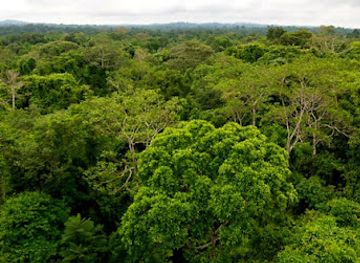
The Amazon's most recognisable landmarks are often created by the meeting of rivers, the scale of the forest and the history of river ports. Near Manaus, the Meeting of the Waters is a major natural landmark where the dark Rio Negro and the paler Solimões run side by side before joining as the Amazon. The Teatro Amazonas, in central Manaus, represents the wealth and ambition of the rubber boom and remains one of Brazil's best-known opera houses. Anavilhanas's labyrinth of forested islands is a geographical landmark as well as a protected habitat, while the broad channels and seasonally flooded forest of the Mamirauá reserve illustrate the Amazon's continual transformation by water. In Belém, the historic Ver-o-Peso market and waterfront form an important eastern-Amazonian urban landmark, though the city is a gateway rather than a rainforest settlement. Remote parks and reserves have fewer monumental structures, but their rivers, giant forest trees and changing floodplain horizons are themselves the defining physical landmarks.
-
National park
Parque Nacional da Amazônia
Explore the untouched beauty of Parque Nacional da Amazônia, a vital sanctuary for biodiversity in the heart of the Brazilian Amazon.
Explore Amazon Rainforest on the map
Plan your trip on one map. See where the top cities, national parks and sights are, and book hotels and experiences in a few clicks.
Best hotels in Amazon Rainforest
Best restaurants in Amazon Rainforest
Amazonian cooking is closely tied to rivers, manioc and native fruits. In Manaus, Santarém, Belém and smaller river towns, menus may feature tambaqui, pirarucu and other freshwater fish, often grilled, baked or served with rice, farinha and plantain. Manioc appears in forms including toasted farinha, tucupi and tapioca, while jambu gives some dishes a distinctive tingling sensation. Açaí is widely consumed, particularly in northern Brazil, where it is often served less sweet and more as an accompaniment to food than as a dessert. Cupuaçu, taperebá, bacuri and other fruits appear in juices, ice creams and sweets. Markets provide an important introduction to regional ingredients, while lodges commonly serve practical set meals using local fish and produce. In remote areas, choice is limited and dietary requirements should be communicated before arrival; responsible visitors should also ask about the origin of fish and forest products.
-
Restaurant
Aprazível
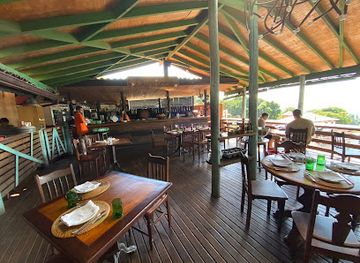
Discover authentic Brazilian flavors at Aprazível in Santa Teresa—where culinary excellence meets breathtaking views.
Best bars in Amazon Rainforest
Nightlife in the Brazilian Amazon is concentrated in its cities and river ports rather than in the forest itself. Manaus has the broadest choice of bars, restaurants, live music and cultural performances, with evening activity around central districts and the waterfront; Belém and Santarém also have established urban scenes. In smaller towns, evenings generally centre on casual bars, music, food stalls and social squares rather than nightclubs. At forest lodges, after-dark activities usually mean guided canoe rides, listening for nocturnal wildlife or sitting quietly beneath the night sky, not drinking-focused entertainment. River boats may have simple social areas, but facilities vary considerably. Visitors should follow operators' safety rules, particularly regarding alcohol before boat travel, swimming or night excursions, and should not expect reliable nightlife once they leave the main urban gateways.
-
Continent
South America
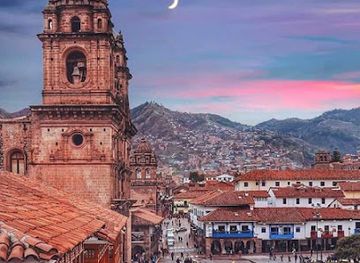
Explore South America: A continent of diverse cultures, stunning landscapes, and unforgettable adventures awaits you.
Best nightclubs in Amazon Rainforest
Nightlife in the Brazilian Amazon is concentrated in its cities and river ports rather than in the forest itself. Manaus has the broadest choice of bars, restaurants, live music and cultural performances, with evening activity around central districts and the waterfront; Belém and Santarém also have established urban scenes. In smaller towns, evenings generally centre on casual bars, music, food stalls and social squares rather than nightclubs. At forest lodges, after-dark activities usually mean guided canoe rides, listening for nocturnal wildlife or sitting quietly beneath the night sky, not drinking-focused entertainment. River boats may have simple social areas, but facilities vary considerably. Visitors should follow operators' safety rules, particularly regarding alcohol before boat travel, swimming or night excursions, and should not expect reliable nightlife once they leave the main urban gateways.
-
Night club
Lions Nightclub
Dance the night away at Lions Nightclub, São Paulo's vibrant nightlife destination known for its electrifying atmosphere and eclectic music.

Best shops in Amazon Rainforest
Shopping in the Brazilian Amazon is strongest in its port cities and market towns. Manaus's Adolpho Lisboa Municipal Market is a notable place to encounter regional foods, medicinal plants, fish, spices and craft traditions, while Belém's Ver-o-Peso market is an important eastern-Amazonian centre for produce, herbs, prepared food and local goods. Santarém and smaller river towns offer more modest markets shaped by fishing, agriculture and boat traffic. Look for lawful handicrafts made from fibres, seeds, wood or ceramics, as well as packaged regional foods such as farinha, fruit preserves and chocolate. Ask sellers about materials and provenance, and avoid wildlife products, archaeological objects, feathers, live plants and timber whose legality or origin is unclear. Independent craft shops and community projects can provide a more direct connection with local makers than informal souvenirs sold without explanation.
-
Shopping mall
Shopping Eldorado
Discover Shopping Eldorado, São Paulo's premier shopping mall, offering a vibrant mix of retail, dining, and entertainment for an unforgettable experience.
-
Shopping mall
RioMar Recife
Explore the vibrant shopping, dining, and entertainment experiences at RioMar Recife, the ultimate destination in the heart of Pernambuco.
-
Shopping mall
Shopping Cidade São Paulo
Explore Shopping Cidade São Paulo, a vibrant shopping mall offering diverse retail, dining, and entertainment experiences in the heart of São Paulo.
-
Shopping mall
Shopping RioSul
Discover Shopping RioSul: A vibrant shopping mall in Rio de Janeiro offering diverse shops, delightful dining, and engaging entertainment for all.

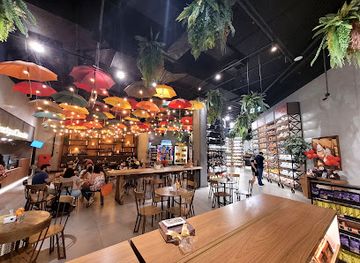
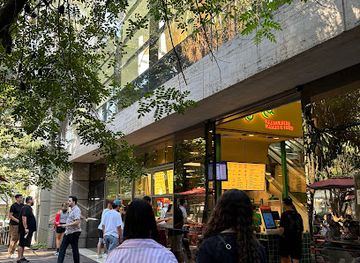
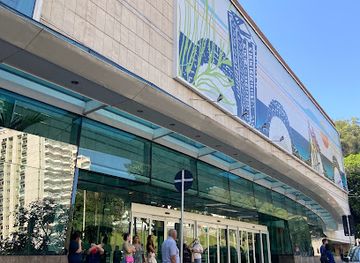
Get your free copy of our complete guide to Amazon Rainforest, delivered straight to you.
Everything on this page, from attractions and restaurants to essentials and local phrases, in one PDF you can read offline, print or share.
Already have an account? Sign in
Your Amazon Rainforest guide is ready.
We'll send it to · Not you? Sign out

Getting your guide ready…
We are putting together a fresh copy of the Amazon Rainforest guide. This can take up to a minute.
This can take a few moments. If your browser asks, choose Allow so the download can start. You'll find the guide in your Downloads folder.
Nothing happened? Download it again
Sorry, the guide is taking longer than usual. Please try again in a minute, or get it by email instead.
Amazon Rainforest essentials
Currency and Payment
Safety
Emergency Situations
Do's and Don'ts
Local Tips
From Eve
Local phrases worth knowing
You don't need to get them perfect. A few words go a long way, and locals appreciate the effort.
Basics
| English | Local | Say it |
|---|---|---|
| Hello | Olá | [oh-LAH] |
| Goodbye | Adeus | [ah-DEH-oos] |
| Yes | Sim | [seem] |
| No | Não | [now] |
| Please/You're welcome | Por favor/De nada | [poor fah-VOR/jeh NAH-dah] |
| Thank you | Obrigado/Obrigada | [oh-bree-GAH-do/oh-bree-GAH-dah] |
| Excuse me/Sorry | Desculpe | [des-KOOL-peh] |
| How are you? | Como você está? | [KOH-moo voh-SEH eh-STAH] |
| Fine. And you? | Bem. E você? | [BENG. ee voh-SEH?] |
| Do you speak English? | Você fala inglês? | [voh-SEH FAH-lah een-GLES?] |
| I don't understand | Eu não entendo | [eh-oo now en-TEN-do] |
Eating & Drinking
| English | Local | Say it |
|---|---|---|
| I'd like to see the menu, please | Gostaria de ver o menu, por favor | [goh-stah-REE-ah jeh VEH-roh meh-NOO, poor fah-VOR] |
| I don't eat meat | Eu não como carne | [eh-oo now KOH-moo KAR-nee] |
| Cheers! | Saúde! | [sah-OO-dee] |
| I would like to pay, please | Gostaria de pagar, por favor | [goh-stah-REE-ah jeh pah-GAR, poor fah-VOR] |
Emergencies
| English | Local | Say it |
|---|---|---|
| Help! | Ajuda! | [ah-ZHOO-dah] |
| Go away! | Vá embora! | [VAH em-BOH-rah] |
| Call the Police! | Chame a polícia! | [SHAH-mee ah poh-LEE-syah] |
| Call a doctor! | Chame um médico! | [SHAH-mee oom MEH-dee-koh] |
| I'm lost | Estou perdido | [es-TOH pehr-DEE-doh] |
| I'm ill | Estou doente | [es-TOH do-EHN-chee] |
Shopping
| English | Local | Say it |
|---|---|---|
| I'd like to buy... | Gostaria de comprar... | [goh-stah-REE-ah jeh kom-PRAHR] |
| I'm just looking | Estou apenas olhando | [es-TOH ah-PEH-nas oh-LYAN-do] |
| How much is it? | Quanto custa? | [KWAN-toh KOO-stah?] |
| That's too expensive | Isso é muito caro | [EE-soh eh MOY-toh KAH-roh] |
| Can you lower the price? | Você pode abaixar o preço? | [voh-SEH POH-jee ah-bah-YAR oh PREH-soh?] |
Time & Numbers
| English | Local | Say it |
|---|---|---|
| What time is it? | Que horas são? | [kee OH-ras sow?] |
| It's one o'clock | É uma hora | [eh OO-mah OH-rah] |
| Half past (10) | Meia (10) | [MAY-ah (10)] |
| Morning | Manhã | [mahn-YAH] |
| Afternoon | Tarde | [TAR-jee] |
| Evening | Noite | [NOY-chee] |
| Yesterday | Ontem | [ON-tem] |
| Today | Hoje | [OH-zhee] |
| Tomorrow | Amanhã | [ah-mahn-YAH] |
| 1 | Um | [oom] |
| 2 | Dois | [doyz] |
| 3 | Três | [trehz] |
| 4 | Quatro | [KWAH-troh] |
| 5 | Cinco | [SEEN-koh] |
| 6 | Seis | [sayz] |
| 7 | Sete | [SEH-chee] |
| 8 | Oito | [OY-toh] |
| 9 | Nove | [NO-vee] |
| 10 | Dez | [DEH-zh] |
Transport & Directions
| English | Local | Say it |
|---|---|---|
| Where's a/the...? | Onde fica...? | [ON-jee FEE-kah...?] |
| What's the address? | Qual é o endereço? | [kwow eh oo en-deh-REH-soh?] |
| Can you show me (on the map)? | Você pode me mostrar (no mapa)? | [voh-SEH POH-jee mee mohs-TRAR (noh MAH-pah)?] |
| When's the next (bus)? | Quando é o próximo (ônibus)? | [KWAN-doo eh oo PROH-see-mo (OH-nee-boos)?] |
| A ticket (to ....) | Um bilhete (para ...) | [oom bee-LYEH-tchee (PAH-rah ...)] |
History of Amazon Rainforest
Indigenous worlds before European colonisation
The Amazon has been inhabited and managed by Indigenous peoples for thousands of years. Archaeological evidence across the basin includes ceramics, earthworks, raised fields, dark fertile soils known as terra preta and traces of extensive settlement. These findings challenge the older idea that the rainforest was an untouched wilderness. Diverse communities developed knowledge of river navigation, medicinal plants, fishing, cultivation and seasonal flood cycles. Today, hundreds of Indigenous peoples and many language groups remain central to the region's cultural life, territorial rights and environmental stewardship.
Portuguese expansion along the rivers
From the seventeenth century, Portuguese colonisation moved inland along the Amazon and its tributaries through military posts, missions, trading settlements and forced labour systems. River routes were the essential means of movement, and colonial control remained uneven across the forest. Towns such as Manaus and Belém grew from this riverine network, while Indigenous communities faced epidemics, violence, enslavement and pressure to convert. The use of the Portuguese language and the region's Catholic heritage owe much to this period, though Amazonian society has always remained culturally diverse.
The rubber boom, nineteenth century
The global demand for natural rubber transformed parts of the Amazon during the late nineteenth and early twentieth centuries. Rubber tappers travelled deep into the forest to collect latex from wild trees, while merchants and exporters accumulated wealth in river ports. Manaus became the most visible symbol of the boom, with grand public buildings including the Teatro Amazonas. The system depended heavily on debt and coercion, and Indigenous people and migrants often worked in harsh conditions. When plantation rubber from Southeast Asia undercut Amazonian production, the boom collapsed and many settlements declined.
River transport, trade and urban growth
Steam navigation and expanding commercial networks made the major rivers more closely connected to national and international markets. Belém remained a principal Atlantic gateway, while Manaus developed as a major inland port. Forest products, Brazil nuts, timber, fish and agricultural goods moved through these urban centres, linking remote communities to national economies. River transport still shapes everyday life: in many areas, boats remain more practical than roads, and distances are measured in hours or days on the water rather than kilometres by land.
Road building and the modern development frontier
From the mid-twentieth century, government programmes encouraged settlement, mining, cattle ranching, road construction and large infrastructure projects across parts of the Brazilian Amazon. The Trans-Amazonian Highway and other routes opened new corridors, but also accelerated deforestation, land conflict and the fragmentation of forest habitats. Hydroelectric schemes, mineral extraction and agribusiness brought employment and infrastructure alongside major social and environmental costs. The region's present geography reflects this tension between economic development, public services, territorial rights and forest protection.
Protected areas and contemporary conservation
Late twentieth-century activism, scientific research and Indigenous mobilisation helped establish national parks, extractive reserves, sustainable development reserves and recognised Indigenous territories. Places such as Jaú National Park, Anavilhanas National Park and the Mamirauá Sustainable Development Reserve represent different approaches to protecting forests and supporting local livelihoods. Conservation remains complex rather than settled: illegal logging, mining, fires, land grabbing and habitat loss continue in parts of the Amazon, while community-led monitoring, sustainable production and responsible tourism contribute to wider efforts to safeguard the forest.
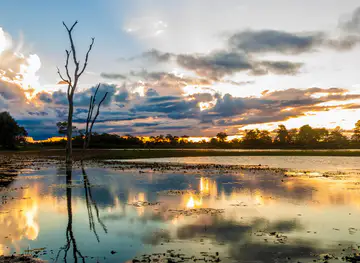
Amazon Rainforest in Photos
Browse through our photo collection highlighting the charm and character of the destination.
Neighbouring regions of Amazon Rainforest
The closest regions to Amazon Rainforest, if you have time for more than one.
-

-

-

-
-


Swipe for more regions
Explore more

Explore more of Brazil
Discover Brazil: a land of samba, stunning landscapes, and rich history. From the Amazon to Rio, explore diverse cultures, world-class cuisine, and vibrant festivals.
Explore Brazil