

Santa Maria Beach, Cabo Verde Travel Guide
Experience the tropical allure of Santa Maria Beach in Cabo Verde with its turquoise waters, golden sands, and vibrant local culture.
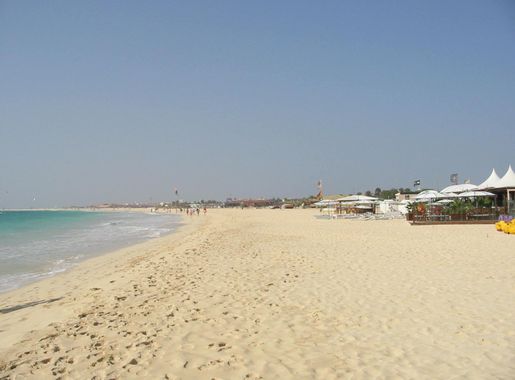
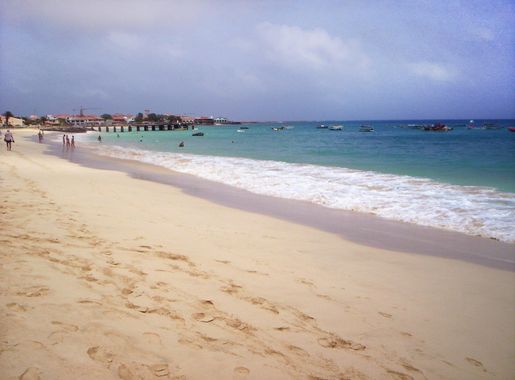
Santa Maria Beach, located on the southern tip of the island of Sal in Cabo Verde, is a slice of paradise in the Atlantic Ocean. Known for its crystal-clear turquoise waters, soft golden sands, and vibrant marine life, this beach is a haven for sun-seekers and water sports enthusiasts alike. Whether you're looking to relax under the sun, swim in the warm waters, or explore the underwater world through snorkeling and diving, Santa Maria Beach offers something for everyone. The beach is lined with charming beach bars and restaurants where you can savor fresh seafood and local cuisine while enjoying stunning sea views. The town of Santa Maria itself is a lively hub with colorful buildings, bustling markets, and a friendly, welcoming atmosphere. Stroll through the town to discover local crafts, music, and the rich culture of Cabo Verde. For those interested in adventure, Santa Maria Beach is a hotspot for windsurfing and kitesurfing due to its consistent trade winds. The nearby salt flats and natural pools add an element of exploration for nature lovers. The beach's serene environment and picturesque landscapes make it an ideal destination for relaxation and rejuvenation.

Know before you go
Hi, I'm Eve. Here are a few practical things to know before exploring Santa Maria Beach.
- Visit early in the morning to enjoy a quieter beach experience before the crowds arrive.
- Try local dishes like 'Cachupa' at the beachside restaurants for an authentic taste of Cabo Verde.
- Pack reef-safe sunscreen to protect the marine environment while enjoying water activities.
- Don't miss the chance to visit the nearby salt flats for a unique natural experience.
- Bring cash, as some local vendors and smaller restaurants might not accept credit cards.
Explore Santa Maria Beach: Things to Do, Places to Eat, Hotels & More
Handpicked recommendations for top attractions, local dining, accommodations, and more

Best attractions in Santa Maria Beach
Top-rated picks
Best Attractions

Mercado Municipal
Explore the Mercado Municipal for a taste of local life, vibrant produce, and unique Cape Verdean handicrafts in Santa Maria.

Museu Dos Naufragos
Explore the history of maritime adventures at Museu Dos Naufragos in Sal Rei, Boa Vista, where culture meets culinary delights.

Best landmarks in Santa Maria Beach
Top-rated picks
Best Landmarks

The Pier of Santa Maria
Discover the breathtaking views and vibrant culture at The Pier of Santa Maria, a must-visit tourist attraction in Cape Verde.

Hotel Riu Funana
Discover luxury and relaxation at Hotel Riu Funana in Santa Maria, Cape Verde, where pristine beaches meet exceptional wellness amenities.

Hotel Riu Cabo Verde
Discover the essence of relaxation and luxury at Hotel Riu Cabo Verde, your perfect escape in the stunning Santa Maria, Cape Verde.

Meliá Dunas Beach Resort & Spa - All Inclusive
Experience the ultimate tropical escape at Meliá Dunas Beach Resort & Spa, where luxury meets relaxation on the pristine shores of Cape Verde.

Best restaurants in Santa Maria Beach
Top-rated picks
Best Restaurants

Ocean Cafe
Experience the best of Cape Verdean cuisine at Ocean Cafe in Santa Maria – where delicious food meets breathtaking ocean views.

Palm Beach
Experience authentic Cape Verdean flavors at Palm Beach, where fresh seafood meets delicious pizza in a stunning coastal setting.

Ponta Preta
Discover exquisite dining at Ponta Preta, where stunning ocean views meet delicious local cuisine in Santa Maria.

Cape Fruit
Experience the vibrant flavors of local cuisine at Cape Fruit, a top-rated restaurant in Santa Maria offering fresh ingredients and exceptional service.

Best bars in Santa Maria Beach
Top-rated picks
Best Bars

Ocean Cafe
Experience the vibrant flavors of Cape Verde at Ocean Cafe, where delicious pizzas and a lively atmosphere meet stunning beach views.

Bikini Beach Club
Experience the ultimate beach club vibe at Bikini Beach Club in Santa Maria, where sun, fun, and vibrant nightlife come together.

Sal Beach Club
Experience the vibrant flavors of Cape Verdean cuisine at Sal Beach Club, a dining gem in Santa Maria with stunning views and a relaxed atmosphere.

The Dubliner - Irish Bar
Experience the vibrant atmosphere of The Dubliner, where Irish culture meets Cape Verdean charm, right on Santa Maria Beach.

Best nightclubs in Santa Maria Beach
Top-rated picks
Best Nightclubs

Bikini Beach Club
Discover the electrifying nightlife at Bikini Beach Club in Santa Maria, where stunning ocean views and vibrant music create an unforgettable experience.

Buddy Bar
Discover the vibrant nightlife at Buddy Bar in Santa Maria, a lively bar perfect for dancing, drinks, and making new friends.

Pub Calema
Discover the lively atmosphere and vibrant entertainment at Pub Calema, the perfect nightlife hub in Santa Maria, Cape Verde.

Chill Out Bar
Experience the vibrant atmosphere and refreshing drinks at Chill Out Bar in Santa Maria, a must-visit destination for all travelers.

Best shops in Santa Maria Beach
Top-rated picks
Best Shops

The Pier of Santa Maria
Discover the vibrant atmosphere and stunning views at The Pier of Santa Maria, a must-visit destination in Cape Verde for unforgettable experiences.

Ocean Cafe
Discover Ocean Cafe, the perfect seaside restaurant in Santa Maria, offering delicious pizzas and a vibrant atmosphere for all visitors.

Pachamama Eco Park - Viveiro Botanical Garden
Explore the lush landscapes and diverse plant life at Pachamama Eco Park, a serene botanical garden in Cape Verde that delights every nature enthusiast.

The Dubliner - Irish Bar
Experience the best of Irish culture and cuisine at The Dubliner, a lively bar by Santa Maria Beach in Cape Verde, perfect for tourists seeking fun and flavor.

Explore Santa Maria Beach on the Map
A handpicked selection of must-see spots in Santa Maria Beach, mapped for you.
Santa Maria Beach Essentials
-
Santa Maria Beach is located on Sal Island in Cabo Verde. The main entry point to Sal Island is Amílcar Cabral International Airport (SID), which receives flights from various international destinations. From the airport, Santa Maria Beach is approximately a 20-minute drive. Taxis and shuttle services are available for transport to your accommodation.
-
Santa Maria Beach is a relatively compact area, making it easy to explore on foot. For longer distances, taxis are readily available and can be hailed on the street or arranged through your hotel. There are also alugueres, shared minibuses that offer a more economical way to get around the island. Bicycle rentals are another popular option for tourists looking to explore at a leisurely pace.
-
The official currency of Cabo Verde is the Cape Verdean Escudo (CVE). While credit cards are accepted in most hotels, restaurants, and larger shops, it is advisable to carry some cash for smaller establishments and local markets. ATMs are available in Santa Maria, but they can occasionally run out of cash, so it’s wise to withdraw sufficient funds in advance.
-
Santa Maria Beach is generally safe for tourists, but it’s important to stay vigilant. Avoid walking alone at night in poorly lit areas and be cautious of pickpockets in crowded places. The area near the pier and some back streets can be hotspots for petty crime. Always keep an eye on your belongings, especially at the beach.
-
In case of an emergency, dial 132 for police assistance, 131 for medical emergencies, and 800 11 24 for fire services. Santa Maria has a medical clinic for minor health issues, but for more serious conditions, the main hospital is in Espargos, about a 20-minute drive away. It’s advisable to have travel insurance that covers medical emergencies.
-
Fashion: Do dress casually and comfortably, but avoid overly revealing clothing, especially when away from the beach. Religion: Do respect local customs; if visiting a church, dress modestly and remove hats. Public Transport: Do use alugueres for an authentic local experience, but don't expect strict schedules. Greetings: Do greet locals with a friendly 'Olá' or 'Bom Dia'. A handshake is also common. Eating & Drinking: Do try local dishes like cachupa and fresh seafood. Don't refuse food or drink offerings, as it may be considered impolite.
-
To experience Santa Maria Beach like a local, visit the municipal market for fresh produce and local crafts. Engage with local vendors and fishermen, who are often eager to share stories and tips. Don't miss the chance to enjoy a traditional morna music performance at a local bar. For a unique experience, take a boat trip to see the island from the water or join a local fishing excursion.
When is the best time to visit Santa Maria Beach?
Useful Local Phrases for Santa Maria Beach
You don't need to speak the language perfectly. Even learning a few simple words can make conversations warmer—and locals usually appreciate the effort.
— Eve

Here are the phrases I use most often in Santa Maria Beach. Try a few—you'll be surprised how far they go! 😊
❤️
-
- HelloOlá
[oh-LAH] - GoodbyeAdeus
[ah-DAY-oosh] - YesSim
[seem] - NoNão
[now] - Please/You're welcomePor favor/De nada
[por fah-VOHR/de NAH-dah] - Thank youObrigado(a)
[oh-bree-GAH-doo(a)] - Excuse me/SorryDesculpe/Desculpa
[dehs-KOOL-peh/dehs-KOOL-pah] - How are you?Como está?
[KOH-moh ehs-TAH] - Fine. And you?Bem. E você?
[behn/eh voh-SAY] - Do you speak English?Fala inglês?
[FAH-lah een-GLAYS] - I don't understandNão entendo
[now ehn-TEN-doo]
- HelloOlá
-
- I'd like to see the menu, pleaseGostaria de ver o menu, por favor
[goh-stah-REE-ah deh vehr ooh MEH-noo/por fah-VOHR] - I don't eat meatNão como carne
[now KOH-moo KAHN/ee] - Cheers!Saúde!
[sow-DAY] - I would like to pay, pleaseGostaria de pagar, por favor
[goh-stah-REE-ah deh pah-GAHR/por fah-VOHR]
- I'd like to see the menu, pleaseGostaria de ver o menu, por favor
-
- Help!Socorro!
[soh-KOH-roo] - Go away!Vai embora!
[vah-ee ehm-BOH-rah] - Call the Police!Chama a polícia!
[SHAH-mah ah poh-LEE-see-ah] - Call a doctor!Chama um médico!
[SHAH-mah oom MEH-dee-koo] - I'm lostEstou perdido(a)
[ehs-TOH pehr-DEE-doo(a)] - I'm illEstou doente
[ehs-TOH doo-EHN-teh]
- Help!Socorro!
-
- I'd like to buy...Gostaria de comprar...
[goh-stah-REE-ah deh kohm-PRAR] - I'm just lookingEstou só a ver
[ehs-TOH soh ah vehr] - How much is it?Quanto custa?
[KWAN-too KOOSH-tah] - That's too expensiveIsso é muito caro
[EE-soh eh MWEE-too KAH-roo] - Can you lower the price?Pode baixar o preço?
[POH-deh BAHY-shahr ooh PREH-soo]
- I'd like to buy...Gostaria de comprar...
-
- What time is it?Que horas são?
[keh OH-rahs saoh] - It's one o'clockÉ uma hora
[eh OO-mah OH-rah] - Half past (10)Meia hora (10)
[MAY-ah OH-rah (DEE-ehs)] - MorningManhã
[mahn-YAH] - AfternoonTarde
[TAHR-deh] - EveningNoite
[NOY-teh] - YesterdayOntem
[ohn-TEHM] - TodayHoje
[OH-zheh] - TomorrowAmanhã
[ah-mahn-YAH] - 1Um
[oom] - 2Dois
[doysh] - 3Três
[tresh] - 4Quatro
[KWAH-troh] - 5Cinco
[SEEN-koh] - 6Seis
[saysh] - 7Sete
[SEH-teh] - 8Oito
[OH-too] - 9Nove
[NOH-veh] - 10Dez
[dehsh]
- What time is it?Que horas são?
-
- Where's a/the...?Onde fica o/a...?
[OHND fih-KAH oh/ah] - What's the address?Qual é o endereço?
[kwahl eh oh ehn-DEH-reh-soo] - Can you show me (on the map)?Pode mostrar-me (no mapa)?
[POH-deh moh-SHTR-meh/noh MAH-pah] - When's the next (bus)?Quando é o próximo (autocarro)?
[KWAN-doo eh oh PROH-kssee-moo/ow-toh-KAHR-roo] - A ticket (to ....)Um bilhete (para ...)
[oom bee-LYE-teh/PAH-rah]
- Where's a/the...?Onde fica o/a...?
History of Santa Maria Beach
-
Santa Maria Beach, located on the island of Sal in Cabo Verde, was initially settled by Portuguese explorers in the late 15th century. The island of Sal was relatively barren and uninhabited, but its strategic location in the Atlantic Ocean made it a key stopover point for ships traveling between Europe, Africa, and the Americas. The settlers established small fishing communities along the coast, including the area now known as Santa Maria Beach.
-
In the 18th and 19th centuries, the island of Sal, and by extension Santa Maria Beach, became a significant hub for salt production and trade. The island's name, 'Sal', actually means 'salt' in Portuguese. Salt pans were established near Santa Maria, and the salt extracted from these pans was exported to various parts of the world. This era brought economic growth to the region and established Santa Maria as a crucial trading post.
-
By the early 20th century, the global demand for salt began to decline, and the salt trade in Santa Maria Beach faced a downturn. Coupled with the Great Depression and World War II, the local economy suffered significantly. Many of the salt pans were abandoned, and the population of Santa Maria Beach dwindled as people moved to other parts of Cabo Verde or emigrated abroad in search of better opportunities.
-
The latter half of the 20th century saw a dramatic transformation in Santa Maria Beach, as tourism began to flourish. The pristine white sands, crystal-clear waters, and excellent conditions for water sports like windsurfing and kiteboarding attracted tourists from around the globe. Hotels, resorts, and other tourist amenities were developed, revitalizing the local economy. Santa Maria Beach became one of the most popular tourist destinations in Cabo Verde, ushering in a new era of prosperity.
-
Despite the modern development, Santa Maria Beach has retained its rich cultural heritage. The local community celebrates various festivals throughout the year, such as the Festival da Praia de Santa Maria, which features music, dance, and traditional cuisine. The vibrant blend of African, Portuguese, and Brazilian influences is evident in the local architecture, music, and culinary traditions, making Santa Maria Beach a unique cultural hotspot in Cabo Verde.
Neighbouring destination travel guides
Browse our curated selection of top destinations, scenic points, and must-visit spots in the area.


Your all‑in‑one travel companion app
Explore expert travel guides, compare and book tours, experiences, hotels, and more—all from the palm of your hand. Download now for seamless trip planning wherever your wanderlust takes you.


Explore More of Cabo Verde
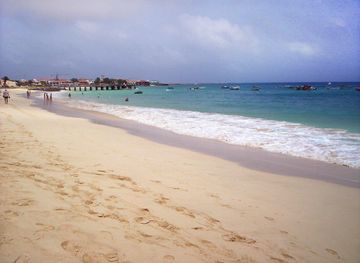
Looking beyond Santa Maria Beach? Discover Cabo Verde for broader travel guides, local hot-spots, and regional highlights.
Explore Cabo VerdeSanta Maria Beach in Photos
Browse through our photo collection highlighting the charm and character of the destination.


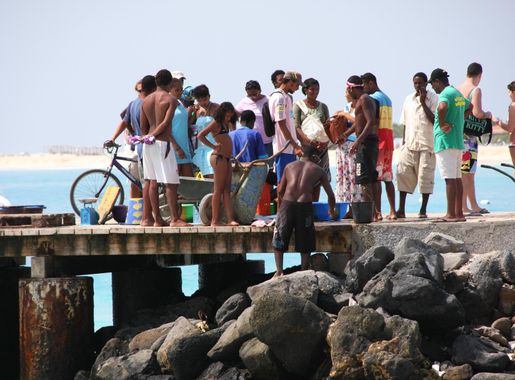


Santa Maria Beach: Cabo Verde's Pristine Coastal Gem
Santa Maria Beach, located on the southern tip of the island of Sal in Cabo Verde, is a slice of paradise in the Atlantic Ocean. Known for its crystal-clear turquoise waters, soft golden sands, and vibrant marine life, this beach is a haven for sun-seekers and water sports enthusiasts alike. Whether you're looking to relax under the sun, swim in the warm waters, or explore the underwater world through snorkeling and diving, Santa Maria Beach offers something for everyone. The beach is lined with charming beach bars and restaurants where you can savor fresh seafood and local cuisine while enjoying stunning sea views. The town of Santa Maria itself is a lively hub with colorful buildings, bustling markets, and a friendly, welcoming atmosphere. Stroll through the town to discover local crafts, music, and the rich culture of Cabo Verde. For those interested in adventure, Santa Maria Beach is a hotspot for windsurfing and kitesurfing due to its consistent trade winds. The nearby salt flats and natural pools add an element of exploration for nature lovers. The beach's serene environment and picturesque landscapes make it an ideal destination for relaxation and rejuvenation.