

Free Assomada Travel Guide & Mobile App
Plan your Assomada trip with Evendo. Get free guides to top attractions, restaurants, hotels, and bars. Web access or download the mobile app.


Assomada, Cabo Verde: explore Santiago’s market town, tabanka heritage, mountain landscapes, local food, Creole culture and walking routes beyond Praia.
A Centre of Santiago
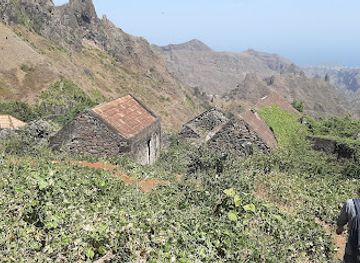
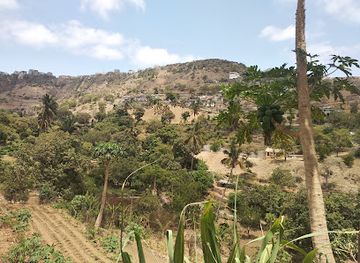
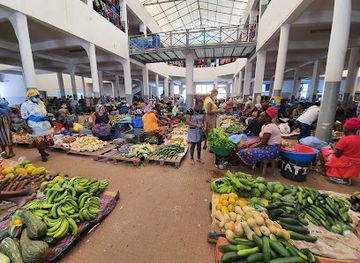
Assomada stands in the uplands of Santiago, Cabo Verde’s largest island, between Praia and the island’s northern districts. Rather than facing the sea, the town looks towards a landscape of dry valleys, volcanic ridges and cultivated slopes, a setting that has shaped its role as an inland commercial and administrative centre. Its streets gather around a large market, where farmers, traders and residents from across central Santiago exchange fruit, vegetables, grains, clothing and household goods. Market days give Assomada a particularly social character, with movement and conversation extending well beyond the stalls.Read more about Assomada
History, Faith and Tabanka
Life Beyond the Market
When is the best time to visit Assomada?
Best: January–March · 27°C| Month | High (°C) | Rainfall (mm) |
|---|---|---|
| January (best) | 27 | 0 |
| February (best) | 27 | 0 |
| March (best) | 27 | 0 |
| April | 27 | 0 |
| May | 27 | 0 |
| June | 27 | 0 |
| July | 28 | 0 |
| August | 28 | 0 |
| September | 28 | 0 |
| October | 28 | 10 |
| November | 28 | 15 |
| December | 28 | 8 |
Getting to and around Assomada
How to get there
Transportation
Best landmarks in Assomada
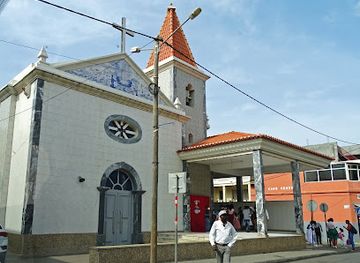
The most characteristic landmark in Assomada is its central market, whose scale and civic importance express the town’s role as the commercial centre of Santa Catarina. The Museu da Tabanka is significant not because of grand architecture but because it gives public form to a living Santiago tradition of music, procession and communal identity. Local churches, including the Igreja de Nossa Senhora de Fátima, provide points of reference in the townscape and reflect the continuing place of Catholic practice in Cabo Verdean public life. Civic buildings and the central square belong to the town’s development as an administrative centre during the colonial and post-independence periods. Beyond the built centre, the volcanic uplands and cultivated valleys around Assomada are landscape landmarks in their own right, showing how settlement, farming and seasonal rainfall have shaped central Santiago.
-
Sightseeing tour agency
Rural Tours - Discover Santiago Island Tour Guides
Discover the enchanting landscapes and rich culture of Santiago Island with Rural Tours, your local guide to Cape Verde's hidden treasures.
1 min walk · 0.1 km from city centre
-
Shopping mall
Assomada market
Experience the vibrant culture and local flavors at Assomada Market, a bustling shopping hub in the heart of Assomada, Cape Verde.
4 min walk · 0.3 km from city centre
-
Historical landmark
Poilão De Boa Entrada
Explore the historical essence of Cape Verde at Poilão De Boa Entrada, a captivating landmark in Assomada that reflects the island's rich cultural heritage.
6 min drive · 1.8 km from city centre
-
Catholic church
Igreja Nossa Senhora De Fátima, Assomada
Explore the serene Igreja Nossa Senhora De Fátima in Assomada, a beautiful Catholic church showcasing Cape Verdean culture and tradition.
1 min walk · 0.1 km from city centre

Explore Assomada on the map
Plan your Assomada trip on one map. See where the top attractions, landmarks, restaurants, bars and hotels are, find what's near where you're staying, and book hotels and experiences in a few clicks.
Best hotels in Assomada
Best restaurants in Assomada
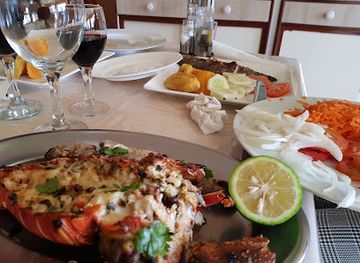
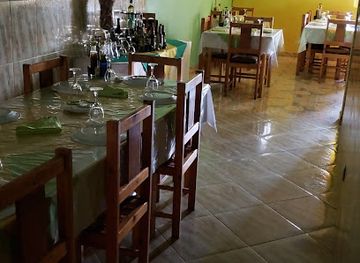
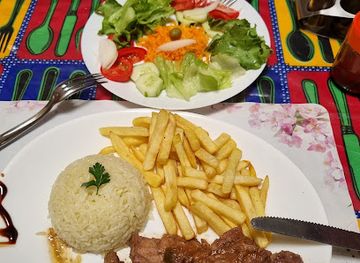
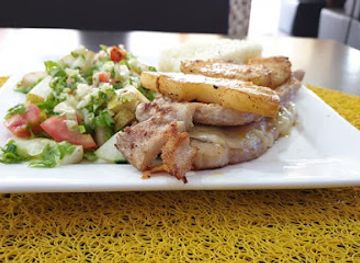
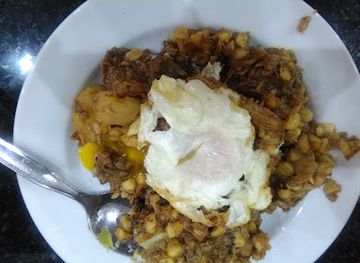
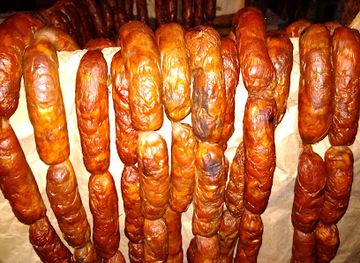
Assomada’s food culture is rooted in Santiago’s agricultural landscape and in the practical, generous cooking of Cabo Verde. Cachupa, the slow-cooked mixture of maize, beans, vegetables and sometimes meat or fish, is a central dish, while cuscuz de milho and xerém reflect the importance of maize in island cuisine. Goat, chicken, fresh fish and stews appear in homes and modest restaurants, often accompanied by rice, beans or seasonal vegetables. Bakeries and small cafés provide simple breakfasts, pastries and coffee, and the market is useful for seeing the fruit, greens and grains that feed the surrounding communities. Meals are generally informal, with local eateries concentrated around the town centre rather than in a dedicated restaurant quarter. Grogue, a distilled sugar-cane spirit, is associated with Cabo Verde more broadly and may appear alongside local food, though tastings should be approached responsibly.
-
Restaurant
Asa Branca
Discover authentic Cape Verdean cuisine at Asa Branca in Assomada - where every dish tells a story.
3 min walk · 0.2 km from city centre
-
Restaurant
Restaurante Churrasqueira Colombo
Experience authentic Cape Verdean cuisine at Restaurante Churrasqueira Colombo in Assomada – where every meal is a flavorful journey.
3 min walk · 0.3 km from city centre
-
Restaurant
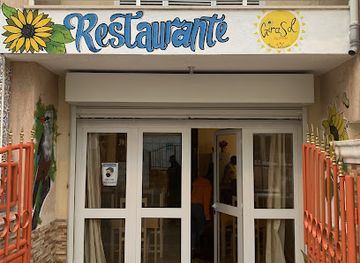
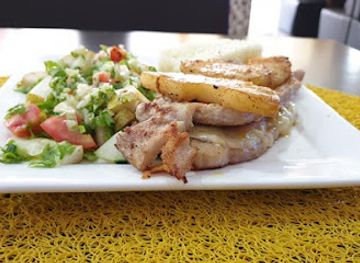
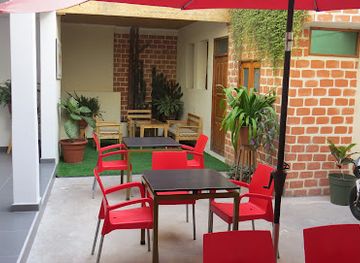
GiraSol Assomada
Experience authentic Cape Verdean cuisine at GiraSol Assomada, where delightful dishes meet warm hospitality in a charming setting.
2 min walk · 0.2 km from city centre
-
Restaurant
TimeOut Assomada
Experience authentic Cape Verdean cuisine at TimeOut Assomada, where every dish tells a story of local tradition and flavor.
4 min walk · 0.3 km from city centre
Best bars in Assomada
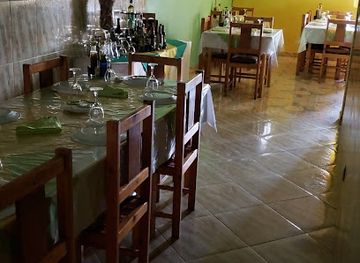
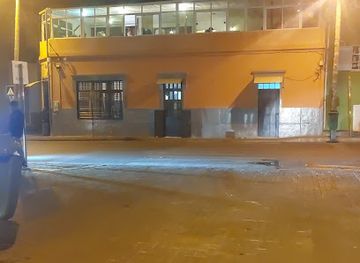
Assomada’s evening life is modest and community-oriented rather than built around large clubs or a concentrated nightlife district. After the market and shops close, residents gather in cafés, small bars and informal meeting places around the central streets, where conversation and music are more important than elaborate interiors. Santiago’s musical traditions, including batuque and funaná, may be encountered through local performances or cultural events, though these are not necessarily scheduled for visitors. Religious festivals and tabanka-related celebrations can bring music and processions into public spaces at particular times of year, but dates and formats vary. Praia offers a broader choice of late-night venues for travellers seeking clubs, while Assomada is better suited to a quiet drink, an early meal and contact with everyday local social life. Visitors should dress respectfully and ask before photographing performances or community gatherings.
-
Restaurant
Restaurante Churrasqueira Colombo
Discover authentic Cape Verdean flavors at Restaurante Churrasqueira Colombo, a must-visit dining spot in Assomada offering a vibrant culinary experience.
3 min walk · 0.3 km from city centre
-
Restaurant
GiraSol Assomada
Experience the vibrant flavors and warm hospitality of GiraSol Assomada, a culinary gem in the heart of Cape Verde.
2 min walk · 0.2 km from city centre
-
Restaurant
TimeOut Assomada
Experience authentic Cape Verdean cuisine at TimeOut Assomada, a vibrant restaurant in Assomada offering a taste of local culinary delights.
4 min walk · 0.3 km from city centre
-
Restaurant
ELDS Espaço Aberto
Discover the culinary delights of ELDS Espaço Aberto in Assomada, offering a diverse menu and delicious ice cream in a warm atmosphere.
1 min walk · 0.1 km from city centre
Best nightclubs in Assomada
Assomada’s evening life is modest and community-oriented rather than built around large clubs or a concentrated nightlife district. After the market and shops close, residents gather in cafés, small bars and informal meeting places around the central streets, where conversation and music are more important than elaborate interiors. Santiago’s musical traditions, including batuque and funaná, may be encountered through local performances or cultural events, though these are not necessarily scheduled for visitors. Religious festivals and tabanka-related celebrations can bring music and processions into public spaces at particular times of year, but dates and formats vary. Praia offers a broader choice of late-night venues for travellers seeking clubs, while Assomada is better suited to a quiet drink, an early meal and contact with everyday local social life. Visitors should dress respectfully and ask before photographing performances or community gatherings.
-
Bar
Bar Para Li
Experience vibrant nightlife and local charm at Bar Para Li in Assomada, where great drinks meet warm hospitality.
3 min walk · 0.3 km from city centre
-
Bar
Bar Cafe Fogu Di Lenha
Discover the vibrant ambiance and local flavors at Bar Cafe Fogu Di Lenha, a top bar in Assomada perfect for unwinding after a day of adventure.
8 min walk · 0.7 km from city centre
-
Bar
Café Central
Experience the vibrant bar culture of Cape Verde at Café Central in Assomada, where local flavors and lively ambiance come together.
1 min walk · 0.1 km from city centre
-
 Sports bar
Torre de Palha
Experience the excitement of live sports at Torre de Palha, the premier sports bar in Assomada, where camaraderie and competition come alive.
10 min walk · 0.8 km from city centre
Best shops in Assomada
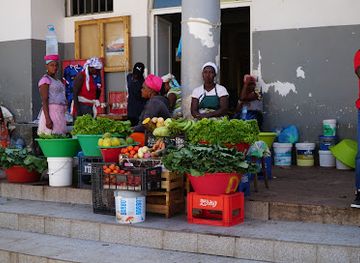
Shopping in Assomada centres on its large market and the surrounding commercial streets rather than on malls or international retail. Market stalls sell fruit, vegetables, grains, clothing, shoes, household goods and everyday items brought in from across Santiago, creating a lively but practical shopping environment. Small independent shops provide food, clothing and basic supplies, while locally made products may include woven goods, prepared foods and items associated with island craft traditions. The market is a better place to understand local commerce than to search for a polished souvenir selection, and quality and availability vary from day to day. Visitors should carry escudos in smaller denominations, ask permission before photographing traders and avoid handling goods without intention to buy. Praia generally offers a wider range of specialist shops, but Assomada’s retail life is more closely tied to the needs of surrounding communities.
-
Market
Mercado Municipal
Explore the Mercado Municipal of Assomada for a vibrant taste of Cape Verdean culture, local cuisine, and unique handicrafts.
2 min walk · 0.1 km from city centre
-
Shopping mall
Assomada market
Discover the vibrant Assomada Market, a cultural treasure trove of local produce, crafts, and culinary delights in the heart of Cape Verde.
4 min walk · 0.3 km from city centre
-
Department store
Cosmo Shopping
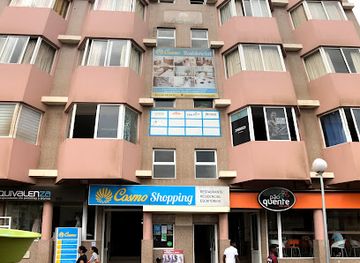
Experience the essence of shopping and dining at Cosmo Shopping in Assomada, where local culture meets modern convenience.
1 min walk · 0.1 km from city centre
-
Produce market
Loja jorge
Explore Loja Jorge in Assomada for a vibrant experience of local culture and fresh produce in Cape Verde.
9 min walk · 0.7 km from city centre
Get your free copy of our complete guide to Assomada, delivered straight to you.
Everything on this page, from attractions and restaurants to essentials and local phrases, in one PDF you can read offline, print or share.
Already have an account? Sign in
Your Assomada guide is ready.
We'll send it to · Not you? Sign out

Getting your guide ready…
We are putting together a fresh copy of the Assomada guide. This can take up to a minute.
This can take a few moments. If your browser asks, choose Allow so the download can start. You'll find the guide in your Downloads folder.
Nothing happened? Download it again
Sorry, the guide is taking longer than usual. Please try again in a minute, or get it by email instead.
Assomada essentials
Currency and Payment
Safety
Emergency Situations
Do's and Don'ts
Local Tips
From Eve
Local phrases worth knowing
You don't need to get them perfect. A few words go a long way, and locals appreciate the effort.
Basics
| English | Local | Say it |
|---|---|---|
| Hello | Olá | [oh-lah] |
| Goodbye | Adeus | [ah-deh-oos] |
| Yes | Sim | [seem] |
| No | Não | [nah-oo] |
| Please/You're welcome | Por favor/De nada | [por fah-vohr/deh nah-dah] |
| Thank you | Obrigado | [oh-bree-gah-doo] |
| Excuse me/Sorry | Desculpe/Desculpa | [deh-skool-peh/deh-skool-pah] |
| How are you? | Como estás? | [koh-moh ehs-tahs] |
| Fine. And you? | Bem. E tu? | [behm. eh too] |
| Do you speak English? | Falas inglês? | [fah-lahs een-glehs] |
| I don't understand | Não entendo | [nah-oo ehn-tehn-doo] |
Eating & Drinking
| English | Local | Say it |
|---|---|---|
| I'd like to see the menu, please | Gostaria de ver o menu, por favor | [goh-stah-ree-ah deh vehr oo meh-noo, poor fah-vohr] |
| I don't eat meat | Não como carne | [nah-oo koh-moo kahr-neh] |
| Cheers! | Saúde! | [sow-deh] |
| I would like to pay, please | Gostaria de pagar, por favor | [goh-stah-ree-ah deh pah-gahr, poor fah-vohr] |
Emergencies
| English | Local | Say it |
|---|---|---|
| Help! | Ajuda! | [ah-zhoo-dah] |
| Go away! | Vai embora! | [vah-ee ehm-boh-rah] |
| Call the Police! | Chama a polícia! | [shah-mah ah poh-lee-see-ah] |
| Call a doctor! | Chama um médico! | [shah-mah oom meh-dee-koo] |
| I'm lost | Estou perdido | [eh-stoh pehr-dee-doo] |
| I'm ill | Estou doente | [eh-stoh doo-ehn-teh] |
Shopping
| English | Local | Say it |
|---|---|---|
| I'd like to buy... | Gostaria de comprar... | [goh-stah-ree-ah deh kohm-prahr] |
| I'm just looking | Estou só a ver | [eh-stoh soh ah vehr] |
| How much is it? | Quanto custa? | [kwahn-too koos-tah] |
| That's too expensive | Isso é muito caro | [ee-soh eh moo-ee-toh kah-roo] |
| Can you lower the price? | Pode baixar o preço? | [poh-deh bahy-shahr oo preh-soo] |
Time & Numbers
| English | Local | Say it |
|---|---|---|
| What time is it? | Que horas são? | [keh oh-rahs sow] |
| It's one o'clock | É uma hora | [eh oo-mah oh-rah] |
| Half past (10) | Meia hora (10) | [may-ah oh-rah (deesh)] |
| Morning | Manhã | [mahn-yah] |
| Afternoon | Tarde | [tahr-deh] |
| Evening | Noite | [noy-teh] |
| Yesterday | Ontem | [ohn-tehm] |
| Today | Hoje | [oh-zheh] |
| Tomorrow | Amanhã | [ah-mahn-yah] |
| 1 | Um | [oom] |
| 2 | Dois | [doysh] |
| 3 | Três | [trehsh] |
| 4 | Quatro | [kwah-troh] |
| 5 | Cinco | [seen-koo] |
| 6 | Seis | [saysh] |
| 7 | Sete | [seh-teh] |
| 8 | Oito | [oy-toh] |
| 9 | Nove | [noh-veh] |
| 10 | Dez | [dehsh] |
Transport & Directions
| English | Local | Say it |
|---|---|---|
| Where's a/the...? | Onde está o/a...? | [ohn-deh ehs-tah oo/ah] |
| What's the address? | Qual é o endereço? | [kwahl eh oo ehn-deh-reh-soo] |
| Can you show me (on the map)? | Podes mostrar-me (no mapa)? | [poh-dehs moh-strahr-meh (noo mah-pah)] |
| When's the next (bus)? | Quando é o próximo (autocarro)? | [kwahn-doo eh oo proh-ksee-moh (ow-toh-kah-roo)] |
| A ticket (to ....) | Um bilhete (para ....) | [oom beel-yeh-teh (pah-rah)] |
History of Assomada
Santiago’s Early Settlement
Assomada’s history belongs to the wider development of Santiago, the first Cabo Verdean island to be permanently settled by the Portuguese in the fifteenth century. Early colonial activity concentrated around Ribeira Grande, now Cidade Velha, while the interior gradually became important for agriculture, livestock and movement between coastal settlements. The uplands around present-day Assomada supported communities whose lives depended on seasonal rainfall and the cultivation of maize, beans and other crops. This inland setting gave the area a different character from the original port centres, linking it to the island’s rural economy and to the movement of people across Santiago.
The Inland Agricultural Economy
As Santiago’s population expanded, the island’s interior acquired greater commercial and administrative importance. Assomada developed because it occupied a strategic position among agricultural districts and routes crossing central Santiago. Farmers and traders brought food, animals and household goods into the town, while manufactured products and imported necessities moved in the opposite direction. Rainfall remained uncertain, and periods of drought repeatedly affected livelihoods across the island, encouraging migration and reinforcing the importance of markets. The town’s identity therefore grew from exchange and settlement rather than from a single royal or military foundation.
Assomada and Santa Catarina
Assomada became the principal urban centre of Santa Catarina municipality, gradually acquiring the public institutions, religious buildings and commercial activity associated with local administration. Its market helped consolidate the town’s role as a meeting place for communities spread through the central highlands. The surrounding districts also preserved forms of communal organisation and musical expression that developed through the complex history of Santiago, including the tabanka tradition. These practices brought together procession, percussion, performance and local solidarity, demonstrating that the island’s history was shaped not only by colonial administration and agriculture but also by collective cultural life.
Colonial Legacies and Social Change
During the later colonial period, Assomada reflected the inequalities and economic pressures that affected Cabo Verde as a whole. Limited rainfall, recurring food shortages and restricted opportunities encouraged many islanders to seek work elsewhere, both within the archipelago and abroad. At the same time, the town remained an important centre for trade and services in Santiago’s interior. Portuguese colonial institutions stood alongside African cultural practices, Creole language and local religious traditions. The resulting society was neither wholly rural nor fully urban: Assomada connected dispersed farming communities with an increasingly organised town.
Post-Independence Assomada
Cabo Verde became independent from Portugal in 1975, and Assomada continued to grow as the municipal centre of Santa Catarina. Public services, education, transport links and commercial activity strengthened its connection with other parts of Santiago, particularly Praia and the northern municipalities. The market remains central to the town’s public life, while cultural institutions such as the Museu da Tabanka help interpret traditions that were long carried through community practice. Contemporary Assomada retains the marks of its agricultural past but functions increasingly as a regional service town, shaped by migration, changing livelihoods and the enduring influence of Santiago’s rural communities.
Assomada in Photos
Browse through our photo collection highlighting the charm and character of the destination.
Cities near Assomada
The closest cities to Assomada, if you have time for more than one stop.
-

-

-

-

-


Swipe for more cities
Explore more
Explore more of Cabo Verde
Discover Cabo Verde: An enchanting archipelago offering beautiful beaches, vibrant culture, and unforgettable adventures, all set against a backdrop of stunning landscapes.
Explore Cabo Verde