Background

Sather Tower: UC Berkeley's Iconic Campanile

Ascend to panoramic Bay Area views from UC Berkeley's iconic Campanile, a historic landmark housing a 61-bell carillon and fascinating fossil collection, a true symbol of California's academic excellence.

Find your perfect hotel, anywhere in the world.

When's your trip?

Who's coming?

Adult (18-90)
Min: 1 Max: 6
Add a child
At least one participant is required. Please adjust and try again.

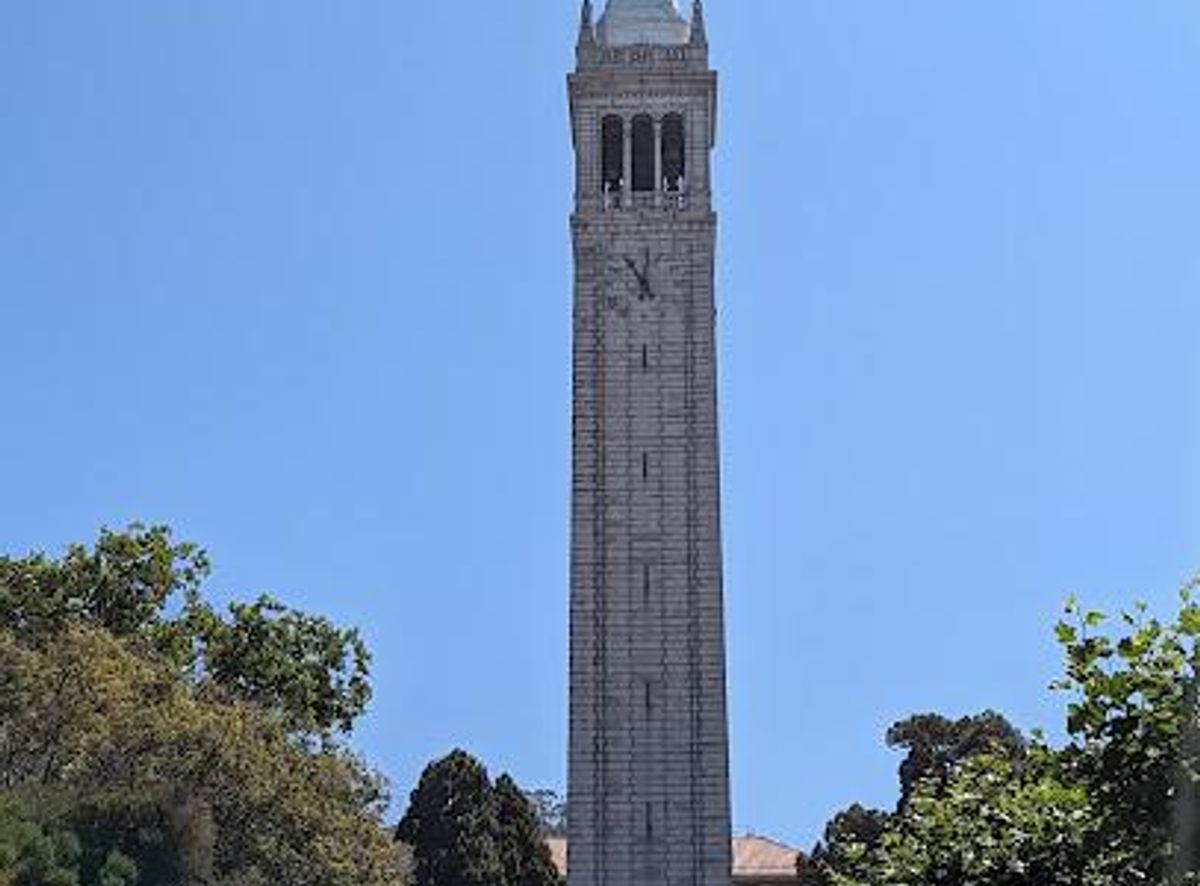
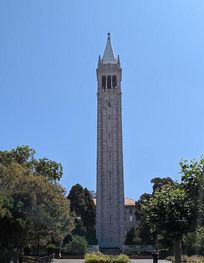
Sather Tower, affectionately known as the Campanile, stands as the most recognizable symbol of the University of California, Berkeley. Visible for miles, this 307-foot clock and bell tower is the second-tallest freestanding structure of its kind in the world. Inspired by the Campanile di San Marco in Venice, Italy, it was designed by John Galen Howard and completed in 1914. Visitors can ascend to the observation deck for panoramic views of the Bay Area, explore the carillon with its 61 bells, and even discover a collection of fossils housed within its walls. The Campanile offers a unique blend of architectural grandeur, musical heritage, and scientific intrigue, making it a must-see destination for anyone visiting the UC Berkeley campus.

A brief summary to Sather Tower

  • Berkeley, California, 94720, US

Local tips

  • Check the Campanile's website for the daily schedule of carillon concerts. The sound is magnificent, and it's a unique experience.
  • Arrive early in the day to avoid long lines for the elevator, especially on weekends and during peak tourist season.
  • Remember that the observation platform is not wheelchair accessible due to the final 38 steps. Plan accordingly.
  • Take advantage of the bag check in the lobby, as large bags and backpacks are not allowed on the observation platform.
  • Bring a camera to capture the stunning panoramic views of the Bay Area from the observation deck.
widget icon

Getting There

  • Walking

    From Sproul Plaza, a central point on the UC Berkeley campus, walk north towards the center of campus. The Campanile is easily visible as the tallest structure. Follow the path past the Valley Life Sciences Building, and the tower will be directly ahead. The entrance is at the base of the tower.

  • Public Transport

    From Downtown Berkeley BART station, walk east on Center Street towards the campus. Continue onto Crescent Lawn, then take a slight right onto Grinnell Pathway. Turn left onto Campanile Way, take the stairs, then turn left onto South Hall Rd. The Campanile will be visible. AC Transit buses also stop near the campus; check the AC Transit website for specific routes and schedules. A single ride on AC Transit costs $2.50.

  • Driving

    Parking near the Campanile is limited. Public parking is available at the Lower Hearst Structure (2451 Hearst Ave) or the MLK Student Union Garage on Bancroft Way. From Lower Hearst, walk east on Hearst Ave, turn right on Euclid Ave, continue onto Haviland Path, turn left onto University Dr, then turn left to stay on University Dr, and finally turn right. From the MLK Student Union Garage, walk north through campus towards the Campanile. Parking fees vary but typically range from $3-5 per hour.

Unlock the Best of Sather Tower

Buy tickets

    No tickets available

Book tours with entry

    No tours available

Book tours without entry

    No tours available

Discover more about Sather Tower

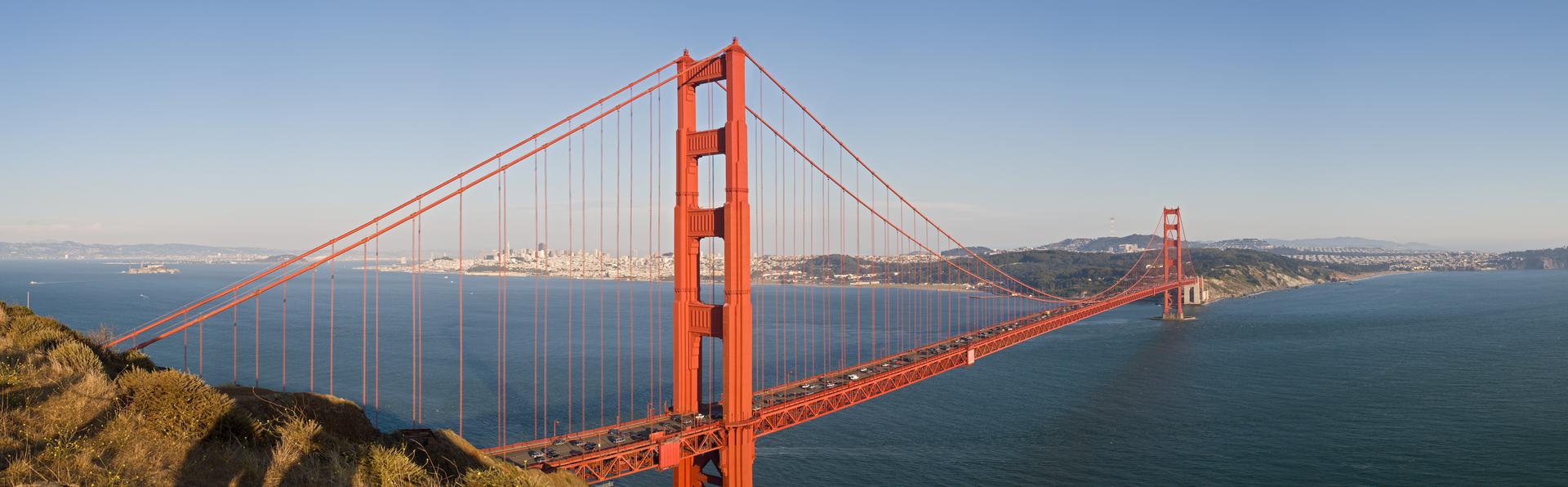
Sather Tower, more commonly known as the Campanile, is the undisputed heart and most enduring symbol of the University of California, Berkeley. Rising 307 feet above the campus, it's visible from almost anywhere in the Bay Area, a beacon representing the university's lofty ideals and contributions to California and the world. Designed by John Galen Howard, the university's supervising architect, the Campanile was completed in 1914 and opened to the public in 1917. Howard drew inspiration from the Campanile di San Marco in Venice, Italy, creating a Beaux-Arts masterpiece that has become synonymous with the Berkeley experience. The tower is named in honor of Jane K. Sather, a major benefactor of the university. Sather's generosity also funded Sather Gate and endowed chairs in History and Classics, leaving an indelible mark on the campus. The Campanile's construction cost $200,000, a sum equivalent to over $5 million today, reflecting its significance and the quality of its construction. Constructed from 2,800 blocks of Raymond granite sourced from the Sierra Nevada Mountains, over 500 tons of structural steel, and Alaskan marble, the Campanile is an engineering marvel. Its robust design incorporates three and a half times more structural steel than a modern skyscraper of comparable size, ensuring its stability and longevity. The tower's steel frame is cross-braced on every other level, providing flexibility in the event of earthquakes. One of the Campanile's most captivating features is its 61-bell carillon. The carillon's history began with a gift of 12 bells from Jane Sather in 1914. These original bells, cast by John Taylor & Co of Loughborough, England, were first played on November 3, 1917, to celebrate California's Big Game against Washington. Over the years, the carillon has been expanded through generous alumni donations, reaching its current configuration of 61 bells in 1983. The bells range in size from small 19-pound chimes to the massive 10,500-pound "Great Bear Bell," which tolls on the hour and features bas-relief carvings of bears and the constellation Ursa Major. The Campanile's carillon program is one of the most active in the world. During the Fall and Spring semesters, the carillon is played for ten minutes at 7:50 a.m., noon, and 6:00 p.m. on weekdays, from 12:00–12:15 p.m. and 6:00–6:10 p.m. on Saturdays, and from 2:00–2:45 p.m. on Sundays. The bells also toll the hour seven days a week between 8 a.m. and 10 p.m. Music students can even take carillon performance classes through the Department of Music, subject to a rigorous musical audition. Beyond its architectural and musical significance, the Campanile also serves as an unexpected repository of scientific treasures. Due to its cool, dry interior, the tower houses a significant portion of the University of California Museum of Paleontology's fossil collection, including many specimens from the La Brea Tar Pits in Los Angeles. These fossils, dating back as far as 23,000 years, include the remains of saber-toothed cats, dire wolves, and giant sloths. Visitors can ascend to the observation deck, located 200 feet above the ground, via an elevator. From this vantage point, they can enjoy breathtaking panoramic views of the UC Berkeley campus, the surrounding hills, San Francisco, and the Golden Gate Bridge. The observation platform is open to the public most days of the year, offering a unique perspective on the Bay Area's beauty. The Campanile has also played a role in campus lore and history. For many years, the trumpets of the California Marching Band have played Cal spirit songs from the top of the tower during Big Game week. Known as the Campanile Concert, the music can be heard throughout the campus and Berkeley. The Campanile has also been featured in films and on the cover of Time magazine, solidifying its place as a cultural icon. While the observation platform is not fully wheelchair accessible due to the 38 steps from the elevator to the top, the Campanile esplanade and lobby displays are accessible by wheelchair. Backpacks, large bags, food, and drinks are not permitted in the elevator or on the observation platform, but a bag check is available in the lobby. The Campanile is more than just a bell tower; it's a symbol of the University of California, Berkeley's rich history, academic excellence, and enduring spirit. Whether you're a student, alumni, or visitor, a trip to the Campanile is an essential Berkeley experience.

Popular Experiences near Sather Tower

Popular Hotels near Sather Tower

Select Currency